

38. Tim Ruddy
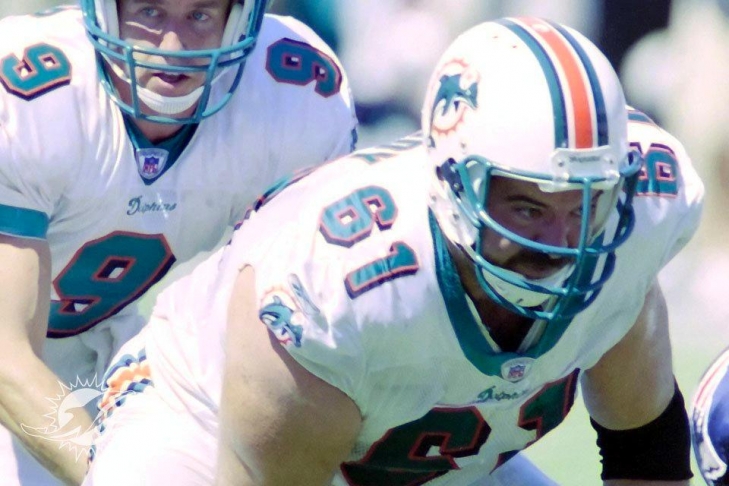
Tim Ruddy joined the Dolphins as a second-round pick in 1994, a Notre Dame center who was a second-team All-American as a senior. He spent his rookie season as a backup, appearing in all 16 games but not starting any, before taking over the job full-time as a sophomore.
From 1995 onward, he started at center, handling the first snap in nearly every game he played. Ruddy anchored the line for Dan Marino through the end of the Hall of Famer’s career and later protected the pocket and opened holes for Ricky Williams during Williams’ 1,853-yard season in 2002. He was durable once he became a starter, missing only a handful of games over the rest of his career, and the Dolphins reached the playoffs seven times without posting a losing record during his decade in Miami. In 2000, his consistency earned him a Pro Bowl selection—the first for a Dolphins center since Dwight Stephenson.
Injuries limited him in 2003, his final season. He still started most of the games he appeared in, but the physical toll had caught up with him. Miami released him the following offseason after he failed a physical, ending his 10-year run with the team. In those 10 seasons, he appeared in 156 games and started 140. Ruddy’s steady presence in the middle of the offensive line made him a reliable, understated piece of those Dolphins teams.
41. Roy Foster

Roy Foster made the coast-to-coast jump from USC to the Dolphins as the 24th overall pick in 1982, a consensus All-American guard who had won the Morris Trophy twice as the Pac-10’s top lineman. He saw limited action as a rookie in the strike-shortened season and started only once the following year, but by 1984 he had locked down the starting left guard spot and held it for most of the next six seasons.
He became a mainstay on an offensive line that protected Dan Marino during some of the quarterback’s peak years. Foster earned Pro Bowl selections after the 1985 and 1986 seasons and started nearly every game from 1984 through 1989, helping the Dolphins reach Super Bowls XVII and XIX. A powerful run blocker with the athleticism to handle edge rushers in pass protection, he was a reliable presence on units that ranked among the league’s best in scoring and yardage. In 1984, the Dolphins’ offense set records while Foster started every game; two years later, the team again led the NFL in points with him anchoring the left side. By 1990 he had lost the starting job to a younger player.
After the 1990 season, he left as a Plan B free agent and signed with the San Francisco 49ers. In nine seasons with Miami, he appeared in 132 games and started 95 of them. Foster’s run as a Pro Bowl guard made him a key piece of those high-powered Dolphins offenses.
36. Tim Bowens
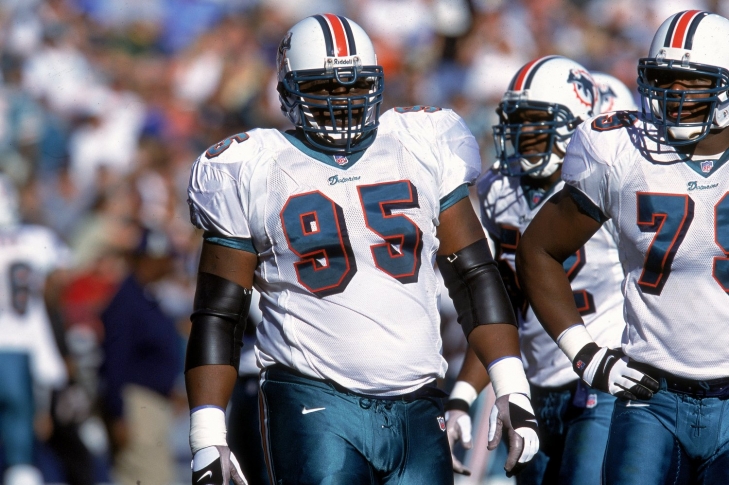
Tim Bowens joined the Dolphins as the 20th overall pick in 1994, a big, raw defensive tackle out of Ole Miss. Questions lingered about his college tape and conditioning, but he settled in quickly. He started almost immediately, helped the defense control the run, and earned AP Defensive Rookie of the Year honors as Miami won the AFC East.
He stayed on the left side of the defensive line for the next decade. Bowens was never a pure pass-rush specialist; instead, he was the kind of interior lineman who took on blockers, clogged running lanes, and freed the linebackers to make plays. Teammates later called him “Tim Badass Bowens” for the physical, no-nonsense style he brought every week. He was remarkably durable, starting nearly every game he played, and the Dolphins reached the playoffs seven times during his tenure. In 1997, he even scored a touchdown by recovering a fumble in the end zone against the Raiders. That same steady production earned him Pro Bowl nods after the 1998 and 2002 seasons.
In 11 seasons and 157 games (155 starts), he finished with 414 tackles, 22.0 sacks, nine forced fumbles, five fumble recoveries, and one interception. The Dolphins later inducted him into the Ring of Honor, a fitting tribute to the quiet, physical anchor who held down their defensive interior for more than a decade.
37. Tony Nathan
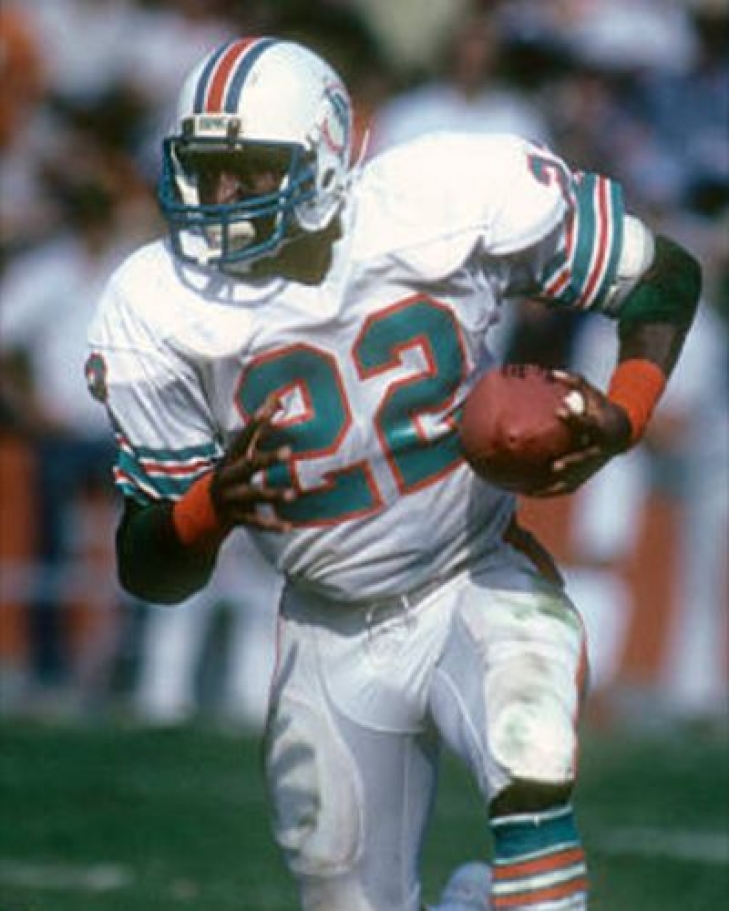
A national champion at Alabama in 1978, Tony Nathan joined the Dolphins the following spring as a third-round pick. Miami saw a versatile back who could contribute in multiple ways, and he began his career primarily as a kick and punt returner. As a rookie, he earned first-team All-Pro honors on special teams, establishing himself as one of the league’s more dangerous return men that season.
He developed into one of the more well-rounded running backs of his era. Nathan was equally effective carrying the ball and catching it out of the backfield, giving Don Shula’s offense a reliable dual threat. He helped the Dolphins reach the playoffs multiple times and started in Super Bowls XVII and XIX. One of his lasting memories came in the 1981 playoffs against the Chargers, when he scored the game-tying touchdown on the famous hook-and-lateral play that helped spark a dramatic comeback.
In nine seasons with Miami, he rushed for 3,543 yards and 16 touchdowns on 732 carries while adding 3,592 receiving yards and another 16 touchdowns on 383 catches. He also contributed on returns early in his career and added 1,176 yards from scrimmage across 12 playoff games. After retiring, he stayed with the organization and joined Shula’s coaching staff. Nathan’s combination of college pedigree, all-around production, and postseason moments made him a steady, valuable piece of those Dolphins teams.
43. A.J. Duhe
A.J. Duhe's rookie season could be argued as the best of his eight-year career. The 13th overall pick in 1977 became an instant fan favorite in Miami, where he earned Defensive Rookie of the Year honors. Playing linebacker or defensive end depending on the scheme, Duhe was a strong interior run stuffer who helped the Dolphins build one of the AFC’s better defenses in the early 1980s.
He was a key part of teams that reached two Super Bowls. His biggest moment came in the 1982 AFC Championship Game against the Jets, when he intercepted three passes and returned one for a touchdown in a 14-0 win. That performance still stands out as one of the best individual games in Dolphins playoff history.
In 1983, he started 15 games as the Dolphins went 12-4 and won the AFC East. He finished with 87 tackles and 5.5 sacks that year while the defense allowed the fewest points in the NFL, and he finished eighth in Defensive Player of the Year voting. Like so many players, Duhe began to compile injuries later in his career. He made his only Pro Bowl after the 1984 season, but the physical toll had already caught up with him. The Dolphins released him before the 1985 season because of his injuries, and he retired soon after.
In eight seasons with Miami, he played in 108 games and finished with roughly 38.5 sacks and 3 interceptions. The early production and that one unforgettable playoff game are what most fans remember.
35. Ricky Williams
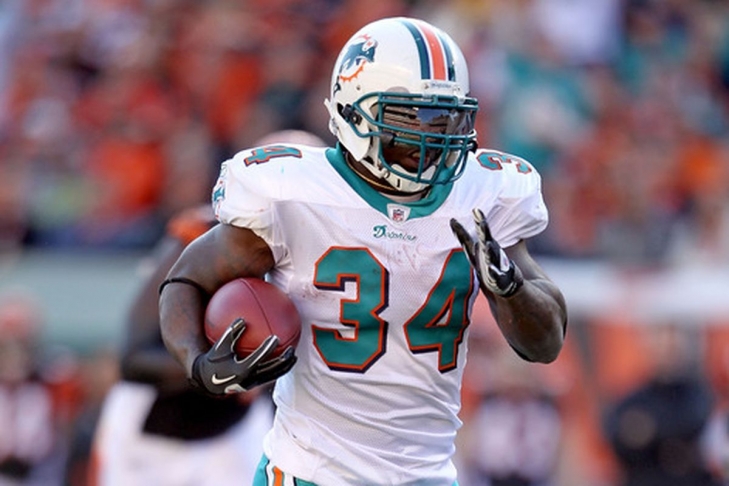
Ricky Williams arrived in Miami via trade before the 2002 season after three productive but uneven years with the New Orleans Saints. The Saints had mortgaged their entire 1999 draft (and more) to select the Heisman Trophy winner fifth overall; when results and off-field issues didn’t match the price, both sides benefited from a change. Miami sent a 2002 first-round pick and a conditional 2003 pick (which became another first after Williams hit 1,500 yards) the other way and installed him as the clear lead back.
His first season in aqua and orange finally matched the hype. Williams led the NFL with 1,853 rushing yards and 16 touchdowns on a league-high 383 carries, averaging 4.8 yards per carry and 115.8 yards per game. He earned first-team All-Pro and Pro Bowl honors, set the Dolphins’ single-season rushing record (still standing), and racked up more than 2,200 yards from scrimmage. Multiple 200-yard games and ten 100-yard performances made him the franchise’s most dominant offensive weapon in years. The team finished 9-7 and missed the playoffs, but the individual season remains one of the best by any Dolphins running back.
The rest of his Miami tenure was more stop-and-start. He followed with 1,372 yards and nine touchdowns in 2003, then abruptly retired before the 2004 season amid marijuana-related issues that also cost him the entire 2006 campaign (he spent that year in the CFL with the Toronto Argonauts). He returned in 2005 in a limited role (743 yards, six touchdowns in 12 games), dealt with further suspensions and injuries, and settled into a complementary role alongside Ronnie Brown.
Even so, he delivered another strong year in 2009: 1,121 yards and 11 touchdowns on 4.7 yards per carry after Brown was injured, setting an NFL record for the longest span between 1,000-yard seasons. He contributed to the 2008 AFC East title and playoff run in the Wildcat offense, then closed his Dolphins chapter in 2010 before one final season with Baltimore.
Across 93 games with Miami, Williams finished with 6,436 rushing yards and 48 touchdowns on 1,509 carries (plus 197 receptions for 1,431 yards and six more scores). Those numbers rank him second in franchise history behind only Larry Csonka in rushing yards. When he was on the field and focused, he was a punishing, high-volume force who gave the Dolphins the ground game they had long lacked; the suspensions and absences simply kept the full version of that career from unfolding.
30. Patrick Surtain
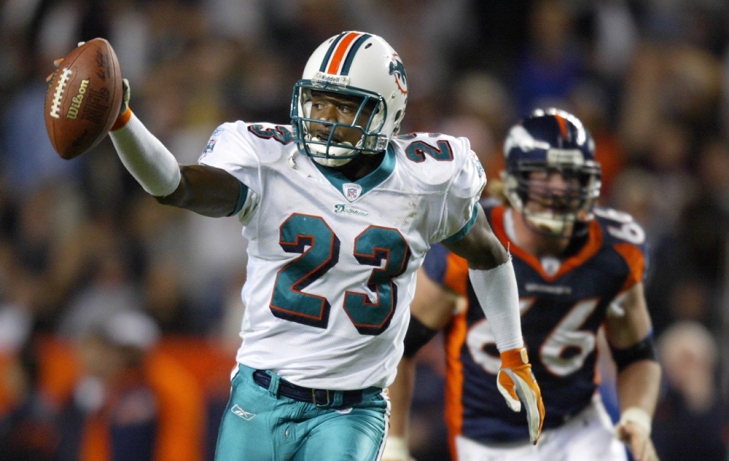
Patrick Surtain arrived in Miami as a second-round pick out of Southern Miss in 1998 and spent most of his first two seasons coming off the bench. By 2000, he had locked down the starting left cornerback job opposite Sam Madison, and the Dolphins’ secondary became one of the league’s more physical units. Surtain specialized in press coverage, jamming receivers at the line of scrimmage to disrupt timing and using his recovery speed to stay in phase once the route broke. He played aggressive man coverage and rarely dropped off, forcing quarterbacks to look elsewhere or risk a contested throw.
From 2002 through 2004, he made the Pro Bowl three straight times and earned first-team All-Pro in 2002. That year he finished with six interceptions, including a 40-yard pick-six against the Broncos, while posting an Approximate Value of 14 and defending 11 passes. In 2003, he led the Dolphins with seven interceptions and still graded out at a high level, finishing second-team All-Pro. Those three seasons alone produced 17 picks and steady production against opposing quarterbacks, as teams often preferred to throw elsewhere.
After the 2004 season, Miami and Surtain could not agree on a new contract. With the team facing salary-cap pressure, the Dolphins allowed him to seek a trade and eventually dealt him to the Kansas City Chiefs for a second-round pick. He played four more years in Kansas City before retiring.
With the Dolphins, he finished with 29 interceptions and 353 tackles.
34. Vern Den Herder
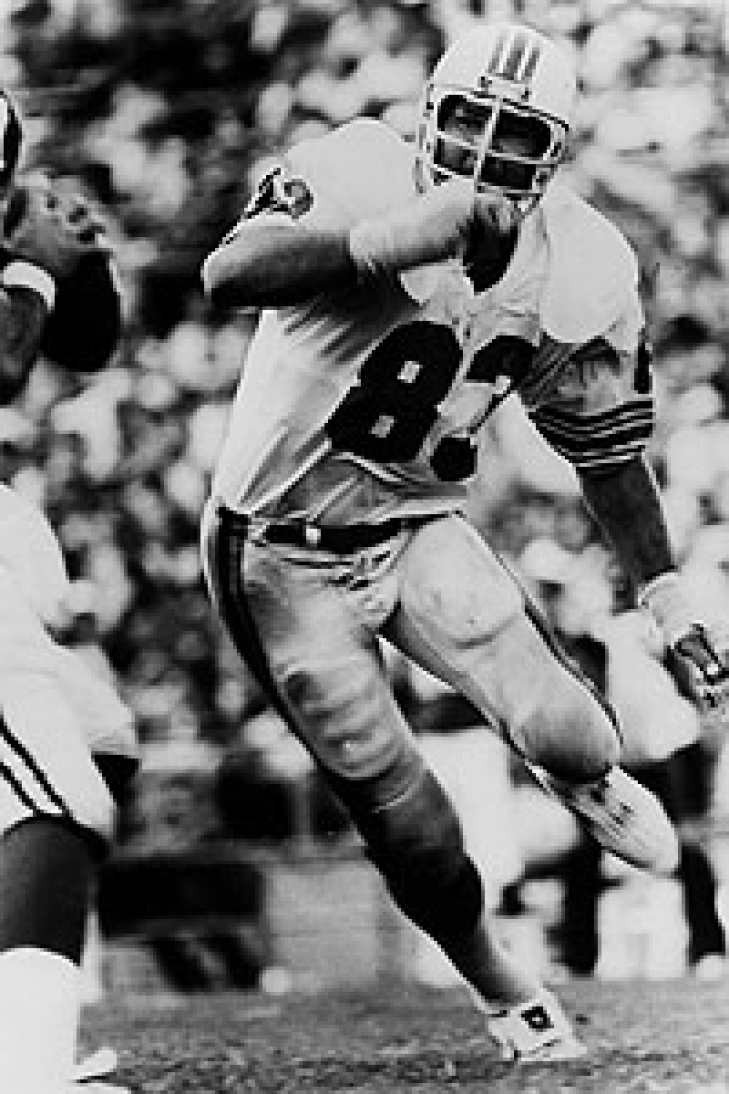
Vern Den Herder showed up in Miami as a ninth-round pick out of Central College in Iowa in 1971 and never left. He spent his whole career with the Dolphins, starting as a backup before locking down the left defensive end spot in 1972 and holding it for the next ten years. He started 144 of his 166 games with the team.
He was a reliable piece on the left side of that defensive line during the perfect 1972 season and the back-to-back Super Bowl wins. Sacks weren’t officially tracked yet, but Den Herder is credited with 64.5, including a five-sack game in 1973 and a couple of four-sack outings. He led the Dolphins in sacks multiple times in the 1970s and earned All-AFC honors in 1972. He wasn’t flashy, but he was a steady, physical presence who held up against the run and kept working the edge. Don Shula later called him one of the most dependable players he ever coached, the kind of guy who showed up every week and got the job done without much fuss.
He stayed a starter through 1981 before shifting to a backup role in the strike-shortened 1982 season, which turned out to be his last.
As a Dolphin, he finished with 64.5 sacks, 14 fumble recoveries, and two Super Bowl rings.
28. Mercury Morris
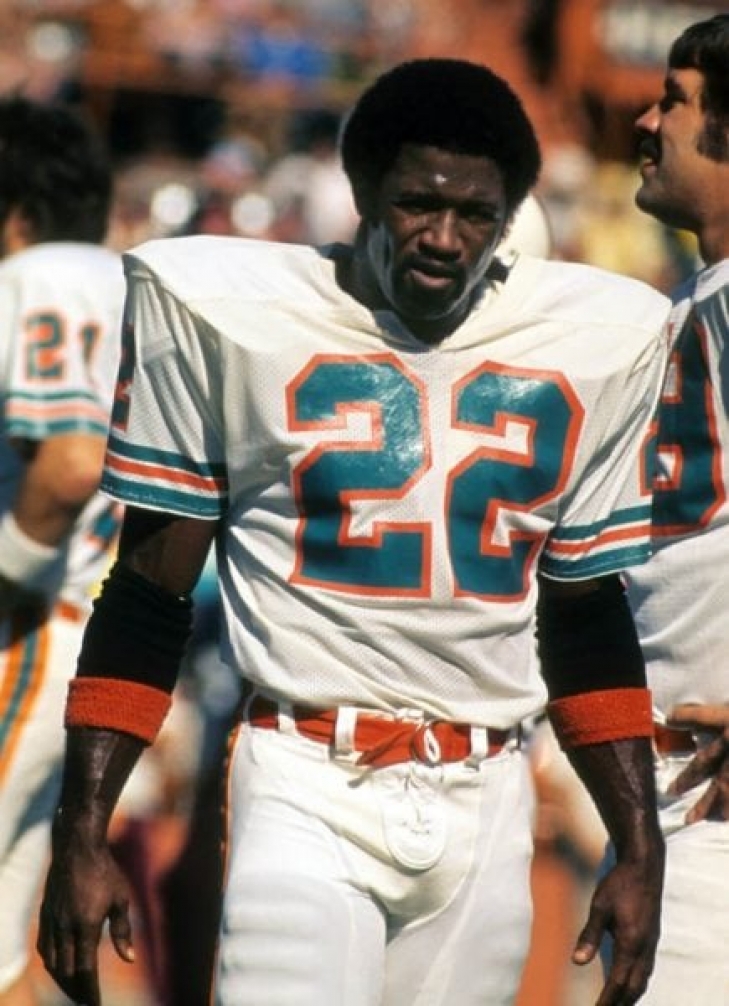
The Miami Dolphins were already loaded at the back position with Larry Csonka and Jim Kiick, but they had another considerable weapon in Eugene “Mercury” Morris. The product of West Texas State was used mostly as a returner early on, and as a rookie in 1969 he led the league in kick return yards (1,136) and total return yards (1,308). Those early returns showed the speed that would eventually force its way into the offense, even if the Dolphins already had two established backs.
He slowly saw more work as a running back and went to the Pro Bowl three years in a row from 1971 to 1973. In 1972, he finished with an even 1,000 rushing yards on 190 carries (5.3 yards per attempt) and led the NFL with 12 touchdowns from the ground. That was the year the Dolphins went undefeated and won their first Super Bowl. He and Csonka became the first teammates in NFL history to each clear 1,000 yards in the same season, and Morris averaged better than five yards a carry while scoring at a rate that kept defenses honest even when they keyed on Csonka. A late statistical correction from a disputed lateral earlier in the year is what pushed him exactly to the thousand-yard mark.
Morris and the Dolphins won the Super Bowl again in 1973, with the running back going for 954 yards and 10 touchdowns while leading the league in yards per attempt (6.4) and yards per touch (6.6). He was injured through most of 1974, and while he returned in 1975 with 875 yards from the ground, he was traded to the San Diego Chargers afterward.
With Miami, he finished with 3,877 rushing yards, a 5.1 career yards-per-carry average, and 7,794 all-purpose yards. The Dolphins later inducted him into the College Football Hall of Fame.
31. Jake Long
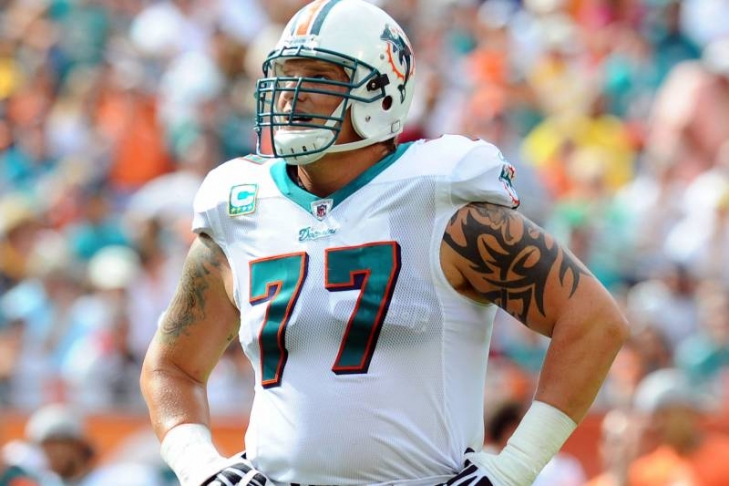
Jake Long arrived in Miami as the first overall pick in the 2008 draft out of Michigan, and he stepped straight into the starting left tackle job. He started all 16 games as a rookie and made the Pro Bowl, helping the Dolphins win the AFC East after a 1-15 season the year before. Long was a classic power tackle who excelled in the run game while holding his own in pass protection.
From 2008 through 2011, he earned Pro Bowl honors every year and made first-team All-Pro in 2010. He started 62 of 64 games in that stretch and regularly ranked among the league’s better left tackles. Approximate Value peaked at 13 in 2009 and stayed in double digits through 2010. Those early seasons established him as one of the more reliable anchors on the Dolphins’ offensive line.
Injuries began to cut into the later years in Miami. He missed time with shoulder and back issues in 2011, then tore a triceps in 2012 and landed on injured reserve. After that season, he left as a free agent. He spent the rest of his career bouncing between the Rams, Falcons, and Vikings while dealing with further knee and Achilles problems before retiring.
With the Dolphins, he started 74 games and finished with an Approximate Value of 50 across those five seasons.
33. Norm Evans
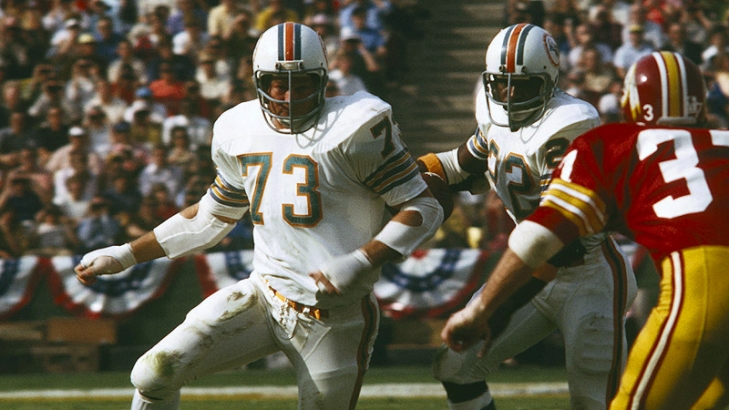
Norm Evans arrived in Miami after one season with the Houston Oilers when the expansion Dolphins selected him in the 1966 AFL Expansion Draft. He stepped into the starting right tackle job immediately and held it for the next decade. Evans started 135 of his 138 games and became one of the most durable pieces on the offensive line.
He earned Pro Bowl selections in 1972 and 1974 while anchoring the right side during the Dolphins’ run of three straight Super Bowl appearances. Those years included the perfect 1972 season and back-to-back titles in Super Bowls VII and VIII. Evans was a steady presence in the run-heavy offense that powered those teams, starting every game in the peak championship years.
After the 1975 season, the Seattle Seahawks selected him in the expansion draft, and he played three more years there before retiring. His exit mirrored his arrival, as he became the only player in league history chosen in two different expansion drafts.
With the Dolphins, he started 135 games and collected two Super Bowl rings along with two Pro Bowl nods.
32. Bryan Cox
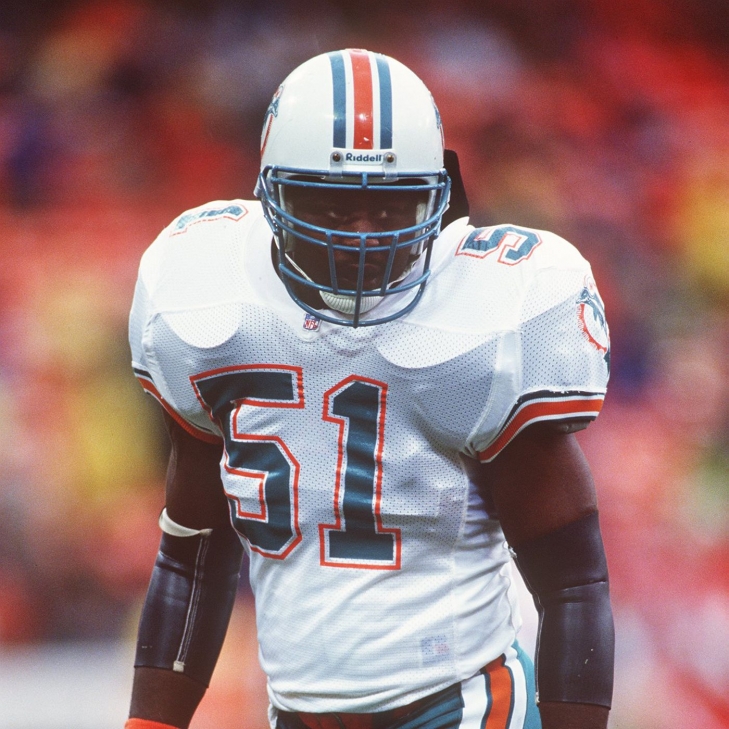
Bryan Cox arrived in Miami as a fifth-round pick out of Western Illinois in 1991 and started right away as a rookie. He played in 13 games that year and recorded 61 tackles and two sacks while the Dolphins finished 8-8. The following season he took a major step forward.
In 1992, he posted 14 sacks, 127 combined tackles, and five forced fumbles, earning first-team All-Pro and his first Pro Bowl nod. Approximate Value for the year was 17. He stayed productive over the next three seasons, making two more Pro Bowls while regularly posting triple-digit tackle totals and adding another 14.5 sacks in that stretch. Cox played with an aggressive, physical style that made him a constant presence against both the run and the pass, and he was known for his intensity and willingness to get after opponents. Those middle years kept him as one of the more reliable pieces in Miami’s front seven, with the Dolphins reaching the playoffs in two of those three seasons. He also forced 12 fumbles and recovered six during his time in Miami, numbers that reflected how often he was around the ball.
After the 1995 season, he left as a free agent and signed with the Chicago Bears. He later played for the Jets and Patriots, where he helped lead them to a Super Bowl XXXVI win.
With the Dolphins, he finished with 31.5 sacks and 529 tackles across 77 starts.
29. Doug Betters
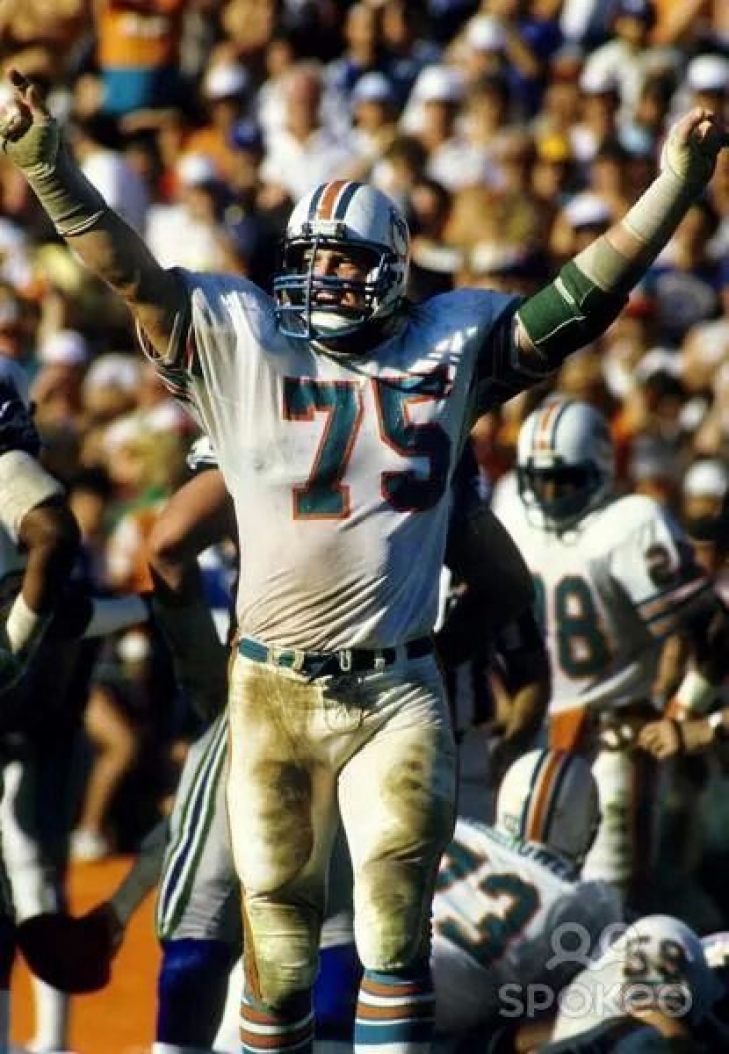
Doug Betters took a long road to Miami. He started at Montana, earned All-Big Sky honors as a defensive lineman, then transferred to Nevada for his senior year, where he led the team with 10 sacks and earned Division II All-America recognition. The Dolphins took him in the sixth round of the 1978 draft, and he spent the next decade with the only team he ever played for.
Early on, he was a rotational piece who gradually worked his way into the starting lineup on the Killer B’s units. By 1980 and 1981, he started most games and added a handful of sacks each year as the Dolphins made the playoffs. The 1982 strike season was shortened, but he still played in every game and helped the team reach Super Bowl XVII.
The peak came in 1983. He started all 16 games and finished with 16 sacks, third in the NFL, while also recovering four fumbles. He opened the year with four sacks against the Bills in Week 1 and stayed productive through the middle of the schedule. That production earned him first-team All-Pro, a Pro Bowl nod, and the Associated Press Defensive Player of the Year award. He received 19 first-place votes, edging out Dallas’s Randy White (15) and finishing well ahead of Lawrence Taylor. His approximate value for the year was 20, easily the highest mark of his career. The Dolphins went 12-4, won the AFC East, and led the league in points allowed.
He stayed productive in 1984 with 14 sacks and another Super Bowl appearance, then dropped to 5.5 sacks in 1985 while still starting most of the season. By 1986 and 1987, the role had shrunk to mostly reserve snaps, and he retired after the latter year. With Miami, he finished with 43.5 official sacks and another 21 unofficial ones from the years before the statistic was formally tracked. The Dolphins inducted him into the Honor Roll in 2008.
26. Garo Yepremian
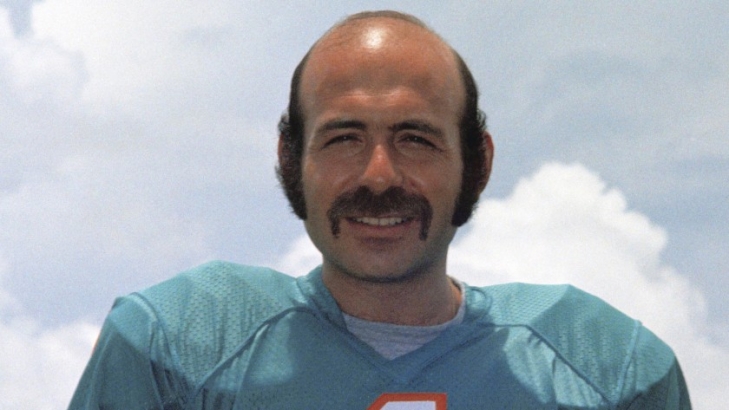
Garo Yepremian showed up in the NFL the hard way. Born in Cyprus, he had a soccer scholarship lined up at Indiana until the school found out he had already played semi-pro in England and yanked it. Instead of heading home, he decided to try kicking American football, a sport he had never played. His brother helped set up a tryout with the Detroit Lions, and somehow he stuck.
The Lions years were short and awkward. He made the roster but never really fit, and after a stint in the military the team let him go. He spent time with the Michigan Arrows in the Continental Football League before the Dolphins signed him in 1970. Once he got to Miami he settled in and became one of the more reliable kickers of the decade. He led the NFL in field-goal percentage three times, earned first-team All-Pro in 1971 and 1973, and made the Pro Bowl twice. In 1971 he led the league in scoring with 117 points. He was never the biggest or strongest guy on the roster, but he could hit the kicks the Dolphins needed, especially when the game was close.
Two plays still define him. On Christmas Day 1971 he made the 37-yard field goal in double overtime that beat the Chiefs and put Miami in Super Bowl VI. A year later, in Super Bowl VII, his attempt late in the game was blocked. Instead of falling on the ball he tried to throw it, the pass was picked off, and the Redskins returned it for a touchdown. Miami still won 14-7 and finished the only perfect season in NFL history. He joked afterward that it was the first time the goat of the game was celebrating in the winner’s locker room.
He left Miami after the 1978 season and signed with the Saints. With the Dolphins he scored 830 points over nine years, and the team later put him on the Honor Roll.
25. Keith Sims
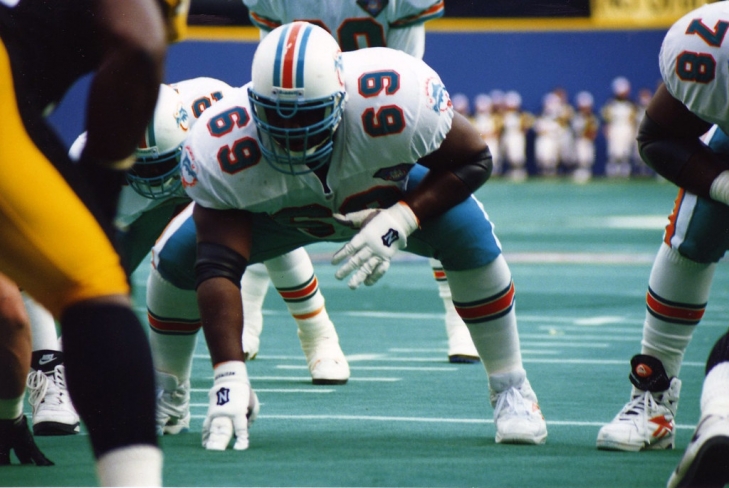
Keith Sims played the first eight of his eleven NFL seasons with the Miami Dolphins after the team took him in the second round out of Iowa State in 1990. He stepped in at left guard and started most of his games from the start, forming a reliable tandem with tackle Richmond Webb on the left side of the line.
That side of the line became one of the more consistent groups protecting Dan Marino in the first half of the 1990s. Sims wasn’t a flashy mauler, but he was durable and technically sound enough to keep the pocket intact regularly. From 1993 through 1995, he earned Pro Bowl selections each year, and in 1994 he also landed second-team All-Pro honors. During that stretch, the Dolphins’ offense ranked near the top of the league in yards and points several times, and the line kept the sack totals manageable even as Marino put up big numbers.
Sims started 108 of the 113 games he played with Miami. The peak years were those three consecutive Pro Bowls, when he and Webb gave the Dolphins a left side that opposing defenses rarely dominated. He was the kind of guard who missed few starts and gave up few easy pressures, which the Dolphins needed as the offense kept trying to push the ball downfield.
He finished his last three seasons in the league with the Washington Redskins after leaving Miami following the 1997 season. With the Dolphins, he was a three-time Pro Bowl selection and a second-team All-Pro, and the franchise later placed him on the Walk of Fame.
24. Jim Kiick
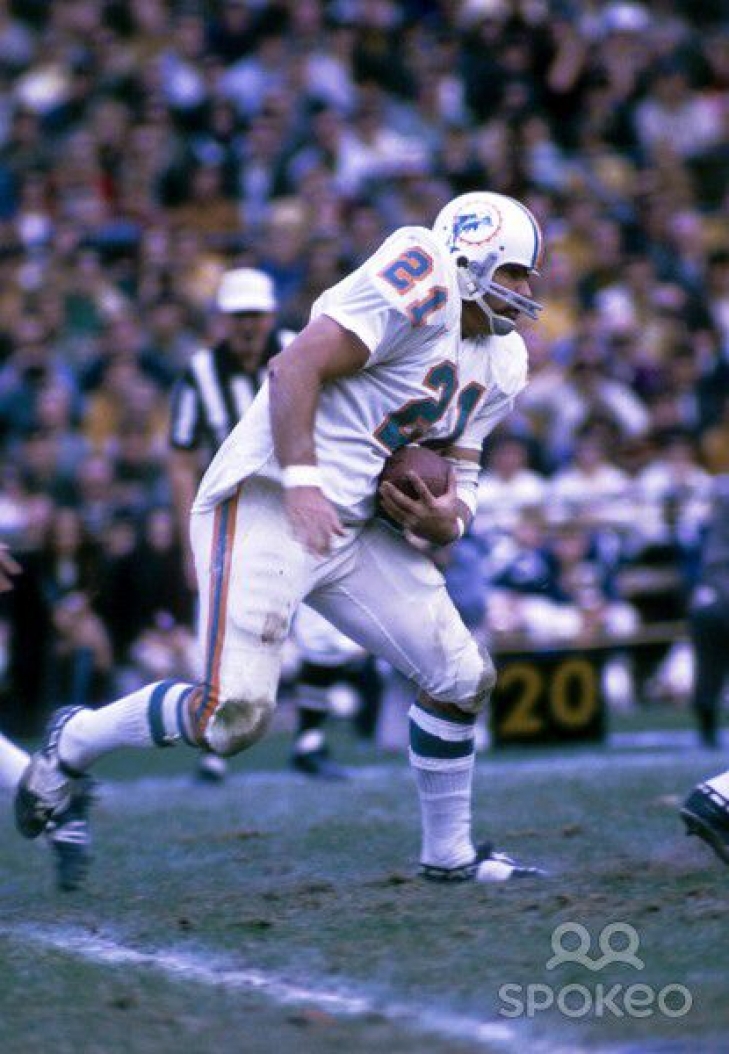
Jim Kiick may not have been a Hall of Famer like his fellow back and teammate Larry Csonka, but he brought an excellent skill set to the Miami Dolphins after arriving as a fifth-rounder from Wyoming in 1968. The two had already crossed paths at a college all-star game, where they spent more time partying than practicing, and the chemistry carried over once they landed in the same backfield.
Kiick was a power runner with good receiving hands and above-average blocking ability. He earned Pro Bowl spots in his first two seasons, and in 1969 he led the league in rushing touchdowns with nine. He also cleared 1,000 yards from scrimmage in each of his first four years. Once Don Shula arrived and the Dolphins began winning, Kiick’s role shifted as Mercury Morris took more outside carries, but he remained a reliable piece in the middle of the offense. He scored the decisive touchdown in Super Bowl VII, capping the only perfect season in NFL history, and added another score the following year in Super Bowl VIII. Those short-yardage bursts were his specialty.
He was part of Miami’s three consecutive AFC Championships and the back-to-back Super Bowl wins. The nickname “Butch Cassidy and the Sundance Kid” stuck because Kiick and Csonka looked the part and played the part, with Kiick often the one clearing space or catching a swing pass when the defense loaded up on Csonka. He never needed a thousand-yard season to matter. He just needed to be the guy who could do a little bit of everything without making the offense predictable.
Along with Csonka and Paul Warfield, Kiick signed with the Memphis Southmen of the World Football League after the 1974 season. When that league folded, he returned to the NFL with the Denver Broncos and finished up with a brief stop in Washington before retiring. As a Dolphin, he accumulated 3,644 rushing yards, 2,210 receiving yards, and 31 touchdowns across seven seasons. The Dolphins later named him to their 50th Season All-Time Team.
23. Nick Buoniconti
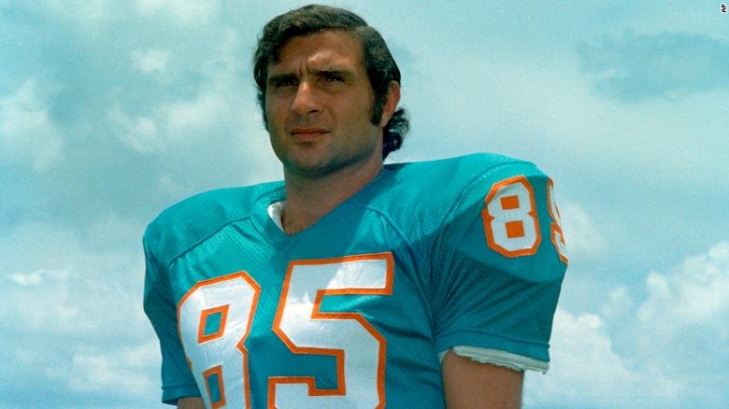
Nick Buoniconti arrived in Miami after a spectacular seven-year run with the Boston Patriots, where he had already earned four first-team All-Pro selections. The Patriots traded him after the 1968 season, and the Dolphins were quietly assembling a young defensive core. Buoniconti gave that group a veteran presence and a voice in the middle of the field, even if he was initially reluctant to make the move and briefly considered retirement after just passing the bar exam. Once he committed, he took charge immediately.
He made an impact right away. In 1969, he earned first-team All-Pro honors and was named an AFL All-Star. He then became the central piece of the defense that carried the Dolphins to three straight Super Bowl appearances. They lost the first one and won the next two. In both of those championship seasons, he made the Pro Bowl. He was undersized for a middle linebacker at 5-foot-11 and 220 pounds, but he played bigger than his frame. His instincts and leadership helped hold together a unit that did not rely on one dominant star, and he was named the team’s Most Valuable Player three times during his Miami years.
The peak years were especially sharp. In 1972, he finished second in Defensive Player of the Year voting while helping the Dolphins complete the only perfect season in NFL history. He also picked off a pass in Super Bowl VII that set up the clinching score. The following year he set a then-team record with 162 tackles. Those moments showed why he was the heartbeat of the No-Name Defense. Coordinator Bill Arnsparger’s scheme mixed a traditional 4-3 with the flexible “53” package, which could rush or drop linebackers and keep offenses guessing. Buoniconti was the steady presence in the middle who made it all work, and opposing offenses rarely found easy yards between the tackles when he was healthy. He was the kind of player who made the middle of the field feel smaller than it actually was.
An injured thumb kept him out of the 1975 season. He returned for one final year in 1976 before retiring. With the Dolphins, he was a two-time Pro Bowl selection, a key part of two Super Bowl wins, and the leader of the No-Name Defense. The Dolphins placed him on their Honor Roll in 1991, and he entered the Pro Football Hall of Fame in 2001.
22. John Offerdahl
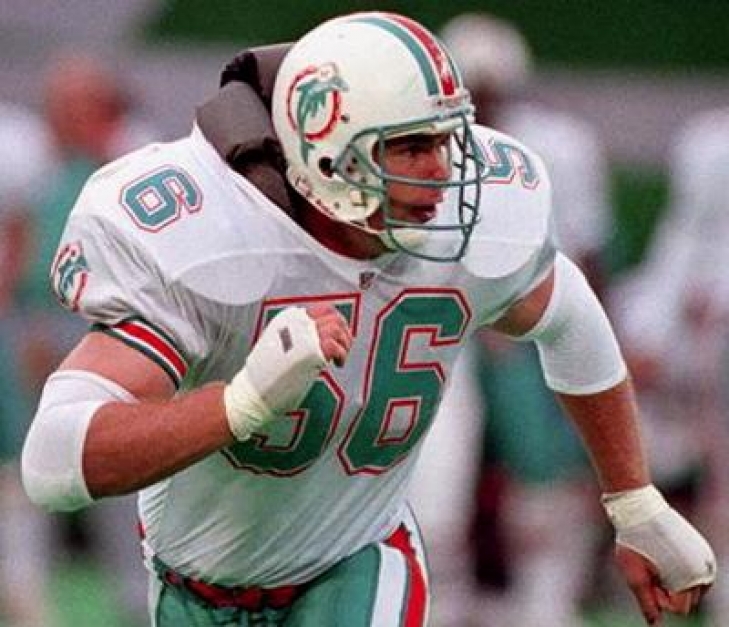
John Offerdahl turned heads at Western Michigan by racking up tackles and earning MAC Defensive Player of the Year in 1985. A strong Senior Bowl performance helped push him up the board, and the Dolphins grabbed him in the second round of the 1986 draft. Miami was the only team he ever played for, and he made it clear right away that he was not there to sit and learn.
He stepped in and produced from the start. As a rookie, he started 15 games, made the All-Rookie team, earned a Pro Bowl spot, and finished runner-up for AP Defensive Rookie of the Year. He then kept the streak going, making the Pro Bowl each of the next four seasons. Offerdahl was the kind of middle linebacker who showed up, made tackles, and did not give up easy yards. His best season came in 1990, when he earned first-team All-Pro, started all 16 games, and posted a career-high Approximate Value of 17. For five straight years, he was one of the more reliable pieces in a Dolphins defense that was trying to keep up with Dan Marino’s offense, and he rarely missed a start when he was healthy.
He was not the biggest or flashiest linebacker, but he was consistent against the run and reliable in coverage, the sort of player who made the middle of the field harder to attack. Opposing offenses rarely found easy yards between the tackles when he was in the lineup, and he had a knack for being in the right place on third down. That steady presence is what kept him in the Pro Bowl conversation for half a decade.
The injuries eventually caught up. He played three more seasons after that peak, but he never reached 10 games in any of them. He retired after the 1993 season following eight years in Miami. Over that stretch, he played in 89 games and started 86, with five Pro Bowls, one first-team All-Pro, four interceptions, and 9.5 sacks marking the high point. The Dolphins placed him on their Honor Roll in 2013.
21. Nat Moore

It is easy to think of Nat Moore as just a compiler, but he compiled a lot!
Born in Florida, he played at the University of Florida after a stop at Tennessee-Martin, then spent his entire 13-year career with the Miami Dolphins. The team drafted him in the third round in 1974, and he stayed through 1986, which meant Florida fans watched him for more than a decade from college through the end of his pro career.
He arrived as a versatile option who could catch passes, return kicks, and even take a few carries. Early on, he worked with Bob Griese and quickly became one of the more reliable targets on an offense still transitioning after the early-1970s dynasty. As a rookie, he led the team in receiving yards while also handling return duties, showing the range the Dolphins expected from him. He never put up a 1,000-yard season, but he was consistent enough to clear 600 yards seven different times.
The clear peak came in 1977. That year he caught 52 passes for 765 yards, led the NFL with 12 touchdown receptions, and earned both the Pro Bowl and first-team All-Pro. It was the one season where he was the primary weapon, and the touchdown total still stands out as the best individual year of his career. After that, he remained a solid contributor even as the offense changed, and once Dan Marino arrived, he became one of the veteran receivers who could still get open and make plays while helping younger wideouts settle in.
Moore finished with 510 receptions for 7,546 yards and 74 touchdowns, plus another 1,155 yards on returns. He played in 183 games and started 124 of them, all with Miami. The Dolphins chose him for their Honor Roll in 1999.
17. Mark Duper
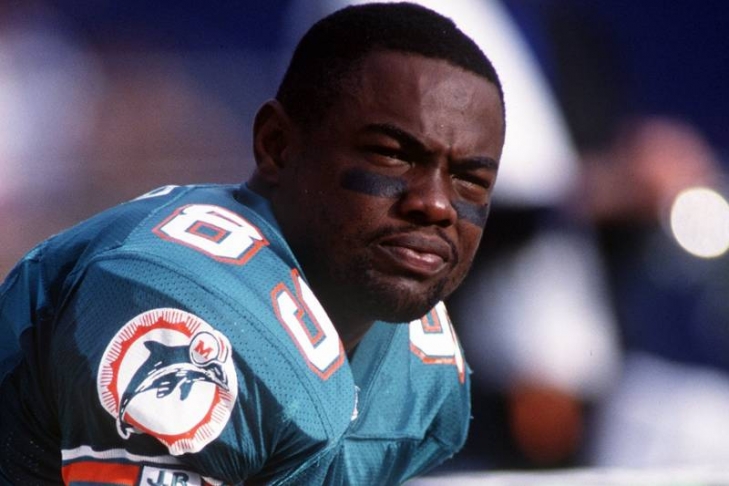
Mark Duper showed up in Miami as a second-round pick out of Northwestern State in 1982, and almost nobody noticed at first. He played in only two games as a rookie and did not catch a single pass. Everything changed once Dan Marino took over at quarterback.
The production arrived in a hurry. In 1983, he went from zero catches the year before to 51 receptions for 1,003 yards and made the Pro Bowl. The next season, Marino’s MVP year, Duper put up 1,306 yards as the Dolphins reached the Super Bowl. He made the Pro Bowl again that year and once more in 1986, when he set a career high with 1,313 yards. He cracked 1,000 yards one more time in 1991, but the three Pro Bowls marked the peak of his career in Miami. Even in the years between those peaks, he remained a reliable deep option who could still stretch the field.
What made Duper effective in those years was his speed and the way he got downfield. At 5-foot-9, he was not the biggest receiver, but he created separation quickly and gave Marino a vertical threat opposite Mark Clayton. The two of them became the Marks Brothers, and together they turned Miami’s offense into one of the most explosive of the 1980s. Defenses had to account for both, and when the timing was right, Duper turned short throws into long gains. He was the kind of receiver who made a great quarterback look even more dangerous.
Duper stayed with the Dolphins through 1992, his final season in the league. He finished as the franchise’s all-time leader in receiving yards with 8,869. He also threw for 59 touchdowns and later joined Clayton in the Dolphins Honor Roll.
