


Committee Chairman
RIP: Otis Taylor
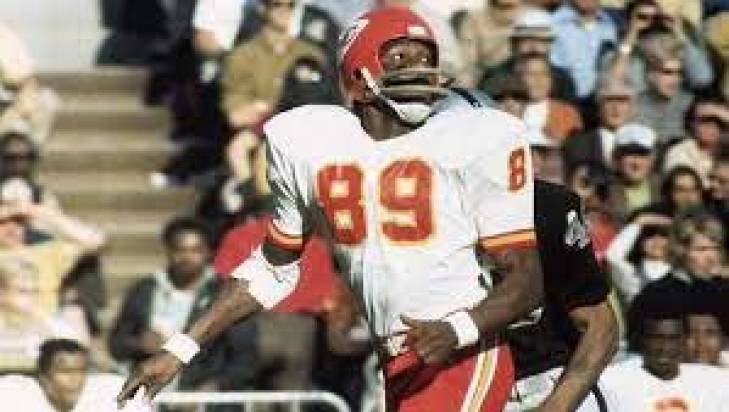
The Kansas City Chiefs lost one of their greats, with the passing of Otis Taylor, who died at the age of 80. He had been battling Dementia and Parkinson’s.
A member of the Chiefs for all of his 11 NFL Seasons, Taylor was the player when Hall of Fame Quarterback Len Dawson was looking for a deep threat. In fact, it was Taylor who caught half of the passes for the Kansas City Chiefs in their Super Bowl IV victory.
Taylor was a star in the AFL, and a big reason that the Chiefs were good. He was their top receiver and rewarded them with a 1,297 yard season in 1966. He was still productive after the NFL/AFL merger and the league in receiving yards in 1971.
Taylor amassed 7,306 Receiving Yards and 57 Touchdowns, and was ranked #17 on our most recent list of those to consider for the Pro Football Hall of Fame. He is also a member of the Kansas City Chiefs Hall of Fame.
We here at Notinhalloffame.com would like to extend our condolences as the friends, family and fans of Otis Taylor.
20. Jeff McNeil
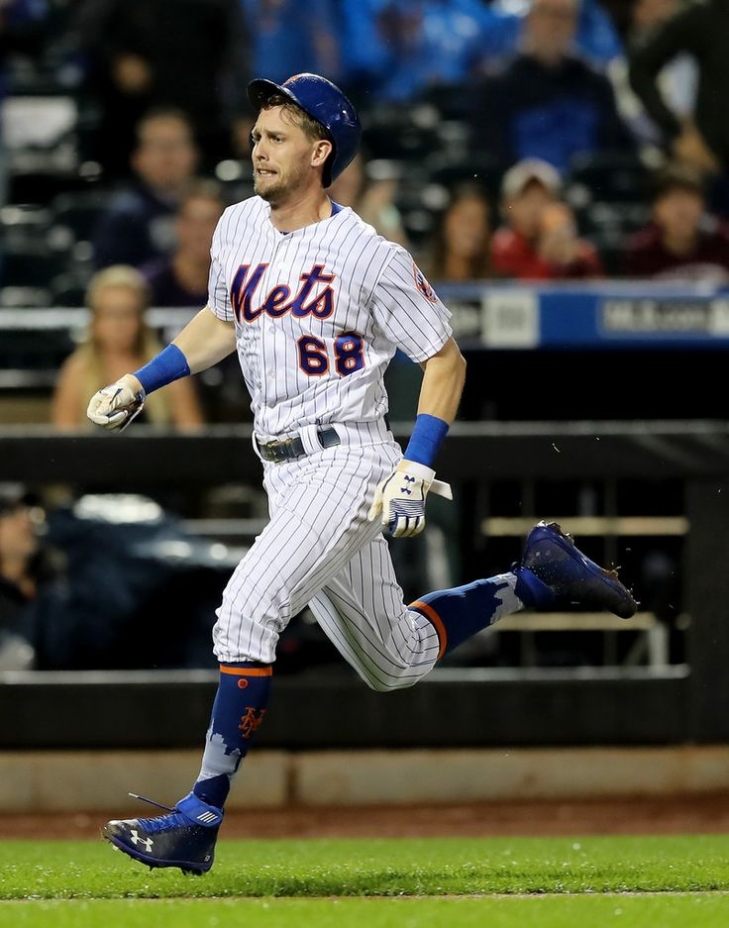
Jeff McNeil first appeared at Citi Field in 2018, making it clear he was intentionally challenging the modern focus on three true outcomes. Using a traditional, knobless bat and emphasizing contact over power, he played as a classic style hitter who prioritized making contact and putting the ball in play rather than hitting for home runs.
After a quick ascent that saw him hit 23 home runs during an All-Star season in 2019 and post an impressive .311 batting average in the shortened 2020 season, McNeil recovered from a challenging, injury-filled 2021 to produce a remarkable display of contact hitting. That summer, he won the National League Batting Title with a.326 average and led all of Major League Baseball with 53 multi-hit games. He also achieved career highs in hits (179) and doubles (39), earning his second All-Star nod and his first Silver Slugger Award. This demonstrated that his aggressive, strikeout-avoidant swing could dominate any pitching staff.
However, his performance often mirrored the franchise's dramatic swings. After his batting title peak, he struggled with consistency and health, trying to find his stride during a frustrating, injury-shortened 2024 campaign that ended early with a fractured wrist. He fought back to make 122 appearances in 2025, grinding through discomfort to salvage 12 home runs and 54 RBI while shifting across the diamond to help keep the club afloat.
Needing to address thoracic outlet syndrome surgery and with the Mets front office aggressively looking to clear salary and reshape their culture, McNeil was sent to the Oakland Athletics in what amounted to a salary-dump trade, with New York eating a significant portion of his remaining contract. McNeil compiled 920 hits, 80 home runs, and a .351 on-base percentage.
The World Golf Hall of Fame names the 2024 Class
The World Golf Hall of Fame announced the Class of 2024 (yeah, this seems early, doesn’t it), which includes one of the most historic classes in recent memory.
The 2024 Class of is:
Johnny Farrell, U.S.A.: Farrell won 22 tournaments, including the 1928 U.S. Open. He also won three Ryder Cups (1927, 1929 & 1931).
Beverly Hanson, U.S.A.: Hanson held 17 tournament wins, the most notable being the 1955 LPGA Championship. She also won the 1950 U.S. Women’s Amateur Championship.
Padraig Harrington, Ireland: Harrington won 21 tournaments (15 on the European Tour) and was the 2007 & 2008 Open Championship winner as well as the 2008 PGA winner. A seven-time Ryder Cup Captain, Harrington was named the PGA Player of the Year in 2008.
Sandra Palmer, U.S.A.: Palmer had 19 wins, including the 1975 U.S. Women’s Open. That year, she won the LPGA Player of the Year.
Tom Weiskopf, U.S.A.: Weiskopf holds 18 wins, including the 1973 Open Championship. He is also a two-time Ryder Cup competitor.
13 Founders of the LPGA: This group included six women who are already inducted (Patty Berg, Marlene Bauer Hagge, Betty Jameson, Marilynn Smith, Louis Suggs and Babe Zaharias) and Alice Bauer, Bettye Danoff, Helen Dettweiler, Helen Hicks, Opal Hill, Sally Sessions and Shirley Spark.
First established in 1974, the Florida-based institution will induct this group in June.
We here at Notinhalloffame.com would like to congratulate the impending World Golf Hall of Fame inductees.
Our All Time Top 50 Colorado Rockies have been updated to reflect the 2022 Season

Yes, we know that this is taking a while!
As many of you know, we here at Notinhalloffame.com are slowly generating the 50 of each major North American sports team. That being said, we have existing Top 50 lists out and we always consistently look to update them when we can and based on necessity. As such, we are very happy to present our post 2022 revision of our top Colorado Rockies.
As for all of our top 50 players in basketball we look at the following:
1. Advanced Statistics.
2. Traditional statistics and how they finished in the National League.
3. Playoff accomplishments.
4. Their overall impact on the team and other intangibles not reflected in a stat sheet.
Last year, Colorado had another abysmal year, but there was a new entry and some fluctuation.
As always, we present our top five, which had one change.
1. Todd Helton
2. Larry Walker
You can find the entire list here.
Blackmon just did enough to make it into the top five, moving from #6 to #5.
Pitchers, German Marquez moved up one spot to #15, and Kyle Freeland, advanced two ranks to #17.
The biggest jump was by Infielder, Ryan McMahon, who advanced ten spots to #32.
First Baseman, C.J. Cron, is the lone new entrant, debuting at #50.
We welcome your input and comments and as always, we thank you for your support.
