


Committee Chairman
Our All-Time Top 50 Milwaukee Brewers have been revised to reflect the 2022 Season
Yes, we know that this is taking a while!
As many of you know, we here at Notinhalloffame.com are slowly generating the 50 of each major North American sports team. That being said, we have existing Top 50 lists out and we always consistently look to update them when we can and based on necessity. As such, we are very happy to present our post 2022 revision of our top Milwaukee Brewers.
As for all of our top 50 players in baseball we look at the following:
1. Advanced Statistics.
2. Traditional statistics and how they finished in the National League.
3. Playoff accomplishments.
4. Their overall impact on the team and other intangibles not reflected in a stat sheet.
Last year, Milwaukee won 86 Games, finishing second in the NL Central, though failed to make the playoffs. There were no new entries in the Top 50, but five players were able to raise their rank.
As always, we present our top five, which has no changes.
1. Robin Yount
2. Paul Molitor
3. Ryan Braun
4. Cecil Cooper
You can find the entire list here.
Christian Yelich, who won the MVP three years ago, moved up from #10 to #7.
Starting Pitcher, Brandon Woodruff, who went 13-4 last year climbed to #23 from #31.
Right behind him is fellow starter, Corbin Burnes, who rocketed to #24 from #43, was the 2021 Cy Young winner and finished seventh last year. He went to the last two All-Star Games.
Closer, Josh Hader, who was traded to San Diego during the 2022 Season, inched up one position to #27.
We welcome your input and comments and as always, we thank you for your support.
Jose Bautista will enter the Blue Jays Circle of Excellence
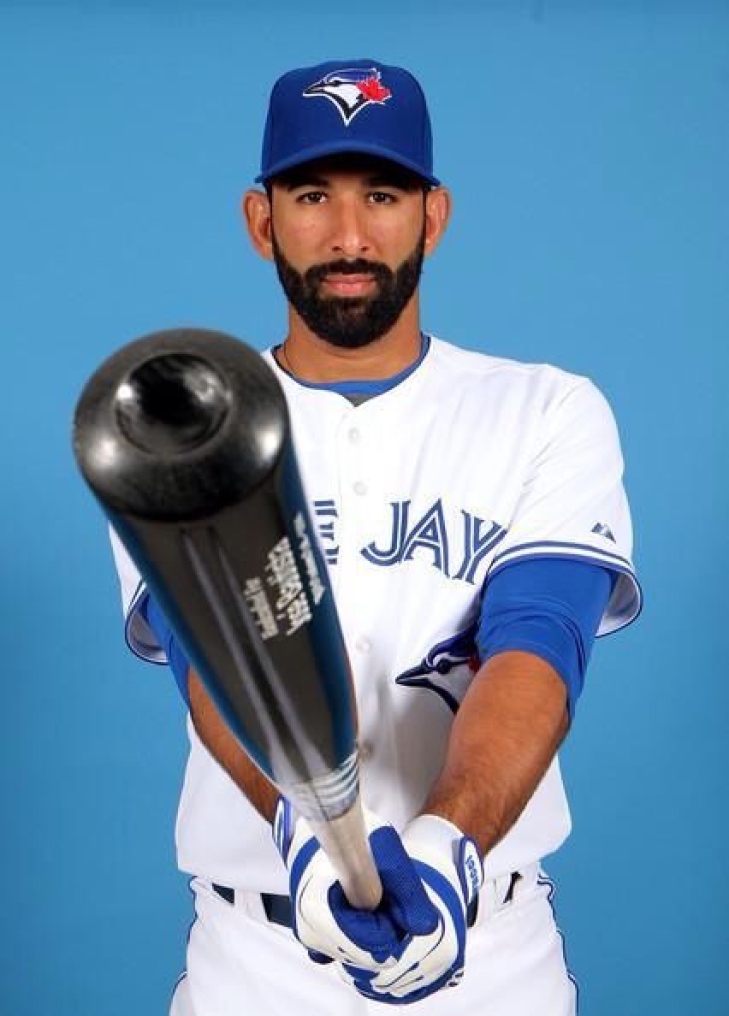
Regular visitors of Notinhalloffame.com know that we are slowly working on the top 50 of every major team in the NHL, NBA, NFL and MLB. Once that is done, we intend to look at how each team honor their past players, coaches and executives. As such, that the Toronto Blue Jays will be inducting Jose Bautista into their Level of Excellence.
Jose Bautista's success in emerging as one of the game's top power hitters might be one of the biggest “Where the hell did this come from?” stories in Baseball.
Bautista was barely even a journeyman, playing briefly for Baltimore, Tampa Bay. and Kansas City before having a respectable season in 2007 as a Pittsburgh Pirate. The Blue Jays traded for him during the 2008 Season, and Bautista began 2009 as the fourth Outfielder. He worked all year with Toronto's hitting coach, Dwayne Murphy, who helped him work on his stance and leg kick. It yielded a coming out part in 2010 that blew everyone away.
After a previous high of 15 Home Runs, Bautista won the Home Run Title with 54. He also had 124 RBI, which would become his personal best. Bautista won the Silver Slugger that year and was fourth in MVP voting. Some in the baseball media thought he had to be a one-year wonder. He wasn't. Bautista won his second straight Home Run Title (43), and he led the AL in Walks (132), Slugging (.608), and OPS (1.056). He added a second Silver Slugger, and this year was third in MVP voting.
Bautista missed quite a few games due to injury in 2012 and 2013, though he still had at least 27 Home Runs in both seasons. Fully healthy in 2014, Bautista won his third Silver Slugger on a 35 HR/103 RBI campaign, blasted 40 taters in 2015, and helped lead the Blue Jays to the playoffs. In the deciding game in the ALDS against Texas, Bautista hit the game-winning Home Run and delivered after the most famous bat flip in Canada. Toronto did not win the Pennant that year, but Bautista's moment will be forever etched in Blue Jays fans.
Age caught up to Batista after, and so did a bit of karma, in terms of a punch to the face by Texas's Rougned Odor. He was not resigned after 2017, and he left the Jays with 1,103 Hits and 288 Home Runs.
Bautista will be officially honored on August 12 before their home game against the Chicago Cubs. He joins George Bell, Dave Stieb, Joe Carter, Cito Gaston, Tony Fernandez, Pat Gillick, Tom Cheek, Paul Beeston, Carlos Delgado and Roy Halladay.
We here at Notinhalloffame.com would like to congratulate Jose Bautista for his impending honor.
Brianna Decker Retires
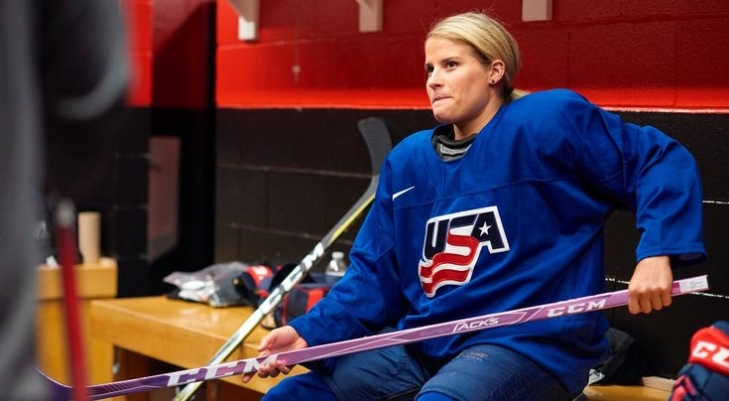
One of the top female American hockey players is calling it a career, as Brianna Decker has announced that she is retiring from U.S.A. Hockey.
Decker compiled 170 Points in 147 Games, and won Gold at the 2018 Olympics along with two Silvers (2014 & 2022). At the World Hockey Championships, Decker won Gold six times (2011, 2013, 2015, 2016, 2017 & 2019) and Silver twice (2012 & 2021).
Collegiately, she led the University of Wisconsin to a National Championship in 2011 and won the Patty Kazmaier Memorial Award the year after as the NCAA MVP. On a club level, she was a two-time National Women’s Hockey League.
We are not sure if she will make the Hockey Hall of Fame, but Decker should be a lock for the United States Hockey HOF.
We here at Notinhalloffame.com would like to wish Brianna Decker the best in her post-playing career.
The World Curling Hall of Fame announces the 2023 Class
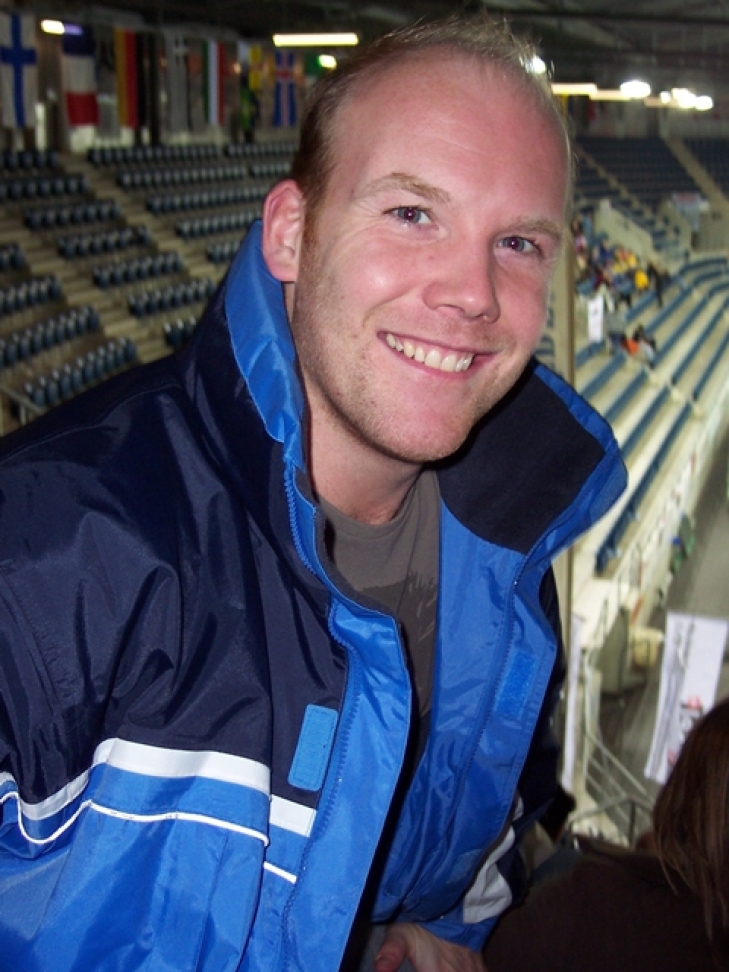
The World Curling Hall of Fame will be inducting five new members into their institution; three curlers and two from the builders category.
The new entrants are:
Kate Caithness, Scotland (Builder): Caithness was the World Curling President from 2010 to 2022, and helped propel Wheelchair Curling into the Paralympics.
Jack Lynch, Canada (Builder): Lynch was well-respected journalist, who covered curling mostly in Quebec. He was pivotal in increasing membership associations that helped qualify Curling as an Olympic sport.
Ewan MacDonald, Scotland (Curler): MacDonald is a three-time World Champion (1999, 2006 & 2010), a two-time European Champion (1999 & 2008) and he represented Scotland in ten World Championships.
Peter Smith, Scotland (Curler): Smith represented Scotland 11 times, winning the World Championship three times (1991, 2006 & 2009), with five Silvers and a Bronze. He is also a three-time European Champion (1988, 2007 & 2008).
Bill Strum, United States (Curler): Strum was a two-time World Champion (1974 & 1978), while also winning a Silver and Bronze.
We here at Notinhalloffame.com would like to congratulate the newest members of the World Curling Hall of Fame.
