


Committee Chairman
38. Bob Elliott
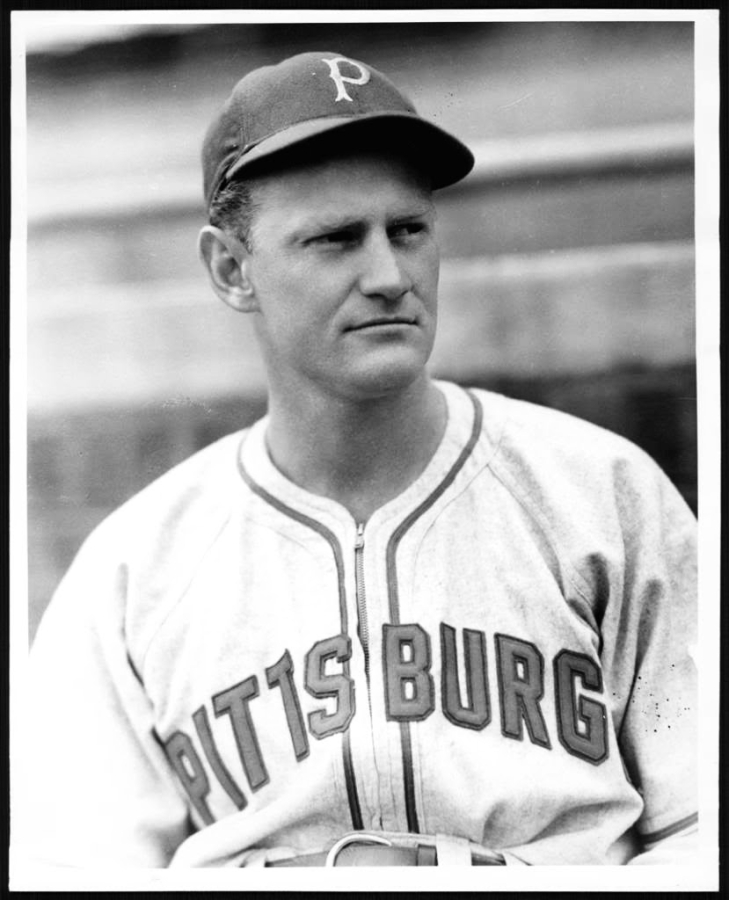
Bob Elliott built an elite career by anchoring the intangible fabric of the clubhouse, long before his fame in New England. The California product was a quiet, efficient engine for the Pittsburgh Pirates in the 1940s, with a disciplined right-handed stroke and a team-first focus at Forbes Field. His situational skill made him a top run-producer in the National League, but his reputation as the ultimate unselfish teammate earned him the nickname "Mr. Team.”
Elliott made his Major League debut with the Pirates at the end of the 1939 season, playing a brief 32-game stint during which he quickly demonstrated his frontline potential by hitting .333. Initially breaking into the regular lineup as an outfielder, his career path changed significantly before the 1942 season when manager Frankie Frisch shifted him to third base to leverage his strong throwing arm.
The positional change led to an extraordinary multi-year peak, during which Elliott made run-production a regular-season habit. He achieved five straight summers batting over .290 while with Pittsburgh, becoming a crucial, volume-heavy anchor in the lineup. His stellar bat control and spatial awareness at the plate yielded three magnificent 100-RBI masterclasses as a Pirate, racking up 101 in 1943, 108 in 1944, and 108 again in 1945.
Exempted from military duty after a serious head injury caused by a batted ball, Elliott led the franchise through wartime rosters that were low on talent. He was selected as an All-Star four years in a row from 1941 to 1945. His advanced efficiency metrics earned wide respect in the National League, leading to three straight top-ten finishes in the National League MVP voting, including eighth place in 1943, and two dominant seasons with high run production, during which he ranked second in RBIs.
After a relatively quiet 1946 season where his performance declined, the front office indicated a major shift. In a winter trade that surprised many locally, management traded their key franchise player to the Boston Braves for 37-year-old player-manager Billy Herman, a move that famously left Herman himself stunned at the high cost paid by the Pirates to acquire him. Elliott quickly proved his former team wrong, delivering an exceptional 1947 season in his first year with Boston, hitting 22 home runs and driving in 113 RBIs to earn the National League Most Valuable Player award and cement his reputation as ‘Mr. Team.'
With the Pirates, Elliott collected 1,142 hits with a slash line of 292/.365/.423.
36. Elbie Fletcher
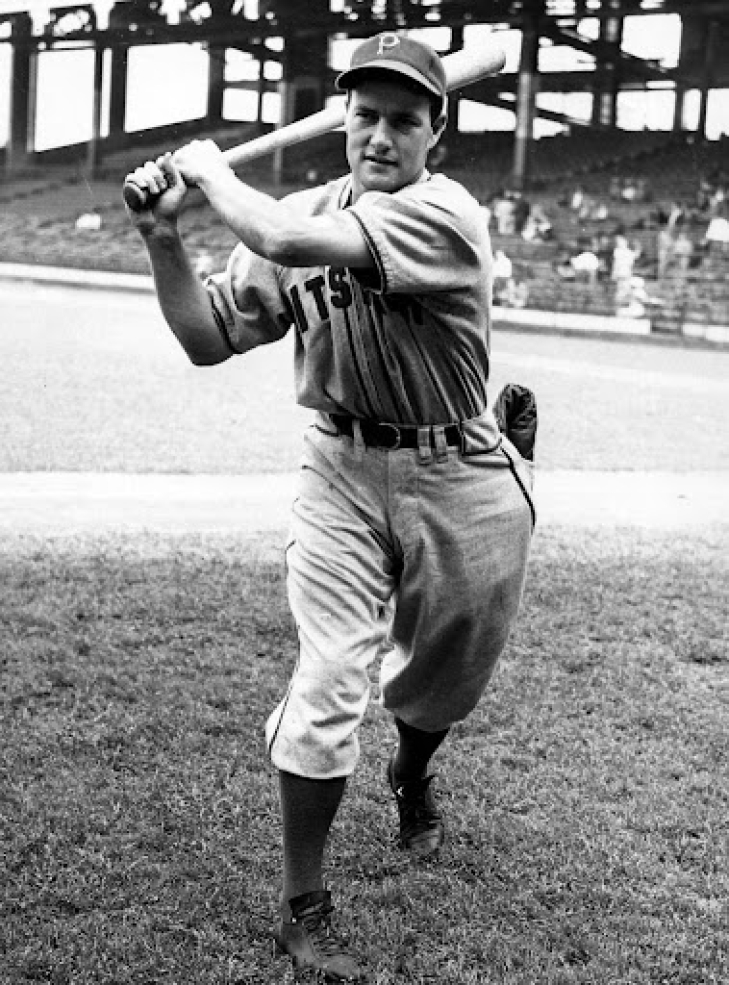
Elbie Fletcher was traded to Pittsburgh from Boston during the 1939 Season, where in Western Pennsylvania, he developed one of the keenest batting eyes of the game.
Fletcher finished the year strong, batting .303 for Pittsburgh, and though he would not bat over .300 again, he learned how to take pitches and would top the NL leaderboard in Walks twice (1940 & 1941) and On Base Percentage three straight years (1940-42). He went into the U.S. Navy for two years, missing two seasons, but was not the same player when he returned and was traded after the 1947 Season.
Fletcher had 875 Hits for the Pirates along with a .403 OBP.
32. Ginger Beaumont
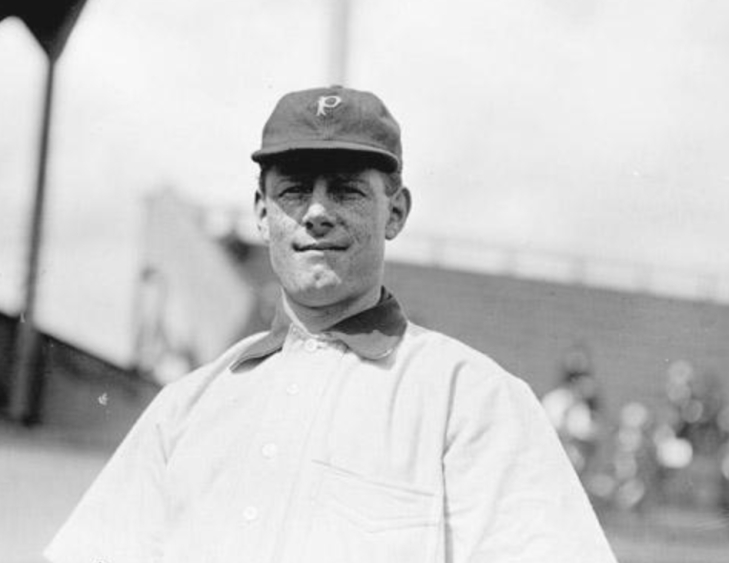
The dawn of 20th-century Western Pennsylvania was defined by Fred Clarke’s aggressive, contact-hitting dynasty, with Clarence Howeth "Ginger" Beaumont at its center. His heavy frame earned him a nickname, but he defied athletic stereotypes using quick first steps and a strong left-handed swing to excel at the top of the order.
His initial appearance during the 1899 campaign is regarded as one of the most remarkable debuts in the extensive history of the organization. As a 24-year-old novice, Beaumont methodically incapacitated National League pitching staffs, achieving an impressive .352 batting average that promptly established his position as a key player. He swiftly transformed accumulating hits into a consistent and reliable offensive contribution, offering a substantial volume of scoring opportunities directly preceding the legendary Honus Wagner.
His quintessential individual peak and superior efficiency metrics converged during a historic three-year period from 1902 to 1904. Beaumont demonstrated exceptional batting prowess, securing the 1902 National League batting title with an impressive .357 average, and establishing a record as the first player in the Senior Circuit to lead the major leagues in total hits for three consecutive summers.
While many modern observers were often misled by his bulky appearance, he was a formidable force on the basepaths, using exceptional speed to steal at least 20 bases across seven different campaigns for the city. His dynamic base-running firmly established his legend during the high-stakes 1903 Fall Classic against Boston. As the fleet-footed center fielder, he stepped up to hit the first pitch in World Series history, helping to elevate Pittsburgh's national profile.
The Pirates traded Beaumont to Boston after his disappointing 1906 Season, but Beaumont proved them wrong by finishing first in hits in 1907. Beaumont, overall as a Pirate, batted .321 with 1,292 hits and 200 stolen bases.
35. Dick Groat
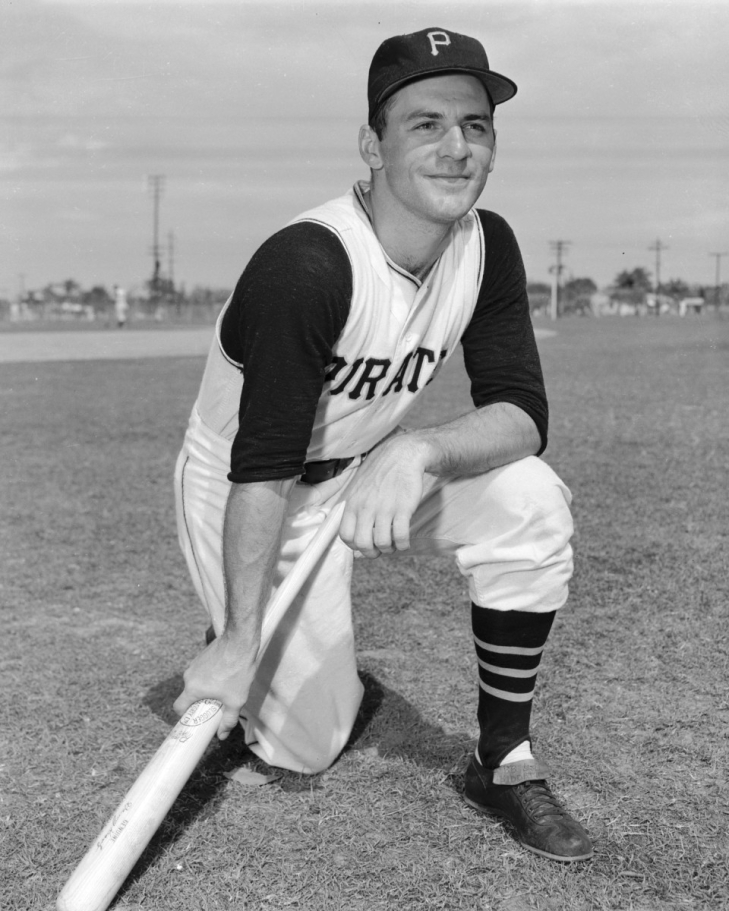
Achieving excellence at the top level of a single sport is rare, but excelling in two vastly different athletic fields requires a unique kind of talent. Richard Morrow Groat exemplified this multi-sport mastery. At Duke University, this talented athlete excelled in both basketball and baseball for several years, setting scoring records in basketball and dominating opposing pitchers in baseball. His exceptional talent led him to become the first athlete inducted into both the College Basketball and College Baseball Halls of Fame. Although he briefly played a season in the NBA with the Fort Wayne Pistons, he ultimately focused on baseball, a choice that significantly impacted Pittsburgh's baseball scene.
He made his major league debut before the 1952 season, quickly demonstrating his top-tier talent and finishing third in the National League Rookie of the Year voting. However, as his career started to gain momentum, Groat had to pause for two years to serve in the military. He returned to the club full-time for the 1955 campaign, instantly anchoring the shortstop position and turning middle-infield stability into an absolute regular-season routine.
While he lacked explosive, over-the-fence power, Groat weaponized an incredibly short, right-handed contact stroke and peerless internal clock, developing into the ultimate table-setter and clubhouse leader for manager Danny Murtaugh. The peak of his national fame and extraordinary efficiency came together during the unforgettable 1960 world championship run. Groat delivered a remarkable display of skill in clutch situations, winning the National League batting title with a superb .325 average that energized the entire offense.
Focusing only on Groat’s offensive stats ignores a significant part of his contributions; he was a defensive genius, leading the entire Senior Circuit with a top-tier 2.6 defensive bWAR. He achieved this by masterfully positioning himself and utilizing keen spatial awareness to shut down opponents’ running threats. His versatile mastery earned him the National League Most Valuable Player award, culminating in his remarkable season where he helped the Bucs secure a memorable seven-game World Series victory against the formidable New York Yankees.
A five-time All-Star, Groat was traded to St. Louis after the 1962 campaign, where he would later win another World Series Championship. With Pittsburgh, Groat batted .290 with 1,435 hits.
