


Committee Chairman
5. Lou Boudreau
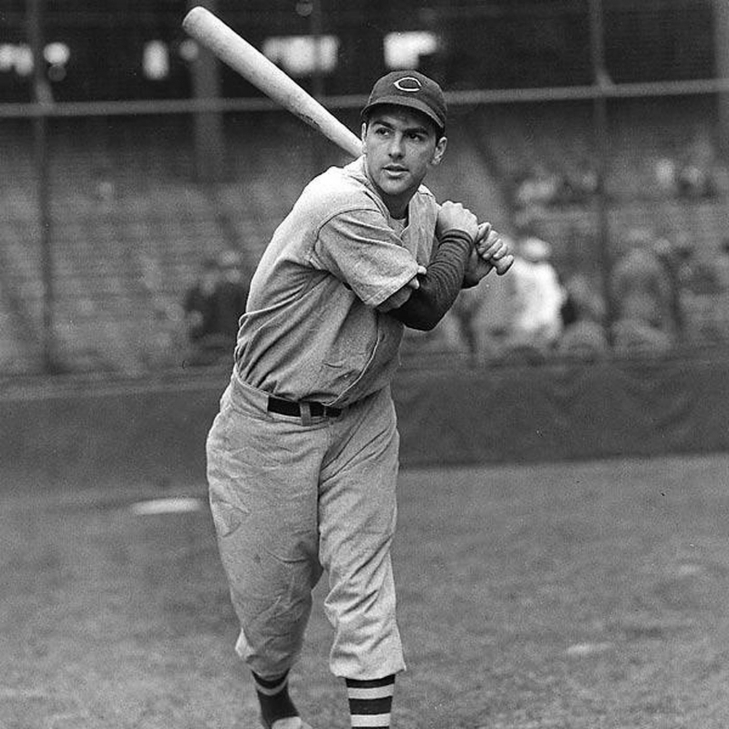
A two-sport star (Basketball and Baseball) at the University of Illinois, Lou Boudreau focused on Baseball, and the Cleveland Indians were blessed by that decision.
3. Tris Speaker
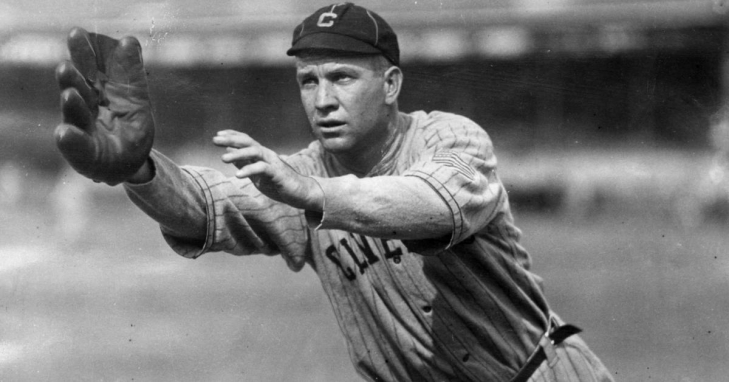
When Tris Speaker was traded to Cleveland in 1916, it was the result of a legendary insult. Despite batting .322, the Red Sox asked their superstar centerfielder to take a pay cut. Speaker’s refusal sent him to Cleveland, where he immediately set about dismantling American League pitching. In his debut season with the Indians, he proved his point with a thunderous campaign, capturing the 1916 Batting Title with a .386 average and leading the league in hits, doubles, and on-base percentage. He arrived as a disgruntled star and instantly became the premier face for a city hungry for a winner.
The peak of his residency saw Speaker revolutionize the way center field was played. Known as "The Gray Eagle," he played a notoriously shallow center field, so shallow that he frequently functioned as a fifth infielder, recording unassisted double plays and picking off runners at second base. He remains the all-time Major League leader in doubles, with 486 of his 792 career two-baggers coming in a Cleveland uniform. From 1916 to 1925, Speaker never batted below .310, serving as the most consistent high-volume producer in the organization's history.
The pinnacle of his leadership came in 1919, when he assumed the title of player-manager. Under the shadow of the tragic on-field death of teammate Ray Chapman in 1920, Speaker displayed a high level of leadership that willed the Indians to their first World Series title. He was a cerebral architect of the game, managing the rotation and the lineup while still batting .388 himself. He was the rare dual-threat who could out-think the opposing manager while simultaneously out-hitting the opposing pitcher.
However, the final walk toward the exit in 1926 was marked by a sudden resignation. While still a productive player, Speaker stepped down from his managerial post and was subsequently released, finishing his journey with brief stints in Washington and Philadelphia. He left Cleveland as a statistical titan, accumulating 1,965 hits and an incredible .354 average for the franchise, a mark that remains nearly untouchable in the record books.
Tris Speaker was a first-ballot immortal in the eyes of the baseball world, entering Cooperstown in 1937. Cleveland rightfully included him in their inaugural Hall of Fame class in 1951, forever cementing the "Gray Eagle" as the man who proved that loyalty is a two-way street, and that Boston’s loss was Cleveland’s eternal gain. He arrived as a man with a point to prove and left as a permanent monument to excellence on the lakefront.
2. Nap Lajoie
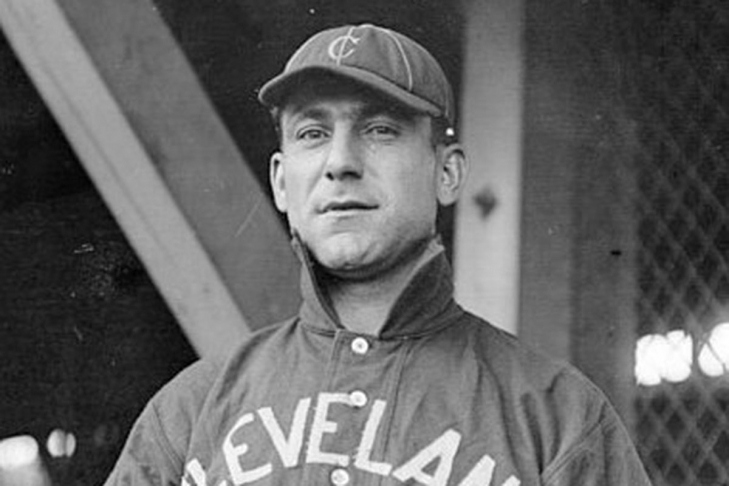
When Nap Lajoie arrived in Cleveland in 1902, he didn't just bring a legendary bat; he brought the validity of an entire league. After a messy legal battle with the Phillies that saw him jump to the Athletics and then flee to Cleveland to avoid a Pennsylvania injunction, Lajoie became the first true titan of the American League. He was so instantly beloved on the Lakefront that by 1903, a fan poll officially changed the team's name from the Bronchos to the "Naps" in his honor. He wasn't just playing for the city; he was the city's identity for over a decade, hitting a blistering .379 in his first partial season and proving that the junior circuit was a force to be reckoned with.
Lajoie was a hitting machine who made the Deadball Era look easy, capturing batting and slugging titles in 1903 and 1904. He was the "Maestro of the Second Base," a fielder so graceful that contemporaries like Cy Young claimed his line drives could take a third baseman’s leg off. His 1910 season remains one of the most controversial chapters in baseball history; while he officially finished second to Ty Cobb in the batting race, the "Chalmers Award" scandal, where the St. Louis Browns intentionally played deep to allow Lajoie to bunt for hits, resulted in both men receiving a brand new car. Modern statistical audits actually suggest Lajoie was the rightful champion with a .384 average, adding a layer of "what-if" to an already decorated career.
Beyond the plate, Lajoie was the ultimate franchise identity figure, serving as player-manager from 1905 to 1909. While the dual role eventually took a toll on his offensive output, his leadership anchored the team through its most formative years. He led the league in hits, doubles, and fielding percentage multiple times, serving as a vacuum at second base who paced the league in Range Factor five times. He played with intensity for thirteen seasons in Cleveland, accumulating 2,047 hits and a .339 average that remains the gold standard for the franchise.
The final walk toward the exit came after the 1914 season, when his contract was sold back to the Athletics. It was the end of an era so significant that the team had to find a new name, eventually settling on the "Indians" to fill the void left by their namesake. Lajoie left Cleveland as a pioneer who had legitimized a league and a city, earning his place in the very first Hall of Fame class in Cleveland history in 1951.
Lajoie arrived as a legal fugitive from Philadelphia and left as a permanent monument of Cleveland baseball. He proved that while players come and go, some names are so powerful they define the jersey itself. Whether he sits at number one or two, he remains the foundation upon which the entire franchise was built.
1. Bob Feller
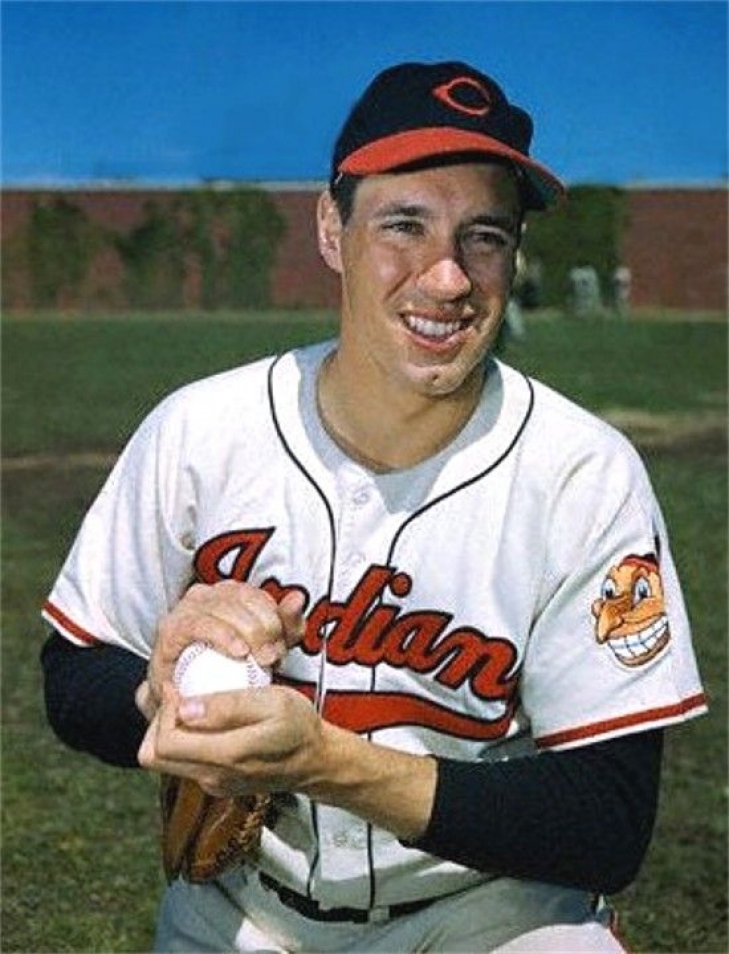
When Bob Feller arrived in Cleveland in 1936, he was a 17-year-old high school student who looked like a farm boy but threw like a god. Bypassing the minors entirely, he famously struck out eight Cardinals in an exhibition game before he had even graduated. By the time he was 19, "Rapid Robert" was already the most feared strikeout artist in the American League, leading the circuit with 240 K's in 1938. His residency in Cleveland began with a level of hype that would have crushed a lesser player, but Feller thrived under the pressure, pairing a legendary fastball with a devastating curveball that left future Hall of Famers like Ted Williams calling him the fastest pitcher they had ever seen.
The peak of his pre-war journey arrived in 1940, a season that began with the only Opening Day no-hitter in Major League history. Feller was a statistical outlier that year, capturing the pitching Triple Crown by leading the league in wins (27), ERA (2.61), and strikeouts (261). He was the undisputed ace of the Tribe and the face of the sport, a player who seemed destined to shatter every cumulative record in the books. However, his journey took a dramatic, selfless turn on December 8, 1941. Two days after the attack on Pearl Harbor, Feller became the first professional athlete to volunteer for combat, walking away from a $50,000 contract and his athletic prime to serve as a gun captain on the USS Alabama.
The middle chapter of his career was a testament to his sheer resilience. Returning to the mound in late 1945 after missing nearly four seasons of his prime, Feller didn't just pick up where he left off, he found a second gear. In 1946, he threw a career-high 371 innings and struck out 348 batters, a single-season record that stood for nearly two decades. He anchored the rotation for the 1948 World Series champions, providing the veteran gravity that pulled the franchise toward its first title in 28 years. Even as his velocity eventually began to wane in the early 50s, his "junk" and his competitive fire allowed him to post one final 20-win season in 1951, proving that he could outthink hitters just as easily as he once overpowered them.
Beyond the box score, Feller was a pioneer who understood the value of the players who made the game possible. He was an early, outspoken critic of the reserve clause and a driving force behind the development of the memorabilia and barnstorming circuits, creating vital secondary income for his peers. He was a man who never hedged an opinion and never forgot the blue-collar roots of the game, serving as a permanent ambassador for the Indians long after his playing days were over.
His final walk toward the exit came in 1956, concluding an 18-season residency spent entirely in a Cleveland uniform. He left the "Tribe" as the franchise’s all-time leader in wins (266), strikeouts (2,581), and shutouts (46). The team wasted no time in honoring its greatest son, making his number 19 the first retired jersey in Cleveland history just one year after he hung up his spikes. In 1962, he was ushered into Cooperstown on the first ballot—the first player since the inaugural 1936 class to earn that honor.
Bob Feller arrived as a teenage prodigy from Iowa and left as a national hero and a permanent monument of the Cleveland landscape. He proved that while the war might have cost him some stats, it could never touch his legacy as the most dominant right-hander to ever toe the rubber for the Indians.