


Committee Chairman
22. Al Rosen
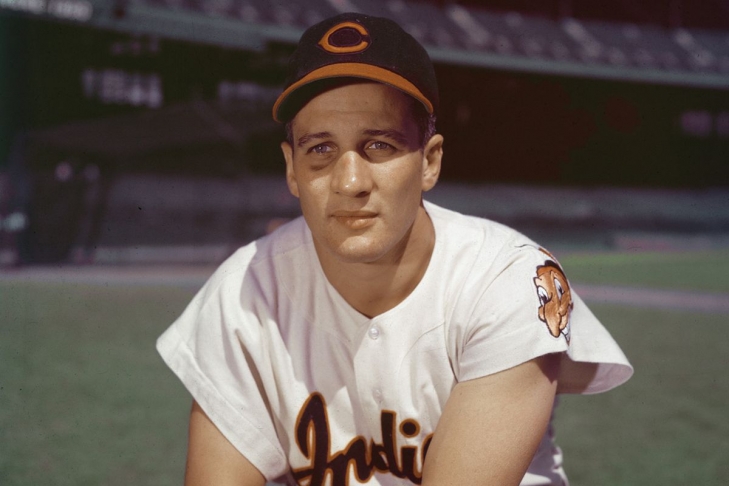
After debuting in 1947, Al Rosen became a regular player in 1950 and became a serious power threat in the Junior Circuit. He made an immediate statement by capturing the home run title in his first full season as a starter, launching 37 homers and driving in 116 runs. It was the beginning of a remarkable five-year run of consistency, where he authored at least 24 home runs and 100 RBIs every single summer. Rosen was a model of specialized efficiency, proving that his game was built on a sophisticated balance of raw power and elite plate discipline, eventually evolving into a high-frequency .300 hitter as his career reached its prime.
Rosen had one of the best years in franchise history in 1953. That summer, Rosen stood as a statistical titan, leading the American League in runs, home runs, RBIs, and slugging percentage. He famously came within a fraction of a point of the Triple Crown, finishing with a .336 average. His value was so profound that he was named the American League MVP in a unanimous vote, a testament to his status as the most dangerous offensive force in the American League. He followed that masterpiece by serving as the anchor of the 100-plus win 1954 pennant-winning squad, providing the high-leverage bat that anchored the middle of the order.
His presence was defined by a fierce, competitive resolve and a physical style of play that often saw him playing through significant injuries. Rosen was a fixture of the Cleveland infield for his entire career, using a specialized approach to remain productive even as his body paid the price for his aggressive play. He chose to retire at 32, walking away from the game while still a productive force rather than wearing another uniform.
With the Indians, Rosen compiled 1,063 hits, 192 home runs, and 717 RBIs with a historic .495 slugging percentage. The organization provided the final punctuation on his legacy decades later, celebrating a career spent entirely in the service of the North Coast. In 2006, Al Rosen was officially inducted into the Cleveland Guardians Hall of Fame.
27. Wes Ferrell
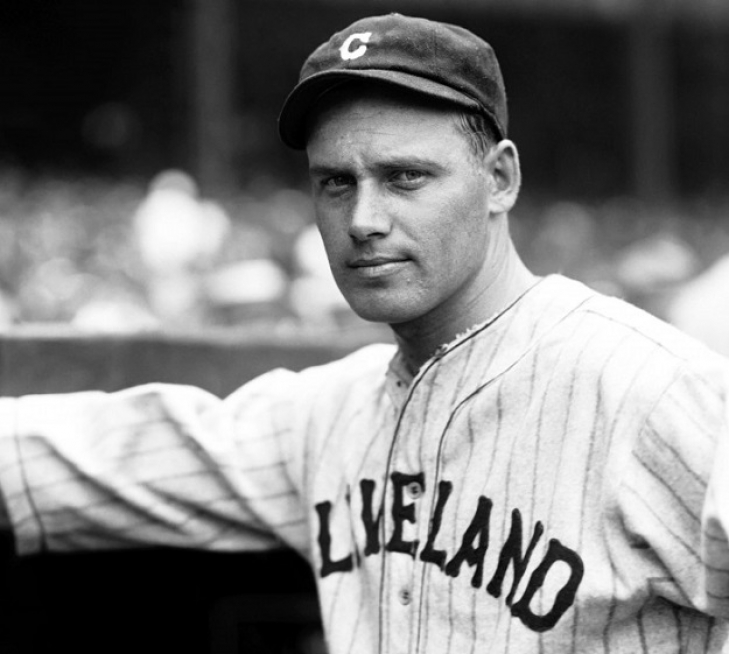
Wes Ferrell’s career shifted from a slow burn to an inferno after a brief, two-game audition in the late 1920s. He secured a permanent spot in the rotation by 1929 and immediately evolved into the league's premier workhorse. Between 1929 and 1932, he anchored the staff with a relentless accumulation of victories, winning at least 21 games every summer and leading the American League in complete games in 1931. He was a model of specialized durability, navigating the era’s high-scoring environment with a sophisticated mix of pitches and mental toughness, allowing him to shoulder nearly 300 innings annually during his physical prime.
The most extraordinary aspect of his tenure was an offensive capability that surpassed that of almost every contemporary in his position. Ferrell was a master of the bat, possessing a specialized swing that made him a viable threat whenever he stepped into the box. This was never more evident than in 1933, when he struggled with a rare losing record on the mound, yet his craftsmanship at the plate remained elite. He was a high-frequency producer who recorded 19 home runs and 100 RBIs during his Cleveland years, figures that prompted the club to experiment with him in the outfield to keep his bat in the lineup. He famously set a then-record with nine home runs in 1931, a feat he punctuated by tossing a no-hitter against the Browns that same spring.
Ferrell remained the emotional center of the rotation through the transition into the 1930s, utilizing a workmanlike approach to secure over 100 wins for the organization. Whether he was grinding through a 13-inning complete game or lacing a double as a pinch-hitter, he competed with a focused intensity that made him a local standout. He proved that a player could become a franchise pillar by mastering the rare, high-leverage art of being a two-way star long before the term was common.
The Indians dealt their embattled ace to Boston, where he would eventually capture another 20-win season and further cement his hitting legacy. He left the North Coast with a 102-62 record and a 3.67 ERA while hitting 19 home runs and maintaining a .274 average. The organization inducted Ferrell into the Cleveland Guardians Hall of Fame.
25. Manny Ramirez

Manny Ramirez became a full-time fixture in the 1994 lineup, narrowly missing out on Rookie of the Year honors before anchoring a legendary core of homegrown talent. He matured instantly into a premier middle-of-the-order threat, following a 1995 breakout in which he hit 31 home runs and drove in over 100 runs. He possessed a specialized, rhythmic approach at the plate that prioritized elite bat speed and a sophisticated understanding of the strike zone. This craftsmanship allowed him to serve as the tactical engine for the 1995 and 1997 World Series squads, providing the high-leverage power that turned a young roster into a perennial contender.
The true magnitude of his dominance became undeniable during a historic three-year stretch at the turn of the millennium. Between 1998 and 2000, Ramirez averaged 39 home runs and 140 RBIs per season. He was a model of specialized efficiency, twice capturing the American League titles in slugging and OPS while finishing in the top ten of the MVP voting for three consecutive summers. He wasn't just a volume producer; he was a high-frequency outlier who seemed to toy with opposing pitchers, concluding his stay with an astonishing .592 slugging percentage, a benchmark that remains a pillar of the organization's record books.
His presence was defined by a unique, lighthearted intensity and a physical hitting style that made every plate appearance a must-watch. Ramirez remained the heartbeat of the Cleveland offense through the pinnacle of the "Jake" era, using his world-class hands to drive the ball to all fields with professional regularity. Whether he was lacing a line drive into the corner or launching a tape-measure blast into the left-field bleachers, he competed with a focused brilliance that solidified his status as a local immortal. He proved that a player could become the cornerstone of a powerhouse franchise through a rare combination of raw strength and a scientific approach to hitting.
Manny departed for Boston in 2001 as a high-profile free agent. With the Indians, Ramirez compiled 236 home runs, 804 RBIs, and 1,086 hits while maintaining a historic .313/.407/.592 slash line.
24. Elmer Flick
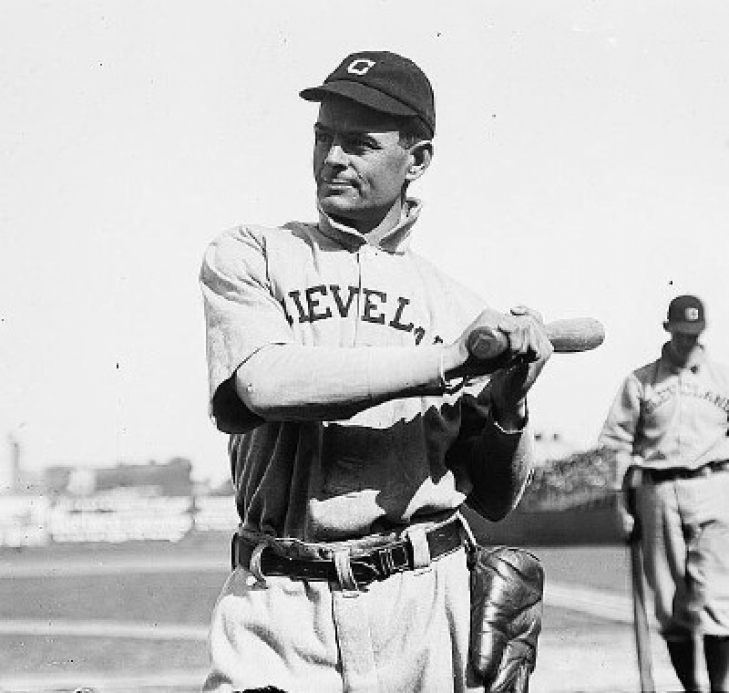
Flick’s path to Cleveland was forged in the chaos of the American League's birth. After jumping from the Phillies to the cross-town Athletics, a Pennsylvania injunction prohibited him from playing for any team within the state. To keep his career alive, he was sent to Cleveland alongside Lajoie in 1902—a move that secured the club's offensive identity for the next nine years. He emerged with a specialized, contact-heavy approach that relied on elite acceleration, maturing instantly into a premier leadoff threat. By 1905, he had reached a remarkable apex, capturing the American League Batting Title with a .308 average and proving that he was the most efficient table-setter in the Junior Circuit.
The most impressive aspect of his tenure was his total command of the most difficult hit in baseball. Flick was a master of the triples alley, authored by a historic three-year stretch from 1905 to 1907, where he led the American League in three-baggers annually. He wasn't just a threat to find the gaps; he was a tactical nightmare once he reached base, twice capturing the Stolen Base crown in 1904 and 1906. He was a model of specialized speed, serving as a high-frequency run producer who used his legs to pressure opposing batteries and turn routine singles into scoring opportunities.
Flick’s presence was defined by a quiet, professional resilience and a defensive grace that made him one of the premier right fielders of the early twentieth century. Flick remained the heart of the Cleveland outfield until 1910, navigating the era’s physical demands with a consistent, blue-collar approach that kept his career average at a near-elite .299 throughout his tenure. Whether he was manufacturing a run with a daring dash on the basepaths or lacing a line drive into the corner for another league-leading triple, he competed with a focused intensity that made him a central figure in the franchise’s formative years. He proved that a player could anchor a lineup through a rare combination of high-frequency contact and world-class velocity.
In 1910, health issues forced him to retire, but he left the organization as a statistical pillar of the deadball era. He departed with over 1,000 hits in a Cleveland uniform, having established a standard for speed and durability that few contemporaries could match.
With the Indians, Flick compiled 1,058 hits, 75 triples, and 188 stolen bases while maintaining a .299 batting average.. In 1963, both the organization and the game at large recognized his greatness; Flick was inducted into the National Baseball Hall of Fame in Cooperstown and simultaneously enshrined as a legend in the Cleveland Guardians Hall of Fame.