


Site Admin
1. Jeff Bagwell
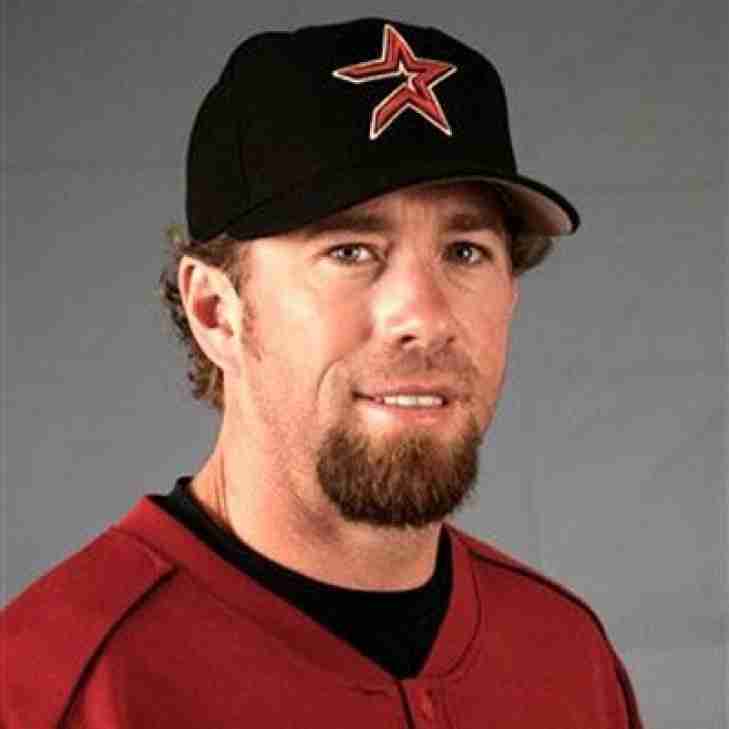
While Jeff Bagwell eventually entered the Hall of Fame in 2017, a call many felt was years overdue, his legacy in Houston was never in doubt. For fifteen seasons, he stood as the definitive identity of the Astros, transforming a scuffling franchise into a perennial powerhouse alongside his "Killer B" partner, Craig Biggio. Though his journey began in the Boston organization, the trade that brought him to Texas for reliever Larry Andersen remains the ultimate cautionary tale in baseball history, as the Red Sox surrendered a future immortal for fifteen games of bullpen help.
Bagwell made his presence felt immediately in 1991, capturing the Rookie of the Year award with 163 hits and a .294 average. He possessed a specialized, low-crouch batting stance that generated immense torque, a craftsmanship that allowed him to overcome the cavernous dimensions of the Astrodome. His best year came during the strike-shortened 1994 campaign, authoring a season so dominant that he was the unanimous selection for National League MVP. That summer, he led the league in runs (104), RBIs (116), and a staggering .750 slugging percentage, proving that he was the most efficient offensive force in the sport.
The most profound aspect of his tenure was a model of high-frequency excellence that defied the traditional aging curve. Bagwell authored six consecutive seasons from 1996 to 2001 where he recorded at least 30 home runs, 100 RBIs, 100 runs, and 100 walks—a feat of all-around production that remains a historic outlier. He was a tactical engine in the middle of the order, blending elite power with a sophisticated eye that earned him over 1,400 career walks. He served as the primary driver for six postseason appearances, utilizing his veteran poise to lead the club through the most successful era in its first forty years.
Beyond his legendary bat, Bagwell brought a professional resilience to the field that was equally impactful on the basepaths and in the dirt. He remains the only first baseman in major league history to record 400 home runs and 200 stolen bases, a testament to a specialized athleticism that caught opponents off guard. Defensively, he was a technician who earned a Gold Glove in 1994 and consistently ranked among the league leaders in assists for his position. He proved that a player could become a franchise pillar by mastering every facet of the game, providing a high-leverage presence that defined the "Killer B’s" era.
His presence in Houston was defined by a quiet, focused intensity and a loyalty that saw him spend his entire fifteen-year career in one uniform. Even as a chronic shoulder condition began to erode his ability to throw, he willed himself back for one final act during the 2005 season. He served as the emotional heartbeat of the squad that finally captured the franchise's first National League pennant, providing the veteran leadership required to navigate the road to the World Series.
With the Astros, Bagwell compiled 449 home runs, 2,314 hits, and a .408 on-base percentage while winning the 1994 MVP and 1991 Rookie of the Year.
The organization provided the final punctuation on his career by retiring his number 5 in 2007 and inducting him into the inaugural class of the Astros Hall of Fame in 2019.
49. Carroll Dale
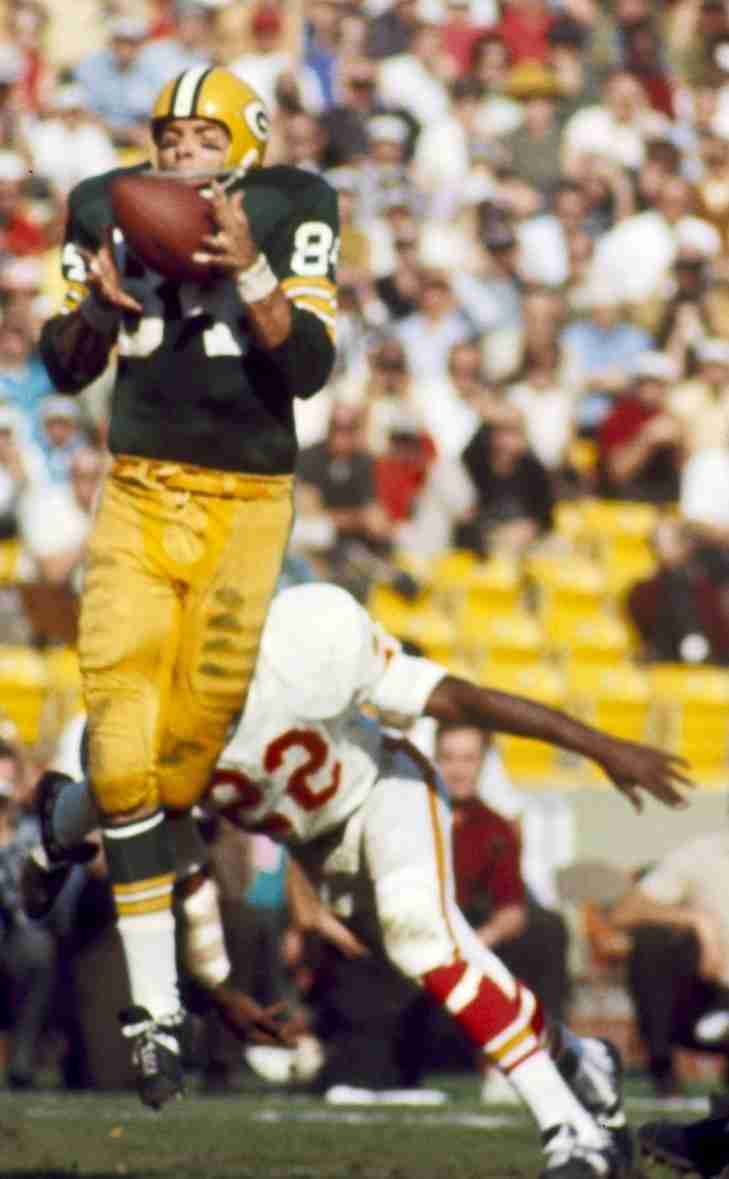
Acquired in a pivotal April 1965 trade with the Los Angeles Rams, receiver Carroll Dale arrived in Titletown already established as a proven vertical threat. Vince Lombardi brought in the former Virginia Tech standout to replace the retiring Max McGee and inject game-breaking speed into Green Bay's passing attack. Dale stepped into the starting lineup across from Boyd Dowler and delivered an immediate spark, averaging a staggering 18.6 yards per catch in his debut campaign as Green Bay captured the 1965 NFL Championship.
Dale’s lethal deep-threat acceleration proved indispensable during the Packers' historic championship three-peat. In the 1966 NFL Championship Game against Dallas, he hauled in a 51-yard touchdown pass from Bart Starr to spark a 34–27 victory, then added 59 receiving yards in Super Bowl I. He reached peak form during the 1967 title run, snaring two touchdown catches in the Western Conference Playoff against Los Angeles before adding four receptions for 43 yards in Super Bowl II.
As the Packers moved beyond the Lombardi era, Dale’s individual brilliance shone even brighter. He earned three consecutive Pro Bowl selections from 1968 through 1970, regularly stretching defenses and leading the squad in receiving yards. His rare big-play efficiency showed in his extraordinary 19.7 yards-per-catch average over eight seasons in Wisconsin—the highest career mark in Green Bay Packers history among receivers with at least 200 receptions.
In 1972, he was not renewed and concluded his eight-year tenure in Green Bay near the top of every major receiving category in team annals, with 5,422 yards and 35 touchdowns across 112 appearances. He played one more year in the NFL with Minnesota. The Packers inducted Dale into their Hall of Fame in 1979.
50. Lynn Dickey
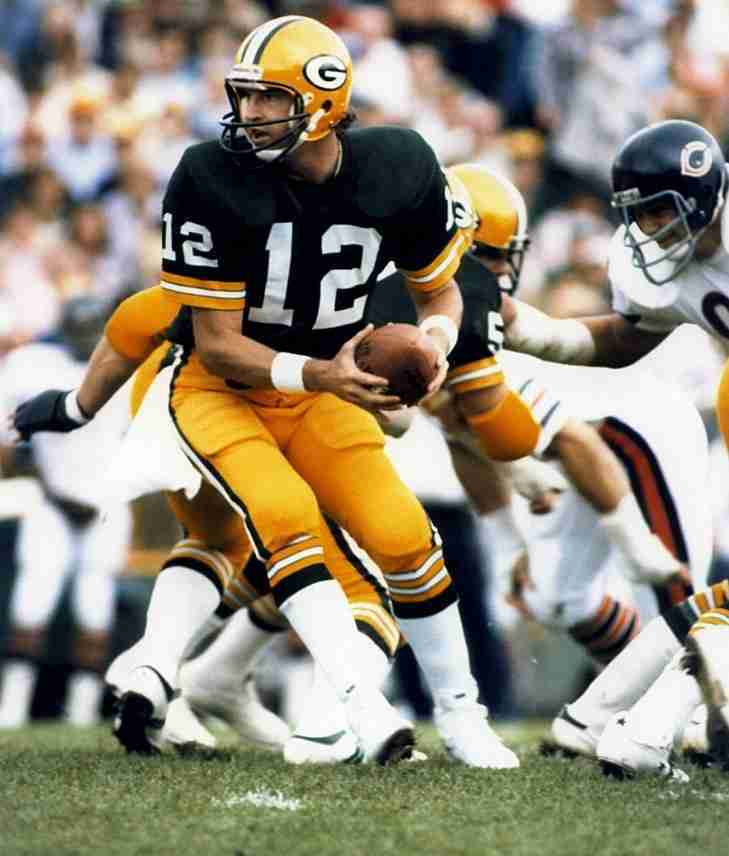
Acquired via trade from Houston in 1976, Lynn Dickey brought a pure pocket-passer's cannon to Titletown. Drafted out of Kansas State in 1971, the Osawatomie native spent his early professional years battling brutal bad-luck injuries, including a severe leg fracture that wiped out nearly two full seasons shortly after taking over the Packers' starting job. Through grueling rehab, Dickey returned to the huddle as a stationary pocket general possessing rare arm talent, touch, and downfield courage.
Working in head coach Bart Starr’s aggressive aerial system, Dickey brought out the full vertical potential of wideout targets James Lofton and John Jefferson. His career reached its statistical peak in 1983, when he led the league's most potent passing attack. He paced the National Football League with 4,458 passing yards and 29 touchdown passes, setting then-franchise single-season records and earning Second-Team AP All-Pro honors. One standout moment came when he helped lead Green Bay to a thrilling 48–47 victory over Washington on Monday Night Football.
Though paired with defensive units that frequently squandered his high-scoring outputs, Dickey remained a courageous presence in the pocket. His willingness to stand in front of opposing pass rushes helped the Packers remain a constant threat in high-scoring shootouts throughout the first half of the 1980s.
Dickey retired after the 1985 season, ending ten years in Wisconsin as the Packers’ second-leading passer behind Bart Starr. He completed 1,591 of 2,831 passes for 21,369 yards and 133 touchdowns. In 1992, the team inducted him into its Hall of Fame, honoring his decade-long tenure and record-setting arm.
48. Larry McCarren
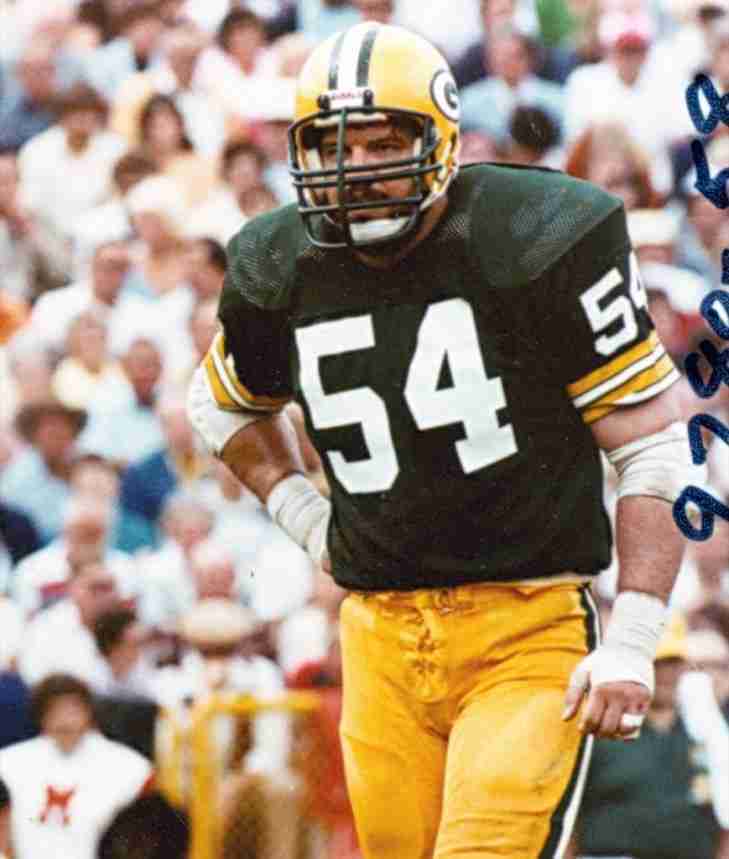
Chosen in the 12th round (308th overall) of the 1973 NFL Draft out of Illinois, Larry McCarren arrived in Green Bay as an extreme long shot who spent his rookie season fighting just to stay on the roster. What the unheralded rookie lacked in draft pedigree, he made up for with sheer grit and relentless offseason conditioning. By his second season, McCarren clawed his way into the starting lineup at center, anchoring Green Bay's offensive line for the next decade.
McCarren earned his legendary moniker, "The Rock,” through ironman durability and unwavering physical toughness that became the standard for Packers linemen throughout the 1970s and early 1980s. Playing through broken bones, dislocated fingers, and severe joint sprains, he built a streak of 162 consecutive games played and 153 consecutive starts—one of the longest consecutive-start streaks in franchise history.
Beyond his toughness, McCarren became one of the NFC’s premier centers during the prime of his career under head coach Bart Starr. Teammates recognized him as an offensive captain from 1979 through 1983, and his sharp pre-snap line calls and dependable leverage blocking helped power Green Bay's high-flying 1982 and 1983 offenses led by Lynn Dickey, James Lofton, and John Jefferson. His individual excellence earned him back-to-back Pro Bowl honors in 1982 and 1983, along with a Second-Team AP All-Pro selection in 1983.
A neck injury abruptly ended his career during the 1984 season, forcing his retirement after 12 seasons. He made 153 starts for the team and was inducted into the Packers Hall of Fame in 199
