


Site Admin
24. Bob Watson
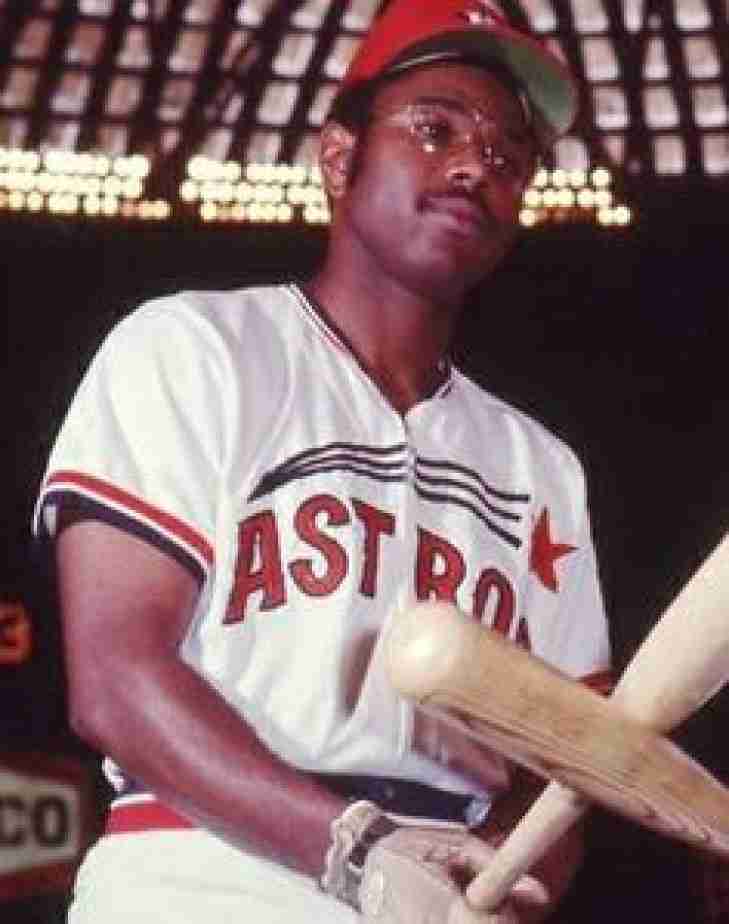
Bob Watson joined the Houston Astros in early 1965 as an amateur free agent out of Los Angeles Harbor College, a signing that eventually provided the expansion franchise with its most consistent offensive force of the 1970s. After navigating a difficult minor league path marked by the challenges of the segregated South, he debuted in 1966 and gradually transitioned from a part-time catcher and outfielder into the definitive anchor of the lineup.
Watson’s journey in an Astros jersey reached a historic peak of efficiency during the mid-1970s. He demonstrated a focused intensity on the craft of hitting that saw him become a perennial fixture among the National League’s batting leaders, recording a career-high .324 average in 1975. That same season, he secured a unique place in baseball lore by scoring the one-millionth run in Major League history, famously sprinting from second base on a Milt May home run to beat out a rival runner in another city by mere seconds. He showed the organization that he was a foundational star, earning All-Star selections in 1973 and 1975.
Between 1971 and 1977, Watson was a statistical standout, exceeding 150 hits in six consecutive campaigns and driving in over 100 runs in back-to-back years. He possessed a specialized ability to drive the ball into the gaps, recording 241 doubles as an Astro. Despite defensive limitations that saw him move from the outfield to first base to preserve his offensive output, he remained a model of durability, eventually amassing 1,448 hits, batting .297, and 139 home runs while wearing the Houston colors.
Watson was traded to the Boston Red Sox in 1979, and he achieved greater success as an executive in New York. He left the organization with a legacy that was formally immortalized with his induction into the Astros Hall of Fame in 2020.
19. Joe Niekro
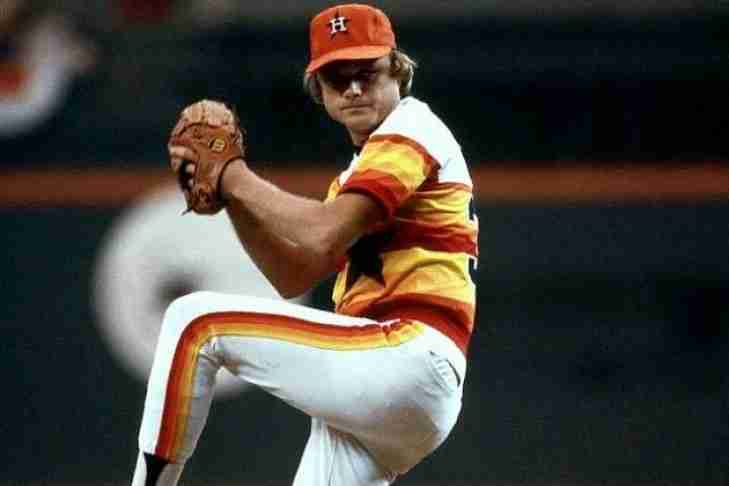
Joe Niekro arrived in Houston as a veteran seeking a second act, a pitcher who had spent nearly a decade wandering through the league before finding the perfect environment for his specialized knuckleball. While he began his journey in the shadow of his Hall of Fame brother, Phil, it was in the climate-controlled air of the Astrodome where Joe truly mastered the butterfly-like motion of his signature pitch. For eleven seasons, he served as the durable anchor of the Houston rotation, proving that a player could reach a career-defining breakout well into his thirties.
Niekro’s rise in Houston began as a low-risk acquisition in 1975, but he reached a new gear of consistency once he fully committed to the knuckleball as his primary weapon. He moved from a swing-man role into a front-line starter, signaling a transition from a journeyman to a premier National League outlier. He possessed a focused intensity that allowed him to thrive in the pitcher-friendly confines of the Dome, where the lack of wind gave his specialized pitch an even more unpredictable break. By the late seventies, he had established himself as a high-frequency winner, a style that culminated in a historic two-year run of dominance.
The heart of his time in Houston came during the 1979 and 1980 campaigns. In 1979, Niekro authored a career year, winning 21 games and earning his first All-Star selection while finishing second in the Cy Young voting. He followed that performance with another 20-win season in 1980, finishing fourth in the Cy Young race and providing the veteran-like poise that helped guide the Astros to their first-ever division title. He showed the organization that a pitcher could lead a staff through guile and movement rather than raw velocity, eventually recording 144 wins in a Houston uniform.
Everything culminated in a decade-long run of reliability that saw him surpass 1,100 strikeouts and become the franchise's all-time leader in wins before his departure. However, the natural evolution of the roster led to a change in direction during the 1985 season, when he was traded to the New York Yankees to join his brother.
In 2019, the Astros inducted him into their inaugural Hall of Fame class.
15. J. R. Richard

J.R. Richard was a force of nature on the mound, a 6' 8" titan who possessed a velocity that felt like a localized atmospheric event. In an era where the radar gun was just becoming a standard part of the game’s lexicon, Richard was the gold standard for raw, unadulterated power. For a decade in Houston, he wasn't just a starter; he was a phenomenon who terrified hitters with a 100-mph heater and a slider that moved like a ghost.
Richard’s arrival in Houston in the early 1970s was a slow-burning evolution, as he worked to harness a lightning-bolt arm that often lacked direction. He reached a pivotal breakthrough in 1976, his first 20-win season, where he finally combined his massive frame with a repeatable delivery. That summer, he struck out 225 batters and threw 291 innings, signaling a transition from a wild prospect to the most feared arm in the National League. He possessed a focused intensity that allowed him to thrive in the high-pressure environment of the Astrodome, where his speed seemed even more lethal against the backdrop of the "Eighth Wonder of the World."
The middle of his tenure saw him reach an unrivaled gear of dominance. In 1978 and 1979, Richard became the first right-hander in National League history to record back-to-back 300-strikeout seasons. He led the league in punchouts both years, and in 1979, he reached a career-high mark for efficiency, leading the NL in both ERA (2.71) and FIP (2.21). He was a model of physical resilience, routinely pitching deep into games and finishing in the top five of the Cy Young voting. He showed the organization that a pitcher could become a franchise pillar by simply being too fast for the modern hitter to comprehend.
Everything seemed to be building toward a historic 1980 campaign. Richard started the All-Star Game and looked poised to lead the Astros to their first-ever postseason berth, carrying a 10-4 record and a microscopic 1.90 ERA into late July. However, the trajectory of his career reached a tragic and sudden final punctuation when he suffered a stroke during a warm-up session at the Astrodome. The medical emergency effectively ended his time on the mound at just 30 years old, leaving the baseball world to wonder what a full career of his "flamethrowing" ability might have looked like.
He left the game with 107 wins and 1,493 strikeouts, a statistical footprint that felt incomplete yet remained legendary. The story in Houston reached its rightful conclusion in 2019 when the Astros inducted him into the inaugural class of their Hall of Fame.
21. Don Wilson
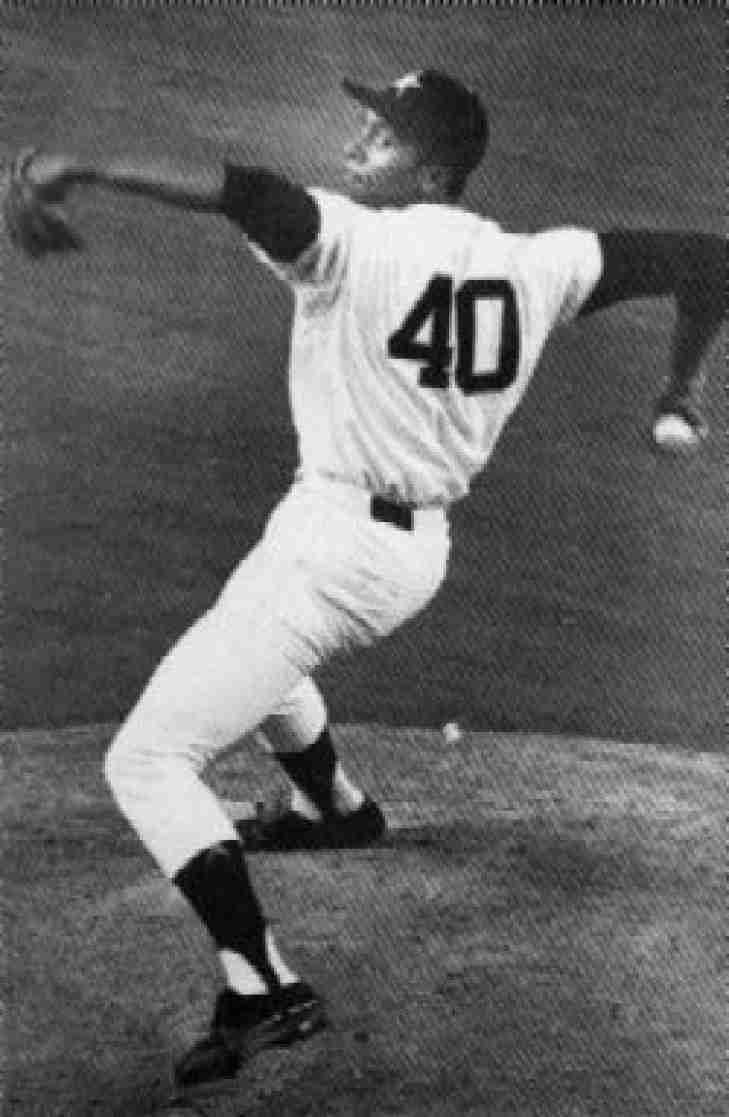
Don Wilson first made his mark in Houston as a fireballing right-hander who defined the early power-pitching identity of the franchise. After signing with the organization in 1964 and quickly climbing the minor league ladder, he joined the big league roster for good in 1967.
Wilson’s impact in a Houston uniform reached a historic peak early in his journey. In 1967, as a 22-year-old rookie, he secured a place in franchise lore by tossing the first no-hitter ever recorded in a domed stadium, striking out 15 Atlanta Braves. This performance signaled a transition from a young prospect to a premier league force who specialized in overpowering hitters. He showed the organization that he was a foundational piece of the staff, proving his consistency by repeating the feat two years later with a second no-hitter against the Reds in 1969.
Between 1968 and 1972, Wilson was a statistical force, recording double-digit wins every single year and earning an All-Star selection in 1971. He reached a career peak for workload during that span, twice surpassing 260 innings pitched and maintaining a focused intensity that led to 1,238 career strikeouts. Despite the early Astros' offensive struggles, he maintained a 104-92 record, providing steady production that anchored the rotation alongside Larry Dierker.
At just 29 years old and still in the prime of his professional life, Wilson passed away alongside his family due to carbon monoxide poisoning in their garage. The loss sent a shockwave through the city, leading the organization to retire his number 40 that spring as a final punctuation on his immense contribution. In 2019, he was inducted as part of the inaugural Astros Hall of Fame class.
