


Site Admin
25. Billy Wagner
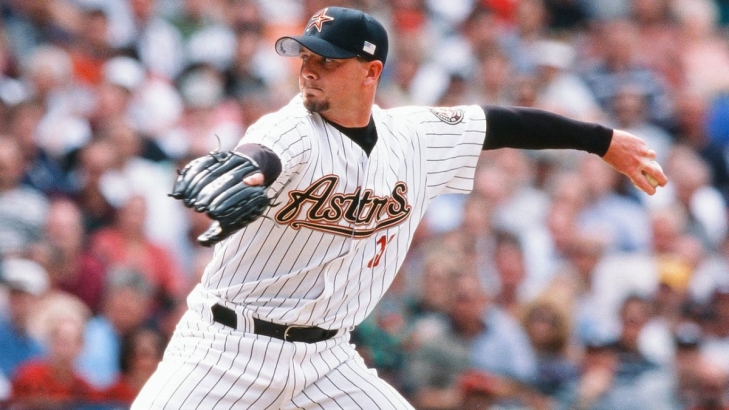
Billy Wagner joined the Houston organization as a first-round selection in the 1993 draft out of Ferrum College, a high-velocity left-hander who defied his smaller stature with a triple-digit fastball. After a rapid three-year ascent through the farm system, where he transitioned from a starter to a late-inning specialist, he debuted in late 1995 and quickly established himself as one of the most intimidating presences in the National League, and for nine seasons in a Houston uniform, he served as the definitive anchor of the bullpen.
After making a brief, scoreless debut in the 1995 postseason, he spent the next few summers refining a triple-digit heater that seemed to defy the laws of physics. By 1996, he had officially seized the closer's role, striking out 67 batters in just over 50 innings and proving that his transition from a starter was a masterstroke by the Houston front office.
Wagner’s journey in an Astros jersey reached a historic peak of efficiency during the 1999 campaign. That summer, he evolved into the premier relief weapon in the sport, recording 39 saves and a staggering 1.57 ERA, striking out 124 hitters in just 74.2 innings of work. He won the Rolaids Relief Man of the Year Award and finished fourth in the Cy Young voting, a rare feat for a closer. He possessed a focused intensity that saw him earn the first of three All-Star selections with the club.
Between 1996 and 2003, Wagner was a statistical standout, serving as the high-leverage bridge between the Astrodome era and the team’s move to its new retractable-roof home. He reached a peak for individual dominance in 2003, recording a career-high 44 saves while maintaining a 1.78 ERA. Despite a significant elbow surgery in 2000 that would have slowed a lesser athlete, he returned with his high-velocity delivery intact, eventually amassing 225 saves and a 1.039 WHIP while wearing the colors of Houston.
Everything culminated in a 2003 trade to the Philadelphia Phillies, an exit that followed a public disagreement with team management regarding the club's payroll and direction, departing with a legacy of 694 strikeouts in just 464.1 innings.
31. Ken Forsch
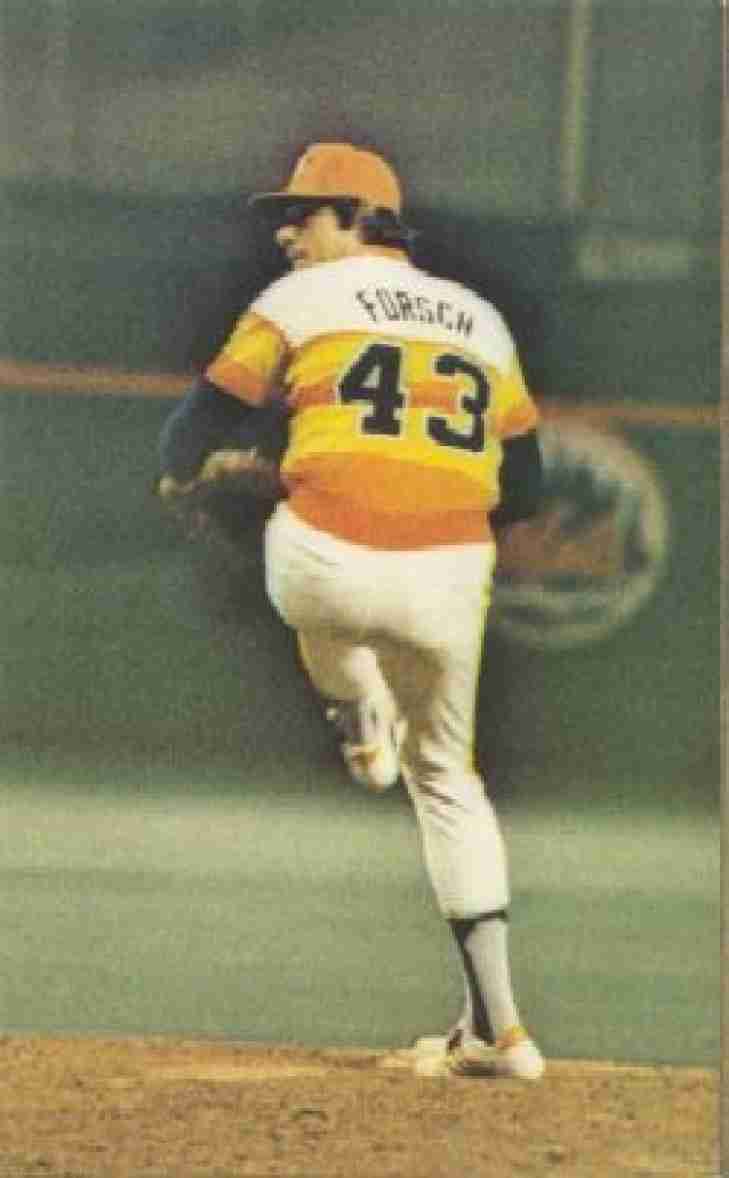
Ken Forsch joined the Houston organization as an 18th-round selection in the 1968 draft out of Oregon State, a versatile right-hander who would spend over a decade alternating between the rotation and the bullpen.
Making his debut in late 1970, Forsch served as a primary starter for his first four seasons, and he transitioned into the role of a premier late-inning weapon by 1974. He earned an All-Star selection in 1976 as the club's closer, recording 19 saves and a microscopic 2.15 ERA. This period of growth served as the essential lead-in to his return to the rotation in 1979, showing that his veteran-like poise allowed him to shift back into a starting role without missing a beat. He famously punctuated this transition by tossing a no-hitter against the Atlanta Braves in his very first start of the 1979 season, a historic feat that joined him with his brother, Bob, as the only siblings to both throw no-hitters. That summer, he evolved into one of the most difficult pitchers to reach base against in the National League, leading the circuit with a 1.069 WHIP and a league-best 1.77 walks-per-nine innings.
He remained a model of offensive prevention during the 1980 run, helping the "feared four" rotation of Ryan, Richard, and Niekro secure the franchise’s first division title, but the next year, he was traded to the California Angels. Forsch compiled a 78-81 record and 50 saves for Houston.
28. Glenn Davis
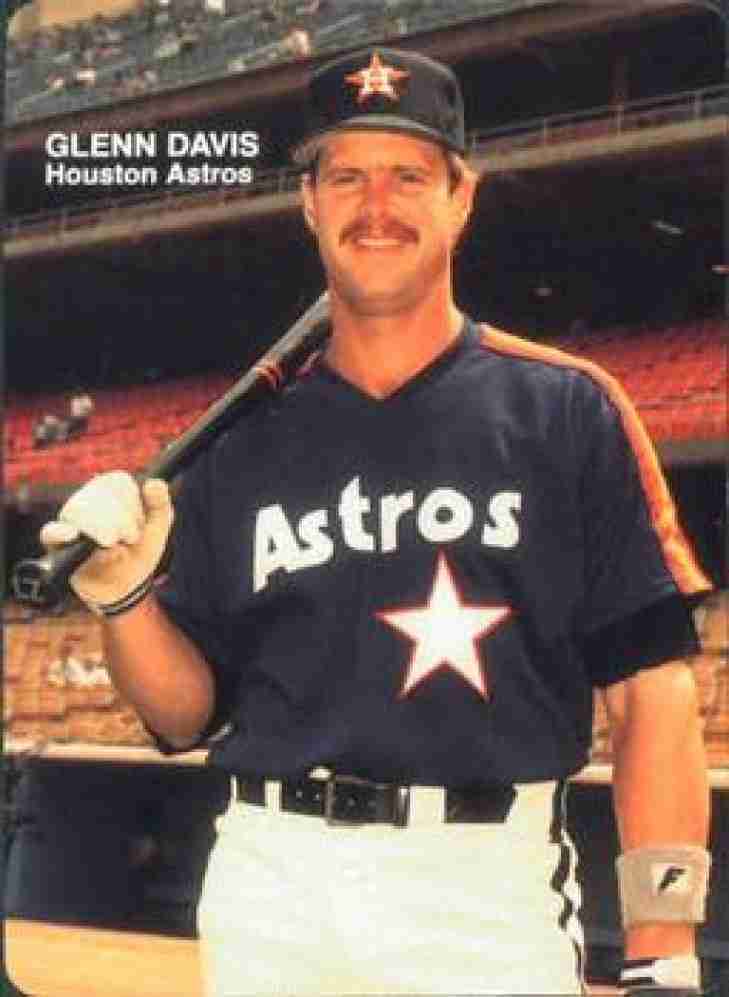
Glenn Davis joined the Houston organization as a first-round selection in the 1981 secondary draft out of Manatee Junior College, a powerful right-handed hitter who had already turned heads in the Cape Cod League. After a prolific minor-league apprenticeship in which he clubbed 71 home runs, he debuted in late 1984 and quickly became the definitive "Big Bopper" of the Astrodome.
He spent the first half of 1985 in the Pacific Coast League before receiving a permanent call-up in June to replace an injured Terry Puhl. He demonstrated a specialized ability to conquer the "dead air" of the Astrodome, clouting 20 home runs in just 100 games, a franchise rookie record at the time. This period of rapid growth served as the essential lead-in to his most dominant years, during which he finished fifth in the NL Rookie of the Year balloting.
Davis’ journey reached a historic peak of individual and team success during the 1986 campaign. That summer, he evolved into one of the most feared hitters in the National League, recording a career-high 31 home runs and driving in 101 runs. He demonstrated a specialized ability to deliver in the clutch, famously hitting a solo home run in his first-ever postseason at-bat to provide the only run in a Game 1 victory over the Mets in the NLCS. He showed the organization that he was a foundational star, winning the Silver Slugger Award and finishing as the runner-up in the NL MVP voting. He possessed a focused intensity that saw him lead the club to a division title, providing the power production required to balance out the team’s elite pitching staff.
Between 1985 and 1990, Davis was a statistical standout, becoming the first Astro to record six consecutive seasons with at least 20 home runs. He reached a peak for raw power in 1989, clouting a career-high 34 home runs and earning his second All-Star selection. He possessed a specialized ability to drive the ball out of the expansive Astrodome, a feat that earned him top-ten MVP finishes in three separate seasons.
In a blockbuster trade following the 1990 season, the Astros sent their franchise slugger to the Baltimore Orioles in exchange for Steve Finley, Pete Harnisch, and Curt Schilling. Davis compiled 166 home runs and 544 RBIs as an Astro.
26. Shane Reynolds
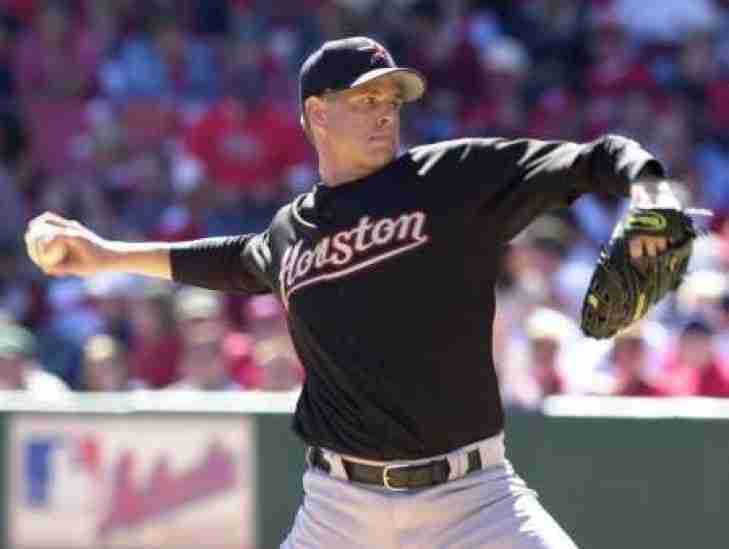
Shane Reynolds joined the Houston organization as a third-round selection in the 1989 draft out of the University of Texas, a pitcher whose career was ultimately defined by a fanatical work ethic and a transformative winter spent in Venezuela. Initially a "so-so" prospect with power mechanics but average velocity, he completely reinvented his delivery under the guidance of pitching guru Brent Strom. For eleven seasons in a Houston uniform, he served as the most reliable rotation anchor of the "Killer B's" era.
The climb toward Reynolds’ peak in the late nineties was a study in steady, high-frequency output and elite physical conditioning. After making his debut in 1992 and establishing himself as a permanent fixture by 1994, he evolved into the tactical leader of the Houston staff. By 1996, he had officially seized the role of an ace, winning 16 games and striking out over 200 batters for the first time. This period of rapid ascent served as the essential lead-in to his most dominant run, showing that when a pitcher pairs a devastating split-finger fastball with focused intensity on the strike zone, he can become a perennial Cy Young contender. Between 1998 and 1999, he led the National League in games started twice and became a primary catalyst for three consecutive division titles.
Reynolds’ journey reached a historic peak of efficiency during the 1999 campaign. That summer, he demonstrated a specialized ability to minimize free passes, leading the National League with a microscopic 1.4 BB/9 and a league-best 5.32 strikeout-to-walk ratio. He showed the organization that he was a foundational winner, recording 16 victories and helping the Astros secure their final division crown at the historic Astrodome. He possessed a rare, durable quality that allowed him to toss over 230 innings in back-to-back seasons, providing the steady-state production required to keep Houston at the summit of the National League Central. This era of dominance culminated in his first and only All-Star selection in 2000, a well-deserved recognition for a decade of under-the-radar excellence.
After a 2002 season derailed by back surgery, Reynolds actually re-signed with the Astros for 2003 with the full intention of being in their rotation. However, in the final week of Spring Training, the Astros front office decided to go in a younger direction and abruptly released him on March 27.
With the Astros, Reynolds compiled 103 wins, 1,309 strikeouts, and was inducted into the Astros Hall of Fame in the 2019 inaugural class.
