








While Jeff Bagwell eventually entered the Hall of Fame in 2017, a call many felt was years overdue, his legacy in Houston was never in doubt. For fifteen seasons, he stood as the definitive identity of the Astros, transforming a scuffling franchise into a perennial powerhouse alongside his "Killer B" partner, Craig Biggio. Though his journey began in the Boston organization, the trade that brought him to Texas for reliever Larry Andersen remains the ultimate cautionary tale in baseball history, as the Red Sox surrendered a future immortal for fifteen games of bullpen help.
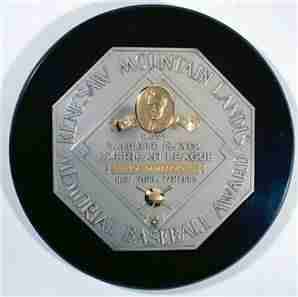
Bagwell made his presence felt immediately in 1991, capturing the Rookie of the Year award with 163 hits and a .294 average. He possessed a specialized, low-crouch batting stance that generated immense torque, a craftsmanship that allowed him to overcome the cavernous dimensions of the Astrodome. His best year came during the strike-shortened 1994 campaign, authoring a season so dominant that he was the unanimous selection for National League MVP. That summer, he led the league in runs (104), RBIs (116), and a staggering .750 slugging percentage, proving that he was the most efficient offensive force in the sport.
The most profound aspect of his tenure was a model of high-frequency excellence that defied the traditional aging curve. Bagwell authored six consecutive seasons from 1996 to 2001 where he recorded at least 30 home runs, 100 RBIs, 100 runs, and 100 walks—a feat of all-around production that remains a historic outlier. He was a tactical engine in the middle of the order, blending elite power with a sophisticated eye that earned him over 1,400 career walks. He served as the primary driver for six postseason appearances, utilizing his veteran poise to lead the club through the most successful era in its first forty years.
Beyond his legendary bat, Bagwell brought a professional resilience to the field that was equally impactful on the basepaths and in the dirt. He remains the only first baseman in major league history to record 400 home runs and 200 stolen bases, a testament to a specialized athleticism that caught opponents off guard. Defensively, he was a technician who earned a Gold Glove in 1994 and consistently ranked among the league leaders in assists for his position. He proved that a player could become a franchise pillar by mastering every facet of the game, providing a high-leverage presence that defined the "Killer B’s" era.
His presence in Houston was defined by a quiet, focused intensity and a loyalty that saw him spend his entire fifteen-year career in one uniform. Even as a chronic shoulder condition began to erode his ability to throw, he willed himself back for one final act during the 2005 season. He served as the emotional heartbeat of the squad that finally captured the franchise's first National League pennant, providing the veteran leadership required to navigate the road to the World Series.
With the Astros, Bagwell compiled 449 home runs, 2,314 hits, and a .408 on-base percentage while winning the 1994 MVP and 1991 Rookie of the Year.
The organization provided the final punctuation on his career by retiring his number 5 in 2007 and inducting him into the inaugural class of the Astros Hall of Fame in 2019.

Comments powered by CComment