


Site Admin
46. John Brockington
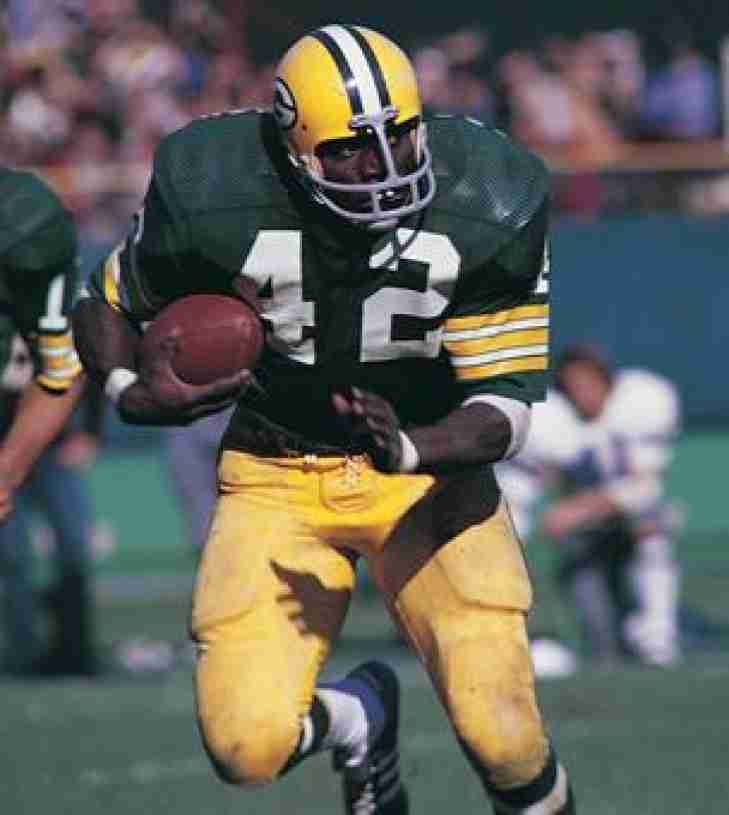
Drafted in the first round (9th overall) of the 1971 NFL Draft out of Ohio State—where he starred as Woody Hayes’ power hammer—John Brockington took the professional gridiron by storm. The 6-foot-1, 225-pound fullback charged into Titletown and compiled 1,105 rushing yards as a rookie, becoming the first player in NFL history to break the 1,000-yard rushing barrier in his debut season, while earning 1971 AP NFL Offensive Rookie of the Year and First-Team All-Pro honors.
Brockington’s arrival re-energized Green Bay's offense, forming a punishing backfield tandem alongside halfback MacArthur Lane. He made history by reeling off three consecutive 1,000-yard rushing seasons (1,105 in 1971; 1,027 in 1972; 1,144 in 1973), earning three straight Pro Bowl invitations and driving the Packers to an NFC Central title in 1972. His head-first, high-thigh collision style made him a nightmare for linebackers, but the relentless physical toll gradually caught up with him over the middle stretch of his career.
While heavy workloads and wear and tear slowed his output from 1974 onward, Brockington remained an integral offensive contributor through seven seasons in Wisconsin. Beyond his ground dominance, he served as a reliable outlet receiver, amassing 147 receptions and over 1,200 receiving yards to eclipse 6,000 total yards from scrimmage.
After a brief stint with Kansas City in 1977, Brockington retired as one of the most prolific power backs in franchise history, sitting second only to Jim Taylor on Green Bay's all-time rushing leaderboard at the time of his departure. In 1984, the Green Bay Packers formally recognized his record-setting start and bruising legacy by inducting him into the Green Bay Packers Hall of Fame.
34. Charles Woodson
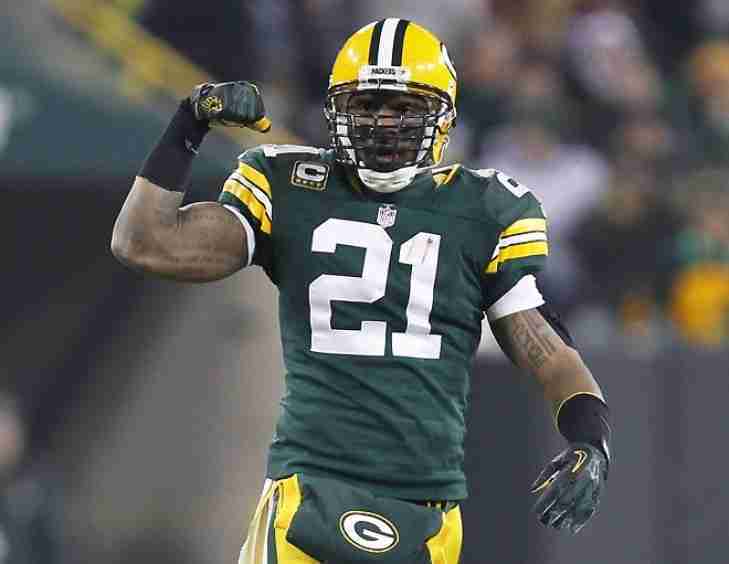
When Charles Woodson signed with Green Bay as a free agent in 2006 after an elite eight-year run in Oakland, few predicted the transformational second act that awaited him in Wisconsin. Skeptics wondered if the former Heisman Trophy winner's best football was behind him, but defensive coordinator Dom Capers unlocked a lethal new evolution: moving Woodson from a pure shutdown cornerback into a versatile, playmaking hybrid who roamed the nickel, blitzed off the edge, and controlled the entire field.
Woodson’s prime in dark green and gold produced one of the most statistically dominant multi-year runs by a defensive back in modern football history. In 2009, he put together a masterpiece campaign, leading the NFL with nine interceptions, returning three for touchdowns, forcing four fumbles, and recording two sacks to sweep First-Team All-Pro honors and win the NFL Defensive Player of the Year award. He paced the league in interceptions once more in 2011 with seven picks, earning his second First-Team All-Pro nod as a Packer.
His instincts and leadership served as the emotional heartbeat for Green Bay’s 2010 championship defense. Woodson racked up four Pro Bowl selections in Wisconsin and provided crucial veteran authority during the Packers' run to Super Bowl XLV. Although a broken collarbone forced him to watch the second half from the sideline, his impassioned halftime speech helped inspire Green Bay to hold off the Pittsburgh Steelers 31–25 and bring the Vince Lombardi Trophy home.
By the time he returned to Oakland in 2013 to conclude his career, Woodson had compiled 38 interceptions, 11.5 sacks, 15 forced fumbles, and a staggering nine pick-sixes in just seven seasons with Green Bay—setting the franchise's all-time record for defensive touchdowns (10).
In 2021, Woodson’s legendary impact earned dual recognition: he was enshrined in both the Pro Football Hall of Fame in Canton and the Green Bay Packers Hall of Fame in the same year. In his 100 games in Green Bay, he compiled 38 interceptions for 412 return yards and nine touchdowns, 11.5 sacks, 15 forced fumbles, and 468 tackles.
16. John "Blood" McNally
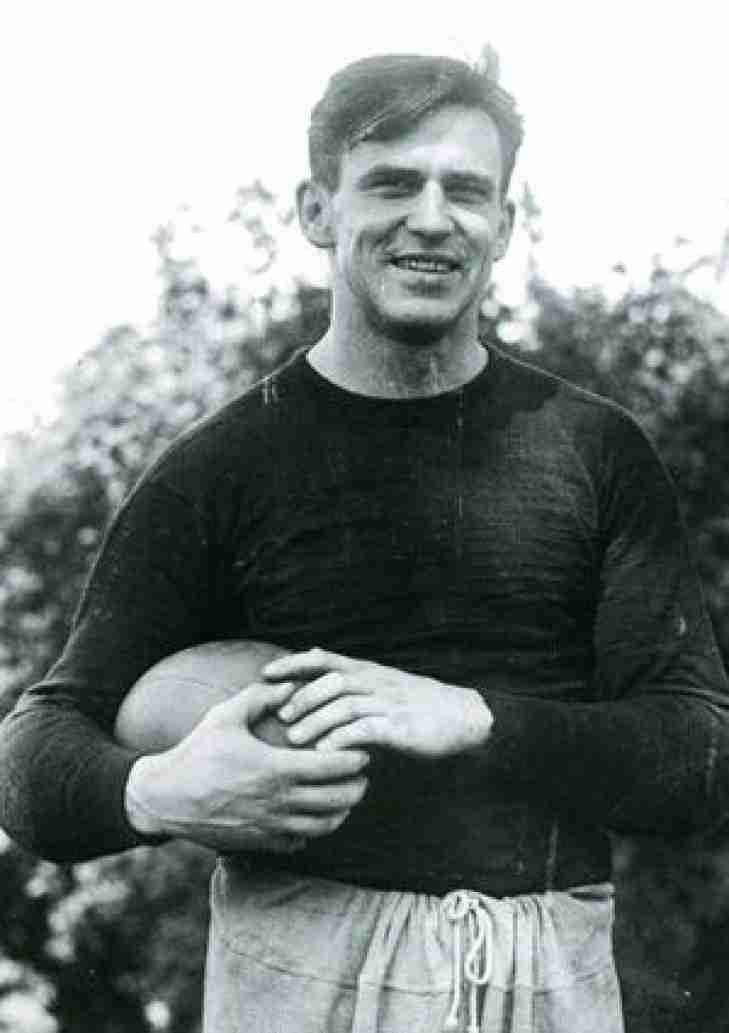
Born John Victor McNally, the colorful halfback famously adopted the pseudonym "Johnny Blood"—inspired by the 1922 Rudolph Valentino film Blood and Sand—to protect his remaining college athletic eligibility while playing for pay. A vagabond gridiron genius who barnstormed with Ernie Nevers’ Duluth Eskimos, McNally arrived in Green Bay in 1929 when Curly Lambeau recognized that his explosive open-field speed, eccentric personality, and game-breaking ability could turn the Packers into a world power.
Operating as a versatile halfback, receiver, defensive back, and kick returner, McNally served as the dynamic catalyst for pro football's first three-peat championship squad. With his rare blend of vertical speed and acrobatic ball skills, he became Arnie Herber's favorite long-distance target, leading Green Bay to consecutive NFL titles in 1929, 1930, and 1931. His flair for the dramatic and legendary off-field exploits only enhanced his status as one of the Roaring Twenties and Thirties' most captivating athletic figures.
After spending 1934 with the Pottsville Maroons and local independent clubs, McNally returned to Titletown in 1935 for a second tenure. His veteran presence and big-play knack provided crucial punch for Lambeau’s 1936 squad, culminating in a 21–6 championship victory over the Boston Redskins for his fourth NFL title in Green Bay.
Following his final stint in Green Bay, McNally served as player-coach for the Pittsburgh Pirates (later the Steelers) before retiring from active play. His enduring impact on the early evolution of the passing game earned him a spot on the NFL 1930s All-Decade Team.
In 1963, McNally was enshrined in the inaugural charter class of the Pro Football Hall of Fame in Canton, Ohio. Seven years later, in 1970, the Green Bay Packers formally honored his founding role in their championship lineage by inducting him as a charter member of the Green Bay Packers Hall of Fame. With the Packers, he had 37 total touchdowns.
45. John Anderson
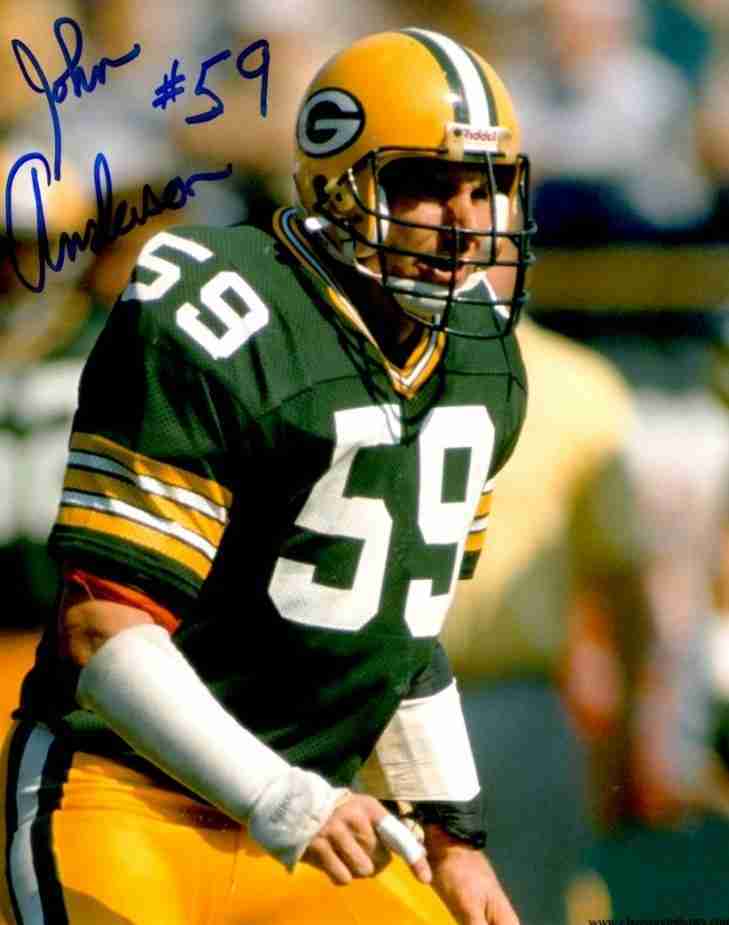
Drafted in the first round (26th overall) of the 1978 NFL Draft out of Michigan, John Anderson made an immediate splash in Titletown. Stepping directly into Green Bay's starting front seven as a rookie outside linebacker, the Waukesha native picked off five passes in his debut campaign—earning PFWA All-Rookie Team honors—and quickly became a versatile, playmaking anchor for the franchise during a transitional era.
While national Pro Bowl voters routinely overlooked him, Anderson stood out as one of the most complete linebackers of his generation. With rare lateral speed, pass-coverage fluidity, and edge-setting toughness, he became an indispensable multi-phase defender for three different head coaches over twelve seasons. He earned Green Bay's team Defensive Player of the Year honors on three separate occasions, routinely pacing the squad in tackles and turnover creation.
Anderson’s range and instincts enabled him to compile unusual statistical production for an outside linebacker. By the time he retired after the 1989 season, he tied Ray Nitschke's franchise record for career interceptions by a linebacker (25) and accumulated over 1,000 career tackles, 25.5 sacks, and 15 fumble recoveries. His steady brilliance against both the run and pass earned him a prestigious selection to the Pro Football Hall of Fame NFL 1980s All-Decade Second Team.
In 1998, the Packers inducted him into their Hall of Fame, honoring his 12 years of defensive excellence and leadership in his home state.
