


Site Admin
43. Rusty Staub
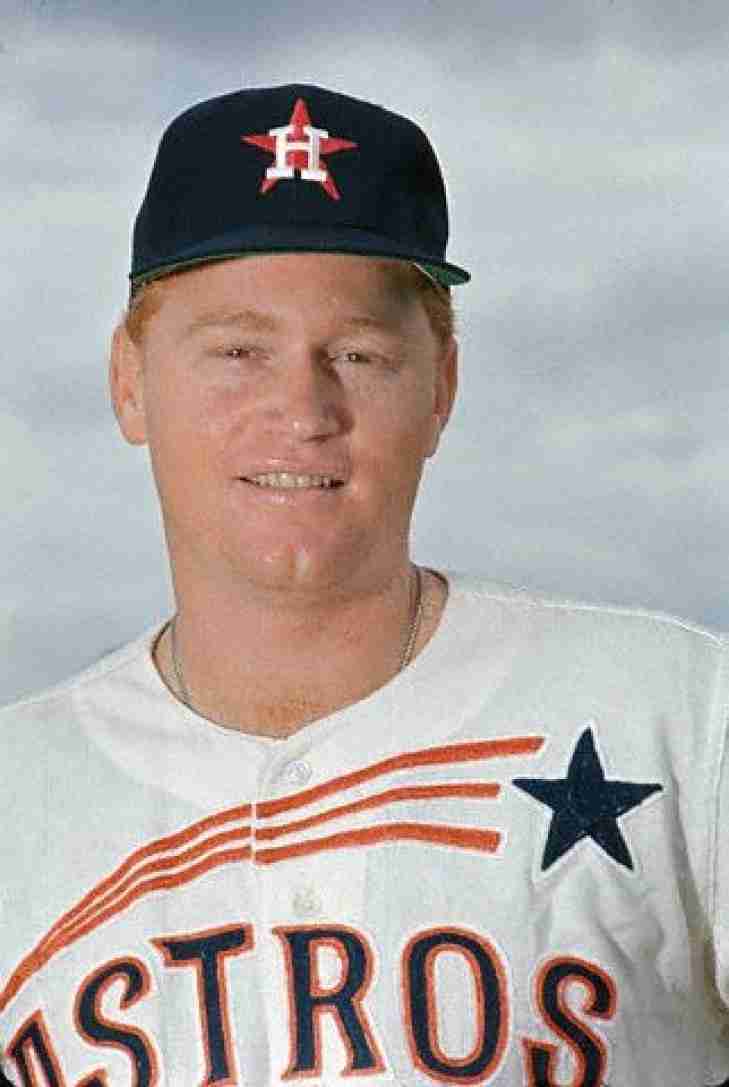
Rusty Staub arrived in the organization as a teenager in 1963, debuting for the Houston Colt .45s before the franchise even transitioned into the Astrodome. Known for his shock of red hair and a sophisticated left-handed swing, he quickly evolved from a young prospect into the team’s first genuine offensive threat.
Seemingly improving every season, Staub had a coming-out party in 1967, where he led the National League with 44 doubles and recorded a career-high .333 batting average. He showed the organization he was a foundational superstar by earning the first of his back-to-back All-Star selections and finishing the year with 182 hits. Despite the cavernous dimensions of the dome, he maintained a high-frequency of extra-base hits, proving that his line-drive approach was a tactical success against any pitching staff.
The final stretch of his Houston tenure was defined by unwavering offensive volume. Between 1966 and 1968, Staub recorded at least 150 hits each season, providing the steady production required for a developing expansion club. While his defensive range in the outfield prevented him from reaching a higher tier of overall value, his bat remained a constant.
Before the 1969 season, Staub was traded to the Montreal Expos. The move, a swap for Donn Clendenon and Jesús Alou, was driven by a contract dispute with Houston management and a tactical desire to shake up the roster. With the Astros, Staub compiled 792 hits, 115 doubles, and two All-Star selections.
34. Mike Hampton
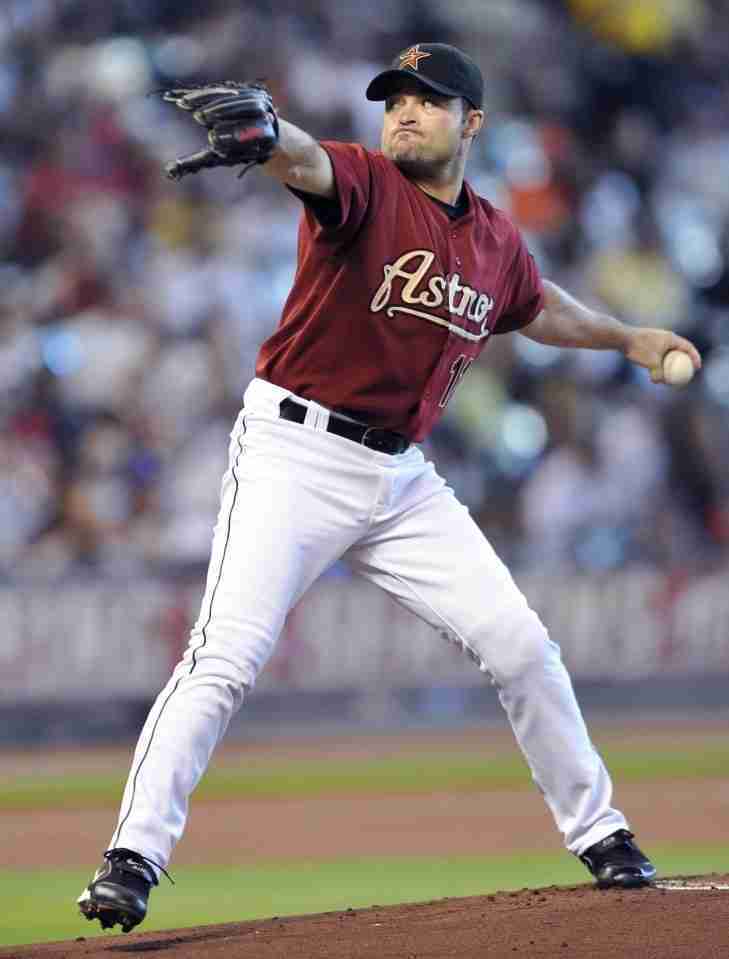
Mike Hampton joined the Houston organization in late 1993 via a savvy trade with the Seattle Mariners, a deal that sent outfielder Eric Anthony to the Mariners in exchange for the young southpaw. A versatile athlete who would eventually become one of the greatest hitting pitchers of his era, he initially cut his teeth as a reliever before moving permanently into the rotation in 1995.
The ascent to Hampton’s peak in 1999 was a study in persistent, year-over-year refinement. After establishing himself as a reliable mid-rotation arm in the mid-nineties, he evolved into the tactical leader of the Houston staff during their run of three consecutive division titles. By 1997, he had officially seized a role as a frontline winner, recording 15 victories and maintaining an ERA under 4.00 for the fourth straight season. This period of steady growth served as the essential lead-in to his historic 1999 run, showing that when a pitcher aligns elite ground-ball induction with veteran-like poise, he can become a perennial Cy Young contender.
In 1999, he was among the most successful pitchers in baseball, recording a staggering 22-4 record and a 2.90 ERA. He demonstrated a specialized ability to eat innings, leading the league in wins and finishing as the runner-up to Randy Johnson in the Cy Young voting. He showed the organization that he was a foundational winner by earning his first All-Star selection and the first of five consecutive Silver Slugger Awards, famously batting .311 during his final year in a Houston uniform.
Despite that monster year, Hampton only had one year left in his contract, and the Astros traded him to the New York Mets. Hampton compiled a 76-50 record, 715 strikeouts, and the 1999 NL wins title as an Astro.
47. Steve Finley
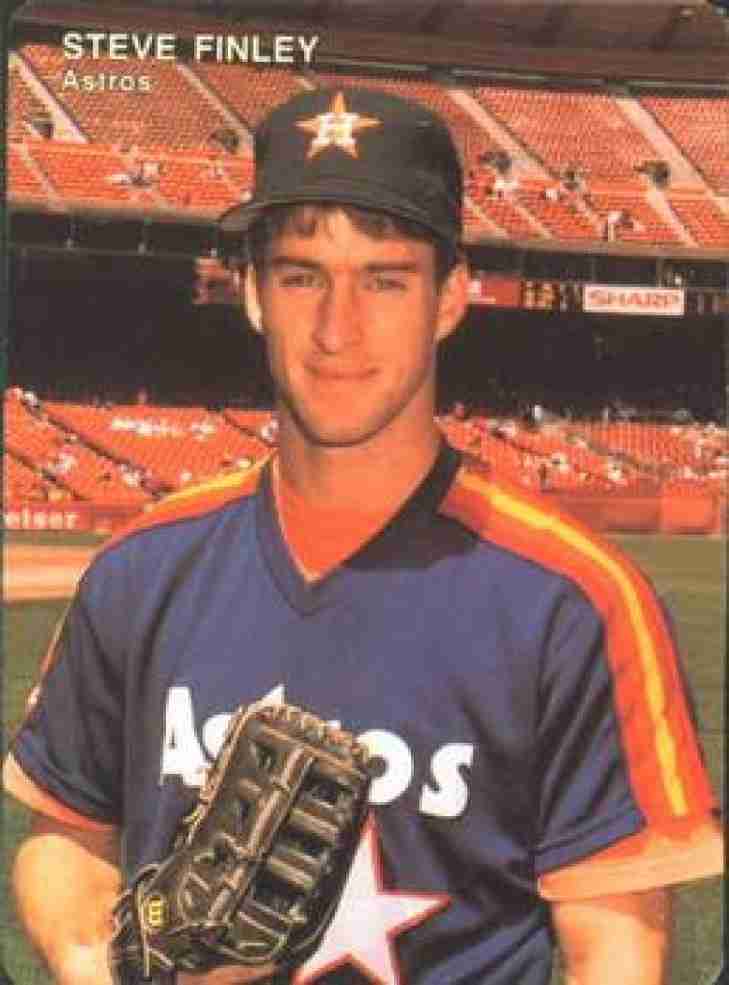
Steve Finley arrived in the Houston organization via a January 1991 blockbuster trade with the Baltimore Orioles, a deal that famously sent slugger Glenn Davis to the AL in exchange for Finley, Pete Harnisch, and a young Curt Schilling. While he had been a promising speedster in Baltimore, Finley evolved into a premier all-around threat in the National League.
Finley took over as the starting centerfielder in 1991 Spring Training, and in his second season with the Astros, Fonley used the vast dimensions of the Astrodome to his advantage, recording 13 triples and a career-high 44 stolen bases by appearing in all 162 games and recording 177 hits, finishing the year with a career-high 5.7 bWAR.
His tenure in Houston was equally defined by his specialized defensive quality in center field. While he would later gain national recognition for winning five Gold Gloves with other clubs, he actually recorded his highest career defensive efficiency in Houston, tallying a 5.0 dWAR over his four seasons with the club. Even as his power numbers remained modest compared to his later "30-homer" seasons, he remained a high-frequency contributor, leading the league in triples again in 1993 with 13.
Houston was, however, in the process of rebuilding. Finley was part of a massive 12-player trade to the San Diego Padres in December 1994, the same transaction that sent Ken Caminiti west. Finley compiled 595 hits, 110 stolen bases, and a 5.0 dWAR as an Astro.
44. Hunter Pence
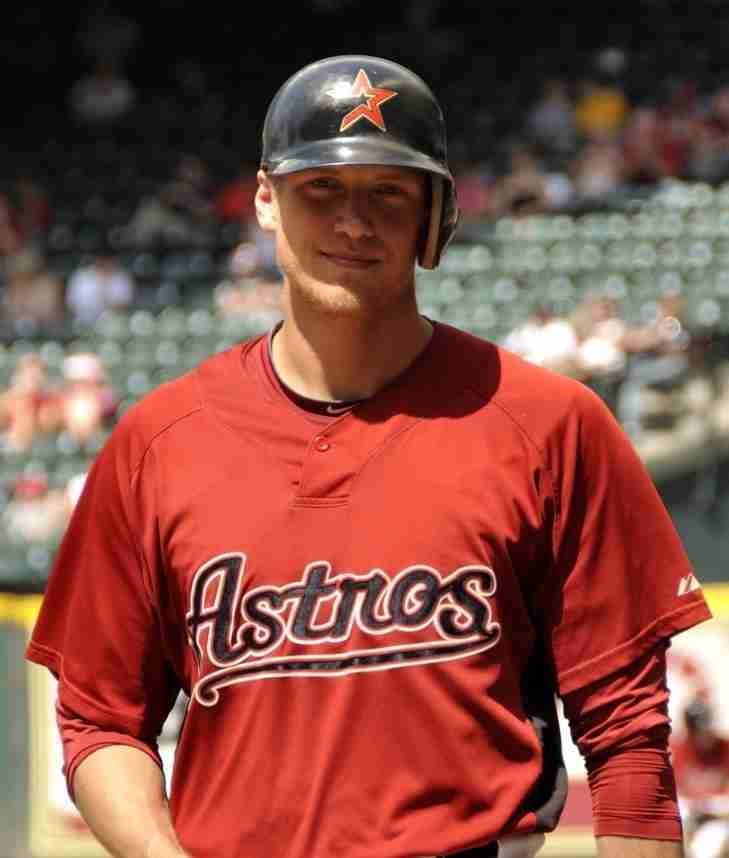
Hunter Pence arrived in the Houston organization as a second-round pick in 2004 out of the University of Texas at Arlington, a player whose unorthodox, high-energy style of play immediately stood out. He debuted in 2007 and wasted no time making an impact, finishing third in the National League Rookie of the Year voting despite playing only 108 games.
Between 2008 and 2010, he reached a level of consistency that few in the league could match, recording three consecutive seasons with at least 25 home runs and 160 hits. He showed the organization he was a foundational superstar by earning his first All-Star selection in 2009, a year in which he hit .282 and drove in 92 runs. His value was enhanced by his durability, as he played in at least 156 games in each of his three full seasons as the starting right fielder.
The 2011 campaign represented the peak of Pence’s efficiency and individual recognition in Houston. Before the trade deadline, he was batting a career-high .308 and had already earned his second All-Star nod, but he was traded in July that year to the Philadelphia Phillies for four players.
Pence compiled 777 hits, 103 home runs, and two All-Star selections.
