


Site Admin
48. Duane Bickett
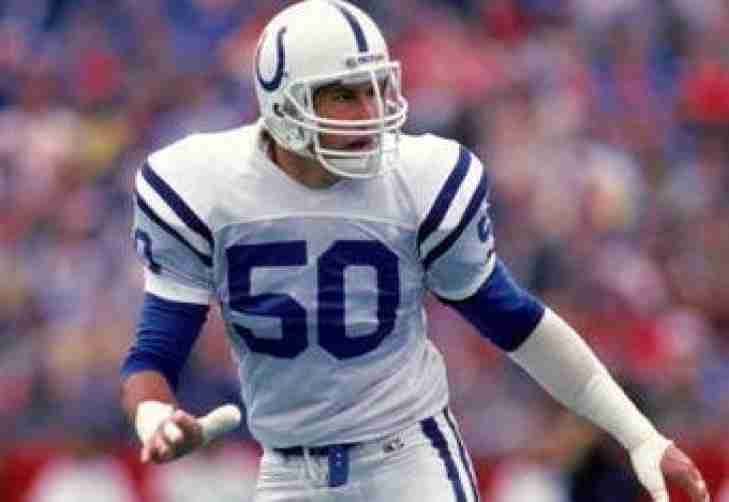
The Indianapolis Colts used the fifth overall pick in the 1985 NFL Draft on USC standout Duane Bickett, betting on a 6-foot-5, 251-pound athletic marvel who could redefine the right outside linebacker position. The move paid immediate dividends; Bickett stepped into the starting defense on day one and took the league by storm, amassing 141 tackles and 6.0 sacks to earn the 1985 AP NFL Defensive Rookie of the Year award.
Bickett’s versatility made him the central brain and primary disruptor of the Colts' late-1980s defense. An equal mix of edge pass rusher and instinctual coverage linebacker, he posted five seasons with at least 5.0 sacks in horseshoe blue. His individual peak arrived in 1987, when he compiled 8.0 sacks in just 12 games to earn both Pro Bowl and Second-Team AP All-Pro honors, anchoring an Indianapolis defense that captured the AFC East division title.
Remarkably durable across his nine active seasons in Indiana, Bickett started every single one of his 137 regular-season games for the franchise. Whether sniffing out screen passes, dropping back into hook zones, or collapsing pocket edges, his high football IQ and relentless effort made him one of the most respected linebackers of his era,
After racking up 50.0 sacks, nine interceptions, and 14 fumble recoveries in Indianapolis, Bickett spent the final three years of his 12-season NFL career with the Seattle Seahawks and Carolina Panthers.
The Chipmunk Song
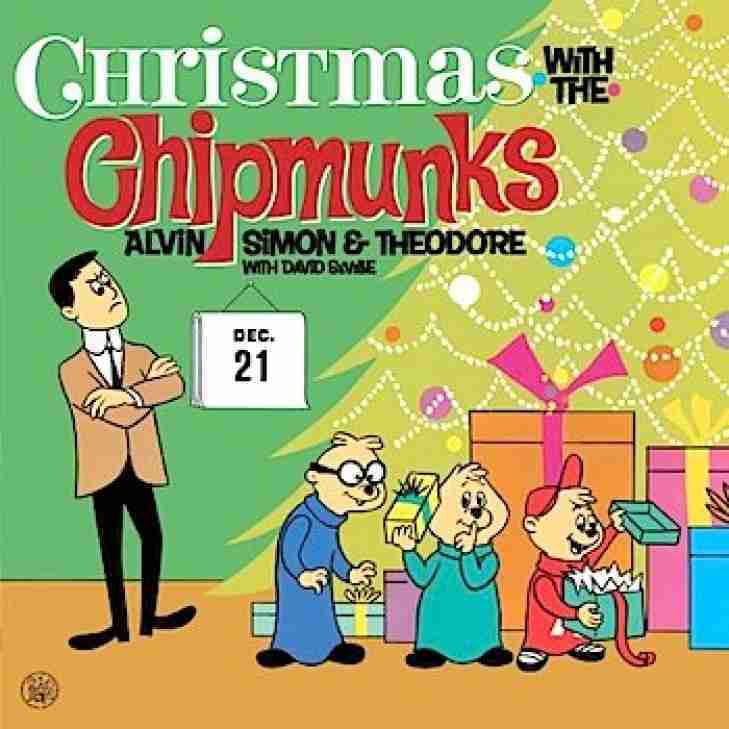
The Chipmunks with David Seville
The Chipmunk Song (Christmas Don’t Be Late)
45. Bubba Smith
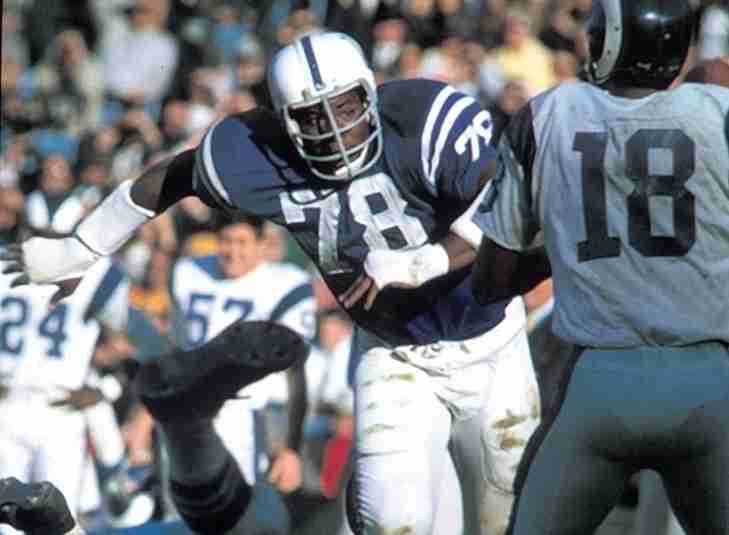
Long before pop culture knew him as the towering Moses Hightower in the Police Academy film franchise, Charles "Bubba" Smith struck genuine fear into opposing backfields as an imposing gridiron force. Selected first overall in the 1967 NFL Draft out of Michigan State, the 6-foot-7, 265-pound defensive end possessed a rare blend of length, explosive speed, and brute power that instantly transformed Don Shula’s defensive front in Baltimore.
Operating on the left side of Baltimore’s defensive trench, Smith became one of the premier pass rushers and edge setters in the National Football League. He earned Second-Team All-Pro recognition in 1968, helping anchor a defense that surrendered just 144 points all season en route to the 1968 NFL Championship. His individual production climbed even higher in 1970 and 1971, earning back-to-back Pro Bowl honors and culminating in a First-Team AP All-Pro campaign in 1971.
Smith’s defensive presence reached its apex during Baltimore’s march to glory in Super Bowl V. Teaming up with Billy Ray Smith Sr. and Fred Miller, his disruptive penetration harassed Dallas quarterbacks throughout the contest, holding the Cowboys' offense in check during a dramatic 16–13 victory to bring the Lombardi Trophy to Baltimore.
Though a tragic knee injury sustained during the 1972 preseason—after colliding with a steel yard-marker post on the sideline—forced him to miss the entire year and ultimately altered his athletic trajectory, his five-season playing run in Baltimore remains legendary.
He was traded to the Oakland Raiders in 1973 before finishing his career with the Houston Oilers. With the Colts, Smith accumulated 43 sacks in 69 games.
49. Gene Lipscomb
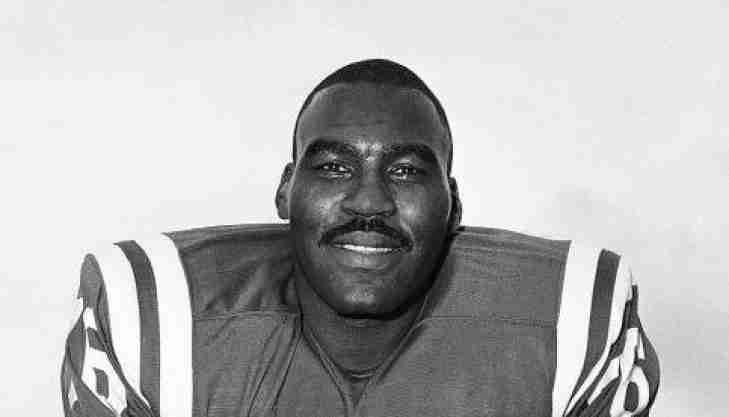
Standing 6-foot-6 and weighing a massive 288 pounds, Gene "Big Daddy" Lipscomb took one of the most improbable paths to professional football stardom in NFL history. Never attending college, Lipscomb honed his physical craft while serving in the United States Marine Corps before breaking into the league with the Los Angeles Rams as an undrafted free agent in 1953. After three seasons in Southern California where his immense potential was overshadowed by off-field friction, the Rams placed him on waivers in 1956—allowing Weeb Ewbank's Baltimore Colts to scoop up the towering defensive tackle for a mere $100 claim fee.
In Charm City, Lipscomb found structure, brotherhood, and immediate stardom. Lining up alongside Hall of Famers Gino Marchetti and Art Donovan, "Big Daddy" utilized a terrifying combination of lateral quickness and physical strength to obliterate opposing offensive lines. His signature move—a stinging slap to the earhole of holding blockers—and his unmatched range allowed him to pursue halfbacks from sideline to sideline. He led Baltimore in tackles during his second season and anchored a dominant interior front that powered the Colts to back-to-back NFL Championships in 1958 and 1959.
During those dual championship runs, Lipscomb operated as arguably the most dominant interior defender in pro football. He earned consecutive First-Team AP All-Pro selections and Pro Bowl nods in 1958 and 1959, then added Second-Team All-Pro honors in 1960. His ability to swallow up double-teams inside gave Baltimore’s linebackers complete freedom to flow to the ball, cementing his reputation as a defensive engine.
Traded to the Pittsburgh Steelers in 1961, Lipscomb played two final All-Pro-caliber seasons before his life was tragically cut short in 1963 at age 31.
