


Site Admin
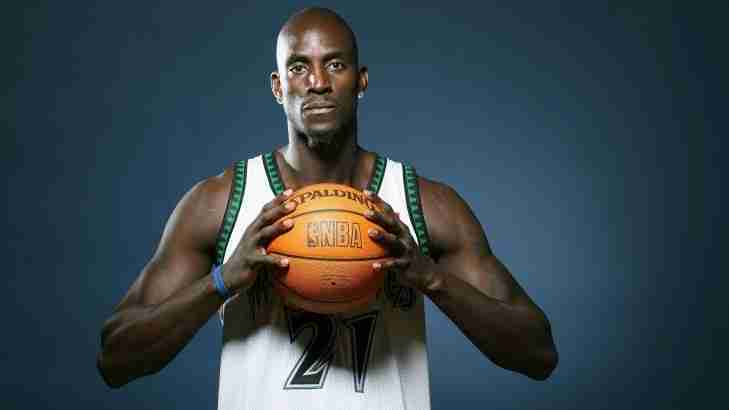
1. Kevin Garnett
42. Eric Dickerson
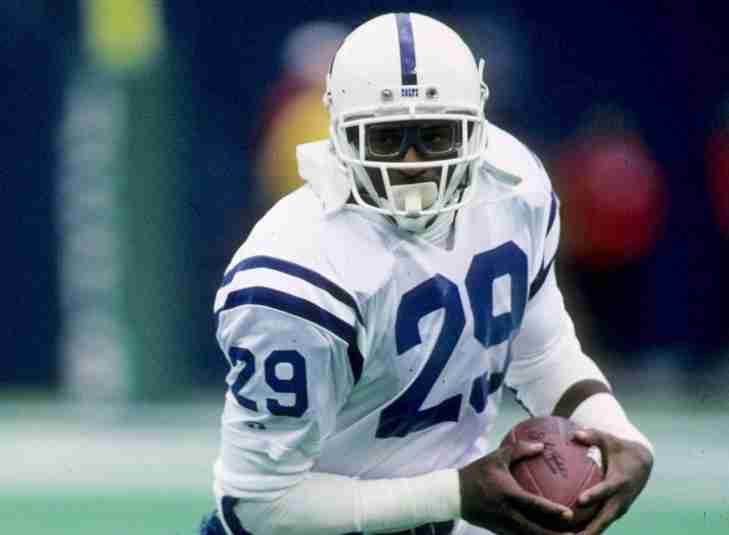
When a blockbuster three-team, ten-player trade rocked the NFL in October 1987, Eric Dickerson brought his iconic goggles, upright stride, and unmatched big-play explosiveness to the Hoosier Dome. Fresh off setting unbreakable rushing benchmarks in Southern California, the SMU star hit the ground running in Indiana, racking up 1,011 rushing yards in just nine games to power the Colts to their first AFC East title since relocating to Indianapolis.
Dickerson’s early years in horseshoe blue were nothing short of brilliant. In 1988, he put together his individual masterwork in Indianapolis, capturing the NFL rushing crown with 1,659 yards while carrying the offense on his back to earn his second consecutive First-Team AP All-Pro selection. He backed that up in 1989 with a 1,311-yard campaign, becoming the fastest runner in pro football history to reach 10,000 career rushing yards.
Yet for all his elite production, Dickerson’s tenure in Indianapolis was perpetually turbulent off the field. Bitter contract disputes, public feuds with management, and subsequent team suspensions strained his relationship with the front office and polarized fans. As injuries and age slowed his world-class speed in the early 1990s, his frustration grew, ultimately leading to a trade to the Los Angeles Raiders in 1992.
Despite the stormy exit, Dickerson’s peak brilliance in Indianapolis remains undeniable; he produced three 1,000-yard seasons and remains one of the most explosive pure ball-carriers ever to wear the uniform.
His overall legacy gained ultimate validation when he entered the Pro Football Hall of Fame in 1999, prompting the Colts to officially patch up the old wounds in 2013 by enshrining him in the Indianapolis Colts Ring of Honor. Stat-wise, Dickerson compiled 1,258 carries for 5,194 rushing yards, 32 rushing touchdowns, and 138 receptions for 1,082 yards.
47. Ted Hendricks
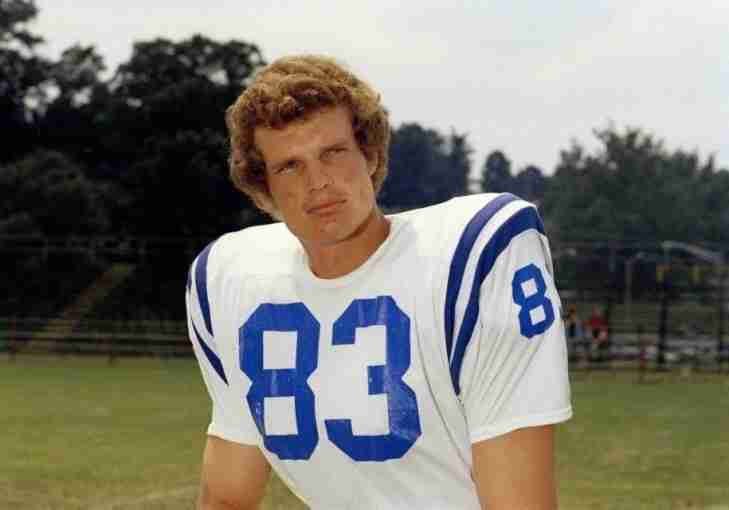
Standing 6-foot-7 with a range that redefined off-ball linebacker play in the late 1960s, Ted Hendricks arrived in Baltimore as a second-round pick out of Miami (FL) in 1989 and immediately earned his iconic nickname: "The Stork." With his towering height and immense wingspan, Hendricks transformed Don McCafferty's defense, using his frame to disrupt short passing lanes, smother sweep runs, and leap over field-goal units to block kicks with alarming frequency.
Hendricks stepped into a starting strongside linebacker role during his sophomore season in 1970, emerging as an indispensable centerpiece of Baltimore’s championship run. His spatial awareness and coverage skills were vital in Super Bowl V, where he helped bottle up the Dallas Cowboys' offense in a tight 16–13 victory to capture the first of his four career Super Bowl rings.
Over his final three seasons in Baltimore (1971–1973), Hendricks put together a dominant, peak-level stretch of linebacker play. He earned three consecutive Pro Bowl selections and a First-Team AP All-Pro nod in 1971, picking off 11 passes, recovering seven fumbles, and recording a safety in horseshoe blue. His knack for creating game-changing defensive turnovers in high-leverage moments made him one of the most feared defensive playmakers in pro football.
After the 1973 campaign, a contract dispute led to his departure for Green Bay and eventually the Oakland Raiders, where he became a legend, but he built the foundation of his Hall of Fame career in Baltimore across 70 consecutive regular-season games. Enshrined in the Pro Football Hall of Fame in 1990, Hendricks cemented his legacy as a uniquely gifted linebacker. In Baltimore, he recorded 11 interceptions for 126 return yards, seven fumble recoveries, and a defensive touchdown.
50. Bert Rechichar
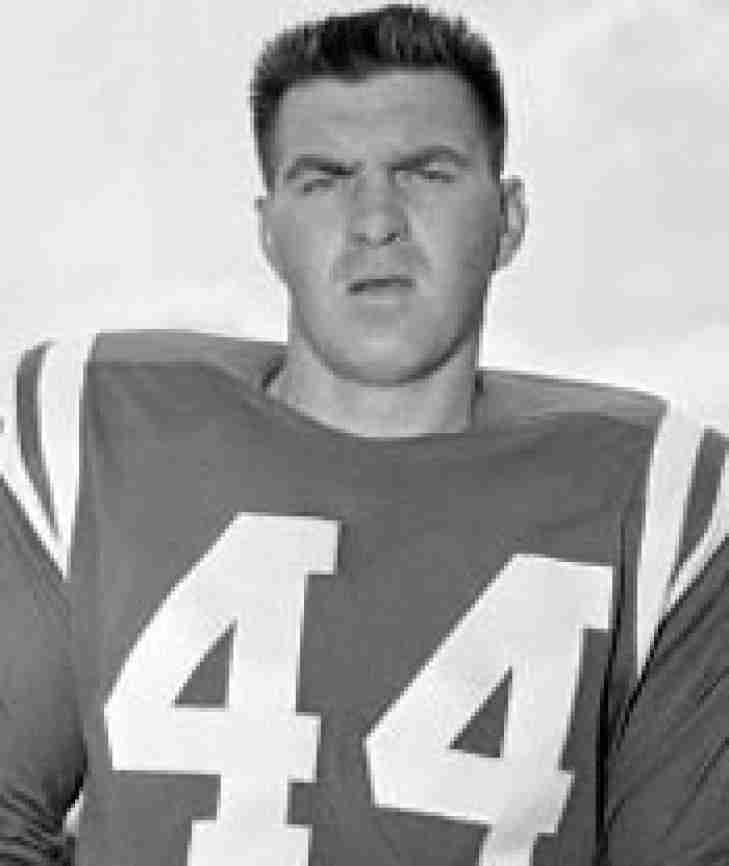
Long before specialized rosters ruled professional football, Bert Rechichar stood out as the ultimate multi-phase weapon in the early days of Weeb Ewbank’s Baltimore Colts. Selected 10th overall in the 1952 draft by Cleveland, Rechichar arrived in Baltimore in 1953 and quickly became a starter in the secondary. Known throughout the league as a bone-jarring, physically imposing safety, his instinctive range over the top gave Baltimore an aggressive backbone at the back end of their defense.
While his violent tackling set the tone on defense, Rechichar wrote his name permanently into football lore during his very first home game in Baltimore in 1953. Lining up against the Chicago Bears, he stepped back and drilled a staggering 56-yard field goal—a booming strike that shattered the previous NFL record by eight yards and stood as the longest field goal in league history for 17 years. Beyond his placekicking, Rechichar served as the team's primary return specialist and emergency punter, handling kickoffs, punts, and coverage duties with equal tenacity.
Rechichar’s individual peak in horseshoe blue came between 1955 and 1957, when he earned three consecutive Pro Bowl selections as one of the NFL’s premier safety anchors. He snagged 24 interceptions across seven seasons in Baltimore, frequently turning defense into instant offense alongside cornerbacks Carl Taseff and Don Shinnick.
His versatile contributions culminated in team triumphs at the decade's end, helping Baltimore secure back-to-back NFL Championships in 1958 and 1959 before finishing his career with brief stints in Pittsburgh and New York. With the Colts, Rechichar had 24 interceptions for 313 return yards, six fumble recoveries, 30 field goals made, 378 kick return yards, and two NFL Championship rings.
