


Site Admin
20. Marshall Faulk
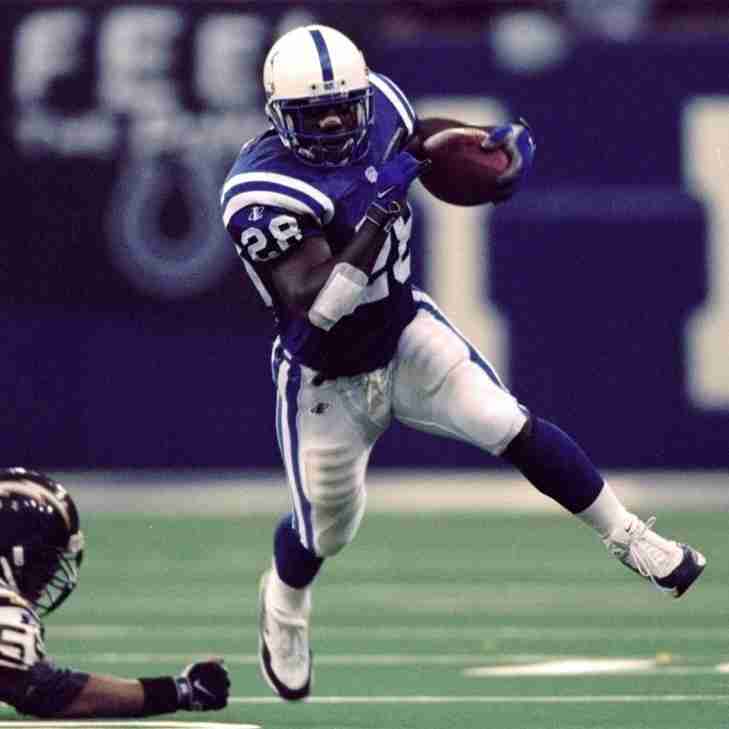
Before he became the dynamic catalyst for "The Greatest Show on Turf" in St. Louis, Marshall Faulk spent his formative years in Indianapolis completely rewiring what NFL teams expected from a modern, dual-threat running back. Selected second overall out of San Diego State in the 1994 NFL Draft, Faulk took the league by storm as a rookie, compiling 1,282 rushing yards, 52 receptions, and 12 total touchdowns to earn AP Offensive Rookie of the Year honors and an immediate Pro Bowl nod.
Despite navigating nagging injuries during his five-year run in blue and white, Faulk's brilliant multidimensional play became the backbone of the offense. Possessing elite field vision and uncanny route-running ability out of the backfield, he routinely erased linebackers in space, producing four seasons with over 1,000 rushing yards and catching at least 44 passes in all five of his campaigns in Indianapolis. His peak Colts season came in 1998, when he set a franchise record with 2,227 yards from scrimmage (1,319 rushing, 908 receiving) and earned First-Team AP All-Pro honors while serving as a crucial safety valve for rookie quarterback Peyton Manning.
Following that career year, a bitter contract stalemate prompted the Colts to make one of the most debated trades in franchise history, sending Faulk to the St. Louis Rams in the spring of 1999 for second- and fifth-round draft picks. While the Colts repurposed that draft capital to select Edgerrin James, watching Faulk win three consecutive NFL Offensive Player of the Year awards, an MVP title, and a Super Bowl ring with St. Louis left Circle City fans pondering what might have been had he remained Manning's backfield partner for the long haul.
Time eventually softened those wounds as both parties recognized the historic weight of his early brilliance. Faulk was elected to the Pro Football Hall of Fame in 2011, and the organization officially embraced his legacy two years later when he was inducted into the Colts Ring of Honor in 2013.
He compiled 1,389 rushing attempts, 5,120 rushing yards, 42 rushing touchdowns, 297 receptions, 2,894 receiving yards, and 11 receiving touchdowns for a total of 8,014 yards from scrimmage and 53 total touchdowns for the Colts.
39. Eugene Daniel
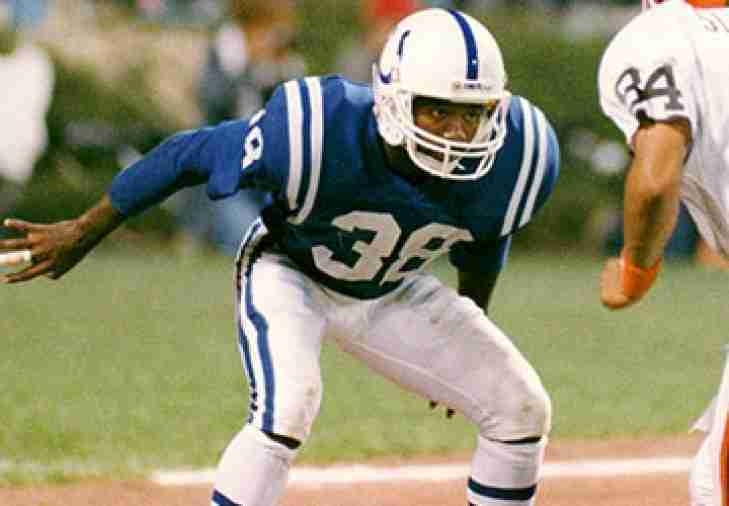
When the Colts packed up and moved to Indiana in 1984, few imagined that an eighth-round longshot out of LSU would end up defining perimeter defense in the Hoosier State for the next thirteen years. Eugene Daniel didn't just earn a roster spot as a rookie flyer—he seized the starting cornerback role with a fierce, physical edge that made him an immediate fan favorite and an immovable anchor in the Indianapolis secondary.
Daniel’s breakout sophomore campaign in 1985 cemented his status as one of the game's most underrated ball hawks. Picking off eight passes to finish tied for second in the National Football League, he authored his signature moment in March of that season against the New York Jets: stepping in front of a pass in his own end zone and racing 97 yards for a touchdown—a franchise record for the longest interception return for a touchdown in Colts history that still stands.
Despite playing through multiple coaching transitions and defensive schemes, Daniel served as a locker room general whose physicality set the tone for Indianapolis. He anchored the secondary during the 1987 AFC East title run and remained a key veteran corner during the team's dramatic run to the 1995 AFC Championship Game, consistently matching up against the opposition's top wideout.
Durable and loyal across 13 active seasons in Indianapolis (1984–1996), Daniel played in 185 regular-season games for Indianapolis—ranking among the highest game totals in franchise history—before concluding his 14-year career with a final season with the Baltimore Ravens in 1997. With the Colts, Daniel compiled 35 interceptions.
34. Ryan Diem
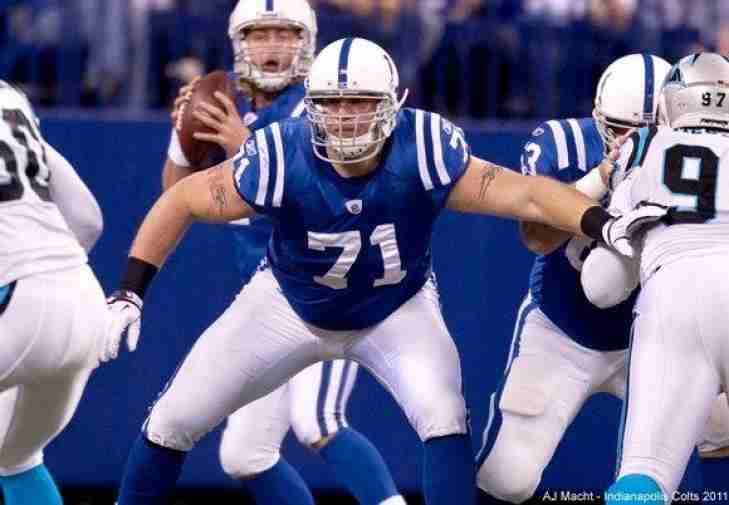
Drafted in the fourth round (118th overall) of the 2001 NFL Draft out of Northern Illinois, Ryan Diem arrived in Indianapolis as a powerful, 6-foot-6 interior prospect who quickly carved out a permanent home on the edge. After proving his mettle as a rotational guard in his debut season, Diem transitioned full-time to right tackle in 2002, securing a starting position he held with exceptional consistency for a decade.
Operating on the strong side of one of the most prolific offenses in pro football history, Diem provided crucial edge protection for Peyton Manning's lightning-fast pre-snap rhythm. Possessing a wide base and heavy hands, he locked down pass rushers while setting a physical edge for Edgerrin James and Joseph Addai in Howard Mudd’s zone-blocking scheme. While high-profile national awards often overlooked right tackles of his era, Diem’s steady reliability in pass sets allowed Manning to operate with complete comfort inside the pocket.
Diem’s quiet dominance was a cornerstone of Indianapolis' golden championship era. He anchored the right side of the front five throughout the 2006 postseason, culminating in a stellar blocking performance in the rain at Super Bowl XLI to help secure a 29–17 victory over the Chicago Bears and bring the Lombardi Trophy to Indianapolis.
Durable and unselfish across 11 NFL seasons, he retired after the 2011 season. Diem appeared in 157 regular-season games and made 150 starts in horseshoe blue, routinely battling through injuries to keep the Colts' high-octane offense operating at peak efficiency.
31. Jerry Logan
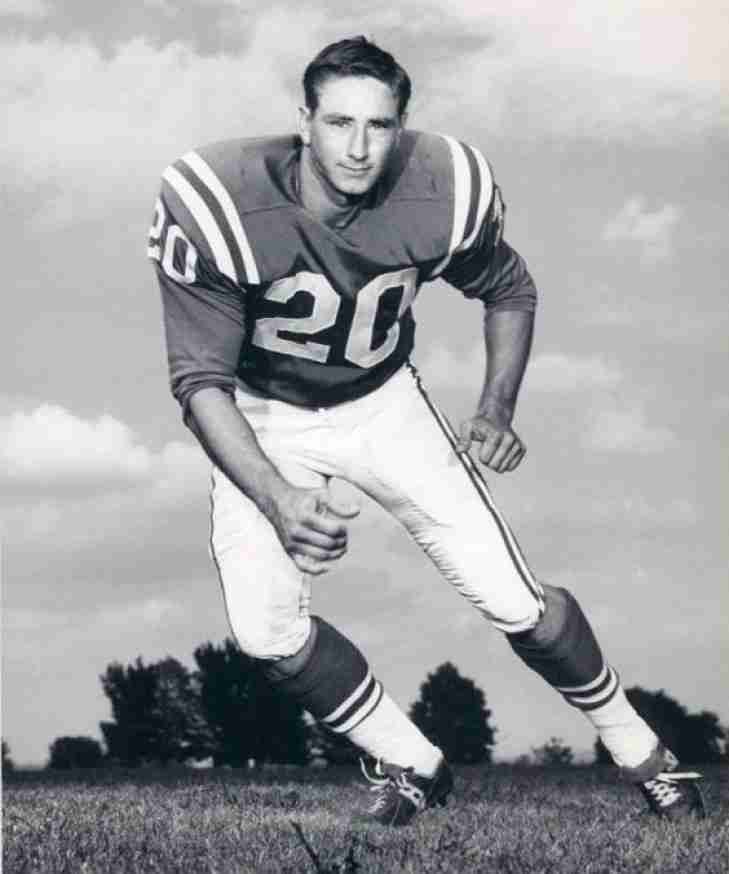
Selected in the third round (41st overall) of the 1963 NFL Draft out of West Texas State, safety Jerry Logan arrived in Baltimore with exceptional speed, ball-hawking instincts, and positional versatility. He carved out an immediate role on special teams as a dangerous kickoff and punt returner while earning snaps in a crowded secondary, quickly becoming a reliable fixture at strong safety for legendary head coach Don Shula.
Logan’s nose for the football made him one of the most prolific turnover machines in franchise history. Alongside free safety Rick Volk, Logan anchored Baltimore's "Organ Grinders" defense that led the Colts to the 1968 NFL Championship and an appearance in Super Bowl III. His play elevated even higher in 1970, when he picked off six passes—returning two for touchdowns—to earn First-Team AP All-Pro honors and his second of three Pro Bowl selections.
His ball-security instincts proved vital during Baltimore's run to glory in Super Bowl V. Logan was a centerpiece of a defensive unit that held the Dallas Cowboys to just 13 points in a dramatic 16–13 victory, securing the franchise's first Super Bowl title and wiping away the sting of two years prior.
Beyond his coverage range in the secondary, Logan remained an indispensable special-teams weapon throughout his career, amassing nearly 1,000 combined return yards. He was a Colt for his entire career and compiled 34 interceptions with 1,203 all-purpose yards.
