


Site Admin
38. Billy Ray Smith
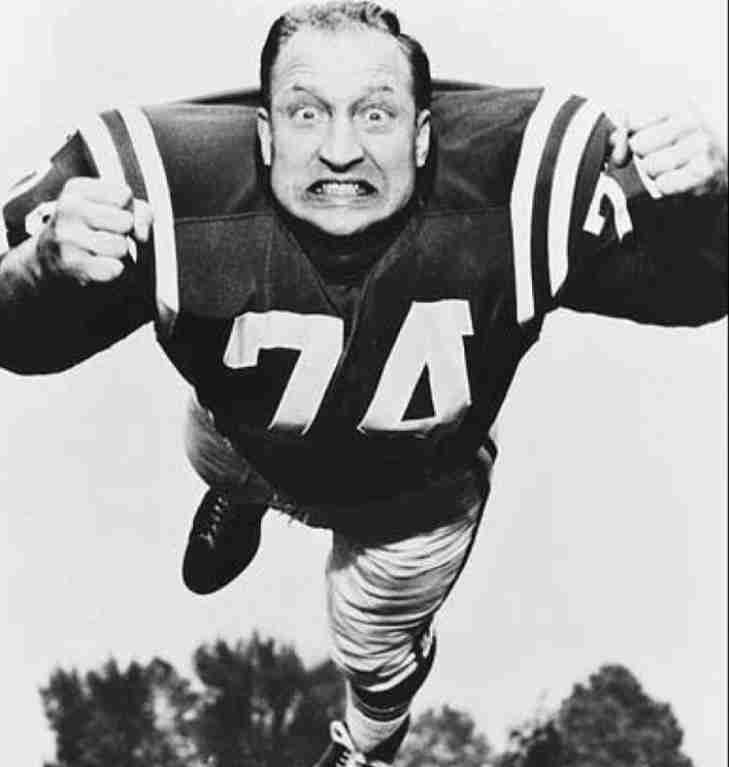
Long before he put the final exclamation point on his 13-year career in orange-squeezed Super Bowl V glory, Billy Ray Smith Sr. arrived in Charm City as a seasoned, battle-tested interior force. Drafted out of Arkansas in 1957, the Augusta native spent his early seasons with the Rams and Steelers before joining the Baltimore Colts in 1961. Smith instantly plugged into the defensive line rotation, bringing relentless leverage, technique, and an unrelenting work ethic that earned him the fond nickname "Rabbit"—a nod to his surprising quickness off the snap for a 250-pound defensive tackle.
Smith’s greatest asset was his rock-solid adherence to defensive fundamentals and unshakeable locker room presence. As a multi-year defensive captain under head coaches Don Shula and Don McCafferty, he anchored the interior alongside Bubba Smith and Fred Miller, establishing a stout front that neutralized opposing ground attacks. His individual peak arrived during the historic 1968 campaign, where he earned Second-Team AP All-Pro honors while helping power Baltimore's dominant defense to the 1968 NFL Championship title.
His career reached a storybook conclusion in 1970. Operating as the heart and soul of the defense at age 35, Smith helped guide the Colts through a gritty playoff run that culminated in Super Bowl V against the Dallas Cowboys. In a hard-hitting 16–13 victory, Smith’s interior wall held firm, securing the franchise's first Super Bowl ring and providing the veteran captain with a perfect fairy-tale exit from professional football.
Durable and steady across a decade for the Shoe, Smith appeared in 133 regular-season games for Baltimore, serving as a trusted leader through one of the most successful eras in team history. Retiring immediately after that Super Bowl V victory, Smith left the game as a two-time champion who set the benchmark for professionalism and defensive line play in Baltimore. He recorded 69.5 sacks in Baltimore.
35. Dick Syzmanski
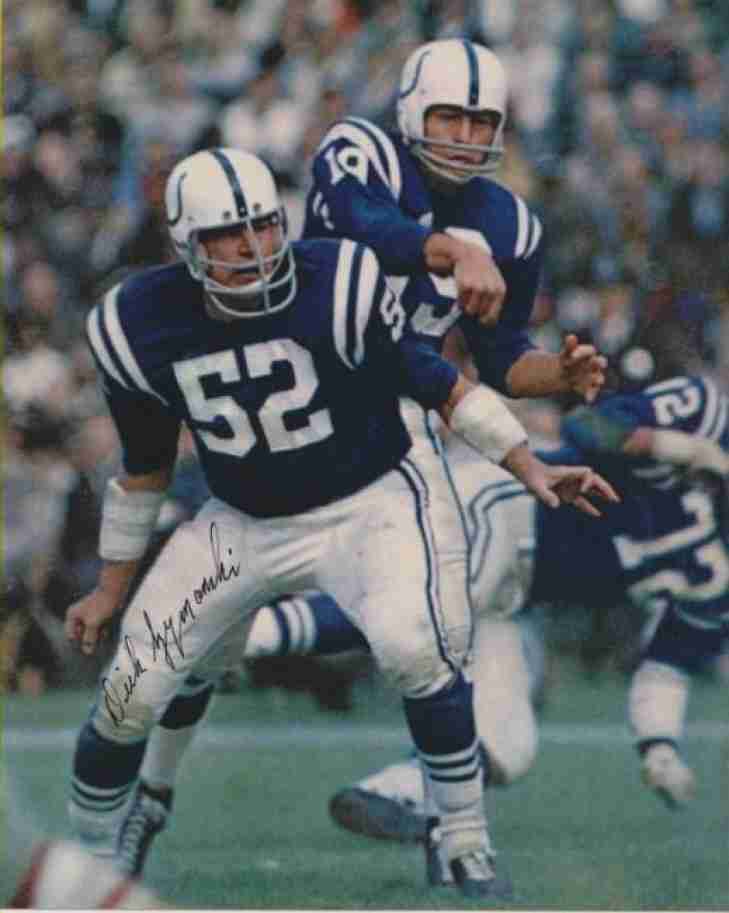
Few players in professional football history have personified two-way versatility like Dick "Sizzy" Szymanski, an iron-jawed pivot who could snap to Johnny Unitas on one drive and drop back to wallop opposing halfbacks on the next. Emerging from Notre Dame in 1955, Szymanski hit Baltimore like a physical revelation, jumping straight into the starting center spot as a rookie to earn Pro Bowl honors before putting his gridiron career on hold to serve his country in the U.S. Army.
After missing the entire 1956 season due to military service, Szymanski returned to a roster that needed his grit on the other side of the ball. Head coach Weeb Ewbank shifted him to middle linebacker for the 1959 and 1960 campaigns, where Szymanski flanked Don Shinnick and Bill Pellington to form one of the league's most punishing linebacking trios. His instinctive play inside proved vital during Baltimore's run to their second consecutive title in 1959, including a 31–16 victory over the New York Giants in the NFL Championship Game.
Returning to his primary center position in 1961, Szymanski re-established himself as one of the game's premier offensive line generals. Serving as the pre-snap caller and protector for Johnny Unitas, he played in 80 consecutive regular-season games from 1959 through 1964, earning two additional Pro Bowl invitations in 1962 and 1964 while anchoring a front line that powered Baltimore back to the top of the league.
Durable, tough, and fiercely loyal across 13 active seasons spent exclusively in horseshoe blue and white, Szymanski appeared in 155 regular-season games, winning three NFL Championship rings (1958, 1959, 1968) before transitioning directly into a multi-decade front office career with the franchise as a scout, personnel director, and general manager.
Syzmanski left the gridiron with 129 starts, 6 interceptions, and one of the most solid reputations in franchise history.
33. Jimmy Orr
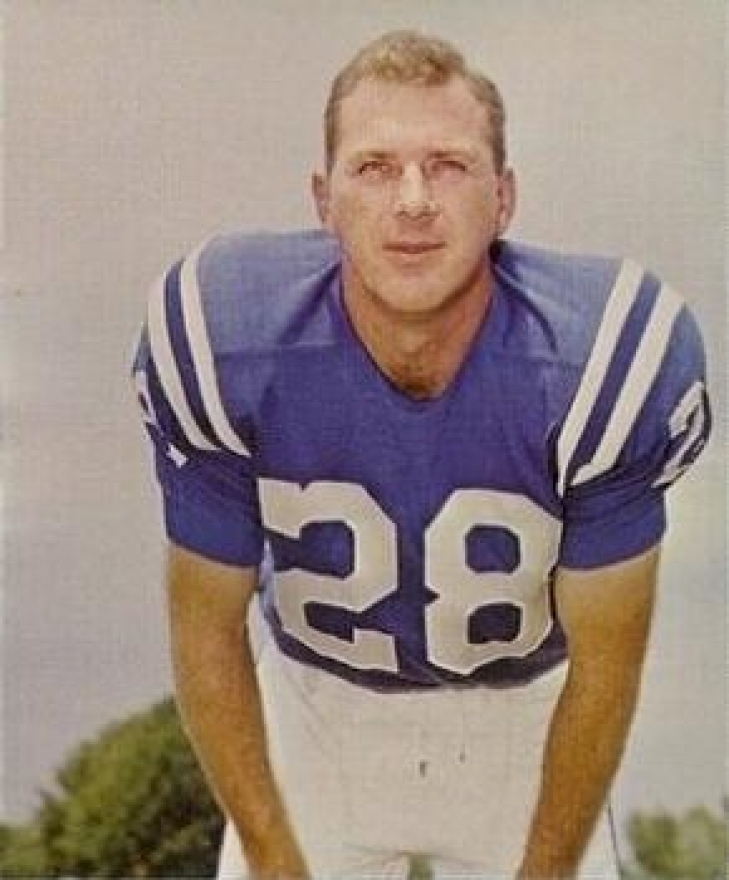
Long before he became Johnny Unitas' favorite downfield target in Charm City, Jimmy Orr proved his big-play pedigree in Pittsburgh. Drafted in 1958 out of Georgia, Orr captured AP NFL Rookie of the Year honors and earned a Pro Bowl bid with the Steelers before a blockbuster multi-player trade brought him to Baltimore in 1961. Lined up opposite Raymond Berry, Orr brought explosive field-stretching vertical speed that gave the Colts' offense an entirely new dimension.
Orr’s signature trait was his staggering big-play efficiency. Possessing exceptional boundary tracking and deep-ball acceleration, he led the entire National Football League in yards per reception twice during his ten seasons in Baltimore—averaging a ridiculous 21.7 yards per catch in 1964 and an incredible 25.6 yards per catch in 1968. Across his ten campaigns in horseshoe blue, Orr averaged 22.9 yards per catch, a mark that stands as one of the most explosive multi-year runs in pro football history.
His individual peak arrived in 1965, when he put together a dominant First-Team AP All-Pro season. With 45 receptions for 847 yards and 11 touchdown catches, Orr earned his second career Pro Bowl selection and established himself as one of the game’s premier flankers. He finished in the NFL's top ten in receiving yards three times during his Colts tenure (1962, 1964, and 1965).
Despite being famously missed by Earl Morrall on the infamous "flea-flicker" play in Super Bowl III while standing wide open in the end zone, Orr found ultimate narrative redemption two years later. In Super Bowl V against the Dallas Cowboys, Orr helped Baltimore secure a dramatic 16–13 victory, walking off the field for the last time as a Super Bowl champion.
With the Colts, Orr caught 256 passes for 5,859 yards and 50 touchdowns, averaging a stunning 22.9 yards per reception.
37. Don Shinnick
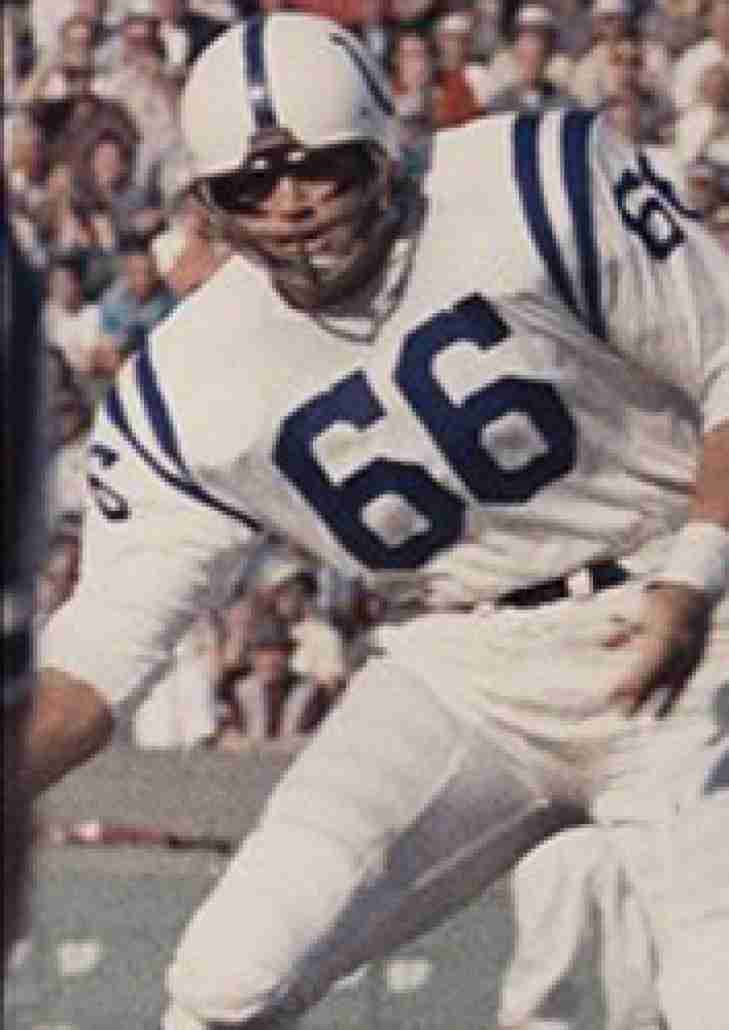
Selected in the second round (20th overall) of the 1957 NFL Draft out of UCLA—where he starred as a two-way fullback and linebacker—Don Shinnick stepped into Baltimore's linebacking corps with an extraordinary nose for the football. Joining Weeb Ewbank's defense alongside Bill Pellington and Gino Marchetti, Shinnick immediately solidified the interior, displaying rare spatial awareness and zone-coverage instincts.
Shinnick’s defining superpower was his unprecedented ability to drop into coverage and snatch opposition passes out of the air. While middle linebackers of the late 1950s were expected primarily to stuff the run, Shinnick revolutionized second-level pass defense. His career apex came in 1959, when he tied for the NFL lead with seven interceptions, earning Second-Team AP All-Pro honors while anchoring Baltimore's defense during their second consecutive NFL Championship run.
Beyond his coverage prowess, Shinnick stood as a relentless, bone-jarring tackler who consistently diagnosed plays before they unfolded. His diagnosing ability enabled Baltimore to capture back-to-back world titles in 1958 and 1959, culminating in his starting role on the 1968 NFL Championship team that reached Super Bowl III.
Loyal and durable across 13 active seasons spent exclusively in Baltimore, Shinnick played in 166 regular-season games for the franchise, picking off at least one pass in 12 of his 13 NFL campaigns. He finished with 37 interceptions for 255 return yards and nine fumble recoveries.
