


Site Admin
16. Mike Caldwell
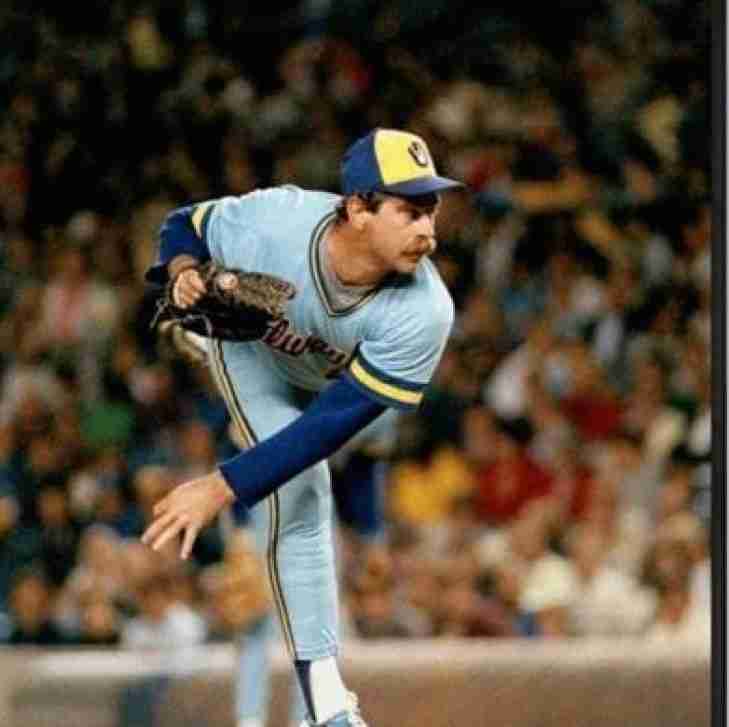
Acquired as a mid-season trade from Cincinnati, Mike Caldwell arrived in Milwaukee during the 1977 season. Caldwell was a left-handed sinkerballer who had bounced through three organizations in the early '70s. After settling in with a solid second half in his debut year, he transformed into the quintessential "Yankee Killer" and a tactical mainstay of the Brewers' rotation.
In 1978, Caldwell produced a remarkable season, ending with a career-best 22 wins and a .710 winning percentage. He dominated opposing lineups by leading the American League with 23 complete games and achieving a notable 2.36 ERA. This outstanding performance earned him the AL Comeback Player of the Year award and a second-place finish in the Cy Young voting, behind Ron Guidry's historic season.
Between 1979 and 1983, he achieved double-digit victories for six seasons. He had a durable arm, often pitching over 200 innings, and was a steady presence supporting a strong offense. Notably, he was a threat to the Yankees, with a 12-5 record and 2.66 ERA against them.
During the 1982 American League Pennant run, Caldwell provided some of the most clutch pitching in team history. While he was a professional workhorse during the regular season, he found an even higher gear in the 1982 World Series against St. Louis. He authored a brilliant performance in Game 1, throwing a complete-game shutout, and finished the Series with a 2-0 record and a 2.04 ERA.
Caldwell retired after the 1984 season. As a Brewer, he posted a 102-80 record, a 3.74 ERA, and 81 complete games.
15. Gorman Thomas
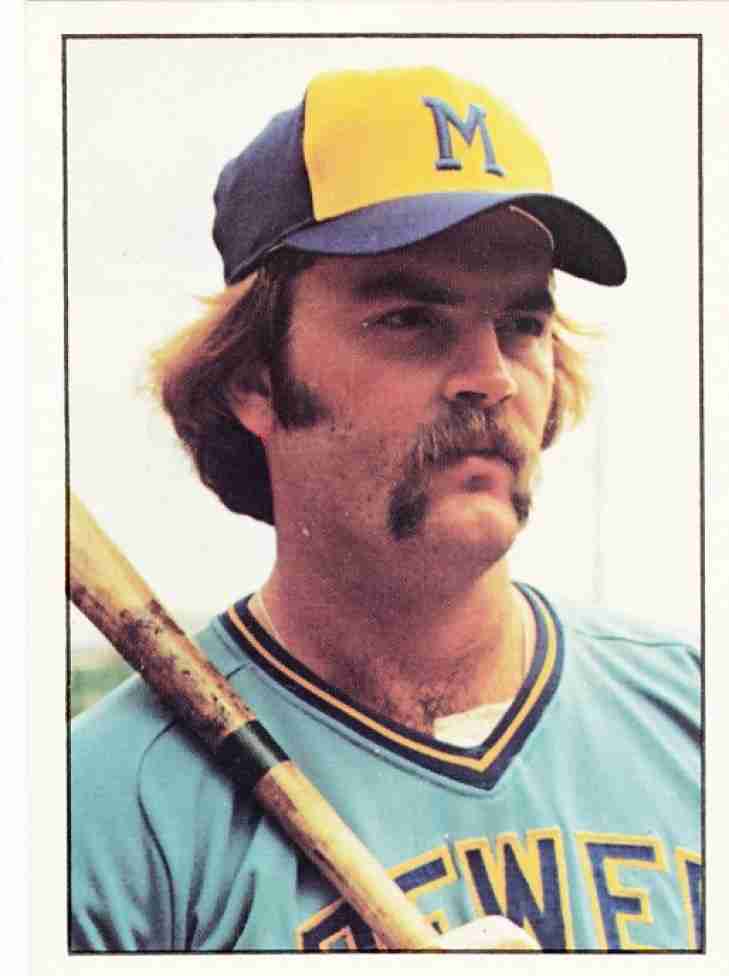
Gorman Thomas commenced his tenure in Milwaukee as the inaugural draft selection for the recently relocated franchise in 1969. He was a center fielder originating from South Carolina, characterized by an unwavering, all-or-nothing batting approach. Although the initial years of his career involved fluctuations between Major League Baseball and minor leagues, including an unusual 1977 season during which he was effectively concealed on the Rangers' roster through a paper transaction, he rejoined the team in 1978 to become the strategic power man of the most formidable lineup in the club’s history.
In 1978, during his first season back with the team, Thomas showcased his power by hitting 32 home runs. He reached a career-defining peak in 1979, setting a standard for Brewers players; he led the American League with 45 home runs and had 123 RBIs, finishing seventh in MVP voting. At this time, he became the first AL center fielder besides Mickey Mantle or Joe DiMaggio to hit at least 45 homers in a season.
In 1982, he was the power-hitting leader for the legendary "Harvey’s Wallbangers" team. He demonstrated expert control of the deep ball, leading the league with 39 home runs for the second time and driving in 112 runs, helping the Brewers secure their first American League pennant. Although he was known for leading the league in strikeouts twice, his main strength was his ability to perform in clutch situations, finishing eighth in MVP voting and participating in the 1982 World Series.
In June 1983, a high-stakes trade sent him to the Cleveland Indians for Rick Manning, a move that left the city in mourning. However, he returned for a final swan song in 1986, finishing his journey where it began before retiring at the end of the year. Thomas compiled 1,051 hits, 208 home runs, and 605 RBIs as a Brewer.
18. Carlos Gomez
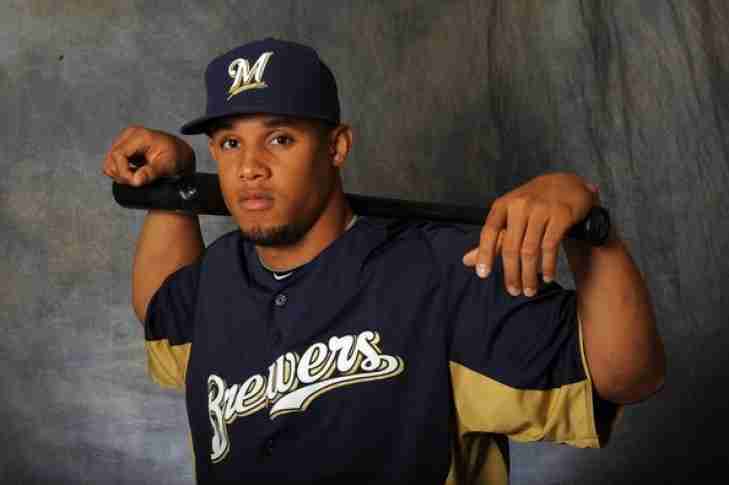
A raw athlete from the Twins organization, Carlos Gomez was traded to the Brewers in 2010, bringing with him unmatched speed but an undisciplined approach at the plate.
In 2012, Gomez achieved a new level of production with 19 home runs and 37 stolen bases, highlighting his athleticism. He followed with a historic 2013 season, earning his first Gold Glove, the first Brewer in 31 years, and his first All-Star selection. He finished with a career-high 24 homers, 40 stolen bases, ranked 9th in MVP voting, and led the National League in bWAR (7.6).
At this time, Jenkins was also showing great work with the leather, winning the Wilson Defensive Player of the Year Award in back-to-back seasons (2012–2013) and earning a reputation for robbing home runs at the wall. In 2014, he reached a second consecutive All-Star plateau, batting .284 with 23 home runs and 34 stolen bases.
In the middle of the 2015 season, they traded Gomez and Mike Fiers to the Houston Astros in July for a package of prospects that included Josh Hader and Domingo Santana. As a Brewer, Gomez compiled 601 hits, 87 home runs, and 152 stolen bases.
14. Jeff Cirillo
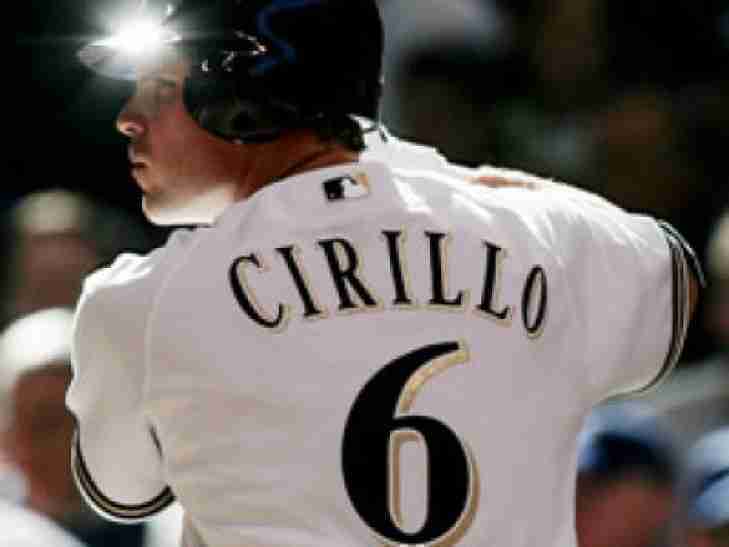
Jeff Cirillo, an 11th-round pick in 1991, was a steady right-handed hitter and a fixture at third base. Though he played for several teams, his time in Wisconsin marked him as one of the most consistent contact hitters for the Brewers.
Debuting in 1994, Cirillo quickly rose to the top tier of American League hitters. From 1996 to 1998, he showed a thorough understanding of the strike zone, batting at least .321 twice and earning his first All-Star spot in 1997. He displayed a professional style centered on line drives and power between gaps, hitting 46 doubles in two consecutive seasons.
His best season with the Brewers was in 1999, a year that cemented his spot in the record books. He achieved a career-high 198 hits and a .326 batting average. He finished the year third in the league in hits. Cirillo was traded to Colorado after that year in a high-stakes gamble, but he returned to the Brewers in 2005 as a veteran presence. He showcased a resilient second act, batting .319 in 2006 and recording his 1,000th hit as a Brewer on the season's final day.
