


Committee Chairman
5 Rock Star Hookups That Turned into a Relationship
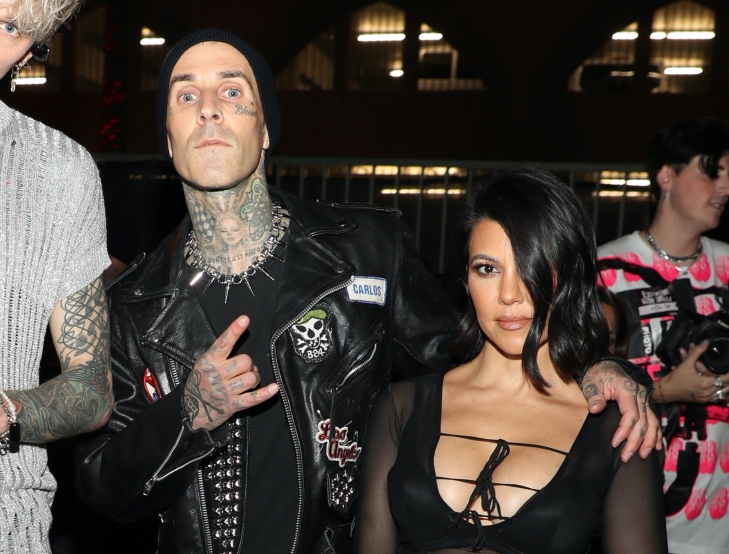
Everybody loves hookups because they are fun and exciting. Seeing the passion in the eyes of someone new, someone you barely know, while they give you a satisfied look is one of the best feelings in the world. And if anyone gets used to that feeling, those must be rock stars. They can get a hookup whenever they want with almost anyone they want. Nowadays, that’s possible for regular people as well. Online dating sites gather people seeking the same type of relationships, so getting extremely casual dates isn’t a big deal. But we won’t make a list of rock stars who love hookups because that would include 99% of them. We’ll look into stars who stayed with their partners after a night of fun.
Travis Barker and Kourtney Kardashian
Travis Barker is one of the best drummers in the last 30 years who played for The Aquabats, Box Car Racer, +44, The Transplants, and Blink-182. He’s no stranger to hookups and relationships with stunning women, but one stands above the rest.
Kourtney Kardashian is one of the Kardashians, so she’s famous for being herself. Travis and Kourtney have been friends for years, but they’ve hooked up in 2021 (or late 2020). That wouldn’t be surprising because celebrities hook up with each other. The surprising part is that Travis and Kourtney stayed together and became a real couple. So all the guys who hope to see Kourtney’s profile on the site for a local hookup can lower their hopes. They won’t meet any Kardashian there, but they can meet many local girls and get casual dates. There are even dating sites only for celebrities. However, regular people can’t join them, so it’s better to stick to proven sites.
Benji Madden and Cameron Diaz
Benjamin Levi Madden is an American musician, singer, songwriter, producer, and the founder of the band Good Charlotte. He plays the lead guitar and sings as a backing vocalist. Benji founded Good Charlotte in 1996 with his identical twin brother. They’ve collaborated with other musicians, but Benji fell for an actress.
Cameron Diaz is cute, bright, and stunning. One of Charlie’s Angels became Benji’s personal angel after a casual hookup. The couple got married in 2015, and they have a daughter together. Cameron said that she loves her husband for teaching her how to value herself more. Guess even Hollywood stars also have self-esteem issues. They never had any trouble in the relationship like some other rock stars. Simon Le Bon from Duran Duran is just one example.
Pamela Anderson and Tommy Lee
Sadly, Pamela Anderson and Tommy Lee weren’t that lucky. And no, we aren’t talking about the famous video. We’re talking about domestic violence that led to their divorce after only 3 years of marriage. But let’s start from the beginning.
The couple met for the first time in the Hollywood club Sanctuary on New Year’s Eve in 1994. Pam approached Mötley Crüe’s founder and drummer to give him her number. They hooked up but quickly fell in love, so they stayed together. They have 2 sons together.
Alice Cooper and Sheryl Goddard
Alice Cooper and Sheryl Goddard have been together for over 40 years. Read that again. He’s a rock star who could hook up with most women on Earth, yet he’s married to the same woman for 40 years. Sheryl Goddard is one of the happy ladies who managed to seduce rock stars, but she’s also one of the rare ladies that might spend 50 years married to the same rock icon. The couple met in 1975 when Sheryl began dancing in Alice’s stage performances.
David Bowie and Ola Hudson
Most people don’t know who Ola Hudson is, but this story becomes much better when you know that lady is Slash’s mom. Yes, the legendary guitarist of Guns N’ Roses had to deal with a rock star dealing with his mom. David Bowie dated Ola Hudson for a while when Slash was a little boy. Slash even shared that Bowie used to tuck him in at night as a stepdad would do. Who knows how many celebrity stories like that one will never become public. Too bad.
We see rock 'n' roll stars build relationships and want to follow our idols. These contacts can be a one-night stand, or something more serious. In both cases, online dating is a good option for finding dates if you don't have a strong fan base and don't hang out at fashionable parties.
Our All-Time Top 50 Boston Red Sox have been revised to reflect the 2021 Season
Yes, we know that this is taking a while!
As many of you know, we here at Notinhalloffame.com are slowly generating the 50 of each major North American sports team. That being said, we have existing Top 50 lists out and we always consistently look to update them when we can and based on necessity. As such, we are very happy to present our pre-2022 revision of our top 50 Boston Red Sox.
As for all of our top 50 players in baseball we look at the following:
1. Advanced Statistics.
2. Traditional statistics and how they finished in the American League.
3. Playoff accomplishments.
4. Their overall impact on the team and other intangibles not reflected in a stat sheet.
Boston made it to ALCS where they lost to the Houston Astros, and they are again loaded in 2022. No new players entered our Top 50, and there is only one active player on the team who rose based on his 2021.
As always, we present our top five, though there were no changes.
1. Ted Williams
4. Wade Boggs
5. Cy Young
You can find the entire list here.
Current Red Sox Infielder, Xander Bogaerts, climbed to #29 from #42.
We welcome your input and comments and as always, we thank you for your support.
Top Overlooked Games That You Need to Try
The standard of computer games has only risen over the years as we get classics, expand them, make them better, and also come out with new and exciting games at the same time. As such, gamers today are absolutely spoilt for choice when deciding what they would like to play.
There are a number of exciting games, such as sporting NFL games where you can play as some of the best players in the world, shooter games, and sci-fi games that transport you to a new world. Of course, where we have classic games and games that get the recognition that they deserve, we also get some titles that fall under the radar and remain overlooked. This is a real shame because they are usually excellent games to play and have simply not been picked up because of poor timing of their release.
This article is going to go into a bit more detail about what some of these overlooked games are and why people should play them.
Many Online Casino Games
Online casino games were already seeing a huge rise in popularity, but this was accelerated in recent years as a result of the pandemic. Many people who were happy going to casinos are now more content within the confines of their own homes, enjoying some of the new and different games that have been made available.
Your favourite slots are already available on a number of different online casino websites, but the sheer number of options means that many are overlooked. Different online casino sites do not just have the game roulette or slot machines but instead have a number of variations on the classics. As such, you tend to find that a lot of amazing titles do not get the recognition they deserve, as they are competing against a number of different games at the same time.
Roulette is an incredibly popular option on these gambling sites that you should certainly consider trying. If you want to find some of the different roulette games available then be sure to check this website.
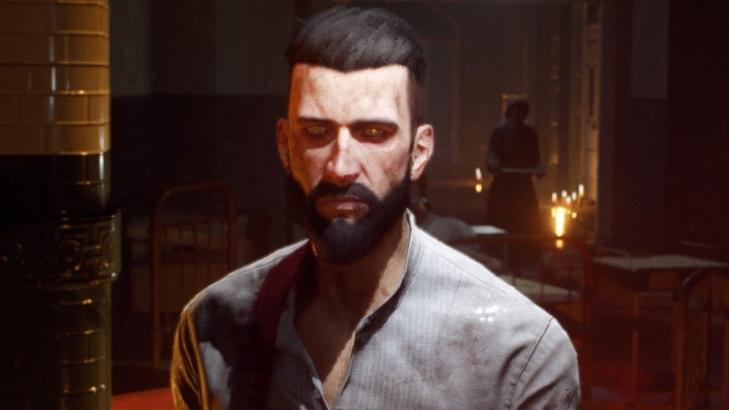
Vampyr
This game is one that was released on a number of consoles, including PlayStation and Xbox. This was a product of Dontnot Entertainment, which created the game Vampyr and set it just after World War I. It was an action-role-player where the player takes on the persona of a doctor who has just been turned into a vampire. The doctor is left in an incredibly awkward position, as he has to then decide whether or not he should stick to the Hippocratic Oath or feed on the living.
The world that is established within this game truly is unique as players meet an exciting range of different characters, all of whom (more or less) can be sacrificed with the intention of helping your character become stronger. There are a number of supernatural abilities at your disposal, as well as a cool and atmospheric take on London, all of which come together and make a great game to play.
The Surge
The Surge is the product of Deck13, which released the game on PlayStation, Xbox, and PC. It was very different from their previous fantasy game, Lords of the Fallen, as The Surge has a very heavy science-fiction and action RPG style to it. The game played with a limb-targeting system available, which allowed players to improve their aim on those they were trying to hit. There were also different exo-suits and upgrades for those exo-suits available, which meant that players could tailor their characters, so they were more suitable for them. There was a sequel released, which seemed to get a bit more praise, but the original was definitely overlooked and is certainly worth a play for anyone who is interested in science fiction games.
Nex Machina
Released on the PC and PlayStation, Nex Machina was developed with the designer Eugene Jarvis, who helped contribute toward what may well be one of the best arcade shooters ever made. There is no getting away from the fact that the game is incredibly difficult to play, but the controls are very smooth, the abilities are simple, and the enemies are huge. Fighting bosses can become a hectic affair, and doing it without dying a dozen times is more or less impossible, but that just adds to the excitement of the game. Nevertheless, this one fell under the radar, and not many people ended up playing it.
Conclusion
Thanks to the massive array of games available and the high standard of said games, it is common for a lot of excellent titles to get overlooked. These are discussed in more detail above and are certainly worth playing if you haven’t already.
RIP: Mike Bossy

One of the most prolific goal scorers in hockey left us as Mike Bossy lost his battle with lung cancer. He was 75 years old.
From Montreal, Bossy was a First Round Pick of the New York Islanders in 1977, and he made the team immediately, scoring 53 Goals and winning the Calder Trophy. Bossy continued to light the lamp at a lightning-like pace, leading the NHL twice, and exceeding the 50-Goal mark in his first nine seasons, and cracking 60 five times.
A five-time First Team All-Star and three-time Second Team All-Star, Bossy led the Islanders to four consecutive Stanley Cups (1980-83), and won the Conn Smythe in 1982. The sniper was also known for his classy play, winning three Lady Byng Trophies.
Bossy dealt with back problems causing his premature retirement at the age of 30 and he left the game with 573 Goals and 1,126 Points.
Bossy entered the Hockey Hall of Fame in 1991, his first year of eligibility.
We here at Notinhalloffame.com would like to extend our condolences to the fans, friends, and family of Mike Bossy.
