


Committee Chairman
RIP: Guy Lafleur
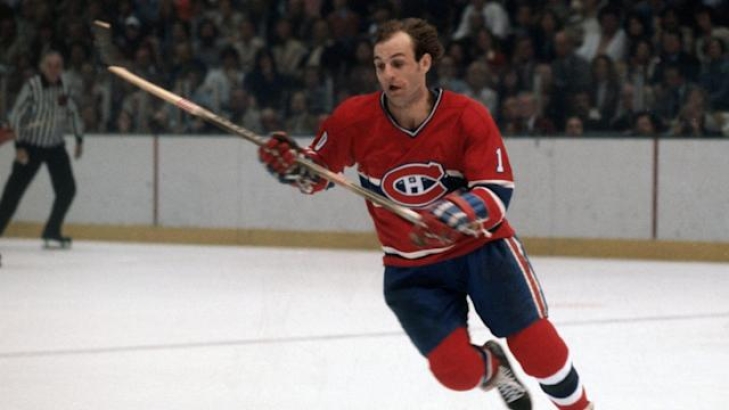
Days after we lost one of the greatest Right Wings in Hockey, another one was taken from us.
Guy Lafleur, one of the best players to ever grace the ice, passed away at the age of 70. While it was not announced how he died, he had contracted lung cancer two years ago.
From Quebec, Lafleur was the number one pick in the 1971 Draft by the Montreal Canadiens, and he was able to stay in his home province, and add to the laundry list of superstars that Montreal boasted. Lafleur helped the Habs win the Cup in 1973, but it was in the 1974/75 campaign where he established himself as one of the game’s top forwards.
From that season until 1979-80, Lafleur was named the First Team All-Star at Right Wing, and won three consecutive Art Ross Trophies (1975-76 to 1977-78), winning the Hart in the latter two year. Lafleur also lit the lamp 50 times in all of those six First Team All-Star years, and also won the Lester B. Pearson Award three times.
Injuries, decreased production, and a changing philosophy in Montreal saw Lafleur retire in 1985, but it would not stick.
Lafleur was inducted into the Hockey Hall of Fame in 1988, but came out of retirement to play three seasons, the first with the New York Rangers, and the latter two with the Quebec Nordiques. While he was not the offensive force he once was, he was still incredibly popular, and added to his impressive stat line.
Retiring for good in 1991, Lafleur amassed 1,246 Points.
We here at Notinhalloffame.com would like to extend our condolences to the friends, family and fans of Guy Lafleur.
RIP: Daryle Lamonica
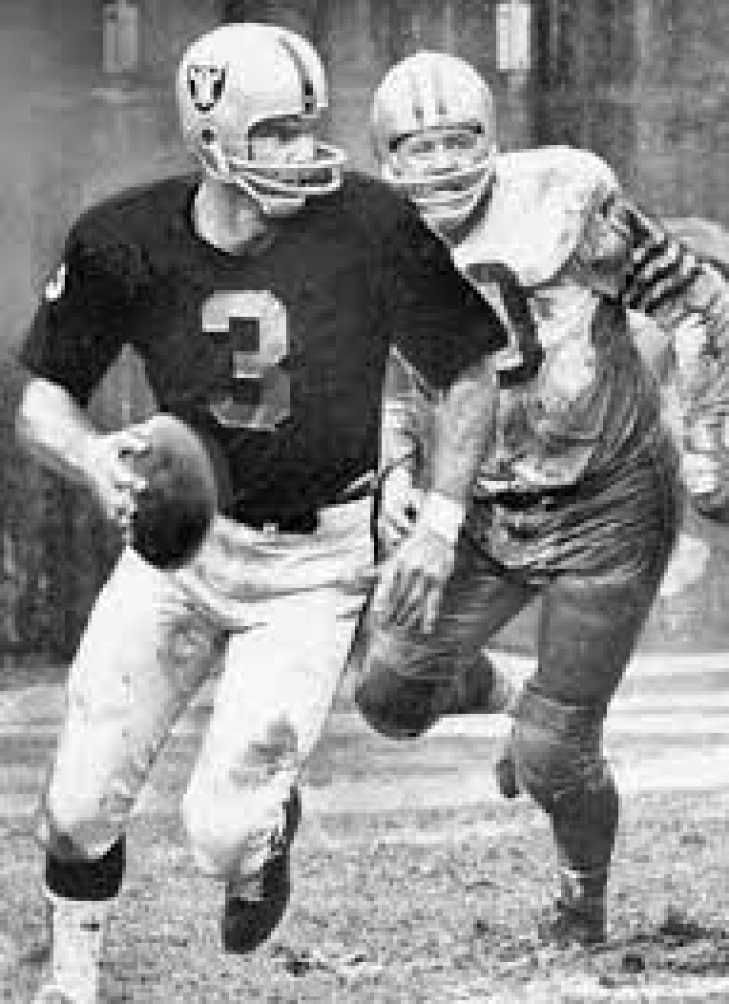
Raider Nation has lost one of their great ones.
Former Quarterback, Daryle Lamonica, passed away at the age of 80 of what is to believed to be natural causes.
Nicknamed the "Mad Bomber," Daryle Lamonica signed with the Buffalo Bills of the AFL, where he saw limited playing time at Quarterback playing behind Jack Kemp. He did get to play, however, and was a part of the Bills' 1964 and 1965 AFL Championship. Lamonica was traded to the Oakland Raiders, and he was finally the starting QB and had the chance to show what he could do, which, as it turned out, would be a lot!
Lamonica would run the Raiders offense, and in his first year there, he would lead the AFL in Touchdown Passes (30), won the AP and UFI MVP and took Oakland to win their first AFL Championship. 1969 was another phenomenal season for Lamonica, as he would win the UPI MVP again while again leading the AFL in Touchdown Passes (34). He also would throw for a league leading 3,302 Yards. Lamonica remained with the Raiders until 1974 and finished his career with a year in the World Football League.
We here at Notinhalloffame.com would like to extend our condolences to the friends, family and fans of Daryle Lamonica.
A Comprehensive Guide To Skateboarding

Whether you have recently taken up skateboarding as a hobby and are looking to take your pastime to the next level and maybe even start entering competitions, or else have been skateboarding for many years and are looking to learn more interesting facts about the sport, you have come to the right place.
Skateboarding is an extremely challenging yet ultimately rewarding extreme sport with a rich and diverse history. Here, for your reading pleasure and, of course, information, is a comprehensive guide to skateboarding and fascinating facts you never knew you didn’t know.
Skateboarding For Kids
Aside from the obvious fundamentals when teaching your child or children the basics of skateboarding, one thing you must not forget to impart is how to fall off the skateboard safely.
There is a simple way, both for you and your child, to get the proverbial hang of falling off a skateboard in the safest way possible with a simple set of rules:
- Push down once towards the ground (ideally grass or another soft surface)
- Once you hit the ‘deck’, the skateboard will either stop completely or slow down
- Allow yourself to fall forwards
- Tuck your forward-facing shoulder down into your body (like you are preparing for a somersault)
The best way to ensure this technique is ingrained in the minds of your child and to allow them to feel comfortable in getting into this position is to encourage them to practice it again and again for as long as they need.
Protective & Safety Wear
It is absolutely essential to invest in the correct safety wear, whether you have been skateboarding for many years now or else are only just beginning your skateboarding journey.
The most important item of protective wear is a helmet. Ideally a Triple 8 Certified Sweatsaver, and as a strict rule, you should never even fully stand on a skateboard, let alone move on one, without wearing a good quality and durable hard helmet. Other important items of safety wear when skateboarding include knee and elbow pads,
Tips For Starting Out As A Skateboarder
As with any other sporting activity, be it in a professional and competitive sense or else as a personal and enjoyable hobby and skateboarding is no different. Arguably, as skateboarding is actually classed as an extreme sport, there are even more guidelines that should be adhered to when starting out as a skateboarder:
- Set realistic goals and be patient
- Research into the Ollie Stationery
- Ask for professional and personal advice on how to improve
- Always practice and learn on grass rather than on a hard floor
- Never compare yourself to other skateboarders
- Be sure to consolidate your progress
The Three Main Skateboarding Stances
Naturally, once you become comfortable on a skateboard, you will develop your own stance and posture. However, it is regularly necessary to adopt certain positions to complete tricks and moves and even keep the board running straight and smoothly.
The ‘Nollie’ is when you are positioned on the skateboard with your leading foot as forward as possible, with your foot balanced on the edge of the nose. The ‘Fakie’ is how you naturally stand and position your body but essentially backward on the board, and the ‘Switch’ is when you stand with your less prominent leg and foot forward.
Logan Mankins, Mike Vrabel & Vince Wilfork are the Patriots HOF Finalists
One of our favorite franchise Halls of Fame, the New England Patriots Hall, has announced their three Finalists for the Class of 2022.
Logan Mankins, Mike Vrabel and Vince Wilfolk are the three Finalists, and you can cast your vote here.
Logan Mankins, 2005-13, Left Guard. Mankins was the final pick of the opening round of the 2005 Draft, and the Fresno State Bulldog became a starter for the Patriots immediately. The runner-up for the Offensive Rookie of the Year, Mankins went to six Pro Bowls for New England and was a First Team All-Pro in 2010, and four-time Second Team All-Pro. Mankins started all 130 of his Games with New England, and had an Approximate Value of 114. He finished his career with Tampa Bay for two seasons.
Mike Vrabel, 2001-08, Linebacker. After four years as a backup in Pittsburgh, Vrabel joined the Patriots, where he helped them win their first three Super Bowls. His best year was 2007, where he went to his only Pro Bowl, was a First Team All-Pro and was fifth in Defensive Player of the Year voting. Vrabel had 48 Sacks as a Patriot, and is currently the Tennessee Titans Head Coach.
Vince Wilfork, 2004-14, Nose Tackle, Defensive Tackle & Defensive End. A First Round Pick from Miami, Wilfork became one of the most popular players in Patriots history and aided them in two Super Bowl wins. Wilfork went to five Pro Bowls and was a one-time First Team All-Pro.
We here at Notinhalloffame.com would like to congratulate the three Finalists who have made it this far.
