gold star for USAHOF
Committee Chairman

Committee Chairman

Kirk Buchner, "The Committee Chairman", is the owner and operator of the site.  Kirk can be contacted at [email protected] .

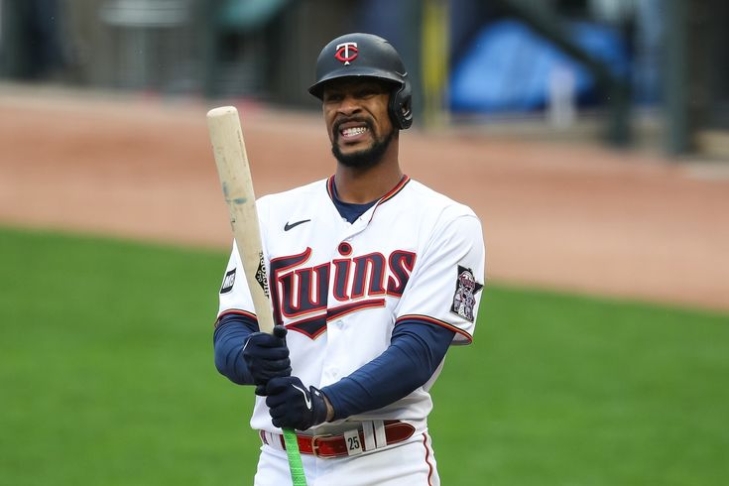
When exploring the unpredictable journey of player development, few stories are as striking as that of a minor-league journeyman suddenly transforming into one of the most formidable power hitters in professional baseball. José Antonio Bautista’s career was a true testament to this, as he was essentially a baseball nomad, moving between teams like Baltimore, Tampa Bay, Kansas City, and Pittsburgh. His big break came when the Toronto Blue Jays acquired him in an overlooked August 2008 trade for a minor league catcher, marking a remarkable turning point in his journey. 

Starting the 2009 campaign as an unnoticed fourth outfielder, he dedicated the summer to intense work with hitting coach Dwayne Murphy. Together, they overhauled his swing mechanics, incorporating a bold early leg kick and a swift pull-side bat path. The result was a remarkable transformation—a masterful rebuild of his mechanics—that significantly changed the franchise's direction.

2010 truly marked an incredible season where Bautista showcased his remarkable talent and power. Despite never hitting more than 15 home runs before, he transformed into a home run machine, consistently launching baseballs out of the Rogers Center every day. His extraordinary performance overwhelmed Major League pitching, earning him the home run title with a record-breaking 54 longballs for the franchise. Additionally, he achieved a career-high 124 RBIs, earning a Silver Slugger award and finishing impressively in the MVP voting. All in all, it was a season filled with inspiring achievements and memorable moments.

While some baseball commentators initially doubted his staying power, he proved them wrong in the summer of 2011 with an outstanding season. He proudly claimed his second consecutive home run crown with 43 home runs, and also led the league with 132 walks. His impressive stats included a .608 slugging percentage and a remarkable 1.056 OPS, helping him secure a well-deserved third-place finish in the AL Most Valuable Player voting. His performance truly showcased his incredible talent and determination.

Physical roadblocks temporarily slowed his blistering pace over the next two summers, as highly frustrating wrist and ankle ailments repeatedly cost him playing time in 2012 and 2013—though he still managed to harness enough muscle to clear the 27-homer mark in both abbreviated campaigns.

Once he achieved full, baseline health ahead of the 2014 schedule, his high-leverage production went right back into orbit. He secured his third career Silver Slugger on the strength of a 35-homer, 103-RBI campaign, before blasting 40 home runs in 2015 to lead the Blue Jays out of a 22-year drought and straight back into the postseason.

That intense competitive spirit is what permanently engraved his name into the foundation of Canadian sports history, especially during the dramatic fifth game of the 2015 American League Division Series against the Texas Rangers. As he stepped into the batter's box amidst a chaotic and high-pressure atmosphere, Bautista hit a beautiful, game-winning three-run homer that soared into the left-field sky—releasing a powerful, confident bat flip that shook the stadium and became an iconic symbol in modern Toronto baseball.

Of course, the fierce, energetic nature that helped him rise to fame eventually led to some hit-back moments later in his career. As he lost some of his quickness after the 2016 season, his well-known conflicts with the Rangers sometimes escalated, famously culminating in a surprising punch from Texas infielder Rougned Odor on the infield dirt.

Recognizing a clear physical crossroads, the front office declined to bring him back following a difficult 2017 campaign, initiating a quiet business exit that led to brief, minor cameos with the Braves, Mets, and Phillies before his active journey officially concluded. With Toronto, he accumulated exactly 1,103 hits, 219 doubles, and 766 runs batted in, while trailing only Carlos Delgado with an incredible 288 franchise home runs.

In August 2023, the organization added Bautista to the Level of Excellence.

Yes, we know that this is taking a while!

As many of you know, we here at Notinhalloffame.com are slowly generating the 50 of each major North American sports team.  That being said, we have existing Top 50 lists out and we always consistently look to update them when we can and based on necessity.  As such, we are very happy to present our post 2022 revision of our top Detroit Tigers.

As for all of our top 50 players in basketball we look at the following: 

1.  Advanced Statistics.

2.  Traditional statistics and how they finished in the American League. 

3.  Playoff accomplishments.

4.  Their overall impact on the team and other intangibles not reflected in a stat sheet.

Last year, Detroit had another rough year an failed to make the playoffs, and they had no new entrants on our top 50 list, but one impactful elevation.

As always, we present our top five, which has the only change, with a new number five.

1. Ty Cobb

2. Al Kaline                            

3. Hal Newhouser

4. Charlie Gehringer

5. Miguel Cabrera

You can find the entire list here.

As mentioned earlier, Cabrera enters the top five, though at this stage of his career, advancing any higher might prove difficult.

We welcome your input and comments and as always, we thank you for your support.

Selected in the first round of the 1995 amateur draft out of high school, Roy Halladay didn't simply soar to major league fame; he had to thoroughly overhaul his entire pitching approach to endure. Making his debut with the Toronto Blue Jays in 1998, the tall right-hander showcased exceptional velocity but lacked a solid technical foundation, leading to a difficult 2000 season with an ERA of 10.64. Instead of panic, he embraced a significant demotion to Single-A to reinvent his arm slot and mindset under pitching expert Mel Queen. From this intense period emerged a masterful pitcher—a relentless, highly efficient sinkerball specialist known as “Doc,” who would become one of the most respected right-handed pitchers of his era.

His breakthrough moment occurred in 2002, marking a decisive year. Halladay made deep, dominating starts a daily habit, pitching 239.1 innings—leading the American League—and finishing with a 19–7 record, which earned him his first All-Star selection.

The pinnacle of his hardware-certified legacy blossomed beautifully during a memorable summer in 2003. That season, Halladay truly showcased old-school resilience and grit. He consistently dominated against junior circuit lineups, leading all of Major League Baseball with an impressive 22–7 record. Additionally, he topped the American League in innings pitched (266.0), complete games (9), and achieved a remarkable 6.38 strikeout-to-walk ratio. These outstanding achievements earned him the highly prized 2003 American League Cy Young Award, truly establishing him as a legendary figure in his organization.

After a challenging two-year period with minor shoulder issues that briefly slowed him down, Halladay bounced back to showcase his elite skills just before 2006. What followed was an incredible four-year streak of dominating performances in the major leagues. From 2006 to 2009, he consistently shut down opposing batters, achieving an impressive 69–33 record. He earned three more All-Star selections, won a WHIP title in 2008, and impressively secured a top-five spot in the Cy Young voting every summer of that period—including a fantastic second-place finish in 2008.

While Halladay was truly exceptional, the small-market team around him wasn't able to break through the tough AL East competition to reach the postseason. Recognizing the natural point in his career to seek new challenges, the beloved ace reached out to management for a fresh start with a team that had a real shot at competing. The front office responded by making a major move, trading him to the Philadelphia Phillies in December 2009 in a blockbuster deal that brought back a talented package including Travis d'Arnaud and Kyle Drabek. Halladay quickly made his mark in his new team’s history, pitching a perfect game and a historic postseason no-hitter on his way to winning his second Cy Young award in the National League.

As a Blue Jay, Halladay accumulated a spectacular 148–76 record, a sharp 3.43 ERA, and 1,495 strikeouts over 2,046.2 innings of work. Advanced analytical anchors heavily reinforce his inner-circle footprint under the dome, anchoring his localized legacy with a magnificent 48.4 franchise pitching bWAR, a total that sits second in club history behind only Dave Stieb. The baseball world was shattered by immense heartbreak in November 2017 when the legendary hurler tragically lost his life in a plane crash over the Gulf of Mexico at just 40 years old.

The final, official acknowledgments of his legendary career on the diamond came precisely as befitted an inner-circle hero. The organization honored his memory by retiring his iconic number 34 on Opening Day in 2018 and inducting him into the Canadian Baseball Hall of Fame and the Blue Jays Level of Excellence.

This was followed by the BBWAA triumphantly electing Roy "Doc" Halladay into the National Baseball Hall of Fame in Cooperstown as a first-ballot legend in 2019.

1. Dave Stieb

Dave Stieb did not merely lead the original pitching pipeline north of the border; he served as the definitive, formidable cornerstone upon which the entire credibility of the franchise was constructed. Making his Major League debut in 1979 and securing the undisputed ace position the following summer, the former college outfielder combined an exceptionally powerful, high-velocity slider with a renowned determination. Throughout a significant 15-season tenure in Toronto, he established himself as the leading right-handed starting pitcher of the 1980s minor league circuit and the inaugural true superstar in Blue Jays history.

His introductory phase immediately changed opponents’ perceptions of a visit to Canada. Stieb aspired to translate deep-innings durability into a disciplined personal routine, which culminated in his first career All-Star selection in 1980. During the first half of the decade, the young team was burdened by common expansion-roster vulnerabilities, often undermining his exceptional performances and denying him clear opportunities for a 20-win season.

Nonetheless, Stieb's exceptional dominance was incontrovertible; he achieved consecutive 17-win seasons in 1982 and 1983, pitching over 270 innings each summer. Although baseball journalists in the United States frequently overlooked his statistics owing to Toronto's limited media coverage, he commanded significant respect within the sport's community. In 1982, he led the American League with an impressive 19 complete games, which led The Sporting News to officially designate him as the American League Pitcher of the Year. He was a skilled thrower with a sharp arsenal, blending elite movement and an unpredictable temper that sometimes caused friction, but teammates always wanted him on the mound in high-stakes games.

The ultimate pinnacle of his hardware-certified legacy was demonstrated during the historic 1985 campaign. Stieb delivered an exemplary performance in frontline command, systematically neutralizing junior circuit lineups to achieve the American League ERA title with a microscopic 2.48 over 265.0 innings. This accomplishment anchored the Toronto Blue Jays to their inaugural postseason appearance and the East Division championship. He consistently maintained a position at the top of the rotation throughout the remainder of the decade; by the end of the 1980s, no pitcher in Major League Baseball had accumulated more total victories than his 140, with the exception of Jack Morris.

Local historians recognize that his long march toward a championship ring was paved with severe physical heartbreak. On the final afternoon of the 1990 regular season, Stieb righted his historic ledger of narrow near-misses by throwing the first and only official no-hitter in franchise history against Cleveland.

However, a brutal series of chronic back ailments and shoulder problems restricted him to minimal frames in 1991 and 1992. As the front office aggressively constructed the star-studded roster that would ultimately capture the 1992 Fall Classic, their long-time ace was forced into a painful structural backseat, initiating a quiet first business exit that winter when he signed with the Chicago White Sox before a brief 1993 retirement. Though he famously orchestrated a highly nostalgic, four-game comeback cameo with Toronto five years later in 1998, his peak chapters had long since closed.

He continues to be the all-time, undisputed leader of the Blue Jays in numerous categories, including wins (175), innings pitched (2,873.0), strikeouts (1,656), starts (408), and complete games (103). Advanced analytics strongly support his status as an all-time great, highlighting his exceptional career with a remarkable 56.9 career pitching bWAR—the highest in the organization's history, just surpassing Roy Halladay's impressive peak.

The final punctuation on his legacy was his induction into the Toronto Blue Jays Level of Excellence and the Canadian Baseball Hall of Fame, ensuring Dave Stieb's legendary status remains a cornerstone of Toronto baseball lore.