


Committee Chairman
Our All-Time Top 50 Cincinnati Reds have been updated to reflect the 2022 Season
Yes, we know that this is taking a while!
As many of you know, we here at Notinhalloffame.com are slowly generating the 50 of each major North American sports team. That being said, we have existing Top 50 lists out and we always consistently look to update them when we can and based on necessity. As such, we are very happy to present our post 2022 revision of our top Cincinnati Reds.
As for all of our top 50 players in baseball we look at the following:
1. Advanced Statistics.
2. Traditional statistics and how they finished in the National League.
3. Playoff accomplishments.
4. Their overall impact on the team and other intangibles not reflected in a stat sheet.
Last year, the Reds had a terrible season, and they were no changes on the list, but we need to present it all lists with an update; whether there is a change in it or not.
As always, we present our top five, which was not affected by the last season:
1. Pete Rose
2. Johnny Bench
4. Joe Morgan
5. Joey Votto
You can find the entire list here.
Votto, who is active, did not do enough to supplant Morgan for fourth, but that could happen this year.
We welcome your input and comments and as always, we thank you for your support.
Our All-Time Top 50 New York Yankees have been updated to reflect the 2023 Season
Yes, we know that this is taking a while!
As many of you know, we here at Notinhalloffame.com are slowly generating the 50 of each major North American sports team. That being said, we have existing Top 50 lists out and we always consistently look to update them when we can and based on necessity. As such, we are very happy to present our post 2022 revision of our top New York Yankees.
As for all of our top 50 players in baseball we look at the following:
1. Advanced Statistics.
2. Traditional statistics and how they finished in the American League.
3. Playoff accomplishments.
4. Their overall impact on the team and other intangibles not reflected in a stat sheet.
Last year, New York made it to the American League Championship Series, but fell to the eventual World Series Champion, Houston. On a team as celebrated as the Yankees, it is very hard to make this list, but one player vaulted over 20 spots. We bet you know who!
As always, we present our top five, which was not affected by the last season:
1. Babe Ruth
2. Lou Gehrig
4. Joe DiMaggio
5. Derek Jeter
You can find the entire list here.
The only change was Aaron Judge, won the 2022 MVP and set the new single season Yankee Home Run record with 62. He vaults from #49 to #26.
We welcome your input and comments and as always, we thank you for your support.
Our All-Time Top 50 Minnesota Twins have been revised to reflect the 2022 Season

Yes, we know that this is taking a while!
As many of you know, we here at Notinhalloffame.com are slowly generating the 50 of each major North American sports team. That being said, we have existing Top 50 lists out and we always consistently look to update them when we can and based on necessity. As such, we are very happy to present our post 2022 revision of our top 50 Minnesota Twins.
As for all of our top 50 players in baseball we look at the following:
1. Advanced Statistics.
2. Traditional statistics and how they finished in the American League.
3. Playoff accomplishments.
4. Their overall impact on the team and other intangibles not reflected in a stat sheet.
Last year, Minnesota had a decent year, though was mildly disappointing. There is one new entrant into the top 50, with no other fluctuation.
As always, we present our top five, which had no changes.
2. Rod Carew
5. Joe Mauer
You can find the entire list here.
The only new entry is Outfielder, Byron Buxton, who enters at #47, who knocks out Bump Hadley from the Top 50. Notably, Max Kepler and Jorge Polanco almost made this portion of the list.
We welcome your input and comments and as always, we thank you for your support.
Notinhalloffame NHL Cup Standings Update (140)
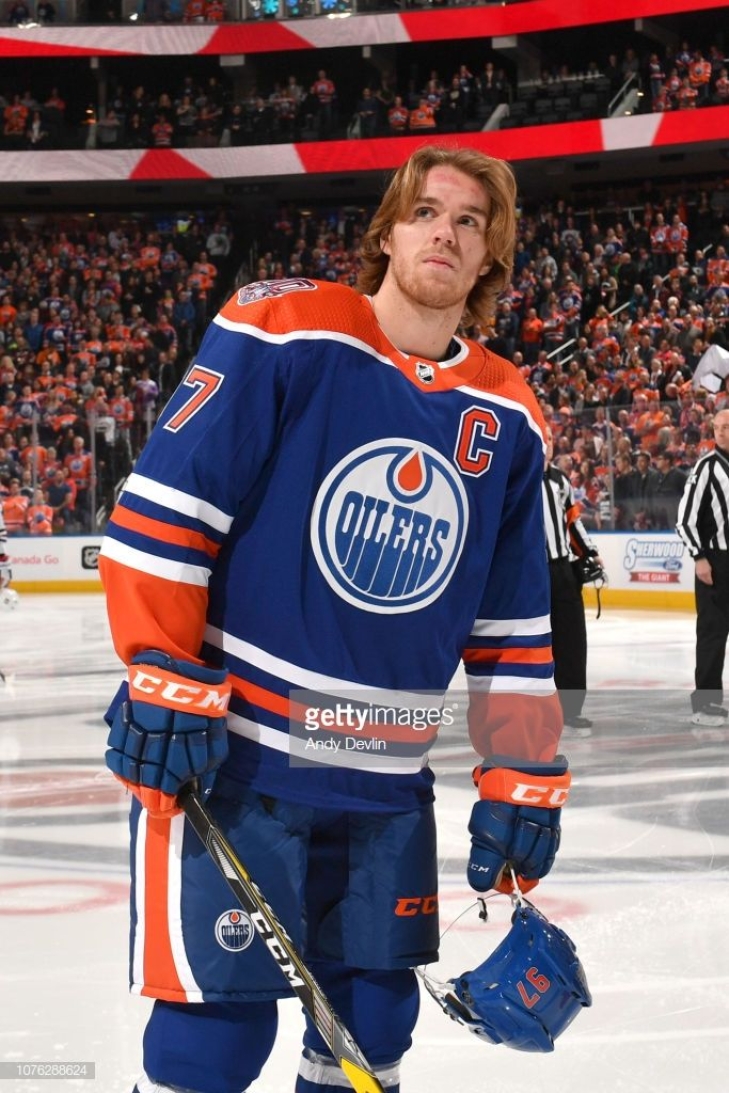
If you are a regular visitor at Notinhalloffame.com, you know that we created the Notinhalloffame NHL Cup, where in every regular season game, we award points (5-4-3-2-1) to the top five performers. This is the second year that we have done this, and Edmonton’s Connor McDavid won the first one.
To keep everyone regularly in the loop this time, we have decided to give regular updates, starting at when the first player cracked 40 Points, and tell all of you the top ten. We will this going forward with every update as the first player breaches the elevated ten-point threshold afterward.
Here is the current top ten, based on the first player to breach 140 Notinhalloffame Cup Points:
1. Connor McDavid, Edmonton Oilers. 140 Cup Points: 67 Games, 55 G, 72 A, 127 P, +10, 14.9 PS. (#1 on last update)
What more can we say about McDavid’s 2022/23 Season. He is running away with every major statistical category, and has a commanding lead in Cup Points. Last year’s Notinhalloffame NHL Cup winner is extending his lead and he is currently the league-leader in Goals (55), Assists (72), Points (127) and Point Shares (14.9). The Hart, Pearson, Richard and Art Ross are his to lose. Is this the best year of his life? He would agree, but only if the Oilers win it all!
2. David Pastrnak, Boston Bruins. 108 Cup Points: 64 Games, 45 G, 41 A, 86 P, +30, 11.4 PS. (#3 on last update)
Pastrnak returns to the number two spot, and bluntly, we think that is where he belongs. The top offensive Bruins player is second in Goals (45), fifth in Points (86), sixth in Plus/Minus (+30) and is also leading the NHL in Shots (305).
3. Nathan MacKinnon, Colorado Avalanche, 102 Cup Points: 58 Games, 28 G, 51 A, 79 P, +18, 9.0 PS. (#3 on last update)
MacKinnon is playing phenomenal hockey, is ranked very high in Cup Points considering how few games he has played relatively to the rest of the top ten. He is third in Points per Game (1.49).
4. Brayden Point, Tampa Bay Lightning. 98 Cup Points: 66 Games, 43 G, 36 A, 79 P, +0, 9.4 PS. (#7 on last update)
Point is having a good year, and is a point-per-game player, there are still quite a few players with higher point tallies than the Tampa Center. Saying that, Point has been the most clutch player for the Lightning, and is leading the NHL in Game-Winning Goals (9) and is currently third in Goals (43).
5. Mikko Rantanen, Colorado Avalanche. 97 Cup Points: 64 Games, 42 G, 34 A, 76 P, +4, 9.1 PS. (#2 on last update)
Rantanen fell three spots to #5, and is no longer the highest Avalanche in Cup Points, as he is behind MacKinnon. Despite slipping, he is still also fourth in Goals (42) and on a team that could repeat as Stanley Cup Champions.
6. Linus Ullmark, Boston Bruins. 95 Cup Points: 40 Games, 33-4-1, 1.89 GAA, .938 Save Percentage, 10.7 PS. (#7 on last update)
Ullmark is the odds-on favorite for the Vezina and is currently the league leader in Wins, GAA and Save Percentage. Our question, is can he do this is the playoffs?
7. (TIE) Jack Hughes, New Jersey Devils. 92 Cup Points, 61 Games, 36 G, 40 A, 76 P, +8, 9.0 PS. (#3 on last update)
Hughes fell two spots to number #7, and has been a bit of a slump. Still, the two-time All-Star is tenth in Goals (36), and can easily shake it off.
7. (TIE) Elias Pettersson, Vancouver Canucks, 92 Cup Points: 63 Games, 30 G, 52 A, 82 P, +11, 8.6 PS. (Not on last update)
Pettersson is having his best year to date, albeit on an abysmal Canucks team. He is back in the top ten after two updates, and is currently ninth in Assists (52) and tenth in Points (82).
9. (TIE) Matthew Tkachuk, Florida Panthers, 89 Cup Points: 64 Games, 30 G, 57 A, 87 P, +17, 9.4 PS. (Not on last update)
Brady Tkachuk fell off the top ten, but his brother, Matthew, takes his spot. The Panthers Wing is fifth in Assists (57) and fourth in Points (87).
9. (TIE) Kirill Kaprizov, Minnesota Wild, 89 Cup Points: 69 Games, 39 G, 35 A, 74 P, +6, 9.2 PS. (#10 on last update)
The Russian star remains in the top ten and is seventh in Goals (39)
Ottawa’s Brady Tkachuk and Dallas’ Jake Oettinger, fell off the top ten.
Our next update will occur when the first player breaks 140 Cup Points.
