

Committee Chairman
Our All-Time Top 50 Atlanta Braves have been revised to reflect the 2022 Season
Yes, we know that this is taking a while!
As many of you know, we here at Notinhalloffame.com are slowly generating the 50 of each major North American sports team. That being said, we have existing Top 50 lists out and we always consistently look to update them when we can and based on necessity. As such, we are very happy to present our post 2022 revision of our top 50 Atlanta Braves.
As for all of our top 50 players in baseball we look at the following:
1. Advanced Statistics.
2. Traditional statistics and how they finished in the National League.
3. Playoff accomplishments.
4. Their overall impact on the team and other intangibles not reflected in a stat sheet.
Last year, the Braves added another post-season, but were unable to win the pennant. As this organization is well over a century old, breaking the top 50 is difficult, and there is only one new entry with no other fluctuation.
As always, we present our top five, which had no changes.
1. Hank Aaron
2. Warren Spahn
3. Kid Nichols
4. Greg Maddux
You can find the entire list here.
The only new addition was Pitcher, Max Fried, who makes his first appearance at the tail end of #50.
It is noteworthy that Ronald Acuna and Ozzie Albies were very close to making the Top 50.
We welcome your input and comments and as always, we thank you for your support.
29. Max Fried
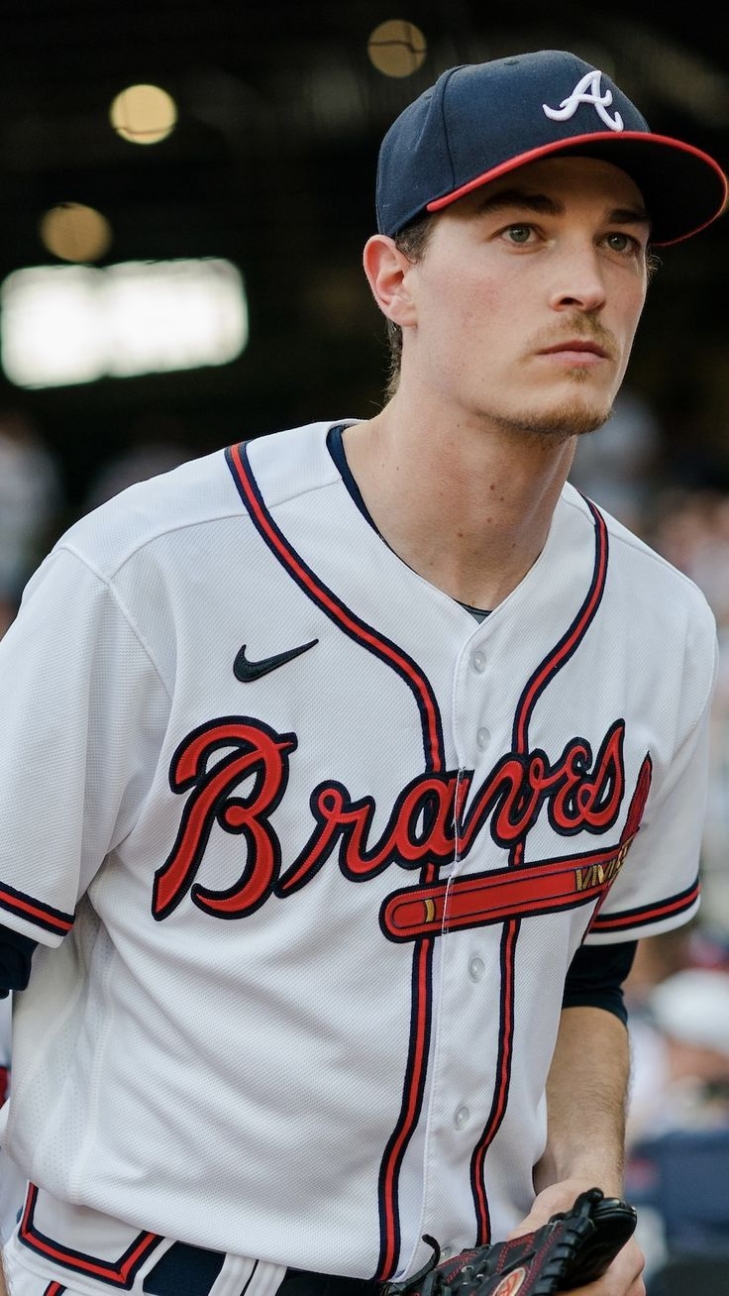
The one-time ace of the Braves rotation, Max Fried did not begin his career in the Braves organization.
Fried was a First Round Pick (7th Overall in 2012) by the Padres, but he had to go through Tommy John Surgery in the Minors, and while he was recuperating, he was packaged out to the Braves for Justin Upton. It is safe to say now, that it was Fried who was the crown jewel of the transaction.
Atlanta methodically developed Fried, first calling him up in 2017, and by 2019, he won a spot in the Braves rotation, winning 17 Games against 6 Losses, though he had aa 4.02 ERA. In the COVID-shortened 2020 Season, Fried had a perfect 7-0 record, lowered his ERA to 2.25 and was fifth in Cy Young voting.
Fried led the Braves to a World Series win in 2021 (14-7, 3.04 ERA), and in 2022, he was an All-Star for the first time, again with a 14-7 record, with a 2.48 ERA, 1.014 WHIP and was the runner-up for the Cy Young. He dealt with injuries in 2023, but was still 8-1 in 14 Starts, and in 2024, which was his final season in Atlanta before signing with the Yankees he went 11-10 wth 166 Ks.
The three-time Gold Glove winner had an overall record of 73-36 with 863 Strikeouts and an ERA of 3.07.
Notinhalloffame NBA Cup Standings Update (250)
If you are a regular visitor at Notinhalloffame.com, you know that we created the Notinhalloffame NBA Cup, where in every regular season game, we award points (5-4-3-2-1) to the top five performers. This is the third year that we have done this, and Denver’s Nikola Jokic won the first two.
To keep everyone regularly in the loop this time, we have decided to give regular updates, starting at when the first player cracked 100 Points, and tell all of you the top ten. We will this going forward with every update as the first player breaches the elevated ten-point threshold afterward.
Here is the current top ten, based on the first player to breach 250 Notinhalloffame Cup Points:
1. Nikola Jokic, Denver Nuggets, 250 Cup Points: 62 Games, 24.8, PPG, 11.9 RPG, 9.9 APG, 1.2 SPG, 0.7 BPG, 31.8 PER, 13.7 WS. (#1 on last ranking)
The two-time defending MVP (and NIHOF Cup Champion) remains at the top, and is the first to break 250 Cup Points. Jokic is leading the league in PER (31.8), Win Shares (13.7), VORP (8.0) and Box Plus/Minus (13.1). He is also averaging a triple-double, is leading the NBA in that stat, and is second in Rebounds per Game.
2. Joel Embiid, Philadelphia 76ers, 245 Cup Points: 55 Games, 33.3 PPG, 10.2 RPG, 4.1 APG, 1.1 SPG, 1.6 BPG, 31.2 PER, 10.2 WS. (#2 on last ranking)
Embiid remains in the number two hole, and is a bona fide MVP contender, and in a dogfight with Jokic. He is currently the scoring leader (33.3) and is second in PER (30.8). Embiid is also in the top five in Wins Shares, VORP and Box Plus/Minus. Could this be the season he takes Philadelphia all the way to a title and finish “The Process?”
3. Jayson Tatum, Boston Celtics, 237 Cup Points: 66 Games, 30.2 PPG, 9.0 RPG, 4.7 APG, 1.0 SPG, 0.8 BPG, 23.5 PER, 9.1 WS. (#3 on last ranking)
Tatum climbed back into the top three. He is still a huge threat to win this award, as well as the MVP, though some of his advanced statistics are lacking. He should finish over 30 Points per Game (he is currently sixth).
4. Giannis Antetokounmpo, Milwaukee Bucks, 231 Cup Points: 55 Games, 31.4 PPG, 11.9 RPG, 5.5 APG, 0.7 SPG, 0.8 BPG, 28.6 PER, 7.5 WS. (#5 on last ranking)
The two-time MVP would have probably been on the top had he not missed a series of Games earlier in the season. He is now a six-time All-Star, and is in the top five in both Points and Rebounds per Game.
5. Luka Doncic, Dallas Mavericks, 227 Cup Points: 57 Games, 33.0 PPG, 8.6 RPG, 8.0 APG, 1.5 SPG, 0.5 BPG, 29.6 PER, 9.4 WS. (#4 on last ranking)
Doncic dropped another spot to #5, which was due mostly to a thigh injury, and inactivity since the last update. He is second in scoring (33.0), and was an early MVP contender, but that may not the case anymore.
6. Shai Gilgeous-Alexander, Oklahoma City Thunder, 222 Cup Points: 59 Games, 31.3 PPG, 4.8 RPG, 5.7 APG, 1.6 SPG, 1.1 BPG, 27.3 PER, 9.9 WS. (#7 on last ranking)
Gilgeous-Alexander went to his first All-Star Game, and is shattering last year’s averages, which were already good. He is currently dealing with some nagging injuries, but you have to imagine just how pathetic the Thunder would be without SGA.
7. Julius Randle, New York Knicks, 218 Cup Points: 71 Games, 25.2 PPG, 10.3 RPG, 4.1 APG, 0.6 SPG, 0.3 BPG, 20.6 PER, 7.9 WS. (#6 on last ranking)
Randle drops one spot, and currently has a higher PPG (25.2), than his first All-Star year two years ago (24.1).
8. Trae Young, Atlanta Hawks, 215 Cup Points: 62 Games, 27.0 PPG, 3.0 RPG, 10.1 APG, 1.2 SPG, 0.2 BPG, 22.8 PER, 6.0 WS. (#8 on last ranking)
Young is the face of an intriguing Hawks squad, but was unable to make the NBA All-Star Team. This could be the player that intrigues us he most in the next two years.
9. Ja Morant, Memphis Grizzlies, 205 Cup Points: 53 Games, 27.1 PPG, 6.0 RPG, 8.2 APG, 1.0 SPG, 0.3 BPG, 23.8 PER, 5.6 WS. (#8 on last ranking)
The last three weeks of Morant’s life has been a disaster, with a bevy of poor personal decisions that has led to a suspension. Currently away from the Grizzlies, he has dropped two spots in Cup Point standings from the last update. This is a man with serious growing up to do.
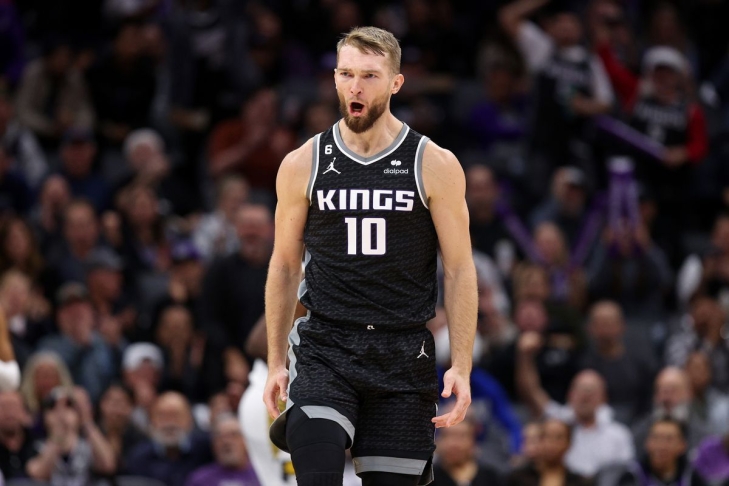
10. Damontas Sabonis, Sacramento Kings, 200 Cup Points: 67 Games, 19.0 PPG, 12.6 RPG, 7.1 APG, 0.8 SPG, 0.5 BPG, 23.3 PER, 10.6 WS. (Not on last ranking)
For the first time this season on one of our updates, Sabonis appears in the top ten, and is currently the NBA leader in Rebounds per Game (12.6). He added a third All-Star this year.
Utah’s Lauri Markkanen fell off the top ten.
Our next update will happen after the first player breaches 260 Cup Points.
Our All-Time Top 50 Arizona Diamondbacks have been revised to reflect the 2022 Season
Yes, we know that this is taking a while!
As many of you know, we here at Notinhalloffame.com are slowly generating the 50 of each major North American sports team. That being said, we have existing Top 50 lists out and we always consistently look to update them when we can and based on necessity. As such, we are very happy to present our post 2022 revision of our top Arizona Diamondbacks.
As for all of our top 50 players in baseball we look at the following:
1. Advanced Statistics.
2. Traditional statistics and how they finished in the National League.
3. Playoff accomplishments.
4. Their overall impact on the team and other intangibles not reflected in a stat sheet.
Last year, Arizona was awful, but as this is a young team with high turnover, there were three new addition and other elevations.
As always, we present our top five, which was not affected by the last season:
2. Paul Goldschmidt
3. Brandon Webb
You can find the entire list here.
Infielder, Ketel Marte climbs to #7 from #11.
Outfielder, David Peralta, moved up two spots to #12.
Pitcher, and Arizona’s top player, Zac Gallen, shot up to #21 from #36.
First Baseman, Christian Walker, debuts at #31.
Starting Pitcher, Merrill Kelly, had a massive jump to #36 from #49.
Daulton Varsho, who is now with the Toronto Blue Jays, makes his first appearance at #44.
Catcher, Carson Kelly is the third new entrant, debuting at #49.
The new additions pushed Chris Snyder, Ryan Roberts and Erubiel Durazo off the list.
We welcome your input and comments and as always, we thank you for your support.
