


Committee Chairman
The Notinhalloffame Pro Football Hall of Fame Monitor has been revised: Wide Receivers Edition
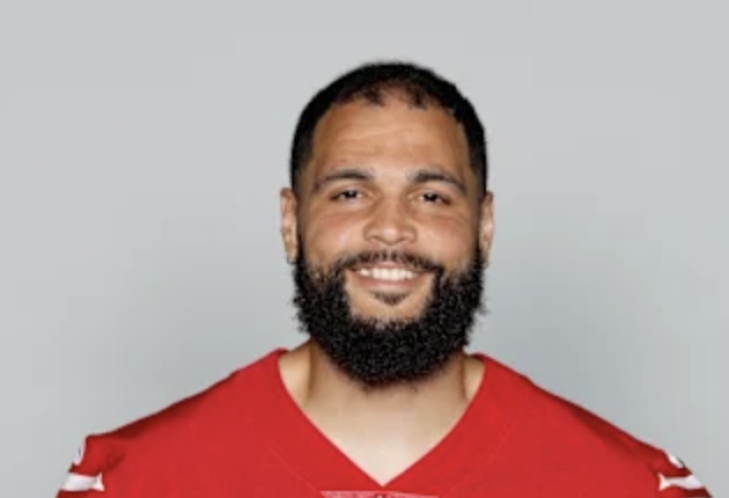
The 2026 NFL season is here, and we have updated our Pre-Season Football Monitor.
As we have expanded our projects, we can’t say we've expanded the team behind the scenes! As a result, we are a little behind on this one, and we could only post the top 50 of the Pre-Season Monitor at this time.
We will add more during the season (and yes, we know that defeats the purpose of pre-season), but thank you for your patience.
We have unveiled the Quarterbacks, Running Backs, and now Wide Receivers, of which there are nine.
They are:
#1 WR, #18 Overall: Mike Evans, San Francisco 49ers. #13 Overall Last Year.
#2 WR, #21 Overall: Davante Adams, Los Angeles Rams, #23 Overall Last Year.
#3 WR, #25 Overall: Tyreek Hill, Free Agent, #18 Overall Last Year.
#4 WR, #27 Overall: DeAndre Hopkins, Free Agent, #24 Overall Last Year.
#5 WR, #40 Overall: Justin Jefferson, Minnesota Vikings, #37 Overall Last Year
#6 WR, #42 Overall: Ja’Marr Chase, Cincinnati Bengals, #56 Overall Last Year
#7 WR, #43 Overall: Stefon Diggs, Washington Commanders, #41 Overall Last Year
#8 WR, #49 Overall: Keenan Allen, Indianapolis Colts, #46 Overall Last Year
#9 WR. #50 Overall: A.J. Brown, New England Patriots, #49 Overall Last Year
Look for more information on this project shortly.
The Notinhalloffame Pro Football Hall of Fame Monitor has been revised: Running Backs Edition
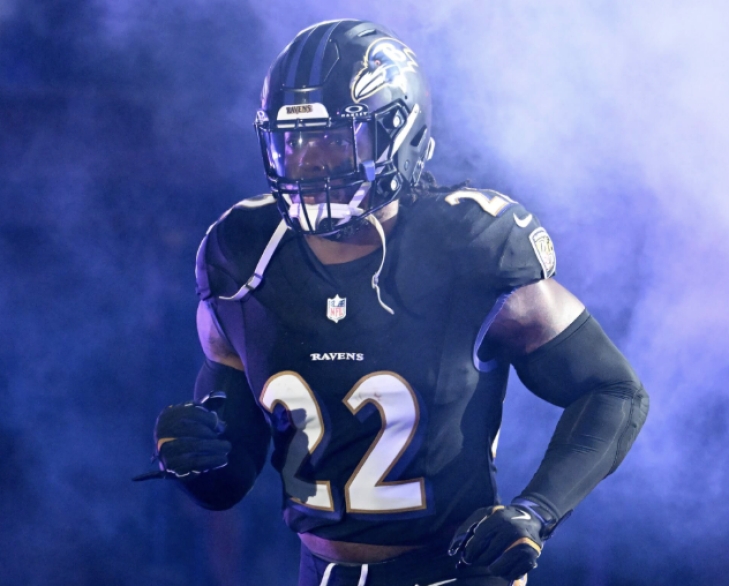
The 2026 NFL season is here, and we have updated our Pre-Season Football Monitor.
As we have expanded our projects, we can’t say we've expanded the team behind the scenes! As a result, we are a little behind on this one, and we could only post the top 50 of the Pre-Season Monitor at this time.
We will add more during the season (and yes, we know that defeats the purpose of pre-season), but thank you for your patience.
We have unveiled the Quarterbacks, and now we have the Running Backs, of which there are four.
They are:
#1 RB, #11 Overall: Derrick Henry, Baltimore Ravens. #11 Overall Last Year.
#2 RB, #17 Overall: Christian McCaffrey, San Francisco 49ers, #21 Overall Last Year.
#3 RB, #45 Overall: Saquon Barkley, Philadelphia Eagles, #51 Overall Last Year.
#4 RB, #47 Overall: Jonathan Taylor, Indianapolis Colts, #70 Overall Last Year.
Look for more information on this project shortly.
The Notinhalloffame Pro Football Hall of Fame Monitor has been revised: Quarterbacks Edition
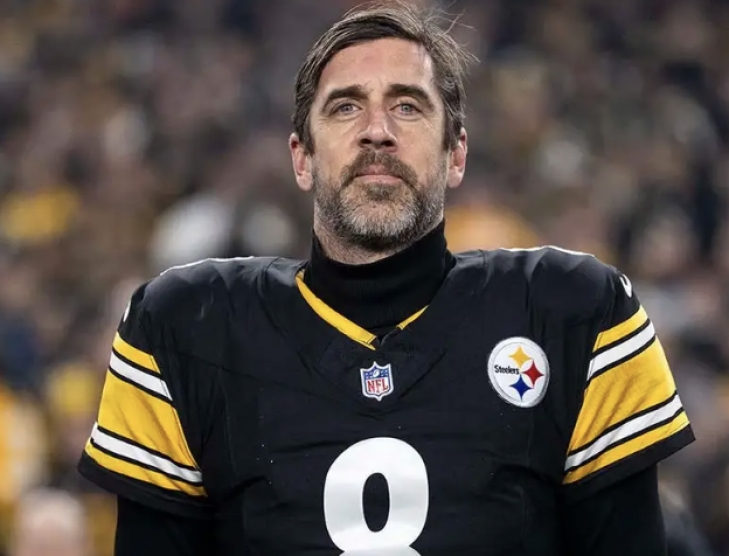
The 2026 NFL season is here, and we have updated our Pre-Season Football Monitor.
As we have expanded our projects, we can’t say we've expanded the team behind the scenes! As a result, we are a little behind on this one, and we could only post the top 50 of the Pre-Season Monitor at this time.
We will add more during the season (and yes, we know that defeats the purpose of pre-season), but thank you for your patience.
Up first are the Quarterbacks, with a staggering eight ranked in the top 50.
They are:
#1 QB, #2 Overall: Aaron Rodgers, Pittsburgh Steelers. #1 Overall Last Year.
#2 QB, #4 Overall: Patrick Mahomes, Kansas City Chiefs, #3 Overall Last Year.
#3 QB, #9 Overall: Matthew Stafford, Los Angeles Rams, #26 Overall Last Year.
#4 QB, #12 Overall: Lamar Jackson, Baltimore Ravens, #10 Overall Last Year.
#5 QB, #16 Overall: Josh Allen, Buffalo Bills, #17 Oveall Last Year.
#6 QB, #32 Overall: Jalen Hurts, Philadelphia Eagles, #33 Last Year.
#7 QB, #37 Overall: Dak Prescott, Dallas Cowboys, #37 Last Year.
#8 QB, #46 Overall: Jared Goff, Detroit Lions, #45 Last Year.
Look for more information on this project shortly.
The Pro Football Hall of Fame Revisited Project: 2000 Final VOTE
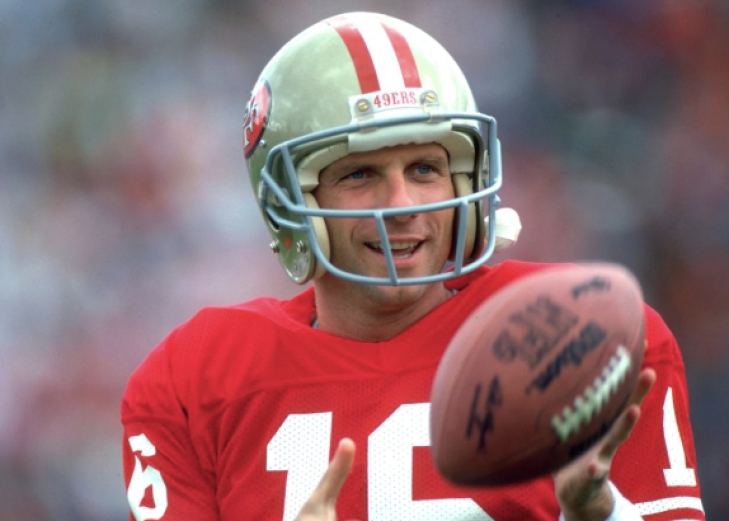
2000 Pro Football Hall of Fame Revisited Project Class.
Here we are! Again!!
If you have been following our Pro Football Hall of Fame Revisited Project, you know we have asked the question: What if the PFHOF had begun in January 1946?
After soliciting and obtaining a passionate group of football fans and historians, we sent out a ballot for a Preliminary Vote, in which each voter selected 25 names as their semi-finalists and five names for the Senior Pool.
We then asked the group to vote for their 15 Finalists in the Modern Era and 3 in the Senior Category. The final stage was to vote for their five Modern Era inductee and one Senior inductee.
These are the results of the 55th official class.
Below are the final results of this project based on 32 votes.
Remember that we have reverted back to the top five candidates entering the Hall in the Modern Era
This is for the “Modern Era”
*Bold indicates they have been elected to the Pro Football Hall of Fame Revisited Class of 2000:
|
Player |
Year of Eligibility |
Vote Total |
|
Joe Montana QB |
1 |
32 |
|
Ronnie Lott DB |
1 |
26 |
|
L.C. Greenwood DE |
14 |
11 |
|
James Lofton WR |
2 |
11 |
|
Andre Tippett LB |
2 |
10 |
|
Floyd Little RB |
20 |
9 |
|
Cliff Harris DB |
16 |
8 |
|
Roger Craig RB |
2 |
8 |
|
Otis Taylor WR-FL |
20 |
7 |
|
Bob Griese QB |
15 |
7 |
|
Lester Hayes DB |
9 |
7 |
|
Sterling Sharpe WR |
1 |
6 |
|
Joe Klecko DE-NT |
7 |
5 |
|
Ken Stabler QB |
11 |
3 |
|
Ken Anderson QB |
9 |
3 |
|
Drew Pearson WR |
12 |
2 |
This is for the “Senior Era”,
*Bold indicates they have been elected to the Pro Football Hall of Fame Revisited Class of 2000.
|
Bobby Boyd DB |
7 |
16 |
|
Alan Ameche FB |
15 |
9 |
|
Art Powell E |
7 |
6 |
|
None of the Above |
N/A |
1 |
This is for the “Coaches/Contributors”,
*Bold indicates they have been elected to the Pro Football Hall of Fame Revisited Class of 2000.
|
Marv Levy (Coach) |
1 |
22 |
|
Eddie Kotal (Scout) |
5 |
6 |
|
Tom Flores (Coach) |
4 |
4 |
|
None of the Above |
N/A |
6 |
About the 2000 Inductees:
Joe Montana, QB, SFO 1981-92 & KAN 1993-94: Inducted in the Pro Football Hall of Fame Revisited Project in 2000 on his 1st Ballot. Inducted into the actual Pro Football Hall of Fame in 2000.
A National Champion at Notre Dame in 1977, Joe Montana was a third-round pick two years later by the San Francisco 49ers, where he began his pro career as Steve DeBerg’s backup.
After riding the pine as a rookie, Montana became the 49ers’ starting Quarterback midway through the 1980 season. It was a good start: he finished first in Pass Completion Percentage (64.5), and it showcased the man who became the most successful QB of the 1980s.
Montana earned his first Pro Bowl in 1981 and led the league in Pass Completion Percentage (63.7), but San Francisco was a far more complete team. The Niners won 13 games that year, defeated the heavily favored Dallas Cowboys in "The Catch Game,” and went on to win the Super Bowl, with Montana winning the game's MVP. "Joe Cool" had arrived, and he was there to stay.
Montana returned to the Pro Bowl in 1983, and also to the Super Bowl, but this time they lost to the Washington Redskins. A Pro Bowler again in 1984, Montana and the Niners were not going to be denied in that year’s Super Bowl, as Montana won his second Super Bowl and Super Bowl MVP in their sound defeat of the Miami Dolphins.
San Francisco remained strong over the years, and as good as Montana was in the first half of the 1980s, his second was arguably even better. The Quarterback again was a First Team All-Pro with a league-leading and career-high 31 Touchdown Passes. The following season, Montana also took the 49ers to a Super Bowl Title, his third of the decade.
You would think that it would be impossible to top that, but Montana did just that in the next two years.
In 1989 and 1990, Montana achieved rarefied NFL air by winning back-to-back MVPs, with the first of those years earning him his fourth Super Bowl and third Super Bowl MVP. No other QB from 1980 to 1990 did more than Montana in the 1980s, and arguably nobody came close. As great as this was, this was the end for Joe Montana in San Francisco.
Montana missed the entire 1991 season and most of 1992 due to an elbow injury. When he was ready to return, Steve Young emerged as the chosen QB, and the Chiefs traded Montana to Kansas City, where he played two more seasons. Over his career, Montana threw for 40,551 Yards and 273 Touchdowns.
Montana entered the Pro Football Hall of Fame and was named to the NFL 1980s All-Decade, 75th and 100th Anniversary Team. The former Quarterback had his number retired in 1997, and he was an inaugural member of the 49ers Hall of Fame in 2009.
Ronnie Lott, CB, SFO 1981-90, RAI 1991-92 & NYJ 1993-94: Inducted in the Pro Football Hall of Fame Revisited Project in 2000 on his 1st Ballot. Inducted into the actual Pro Football Hall of Fame in 1999.
Ronnie Lott stands as one of the most ferocious and impactful defensive backs in NFL history, a player whose legendary intensity redefined the safety position. Drafted eighth overall by the San Francisco 49ers in 1981, Lott made an immediate impact by helping anchor a defense that captured a victory in Super Bowl XVI during his rookie season. His playing style was defined by an uncompromising, punishing physical nature combined with elite closing speed. Lott didn't just tackle opponents; he delivered bone-jarring collisions that forced turnovers, rattled receivers, and altered the game plan of opposing offenses that feared entering his zone.
During the first half of his career, Lott showcased his elite coverage skills as a dominant cornerback. His exceptional instincts and ability to read quarterbacks allowed him to shut down opposing wide receivers while maintaining his signature physical presence against the run. However, his transition to safety in 1985 truly unlocked his legendary status. From the safety position, Lott became the ultimate field general, patrolling the secondary with unmatched range and a predatory instinct for the football. This versatility allowed him to lead the league in interceptions twice, once as a cornerback and later as a safety.
Lott’s psychological and physical toughness became NFL lore, epitomized by a famous incident during the 1985 season. After crushing his left pinky finger while making a tackle against the Dallas Cowboys, Lott chose to have the tip of his finger amputated during the off-season rather than undergo a complex surgery that would delay his availability for the upcoming season. This extreme commitment to the game and his teammates solidified his reputation as a warrior who prioritized winning above all else, inspiring fear in opponents and deep loyalty from his teammates.
As a primary catalyst for the 1980s San Francisco 49ers dynasty, Lott won four Super Bowl rings and served as the emotional heartbeat of a team often celebrated for its elegant West Coast offense. He brought a necessary, gritty edge to those championship rosters, earning ten Pro Bowl selections and eight First-Team All-Pro honors throughout his career. After a dominant decade in San Francisco, Lott continued to show his leadership and hard-hitting style during impactful later-career stints with the Los Angeles Raiders and the New York Jets, proving his defensive excellence could transcend any system.
By the time he retired, Lott had amassed 63 career interceptions, 16 regular-season forced fumbles, and an extensive highlight reel of legendary hits.
L.C. Greenwood, DE, PIT 1969-81. Inducted in the Pro Football Hall of Fame Revisited Project in 2000 on his 14th Ballot. Was never inducted into the actual Pro Football Hall of Fame in 2000.
L.C. Greenwood stands as one of the most imposing and architecturally significant defensive ends in NFL history, a player whose relentless pursuit redefined edge-rushing during the 1970s. Drafted by the Pittsburgh Steelers in the tenth round of the 1969 draft out of Arkansas AM&N, Greenwood defied his late-round draft status to become an indispensable cornerstone of the legendary "Steel Curtain" defense. His playing style blended exceptional length with deceptive, linebacker-like speed. Standing 6-foot-6 but playing at a relatively lean 245 pounds, Greenwood did not rely on overwhelming bulk; instead, he weaponized a blistering 4.6-second forty-yard dash and exceptionally long arms to bypass offensive tackles before they could set their blocks.
Operating on the left side of the defensive line alongside Hall of Fame tackle Joe Greene, Greenwood used his unique frame to torture opposing quarterbacks. His technique was a calculated chess match; coaches widely regarded him as a "thinking man's player" who meticulously set up offensive linemen over the course of a game before flashing past them in critical moments. When he wasn't bypassing tackles to collect 78.0 career sacks, Greenwood used his massive wingspan and height to alter passing lanes, famously batting down three passes in Super Bowl IX and routinely suffocating the outside run.
Greenwood’s persona on the field was as unforgettable as his physical dominance, highlighted by his iconic choice of footwear. To help fans and officials distinguish him on the muddy, monochromatic fields of the 1970s, Greenwood began wearing bright gold, high-top cleats. This flash of color, paired with his stylish off-field demeanor, earned him the moniker "Hollywood Bags" and added psychological theater to his game. The gold shoes became a visual warning flag for opposing offenses, signaling that one of the league’s premier big-game hunters was closing in from the perimeter.
As a vital engine of the 1970s Steelers’ dynasty, Greenwood accumulated four Super Bowl rings and routinely saved his most devastating performances for the grandest stages. His clutch gene was immortalized in Super Bowl X, where he terrorized Dallas Cowboys quarterback Roger Staubach by sacking him a record-tying four times. Throughout his decorated 13-year career, Greenwood earned six Pro Bowl selections, two First-Team All-Pro honors, and a well-deserved spot on the NFL 1970s All-Decade Team. Greenwood may not have made the Pro Football Hall of Fame, but he did make it to ours.
James Lofton, WR, GNB 1982-93, RAI 1987-88, BUF 1989-92, RAM 1993 & PHI 1993. Inducted in the Pro Football Hall of Fame Revisited Project in 2000 on his 2nd Ballot. Inducted into the actual Pro Football Hall of Fame in 2003.
James Lofton stands as one of the most graceful and revolutionary vertical threats in NFL history, a player whose breathtaking speed completely altered how offenses attacked the deep secondary. Drafted sixth overall by the Green Bay Packers in 1978, the Stanford alumnus and NCAA track champion brought Olympic-level sprinting capabilities straight to the gridiron. His playing style was a masterclass in fluid, long-striding acceleration that made cornerbacks look like they were running in place. Lofton didn’t just beat coverages; he vaporized them, routinely gliding past deep safeties with deceptive ease that forced opposing defenses to permanently alter their alignments to account for his game-breaking speed.
During his prime in Green Bay, Lofton established himself as the ultimate prototype for the modern "X" wide receiver. His game was built on exceptional route-running precision and an incredible catching radius, allowing him to pluck balls out of the air at their highest point. He weaponized this combination to become the first player in NFL history to score a touchdown in three different decades. Lofton was a walking big play, leading the league in yards per reception twice and stringing together five consecutive 1,000-yard seasons for a Packers franchise that leaned heavily on his ability to stretch the field.
Lofton’s rare longevity and adaptability became defining features of his Hall of Fame career, as shown by his late-career resurgence. After a productive stint with the Los Angeles Raiders, Lofton joined the Buffalo Bills in 1989 as a veteran piece for their explosive "K-Gun" offense. Even in his mid-30s, his deep-threat ability remained so potent that he helped propel the Bills to three straight Super Bowl appearances, highlighted by a 1991 season in which he earned a Pro Bowl nod at 35. His presence demanded respect from younger secondaries, proving that his masterclass in vertical tracking and body control was completely timeless.
By the time he retired, Lofton had amassed 764 receptions, 75 touchdowns, and a staggering 14,004 receiving yards—a number that stood as the NFL's all-time record at the moment of his departure from the game.
Andre Tippett, LB, NWE 1982-93. Inducted in the Pro Football Hall of Fame Revisited Project in 2000 on his 2nd Ballot. Inducted into the actual Pro Football Hall of Fame in 2008.
Andre Tippett stands as one of the most explosive and technically unique outside linebackers in NFL history, a player whose combination of raw speed and martial arts mastery revolutionized edge-rushing in the 1980s. Drafted in the second round of the 1982 NFL Draft by the New England Patriots out of Iowa, Tippett quickly became the foundational piece of a defense that previously lacked a marquee star in the front seven. His playing style was defined by a terrifying burst off the line of scrimmage, utilizing a low-slung, powerful frame to bend around the edge of offensive tackles. Rather than relying strictly on standard football mechanics, Tippett infused his rush with advanced hand-combat techniques. As a high-level black belt in karate, his lightning-fast hands and forearm shivers allowed him to systematically swat away and disarm would-be blockers before they could ever establish leverage.
Operating out of the Patriots' traditional 3-4 defensive scheme as a left outside linebacker, Tippett used his unique attributes to orchestrate the most destructive two-year stretch by any linebacker in league history. Between the 1984 and 1985 seasons, he terrorized opposing quarterbacks to the tune of 35.0 combined sacks—setting a historic standard for his position. He wasn't a one-dimensional specialist, however; Tippett was equally adept at diagnosing plays from the edge, shedding blocks to swallow up running backs, and enforcing boundaries against the outside run. This dominance peaked in 1985, when he won AFC Defensive Player of the Year honors and served as the emotional and physical anchor for a gritty Patriots team that captured the franchise's first-ever AFC Championship.
Despite his staggering production, Tippett’s national legacy often operated in the shadow of Lawrence Taylor, though his peerless technical execution earned deep reverence across the league. NFL coaches, including Bill Belichick, famously studied Tippett’s film specifically to implement his martial-arts-inspired hand drills into their own defensive systems. His toughness was absolute; even when a severe knee injury required mid-season surgery in 1986, he defied medical timelines to return for the final stretch of the year and immediately resume his dominant form. Tippett was a model of consistency for a New England franchise navigating turbulent decades, leading the team in sacks six times and establishing single-season franchise benchmarks that stood untarnished for generations.
By the time he concluded his 12-year career exclusively with New England, Tippett had reached the legendary 100-sack milestone, retiring as one of only a handful of linebackers in NFL history to do so. His brilliant body of work yielded five consecutive Pro Bowl selections, two First-Team All-Pro nods, and a permanent place on the NFL 1980s All-Decade Team.
Bobby Boyd, CB, BAL 1960-68. Inducted in the Pro Football Hall of Fame Revisited Project in 2000 on his 7th Senior Ballot. Was never inducted into the actual Pro Football Hall of Fame.
Bobby Boyd stands as one of the most cerebral and prolific ballhawks in NFL history, a cornerback whose masterclass in anticipation redefined pass defense during the 1960s. Drafted in the tenth round of the 1960 NFL Draft by the Baltimore Colts out of Oklahoma, where he had played both quarterback and defensive back, Boyd arrived in the pros with a quarterback’s deep understanding of offensive architecture. His playing style was less about overwhelming physical intimidation and entirely about predatory intuition and route recognition. Instead of simply reacting to wide receivers, Boyd routinely diagnosed their intentions before they broke into their stems, positioning himself perfectly to disrupt the passing game.
Operating on the perimeter of a legendary Colts defense that featured ferocious talents like Bubba Smith and Mike Curtis, Boyd specialized in the art of the tactical bait. He weaponized a unique technique: intentionally masking his coverage depth by hiding behind taller receivers or lagging slightly behind to fool quarterbacks into throwing into his zone. The moment the ball was released, Boyd would use his exceptional acceleration and field vision to close the gap, slicing under the receiver's arms to pick off the pass. This aggressive, ball-first mindset made him an absolute turnover machine, forcing opposing offenses to treat his side of the field with extreme caution.
Boyd’s statistical efficiency remains staggering, giving him a career interception rate that matches or exceeds almost every legendary secondary defender in history. Over a brilliant nine-year career spent entirely in Baltimore, he amassed 57 regular-season interceptions in just 121 games—averaging a mind-boggling interception nearly every two contests. He led the NFL in picks with nine during the 1965 campaign and anchored the historic 1968 squad that surrendered just nine passing touchdowns all year. His longevity in the takeaway department produced seven seasons with at least six interceptions, cementing his status as the decade’s most dominant interception artist.
Despite retiring with an NFL Championship and more interceptions than any other cornerback in the 1960s, he was chosen for the 1960s All-Decade Team.
Marv Levy, Head Coach, KAN 1978-82 & BUF 1986-97. Inducted in the Pro Football Hall of Fame Revisited Project in 2000 on his 1st Coach/Contributor Ballot. Inducted into the actual Pro Football Hall of Fame in 2001.
Marv Levy stands as one of the most intellectually refined and uniquely empowering head coaches in NFL history, a leader whose masterclass in collective psychology shaped a legendary football dynasty. Armed with a master’s degree in history from Harvard, Levy brought an academic discipline and a statesmanlike calm to a profession typically dominated by authoritarian control freaks. His coaching style was defined by a rare willingness to delegate authority and subordinate his own ego to the talents of his roster. Rather than dictating every micro-movement from the sideline, Levy treated his players as professionals and built a culture founded on mutual respect, trust, and meticulous physical preparation.
Before transforming the NFL gridiron, Levy spent decades sharpening his philosophical approach across high school, college, and the Canadian Football League. He achieved a massive professional breakthrough as the head coach of the Montreal Alouettes, where he won two Grey Cup championships by building flexible, disciplined rosters. When he finally landed his defining NFL role with the Buffalo Bills in 1986, he inherited a locker room fractured by giant salaries and warring egos. Levy systematically united these alpha personalities—including future Hall of Famers Jim Kelly, Thurman Thomas, and Bruce Smith—not through intimidation, but by holding them strictly accountable to one another.
The tactical manifestation of Levy’s trust-based philosophy was his revolutionary adoption of the full-time, no-huddle "K-Gun" offense. In a move that shocked traditionalists, Levy effectively shrank his sideline playbook to empower quarterback Jim Kelly to call plays on the fly at the line of scrimmage. This system weaponized extreme conditioning and rapid execution, trapping exhausted opposing defenses on the field and fundamentally changing the temporal pacing of modern professional football. By prioritizing fluid teamwork over rigid coaching directives, Levy’s teams didn't just outplay opponents; they entirely dictated the emotional and physical terms of the contest.
As the chief architect of the 1990s Buffalo Bills, Levy guided the franchise to an unprecedented and unmatched four consecutive Super Bowl appearances. Though each of those championship games ultimately ended in a painful defeat, Levy’s true genius shone through his ability to repeatedly rally his team back from catastrophic heartbreak and conquer the AFC year after year.
