


Committee Chairman
The Pro Football Hall of Fame dramatically change its Pro Football Hall of Fame process
Wow!!!
We knew that the Pro Football Hall of Fame was going to overhaul the process. Jim Porter, the CEO and President of the Hall, was openly upset (as were many of us) when six-time Super Bowl Champion Head Coach Bill Belichick failed to get in. He alluded to changes coming then, and in the past few weeks, we knew something was coming.
We didn’t expect this.
Let’s get right into the meat of what is changing.
First off, the Committee will see a large reduction from 50 to 28, with only 25 active and three non-voting participants. As for who has been removed, we don’t know yet, as they don't appear to have told the voters, but based on who has been critical and the second point, we think we have an idea of who that might be…
This would be based on geography. They announced that there will no longer be a representative for each NFL team; thus, we assume many of those voters will be axed. It will now be 27 at-large selectors with one PFWA representative.
That’s big enough, but the pools have now changed.
The Senior pool is no more. There is no longer a division between modern and senior, and it will be a combined group. This one is fascinating to us, especially considering the recency bias that we have seen in the last few years, where the most “recent” Senior has gotten in. As we don’t know who the new group of selectors will be, is it safe to say that a pre-1980 player candidate just saw their chances diminish?
Here is another interesting wrinkle. The Coaches and Contributors section will remain the same, with one candidate in each category pushed through as a Finalist; however…
The press release said the Contributor candidate will expand to include candidates who “contributed to the game outside of playing or coaching,” so they can consider a candidate’s full football résumé, which may include playing, coaching, and other contributions to the sport.
We have seen the Hall put forth interesting preliminary candidates (Doug Williams and John Facenda come to mind) for this group, and we might see more outside-the-box thinking here.
Another change is that there will be only 15 Finalists: 13 Modern, one Coach, and one Contributor. Also, and this is big, the math is different. As before, it will be cut down from 15 to 10 to 7; however, instead of voting for only five, they will vote for 6. The 80 percent threshold stays the same, but with more voting options, the four-person classes should end.
The carry-over process, whereby any candidate who finished in the top seven but did not make the Hall has also been thrown out.
We will have much more to say as more news trickles out.
Missed Dialogue Can Ruin a Live Event Just as Fast as a Bad Performance
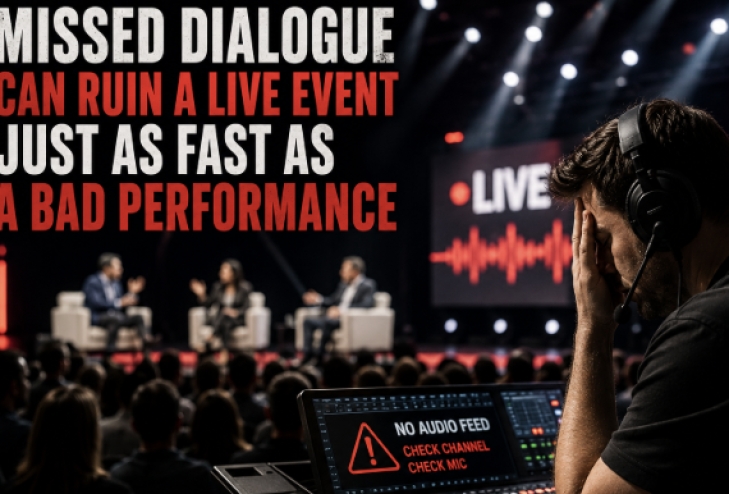
When attendees leave a live event, they rarely remember every song played or every slide shown. Instead, they carry away impressions formed by moments of genuine human connection, and often these moments hinge on what was said between the planned segments. A speaker who forgets to acknowledge the audience, an emcee who skips crucial transitions, or a panelist who fails to respond meaningfully to a question can deflate the energy in a room faster than a technical failure. The dialogue that happens during a live event is not filler material to be rushed through or overlooked. It is, in many ways, the glue that holds the entire experience together.
How Dialogue Shapes Audience Perception
The unscripted moments in live events carry enormous weight in how audiences perceive success or failure. When a speaker engages directly with the crowd, asks rhetorical questions, or acknowledges shared experiences, attendees feel seen and valued. Conversely, when these conversational elements are missing or poorly executed, the event feels hollow regardless of how polished the presentation might be otherwise. A performer could deliver flawless technical content while maintaining complete emotional distance from the room, and the audience will sense that disconnect. The absence of genuine dialogue transforms what should be a shared experience into something that feels transactional. This dynamic applies equally to corporate conferences, academic seminars, community gatherings, and entertainment venues.
The Cost of Poor Transitions and Missed Cues
Live events depend on smooth transitions between segments, and these transitions almost always involve spoken dialogue. When an emcee fails to properly introduce a speaker, the incoming performer must work harder to establish credibility and connection. When a moderator misses a cue to acknowledge a question from the audience, that questioner and those near them feel dismissed. These gaps create awkward silences that ripple outward, making other attendees uneasy and less likely to participate later. A single poorly handled handoff between presenters can undermine the momentum an event has built over hours. The cumulative effect of multiple missed dialogue moments can turn a potentially memorable experience into one that attendees actively forget or remember negatively.
Building Genuine Connection Through Prepared Flexibility
Successful live events require a paradoxical balance: speakers and facilitators must prepare their dialogue while remaining flexible enough to respond authentically to the room's energy. This means having a script or outline for key talking points, but not delivering every line in a robotic manner. For example, a conference speaker might prepare remarks about a new industry trend, but the most memorable moment may come when they pause to ask the audience how that trend has affected their specific work. This prepared flexibility also means training all event personnel to handle unexpected questions, technical delays, or audience reactions with grace and appropriate humor. When team members are empowered to improvise dialogue that maintains the event's tone and purpose, the experience feels natural rather than manufactured. The goal is to create space for genuine human interaction within a structured framework.
Why Silent Moments Feel Longer in Live Settings
Psychological research on human perception shows that silence or communication gaps create discomfort in shared spaces. During a live event, a ten-second pause while waiting for the next speaker feels substantially longer than ten seconds in a recorded video. When this silence occurs because of a missed dialogue cue, the discomfort multiplies because attendees sense something has gone wrong. The mind fills these gaps with self-doubt about whether they should applaud, whether the event is running on schedule, or whether something technical has failed. A seasoned event host knows that a brief, relevant comment, joke, or acknowledgment keeps the audience oriented and engaged during transitions. Even a simple statement such as "While we're getting our next speaker set up, I want to take a quick look at our earlier poll results" fills the void with purposeful content. This proactive dialogue prevents the mental friction that arises when attendees are left wondering what happens next.
Planning Dialogue as Carefully as You Plan Performance
Professional event planners recognize that the words spoken between main segments deserve as much attention as the featured performances or presentations themselves. This means creating a detailed runbook that outlines not just what happens, but what will be said and by whom at each transition point. It means rehearsing with emcees and hosts to ensure they understand the event's flow and can speak about it confidently. It means training speakers on how to handle audience questions even if those questions were not anticipated in advance. Providing accessible realtime captions for live events is one practical method organizers use to ensure that no spoken dialogue is lost on attendees with hearing differences or those seated far from the sound system. When dialogue is planned deliberately rather than left to chance, the event maintains its intended pacing and emotional arc, and that preparation creates a foundation from which genuine, responsive interaction can flourish.
Conclusion
The quality of dialogue in a live event carries as much weight as the quality of the performances and presentations. Audiences disconnect when speakers fail to engage them through meaningful communication, when transitions lack proper introduction or acknowledgment, or when the space between planned segments feels empty and uncertain. By recognizing dialogue as a critical component of event design rather than an afterthought, organizers can significantly improve the overall experience. This requires preparing key talking points for transitions, training team members to handle the unexpected with poise, and remaining flexible enough to respond authentically to audience energy. The most successful live events are not necessarily those with the flashiest production values, but rather those where every participant on stage and in the audience feels connected through thoughtful, purposeful dialogue. When this element is done well, attendees leave with memories that endure far longer than any single performance moment.
An Athlete's Most Valuable Asset Isn't a Contract. It's Their Ability to Compete

When a professional athlete signs a major contract, fans and media often treat it as the pinnacle of success. The financial security, the validation, and the endorsement opportunities that follow all feel like the ultimate payoff for years of hard work. Yet experienced athletes and sports professionals know a deeper truth: that piece of paper means nothing if the athlete cannot step onto the field, court, or track and perform at the highest level. The real asset that matters is the ability to compete, show up, and execute when it counts. This quality shapes not only an athlete's immediate career trajectory but also determines long-term sustainability, marketability, and legacy.
1. Physical and Mental Durability Define Competitive Edge
The foundation of any athlete's competitive ability rests on two interconnected pillars: physical capacity and mental resilience. Physical durability means staying healthy enough to train consistently, recover properly, and perform without chronic pain or recurring injuries. Athletes who can maintain this level of physical readiness gain a significant advantage over competitors who struggle with injuries or inconsistent training cycles. Mental durability is equally critical, encompassing the psychological toughness to handle pressure, bounce back from setbacks, and maintain focus during high-stakes moments when outcomes matter most. An athlete with both forms of durability can compete effectively regardless of external circumstances, making them far more valuable to their team and organization than someone with raw talent alone.
Consider how athletes manage injuries during competitive seasons. Some athletes miss games or matches and lose months of development time, while others find ways to maintain their competitive edge despite physical challenges. This difference in durability often stems from training philosophy, injury prevention strategies, and mental approach to adversity. The athlete who can stay healthy and mentally sharp becomes a reliable performer, and reliability is something no contract can guarantee. Teams and coaches recognize this, which is why durability often influences contract negotiations and playing time more than raw statistics from a single season. When protecting that durability becomes a financial priority, many professionals rely on athlete insurance to safeguard their income and career continuity in the event of an injury that sidelines them from competition.
2. Consistency Transforms Potential Into Performance
Raw talent alone does not make an athlete valuable. The sports world is full of naturally gifted individuals who never reach their potential because they cannot consistently translate that talent into measurable performance. Consistency is the discipline to perform at a high level repeatedly, not just on good days or in favorable conditions. It means showing similar effort in practice as in games, maintaining preparation standards even when no one is watching, and delivering results across different opponents and circumstances. Consistency separates athletes who have brief flashes of excellence from those who build sustainable careers and become team cornerstones.
Athletes who demonstrate consistency become predictable in the best possible way. Coaches can rely on them, teammates trust them, and organizations can build strategic plans around their contributions. A basketball player who scores 15 points on strong shooting in one game but manages only 5 points on poor efficiency in the next is less valuable than a player who consistently contributes 12 points on solid shooting percentages night after night. The second player is more reliable, and ultimately more valuable to team chemistry and strategic execution. This is why consistent performers often command respect and playing time even when more talented teammates may be available.
3. Adaptability Determines Longevity in Changing Competition
Sports evolve. Rules change, playing styles shift, and competitors innovate strategies that require athletes to adjust their approach. The athletes who thrive across decades are those who adapt their game to match the current competitive environment rather than insisting on the same methods that worked in the past. Adaptability means staying open to coaching, learning new skills, adjusting physical conditioning as the body changes with age, and finding new ways to compete even when previous advantages diminish. An athlete with this quality can extend their career and remain competitive well beyond their peak physical years.
Athletes who struggle to adapt often find themselves suddenly obsolete despite past success. A defensive strategy that dominated five years ago may no longer work against modern offensive tactics. A training regimen that built strength in youth may need modification to prevent overuse injuries in the later career stages. Champions who maintain competitive relevance are those who recognize these changes, embrace new methods, and continuously refine their approach. This adaptability is what separates athletes who have one great era from those who remain competitive across multiple phases of their careers.
4. Preparation Creates the Opportunity for Competition
Behind every moment of competition lies countless hours of preparation that rarely gets highlighted. The ability to compete at the highest level requires meticulous attention to training, nutrition, sleep, film study, and tactical planning. Athletes who prepare thoroughly enter competition with confidence and knowledge that gives them an edge, understanding their opponents' tendencies and having trained specifically for the challenges they will face. This preparation transforms competition from a gamble into a performance built on solid fundamentals and strategic thinking.
Preparation distinguishes athletes who succeed in pressure moments from those who crumble when stakes are highest. A runner preparing for a championship race will have completed specific workouts, practiced racing strategies, and visualized success hundreds of times before the actual event. An athlete who simply shows up without this preparation foundation puts themselves at a severe disadvantage against opponents who have done the detailed work. Organizations invest heavily in preparation infrastructure because they understand that competition outcomes are often determined long before the actual game or match begins. The athlete who commits to rigorous preparation signals a willingness to do the work necessary to excel at the highest level.
5. Accountability and Professionalism Sustain Competitive Value
What athletes do off the field often determines what they can accomplish on it. Maintaining professionalism means honoring commitments to the team, following organizational policies, staying in required physical condition, and conducting oneself in ways that reflect positively on the organization. Athletes who lack this accountability sometimes possess great talent but underperform due to off-field issues that distract from their competitive focus. Conversely, professional athletes without elite physical gifts often outperform more talented peers because they maximize every advantage through consistent, disciplined behavior.
Accountability also means accepting responsibility for poor performances and learning from mistakes rather than deflecting blame. An athlete who performs poorly but attributes failure to external factors will struggle to improve because they are not addressing their own controllable variables. An athlete who examines their own role in failure, identifies specific areas for improvement, and works methodically to make changes demonstrates the accountability that drives sustained competitive excellence. Organizations value this quality because it indicates an athlete will continually work to improve rather than plateau after initial success. This accountability, combined with professionalism, creates the stable foundation upon which all competitive performance is built.
Conclusion
The signing bonus and guaranteed money in an athlete's contract mean something only to the extent that the athlete can actually compete at the level the contract promises. A contract for an injured athlete who cannot perform is essentially worthless to the organization and damaging to the athlete's career and reputation. The real, lasting value comes from the ability to show up, prepare thoroughly, execute effectively, and deliver results consistently. Athletes who prioritize this competitive capability build sustainable careers, earn the respect of teammates and coaches, and create genuine legacies that extend far beyond their playing years. Whether in professional sports or amateur competition, the competitor who can reliably bring their best self to moments that matter is the one who truly succeeds, because that ability to compete is an asset that no contract can buy and no amount of money can guarantee.
New Jersey Started It in 2013 and the US Online Casino Map Is Still Filling In

Halls of fame are chronology arguments with plaques attached. Who did it first, who did it best, who kept doing it long enough that leaving them out became embarrassing. Anyone who has spent an evening arguing over a ballot knows the opening question is rarely "was this the greatest?" It's "when did this happen, and what came before it?" Order settles credit. It also settles blame. That's why founding dates get checked and re-checked while the adjectives around them drift, and why a committee will forgive a bad argument about greatness long before it forgives a wrong year.
The regulated online casino sector in the United States has a founding date, and unlike most induction debates, this one has a paper trail. New Jersey authorized internet casino play and went live in November 2013. Every state that followed did it with New Jersey's rulebook, tax structure and technical standards somewhere on the desk. If you want the current roster rather than the origin story, PlayUSA keeps a running account of which states are open and which are still arguing about it. The roster is the interesting part, because it's far shorter than most people assume, and it has stayed short for a long time.
The Founding Date Is the Part Nobody Argues About
New Jersey didn't drift into this. The state legislated for it, stood up a regulatory apparatus around it, and tied every online brand to a licensed Atlantic City casino property, which gave the market a physical address and a license to revoke from the first day. Oversight sits with New Jersey's Division of Gaming Enforcement, and that licensing-through-a-land-based-partner structure is the single most copied feature of the whole thing. Later states changed the tax rate, the number of skins per license and the certification process. Almost none of them abandoned the basic idea that an online operator has to be attached to something a regulator can walk into.
Now the honest counterweight, because a hall-of-fame crowd will spot it anyway. Primacy claims in this sector depend entirely on how you write the eligibility criteria. Count online poker separately from casino games and the ordering shifts. Count a small state-run platform the same as a competitive commercial market and it shifts again. Delaware is on the live list and its own timeline overlaps New Jersey's closely. What New Jersey unambiguously owns is the model: a licensed, taxed, competitive multi-operator market that other legislatures could point at and copy. That's a different claim from "nobody took a bet online before us," and it's the one that survives scrutiny.
Seven States Are Live, and the Number Surprises People
Nearly thirteen years on from November 2013, seven states have legal real-money online casino play: New Jersey, Pennsylvania, Michigan, West Virginia, Connecticut, Delaware and Rhode Island. That's it. Not seventeen, not thirty. Seven.
The list splits into two very different groups. New Jersey, Pennsylvania and Michigan are large states running competitive markets with many operators and real tax receipts. West Virginia, Connecticut, Delaware and Rhode Island are small, and in some cases the market is effectively a short list of brands rather than an open field. Lumping them together as "seven legal states" flattens a genuine difference in scale, the way a career-length record flattens the difference between a decade of dominance and a decade of showing up.
|
Jurisdiction |
Online casino status, 28 August 2026 |
|---|---|
|
New Jersey |
Live since November 2013 |
|
Pennsylvania, Michigan, West Virginia, Connecticut, Delaware, Rhode Island |
Live, all following New Jersey's model |
|
Maine |
Legalized in 2026, not yet operating |
|
The other 42 states |
No regulated online casino |
|
Ontario |
Private operators since 4 April 2022 |
|
Alberta |
Private operators since 13 July 2026 |
|
British Columbia |
Provincial platform only |
One thing the list hides is that these are seven separate markets rather than one national one. Accounts are ring-fenced by state, every session runs a geolocation check, and crossing a state line mid-session ends it. A player who moves house generally starts again at the registration screen with a new account. The map isn't one country with holes in it. It's a set of unconnected jurisdictions that happen to share borders.
Sports betting spread across most of the country in a few years after 2018. Online casino did not follow it. The two are routinely discussed as one subject and they have behaved nothing alike, which is the most useful thing to know about the map.
Maine Passed a Law and Still Has Nothing to Play
Maine legalized online casino play in 2026. As of 28 August 2026 it isn't running. That gap between a statute and a live product is where most public confusion lives, and it's the part news coverage tends to skip.
Legalisation is a vote. Launch is a construction project. Between the two sit written regulations, a licensing round, background checks on operators and suppliers, technical certification of every game, geolocation testing at the state border, tax and reporting plumbing, and a responsible gambling framework somebody has to approve. Any one of those can add months. In the sector's history, the distance from signature to first legal wager has usually been measured in quarters, occasionally in years.
It's the difference between being elected to a hall of fame and standing at the podium in the summer. The vote is real, the plaque isn't cast yet, and anyone who books travel on the vote alone has misread the calendar. PlayUSA on Facebook posts state changes as they clear, which is more useful than reading a legalisation headline and assuming a market exists.
The Holdouts Aren't Waiting on Public Opinion
It's tempting to read a 42-state gap as squeamishness about gambling. Mostly it isn't. Where online casino bills have stalled, the loudest opposition has usually come from inside the gambling business rather than from outside it. Commercial casino owners argue that a phone in every pocket cannibalizes the floor, and they employ people in districts whose representatives have to vote. In states with substantial tribal gaming, an online bill can mean reopening compacts that took years to negotiate and exclusivity terms worth a great deal of money. Lottery retailers have their own lobby and their own view about where a customer's spend ends up. Add a governor who would rather not own the subject in an election year, and a bill dies quietly, without anyone ever having to stand up and argue that gambling is immoral.
Two Canadian Provinces Filled Their Map in a Single Move
The American map fills in state by state and slowly. Canada's has moved in whole jurisdictions at a time, and the contrast is instructive.
Ontario opened to private operators on 4 April 2022, replacing a gray market with a licensed one almost overnight. The regulator is the AGCO, iGaming Ontario conducts and manages the market, and the minimum age is 19. iGaming Ontario reported C$82.7bn wagered and C$3.2bn in gaming revenue for the 2024-25 financial year. That's one province producing numbers comparable to a large American state, in a market that didn't formally exist four years earlier.
Alberta followed on 13 July 2026 under the iGaming Alberta Act. Twenty-two platforms went live at launch and more than 27 were operating by mid-August 2026, with the provincial PlayAlberta site continuing alongside the private brands. The minimum age is 18. British Columbia has not moved: BCLC's PlayNow remains the only legal option there, with a minimum age of 19.
So the switch can be thrown quickly when a government decides to run it as a single project. The American structure makes that harder rather than impossible, because fifty legislatures each set their own timetable, tax rate and appetite for the fight. Ontario also shows what the alternative to a licensed market looks like, since the players it licensed in 2022 were largely already playing somewhere. The choice was never between a market and no market. It was between a supervised one and an unsupervised one.
Sweepstakes Sites Are the Eligibility Fight
Every hall of fame has a category of candidate whose eligibility is the actual dispute. Here it's the sweepstakes casinos, which operate in states with no regulated online casino at all and look, to a casual visitor, close enough to the real thing.
The mechanism uses two currencies. Gold Coins have no cash value and are for play only. Sweeps Coins can be redeemed for roughly a dollar each once a playthrough requirement is met. An alternative method of entry, typically a mail-in request or a daily free claim, is a legal requirement of the model rather than a courtesy. Operators frame the arrangement as promotional rather than gambling, on the basis that no stake is placed. That's their framing, and several state authorities have rejected it.
The last year has been rough for the category. Florida's Attorney General sued sweepstakes operators and, notably, their payment processors in August 2026, which threatens the money rails rather than just the websites. California's AB 831 was signed on 11 October 2025 and took effect on 1 January 2026, extending liability to vendors and suppliers rather than stopping at the operator. Connecticut, New Jersey and Montana have also acted. The result is a patchwork: legality varies by state, it's genuinely contested, and a site being reachable from your sofa says nothing about its standing where you live. Note the distinction that gets blurred constantly. An operator geo-blocking a state is a business decision. A state prohibiting the product is a legal one. They are not the same thing and they don't always point the same direction.
Regulation Decides Whether You Get Paid, Not Whether You Win
This is the part worth being blunt about. A license is a promise about process. It means the games have been certified, the random number generator has been tested, the operator's cash is segregated, complaints go somewhere with authority behind it, and a withdrawal request is enforceable rather than a hope. Those are real protections and they're the entire practical argument for playing inside a regulated market.
What a license does not do is change the arithmetic. The house edge is built into every product on the site, in every one of those seven states, and a regulator's approval is confirmation that the edge is disclosed and honestly implemented, not that it's absent. Regulated play is safer play. It isn't winning play, and any coverage that lets those two ideas blur is doing the reader a disservice. If gambling has stopped being entertainment, the US national helpline is 1-800-GAMBLER.
What This Leaves You to Decide
The founding entry on this map is settled and dated. The rest of it is an open ballot, and it has moved more slowly than almost anyone predicted in 2013.
For a reader, that turns into one question, and it isn't about New Jersey. It's whether your own state is on the live list, on the legalized-but-waiting list like Maine, or on the long list of 42 that have done nothing. The answer determines whether the thing in front of you is a licensed operator with an enforceable payout, a sweepstakes site with a contested legal position, or an offshore book with neither. Check the status where you live before you assume it, because "legal in America" and "legal here" have been two different statements ever since November 2013.
Figures and legal status current to 28 August 2026.
