

Top 50 New York Yankees
This might be the hardest list that we have ever done.Maybe we have said this before, but how can this not be?
We don’t have to tell you about the history of the New York Yankees by saying anymore that this is the most popular and successful team in baseball and one of the only sports franchises in the world that transcends sports. If you like the members of the New York Yankees baseball team, you can consider custom pins, patches, and stickers to show your support for the team. You can also wear baseball hard enamel pins on your hats and clothes to watch their games. In this way, you can directly show the team and the player you support and even meet the same supporters as yourself at the game. So, go here now and customize your favorite pins online!
As such, how do you decide who are the top players for a team without hurting feelings?
The answer is that you can’t.
There are superstars who didn’t make this list (Roger Clemens, Mark Teixeira, Roger Peckinpaugh, Jason Giambi) for example who didn’t make it. The next fifty that we would have picked are better than over half of the top 50 of the other Major League teams. We easily understand the argument for those. We understand the backlash we will hear over the fact that Reggie Jackson barely made this list and could be only a few seasons away from dropping off of this completely.
There was nothing easy about this.
We have our shield on as you read this.
Note: Baseball lists are based on an amalgamation of tenure, traditional statistics, advanced statistics, playoff performance, and post-season accolades. This is a list up to the end of the 2025 Season.
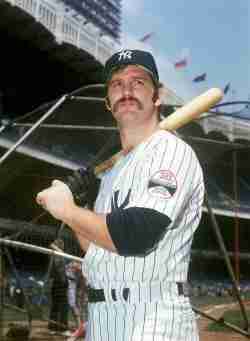
When the Yankees chose Thurman Munson in the first round of the 1968 draft, they were not only selecting a highly skilled catcher from Kent State but also embodying the spirit of a new generation. Munson, a stocky and straightforward individual with a thick mustache, displayed a blue-collar determination that won over the Bronx fans. He played with unmatched fervor, diving into plays behind the plate, and eventually became the first team captain in pinstripes since Lou Gehrig. His professional ascent was immediate and historic. Stepping into the everyday catching role, Munson earned the 1970 American League Rookie of the…
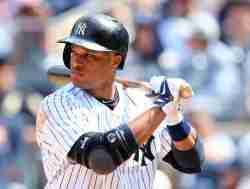
When Robinson Canó assumed daily second base duties in the Bronx in May 2005, manager Joe Torre noted that the rookie's smooth and effortless presence at the plate reminded him of Hall of Famer Rod Carew. Canó not only met those high expectations but also spent nine seasons showcasing a rhythmic, pure hitting style that made him one of the most visually appealing and effective second basemen to step into a Yankee Stadium batter's box. Canó showcased a relaxed yet precise hitting style. His remarkably quick and smooth left-handed swing allowed him to easily line outside fastballs into left field…
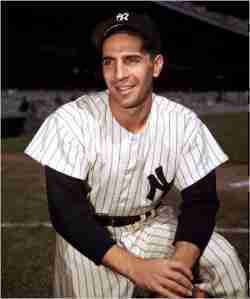
Holy Cow! Philip Francis Rizzuto was cut by the Brooklyn Dodgers and New York Giants as a teenager because of his 5-foot-6 frame—told by Casey Stengel to "go get a shoeshine box.” Few predicted he would become the key infield anchor of baseball's greatest dynasty. The Brooklyn native didn't let rejection slow him, arriving in Bronx in 1941 to start at shortstop and change organizational control of the diamond. "The Scooter" served as the quintessential counterbalance to the formidable identity of the "Bronx Bombers." He did not achieve fame by consistently hitting baseballs over the fences, amassing only 38 home…
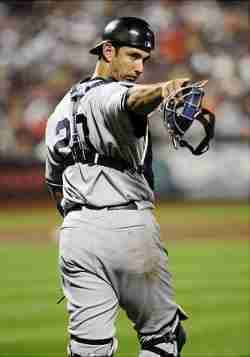
Jorge Posada was selected in the 24th round of the 1990 draft as a skinny infielder out of an Alabama community college, a place where you are barely expected to make it out of single A. Tapped to convert to catcher by the front office, the Puerto Rican native hammered away at his defensive assignments until making his mark in the Bronx. He eventually cemented his status as the fiery, emotional engine of the legendary "Core Four" alongside Derek Jeter, Mariano Rivera, and Andy Pettitte. Posada brought a rare and formidable offensive style to the switch-hitting catching position. He played…
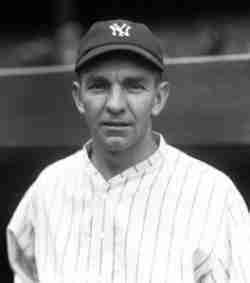
When a franchise builds its identity around a mythic moniker like the "Bronx Bombers," the elite pitching often gets overshadowed. Bob Shawkey spent 13 seasons in New York as the team’s main ace before the baseball world focused on Babe Ruth and Lou Gehrig's home runs. Nicknamed "Sailor Bob" after military service on USS Arkansas during WWI, his arrival through a $3,000 purchase from Connie Mack's Athletics in June 1915 changed the New York rotation. Shawkey combined a high-velocity fastball with an exceptionally sharp, snapping curveball to methodically dismantle lineups. He expended no time in establishing an elite workload, experiencing…
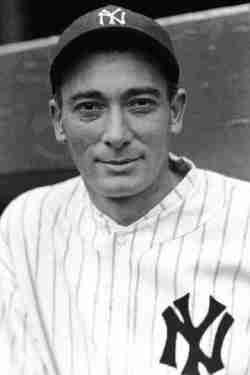
Tony Lazzeri's arrival in the Bronx in spring 1926 marked not only the debut of a highly praised rookie second baseman but also the emergence of a significant cultural icon for thousands of Italian-American fans across New York City. They packed the stands, enthusiastically chanting "Poosh 'Em Up Tony”, a tribute to his legendary power. While historical focus often highlights the mythical, tape-measure home runs of Babe Ruth and Lou Gehrig, Lazzeri’s subtle yet deadly efficiency in the lower order was essential in uniting the historic "Murderers' Row" lineup. Lazzeri fundamentally redefined the expectations for middle infielders regarding run production.…
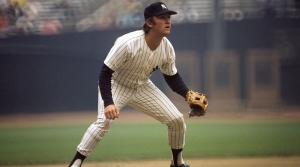
When Graig Nettles was acquired from the Cleveland Indians in November 1972, the New York Yankees knew they were landing a sound third baseman. However, they got a defensive maestro whose glove work at third base stabilized the left side of the field, supporting the late-1970s pinstriped revival. With dry wit, an intense demeanor, and a knack for reading a baseball off the bat, Nettles grew into a key clubhouse leader. Nettles transformed games with his fielding, yet he was also a powerful left-handed hitter perfectly suited for Yankee Stadium's short porch. He started his New York career with seven…
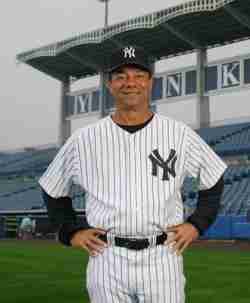
Roy White entered the Bronx clubhouse in September 1965, during the Yankees’ decline from their mid-century dynasty. While fans lamented the team's fall, White, a switch-hitter from Los Angeles, quietly became a steady bridge between two championship eras. With dignity, he endured rebuilding years before winning October titles. White exemplified a masterful, quiet approach to situational hitting, balancing discipline and patience at the plate. With a highly disciplined visual clock and a rare patience, he avoided expanding his strike zone to appease impatient pitchers. During his time with the Yankees, he exceeded 70 walks seven times, including a standout 1972…
SEATTLE MARINERS VS. ATHLETICS
Sep 05, 2026
Buy your Tickets to see Seattle Mariners vs. Athletics HERE!
NEW YORK METS VS. SAN FRANCISCO GIANTS
Sep 05, 2026
Buy your Tickets to see New York Mets vs. San Francisco Giants HERE!
MIAMI MARLINS VS. CHICAGO CUBS
Sep 05, 2026
Buy your Tickets to see Miami Marlins vs. Chicago Cubs HERE!
PHILADELPHIA PHILLIES VS. ATLANTA BRAVES
Sep 05, 2026
Buy your Tickets to see Philadelphia Phillies vs. Atlanta Braves HERE!
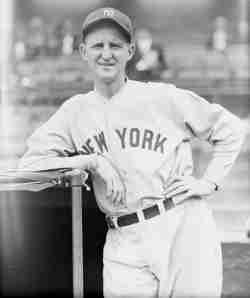
Miller Huggins once said that if his ace's head was cut open, "the weakness of every batter in the league would fall out," highlighting Herbert Jeffries Pennock's operational intelligence. While the 1920s Bronx were known for their power hitting, "The Knight of Kennett Square" was the smooth, elegant southpaw who stabilized the rotation. Acquired in January 1923 from Boston, the veteran left-hander had a graceful, refined delivery that made heavy workloads seem effortless. Pennock demonstrated a masterclass in refined, strategic control. Instead of relying on overwhelming velocity to break down lineups, he utilized a diverse, deceptive speed repertoire and an…
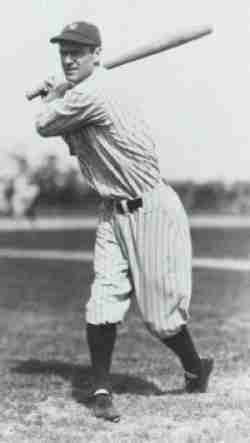
Earle Combs exuded a calm, scholarly dignity that sharply contrasted with the lively, flamboyant personalities of the roaring twenties. A former Kentucky schoolteacher who only made his major league debut at 24, "The Kentucky Colonel" quickly became a key figure in forming the most formidable lineup ever. As the regular center fielder and leadoff hitter for the legendary 1927 "Murderers' Row,” his main role was straightforward yet vital: to reach base before Babe Ruth and Lou Gehrig. Debuting in 1924, Combs performed with remarkable, consistent efficiency, establishing himself as one of baseball's top table-setters. His quick, level left-handed swing allowed…
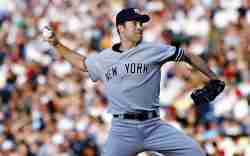
Mike Mussina joined the New York Yankees as a free agent in December 2000, after a decade with the Baltimore Orioles. Moving from Oriole Park to Yankee Stadium didn't change his relentless, efficient style. With an Ivy League-caliber mind, an elite visual clock, and a signature knuckle-curveball, "Moose" spent eight seasons delivering durability during a transitional era for the Yankees’ pitching staff. He didn't rely solely on raw, overpowering velocity to dominate American League lineups. Instead, he carefully dissected hitters by consistently varying eye levels and adjusting his pitch speeds. During his time in New York, he surpassed 200 innings…
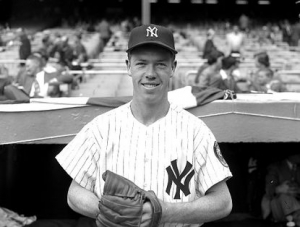
In 1951, Gil McDougald walked straight into a transitional changing of the guard, playing alongside an aging Joe DiMaggio and a raw rookie named Mickey Mantle. Standing out with an incredibly unorthodox batting stance, holding the bat remarkably low with an open, slouching posture, the 23-year-old San Francisco native immediately proved that classic form mattered far less than pure, high-leverage execution. McDougald was a key tactical asset for manager Casey Stengel, leveraging his defensive flexibility to serve as the backbone of the infield during the team's mid-20th-century success. He didn't just fill in gaps; he played at an elite level…
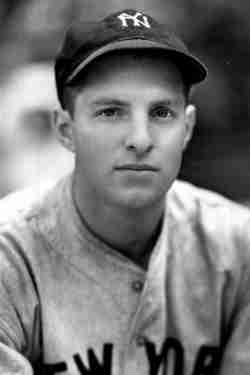
When legal issues in spring 1937 freed Thomas David Henrich from the Cleveland Indians' minor league system, a heated bidding war arose for the talented young outfielder. It was only through a personal meeting with Yankees business manager Ed Barrow that Henrich, a native of Ohio, agreed to sign with New York. This move proved to be a strategic victory for the franchise. By teaming up with Joe DiMaggio and Charlie Keller, Henrich completed the legendary outfield trio and proved himself to be the ultimate teammate, often saving his best performances for the most important moments. His teammates and the…
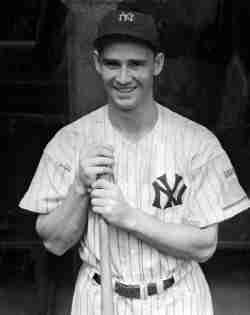
In 1938, Joe Gordon replaced Tony Lazzeri. At 23, he handled the pressure and transformed second base defense into acrobatics, covering the right side with aerial, diving range that redefined physical limits at the position. Gordon was a complete defensive force, greatly influencing the game's pace. He had a lightning-fast transfer and an exceptional sense of spatial awareness, often grabbing balls from the dirt and twisting mid-air to start double plays. Advanced statistics support his reputation, as he ranked in the top five in defensive bWAR in the American League seven times with the team, including four outstanding seasons surpassing…
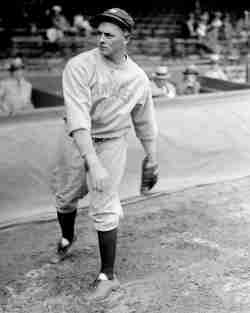
In December 1920, when the New York Yankees targeted the financially struggling Boston Red Sox to acquire a 21-year-old right-hander, they were more than just conducting a typical roster acquisition. They were securing the cornerstone pitcher for what would become the most legendary dynasty in baseball history. Waite Hoyt, born in Brooklyn, was a prodigy who was signed by John McGraw's Giants at just 15, earning him the nickname "Schoolboy" for life. By the time he wore the pinstripes, he had developed into a highly skilled and polished pitcher, seamlessly supporting Babe Ruth's powerful hits and the formidable "Murderers' Row"…
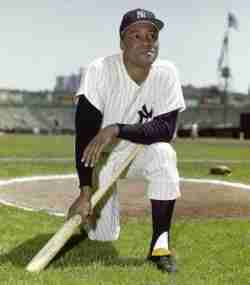
When Elston Howard finally made his major league debut in April 1955, he carried a historic weight that extended far beyond the white lines of the diamond. As the first African-American player to break the color barrier for the sport's most successful franchise, Howard faced immense, high-pressure scrutiny with quiet dignity and resilience. A former standout for the Kansas City Monarchs in the Negro Leagues, the St. Louis native was intentionally converted into a catcher by the New York front office during his minor league journey, a strategic move that would eventually transform the backstop position for a new generation…
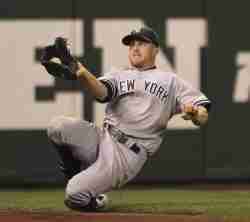
When a player remains with a single franchise for 14 seasons in today's free-agency era, it's no coincidence. It indicates that the front office recognizes something that casual observers often overlook. Brett Michael Gardner may not have had the legendary reputation of Derek Jeter or the overwhelming power of Aaron Judge that captures broadcasts, but he was the perfect example of an analytical favorite—a crucial "glue guy" whose high value stemmed from exceptional spatial awareness, patience, and relentless grit. Gardner exemplified modern, highly efficient base running. He transformed the batter's box into a contest of endurance, often forcing pitchers into…
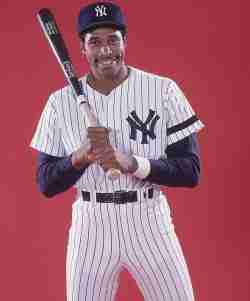
In December 1980, Dave Winfield stunned the sports world by signing a groundbreaking ten-year deal with the New York Yankees. This move not only set financial records but also plunged him into a prolonged media spotlight. The St. Paul native, standing 6-foot-6 and known for his smooth athleticism—traits that had led to drafts in three professional sports—brought a commanding, superstar aura to the Bronx. However, his time with the team was marked by a tumultuous, often confrontational relationship with owner George Steinbrenner, who famously called him "Mr. May" after a brief postseason slump. Despite ongoing off-field drama and a highly…
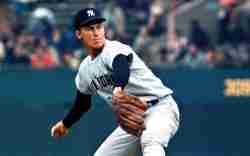
Mel Stottlemyre made a striking debut in Major League Baseball in August 1964, quickly establishing himself with a dramatic entrance. During a tense late-summer pennant race with the Yankees, and with veteran Whitey Ford out due to a hip injury, the 22-year-old rookie was called up to step in immediately. He responded by pitching a complete-game win in his first game, finished the season with a 9–3 record in critical late-season games, and famously matched up against Bob Gibson by pitching three times in the 1964 World Series. This remarkable start hinted at a future career illuminated by October's spotlight.…
