

Top 50 New York Yankees
This might be the hardest list that we have ever done.Maybe we have said this before, but how can this not be?
We don’t have to tell you about the history of the New York Yankees by saying anymore that this is the most popular and successful team in baseball and one of the only sports franchises in the world that transcends sports. If you like the members of the New York Yankees baseball team, you can consider custom pins, patches, and stickers to show your support for the team. You can also wear baseball hard enamel pins on your hats and clothes to watch their games. In this way, you can directly show the team and the player you support and even meet the same supporters as yourself at the game. So, go here now and customize your favorite pins online!
As such, how do you decide who are the top players for a team without hurting feelings?
The answer is that you can’t.
There are superstars who didn’t make this list (Roger Clemens, Mark Teixeira, Roger Peckinpaugh, Jason Giambi) for example who didn’t make it. The next fifty that we would have picked are better than over half of the top 50 of the other Major League teams. We easily understand the argument for those. We understand the backlash we will hear over the fact that Reggie Jackson barely made this list and could be only a few seasons away from dropping off of this completely.
There was nothing easy about this.
We have our shield on as you read this.
Note: Baseball lists are based on an amalgamation of tenure, traditional statistics, advanced statistics, playoff performance, and post-season accolades. This is a list up to the end of the 2025 Season.
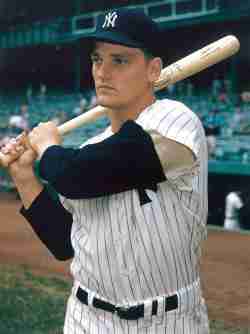
When Roger Maris arrived in the Bronx before the 1960 season through a multi-player trade with the Kansas City Athletics, few expected the quiet, crew-cut kid from Fargo, North Dakota, to immediately challenge the franchise's legendary status. Many thought he would simply serve at best as a reliable, power-hitting sidekick to Mickey Mantle. However, Maris found himself under intense pressure, propelling him into a historic period of exceptional performance that would change baseball forever and solidify his place in American folklore. Maris didn't gradually step into the spotlight; he made a striking entrance. His swift, elegant left-handed swing, perfectly suited…
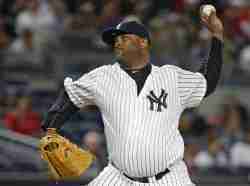
C.C. Sabathia Jr. finalized a massive seven-year, $161 million contract in December 2008, which wasn’t just a premium free-agent signing. He was assuming the ultimate, high-stress mandate: anchor a modern pitching rotation under the most demanding spotlight in sports. Standing an imposing 6-foot-6 and weighing well over 270 pounds, the Vallejo, California native brought a towering physical presence and a fierce, competitive fire to the Bronx that immediately shifted the organizational culture, which, considering the legacy of the Yankees, was no small task. Sabathia did not merely accept the role of ace; he upheld it with a durability reminiscent of…
SEATTLE MARINERS VS. ATHLETICS
Sep 05, 2026
Buy your Tickets to see Seattle Mariners vs. Athletics HERE!
NEW YORK METS VS. SAN FRANCISCO GIANTS
Sep 05, 2026
Buy your Tickets to see New York Mets vs. San Francisco Giants HERE!
MIAMI MARLINS VS. CHICAGO CUBS
Sep 05, 2026
Buy your Tickets to see Miami Marlins vs. Chicago Cubs HERE!
PHILADELPHIA PHILLIES VS. ATLANTA BRAVES
Sep 05, 2026
Buy your Tickets to see Philadelphia Phillies vs. Atlanta Braves HERE!
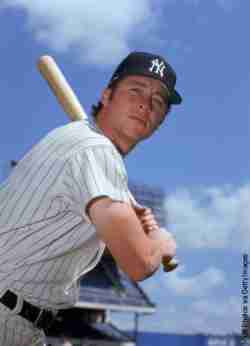
When New York called up Bobby Murcer as a teenager in the 1960s, the team saw him not just as a promising player but as the direct heir to Mickey Mantle, placing an unfair burden on him. Both proud Oklahoma natives, signed by legendary scout Tom Greenwade, they shared athletic, left-handed swings that inevitably drew comparisons. Murcer even took over Mantle’s locker and his role in center field. While living up to the mythical status of such a legendary figure was impossible, Murcer forged his own significant legacy, becoming the franchise’s emotional core during some of its toughest years. After…
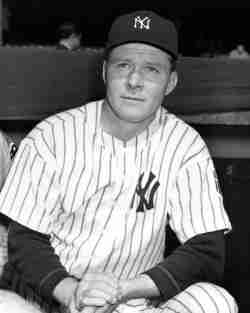
"Spud" Chandler patrolled the area around the pitching rubber at Yankee Stadium with fierce intensity that treated hitters like enemies. Because he didn't debut until age 29 and missed nearly two prime summers to WWII, many overlook his legacy. We won’t do that here. Armed with a heavy, biting slider, a relatively rare and devastating pitch that sharply cut across the plate, Chandler specialized in breaking opposing bats and inducing weak contact. Despite limitations from nagging arm fatigue and injuries in his early thirties, he fully realized his potential as a dominant, front-of-the-rotation pitcher as the 1940s began. He was…
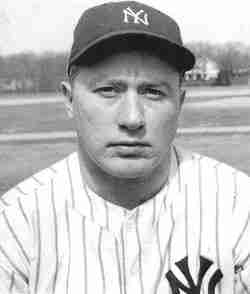
Hmmm. This is another tricky one. Regarding pure talent, Snuffy Stirnweiss isn’t typically considered among the best, with his peak seasons occurring during World War II when MLB rosters were short-handed. He secured his infield position while Joe Gordon was serving in the military and lost it upon Gordon's return. The undeniable truth in professional sports is that a player can only compete against the opponents present. During the wartime roster shortages, Stirnweiss didn't just occupy a position; he maximized his athletic abilities to produce a two-year performance that modern analytics recognize as truly elite. When Joe Gordon left for…
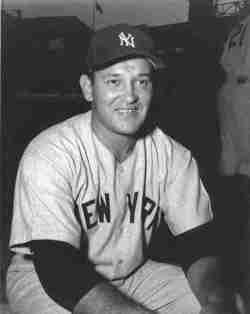
When modern analytics grids dissect Allie Reynolds's career, the spreadsheets can look a bit cold. Sabermetricians often point straight to his 1.386 career WHIP and assert that his heavy win totals were simply a byproduct of playing for an absolute powerhouse dynasty that gifted him relentless run support. But evaluating "Superchief" solely through a modern mathematical lens completely misses the actual shape of his legacy. Reynolds wasn't built to maximize efficiency rows on a computer screen; he was engineered to win the specific baseball game right in front of him. His most notable trait was an exceptional, multi-positional versatility that…
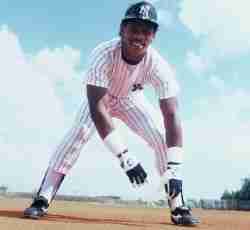
Rickey Henderson is, and will always be, an Athletic. Yet… His move to New York was anything but ordinary—it was an exciting winter event at the 1984 Winter Meetings, highlighting George Steinbrenner's strong passion for top talent. By the end of 1984, the Athletics, his hometown team, were struggling with consecutive losing seasons and hesitated to offer Henderson a lucrative contract extension as he was nearing free agency. Seeing a special opportunity to acquire a legendary player at his peak, the Yankees eagerly joined a competitive bidding battle with the Orioles, Dodgers, and Rangers. To win the sweepstakes, New York…
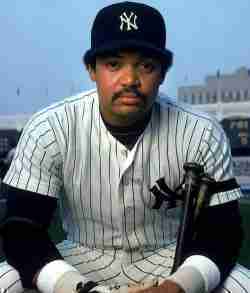
Oh boy… This was by far the hardest one to rank on any MLB top 50 list. When the high-stakes winter of 1976 arrived, the Bronx front office desperately craved a transformative center stage attraction to anchor a new era of baseball supremacy. They found their lightning rod in Reggie Jackson. Arriving with a larger-than-life persona and a thunderous, left-handed swing built for the short right-field porch, he single-handedly injected a fierce, high-drama electricity into the clubhouse. No wonder he was nicknamed Mr. October. The story started in November 1976 when Jackson signed a landmark five-year, $3.5 million free-agent deal,…
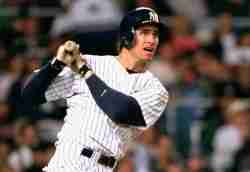
By the time Paul O’Neill reached the Bronx, he was no longer an untested player. He had already been an All-Star and had a World Series title with the 1990 Cincinnati Reds. However, the trade that sent him to New York in November 1992, in exchange for Roberto Kelly, marked a new chapter in his career. He was no longer just a team member; he became the driving force of a dynasty. O’Neill quickly became one of the most cherished figures in modern franchise history. While he was never the most glamorous or the most talented athlete on a team…
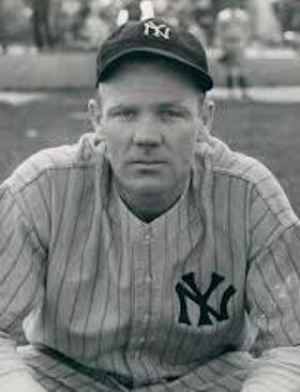
Red Rolfe claimed the starting third base job in 1934 and joined a lineup that became a baseball juggernaut. Playing alongside icons like Babe Ruth, Lou Gehrig, and Joe DiMaggio, it was easy for a soft-spoken Dartmouth graduate to get lost in their shadow. Yet, Rolfe’s decade as a "Lifer" at third base provided the steady baseline that held the 1930s dynasty together. Rolfe officially debuted in a single game in 1931, but by 1934, he had cemented himself in the fabric of the team. He was a fundamentally sound, smooth-fielding defensive asset, bringing an intelligent, calm stability to a…
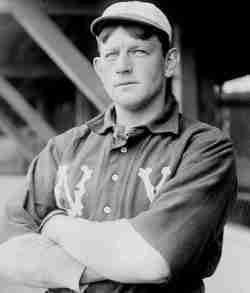
"Happy Jack" Chesbro is a fascinating anomaly in Cooperstown. Critics say his plaque mainly hinges on a single, remarkable regular-season outlier. That season, leading the New York Highlanders, predecessors of the modern Yankees, cemented his legacy in the franchise's history. His arrival in New York stemmed from the chaotic and aggressive founding of the American League. In late 1902, the new junior league was eager to establish a strong presence in Manhattan to compete head-to-head with the established National League. To quickly build a competitive team, AL founders recruited players from the NL by offering much higher salaries and attractive…
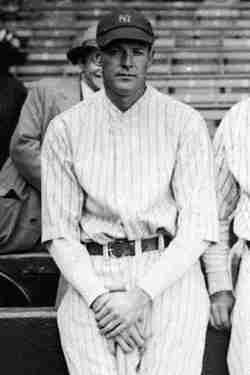
When Bob Meusel entered the batter's box in the 1920s, he offered an optimal and formidable safeguard for the most intimidating lineup in the history Of baseball. Positioned immediately behind Babe Ruth and Lou Gehrig in the renowned "Murderers' Row" batting order, Meusel did not need to dominate the media spotlight to cause significant harm. His presence contributed to a balanced and exceptionally comprehensive offensive strategy for the Yankees, effectively punishing opposing pitchers who attempted to avoid confronting the team's larger-than-life figures. His pinstriped career was characterized by an exceptionally smooth, line-drive swing that achieved elite consistency. Meusel adapted instantly…
