


Committee Chairman
12. Mel Harder
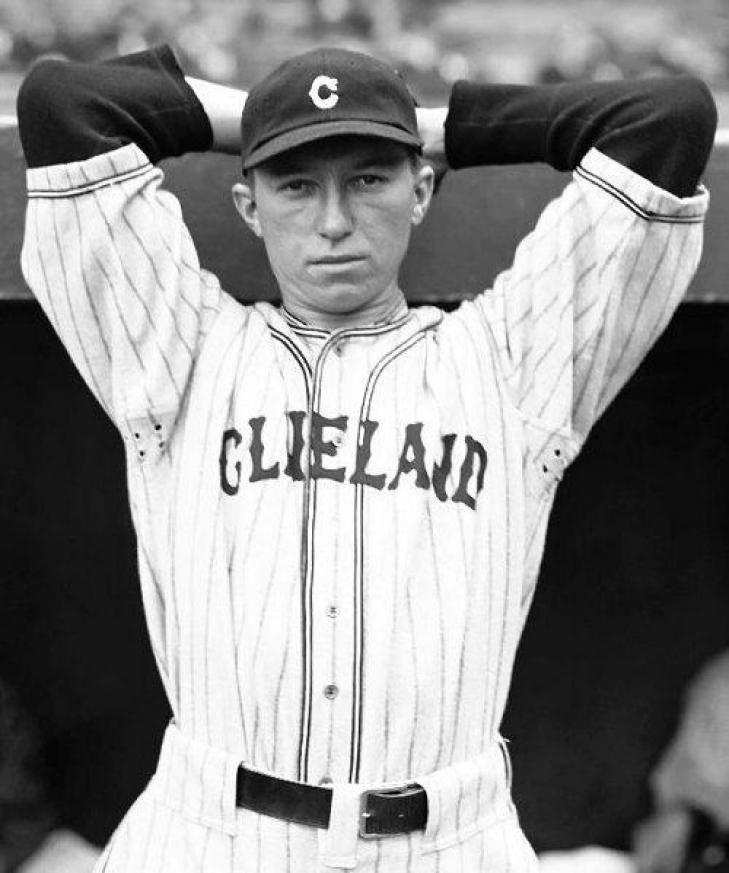
Harder’s journey in Cleveland began in 1928, and after a brief maturation period in the bullpen, he emerged as the definitive lifer of the rotation. He was the ultimate tactical technician, relying on a sharp curveball and a sinker that lived on the edges of the plate. He arrived as a young prospect from Nebraska and quickly evolved into a statistical titan, winning the American League ERA title in 1933. He was a four-time All-Star who provided a level of stability that few in the league could match, rattling off eight consecutive seasons with at least 15 victories during the heart of the 1930s.
The true genius of his game was found in his refusal to give away free passes. Harder was an efficiency machine, leading the league in fewest walks per nine innings in 1935 and finishing in the top ten in that category eight times over his career. Perhaps most impressively, he was a perennial leader in strikeout-to-walk ratio, a feat he achieved through pure location and sequencing rather than raw power, as he only eclipsed the 100-strikeout mark once. He was a master of run suppression who finished in the top ten in WHIP and ERA six times each, proving that in the "Live-ball" era, command was the ultimate equalizer.
Reliability and longevity were the hallmarks of his identity. Harder held a spot on the Cleveland roster for 20 consecutive seasons, a record of service that underscored his importance to the franchise. Even as his physical tools began to erode in the 1940s, his veteran savvy allowed him to remain a productive contributor until his retirement in 1947. He concluded his long journey with 223 wins, a total that remains near the absolute top of the franchise leaderboard. Whether he was navigating the power-heavy lineups of the 30s or helping a young Bob Feller find his footing, he was the steady pulse of the clubhouse.
The chapter of his playing days may have closed without a postseason appearance, but his impact on Cleveland baseball was impossible to ignore. He transitioned seamlessly into a legendary coaching career with the club, but his work on the mound had already secured his immortality. He left the game as a statistical pillar and a symbol of professional excellence.
In recognition of his twenty years of elite service, the organization named Harder to the inaugural class of the Cleveland Indians Hall of Fame in 1951.
16. Corey Kluber
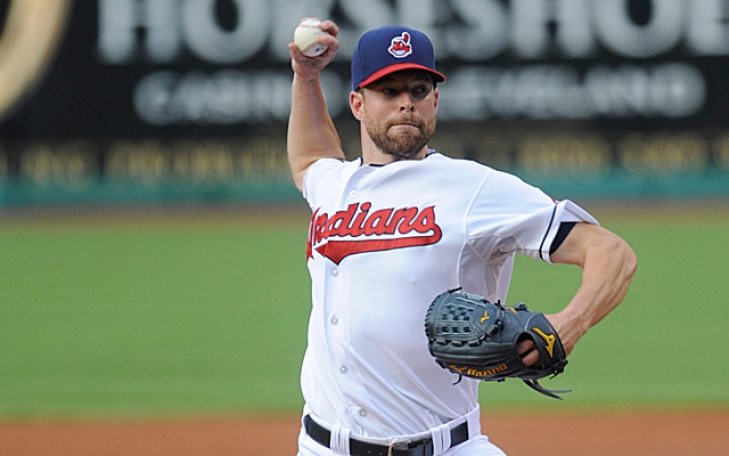
Corey Kluber emerged in the Cleveland rotation in 2013 and matured instantly into a cornerstone of the franchise. He arrived with a "slurve" that defied conventional physics and a stoic demeanor that made him a high-leverage nightmare for American League hitters. Following a breakout eleven-win campaign, he exploded onto the national stage in 2014. That summer, he was a statistical titan, leading the league with 18 wins and a 2.35 FIP, a performance that earned him his first Cy Young Award. He wasn't just a power pitcher; he was a tactical technician who used late, explosive movement to rule the strike zone with professional poise.
The absolute pinnacle of his dominance came during a relentless three-year stretch of All-Star appearances from 2016 to 2018. During this window, Kluber was an efficiency machine, serving as the tactical heartbeat of the 2016 pennant-winning squad and reaching a historic ceiling in 2017. That year, he stood as the undisputed king of the mound, finishing first in the American League in ERA (2.25) and WHIP (0.869) while securing his second Cy Young. He followed that masterpiece with a 20-win season in 2018, finishing third in the voting and proving that his value was rooted in a rare balance of durability and run suppression.
His identity was synonymous with a relentless, mechanical consistency that resonated with the Cleveland faithful. Kluber was a master of the "Dead-red" era, using his signature sinker and breaking ball to navigate the most dangerous lineups in the game. Whether he was striking out the side in a crucial playoff start or grinding through the dog days of August, he played with a visible focus that made him a local immortal. Even as arm injuries eventually slowed his momentum and led to a trade to the Texas Rangers, he left behind a legacy of craftsmanship that solidified his place as the greatest Cleveland pitcher of his generation.
As a member of the Indians, Kluber recorded a 98-58 record with 1,461 strikeouts, two Cy Young Awards, and a 3.16 ERA.
15. Addie Joss
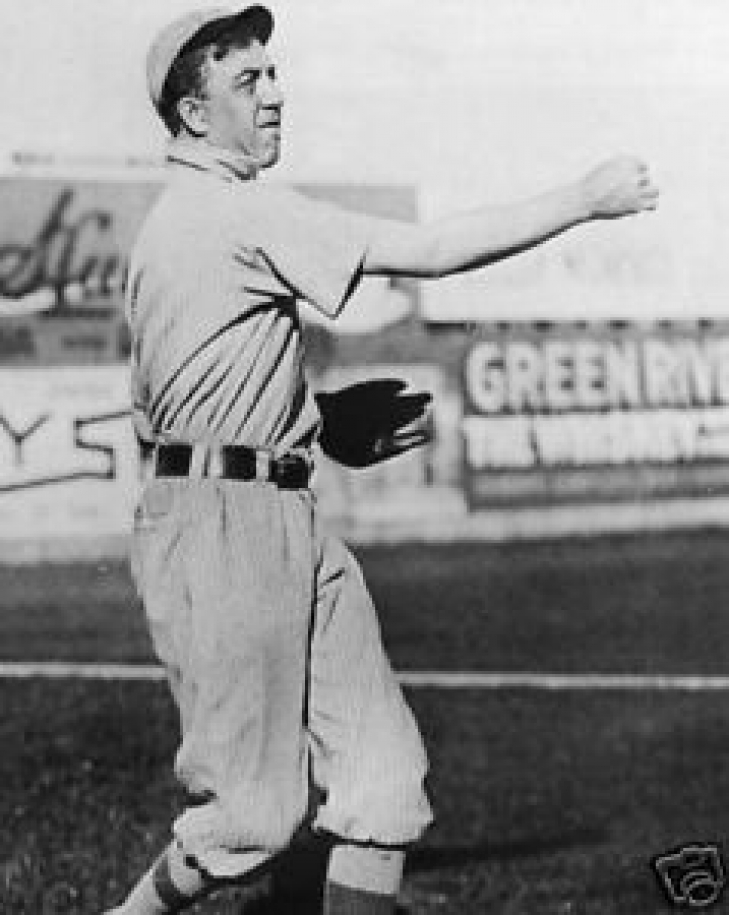
When Addie Joss arrived in 1902, he bypassed the usual maturation process, maturing instantly into a premier arm in the American League. He arrived with a "shadowing" delivery that hid the ball until the last possible second, and by 1903, he was already leading the league in WHIP. He was an efficiency machine from the jump, capturing his first ERA title in 1904 with a microscopic 1.59 mark. He wasn't just a finesse pitcher; he was a high-volume workhorse who rattled off four consecutive 20-win seasons, including a league-leading 27 victories in 1907.
The absolute pinnacle of his career, and perhaps the greatest individual season in franchise history, arrived in 1908. Joss was a statistical outlier that year, winning his second ERA title with a career-best 1.16 and leading the league with a 0.806 WHIP. The crowning achievement was a Perfect Game against the Chicago White Sox in the heat of a pennant race, a masterpiece of run suppression that remains one of only a handful in the game’s history. He was a master of the "Deadball" era tactical game, using his intelligence and poise to dismantle lineups with surgical precision.
His identity was defined by a quiet dignity and a level of performance that bordered on the impossible. Joss concluded his stay in Cleveland as a "Lifer," having spent all nine years of his professional career with the club. He amassed 160 wins and maintained a career 1.89 ERA—the second-best mark in baseball history. Even more staggering is his 0.968 lifetime WHIP, which stands as the best of all-time. He proved that you didn't need a decades-long career to leave an eternal mark on the game; you just needed to be perfect for every moment you were on the mound.
The chapter reached a heartbreaking and sudden conclusion in April of 1911. After battling various ailments, Joss passed away from tubercular meningitis at the age of 31. His loss was felt so deeply by his peers that his teammates famously went on strike to attend his funeral, an unprecedented show of respect for a man who was as beloved as he was dominant.
Recognition of his historic impact came in 1978, when the Veterans Committee elected him to the National Baseball Hall of Fame, notably waiving the ten-year service rule to honor his nine-year masterpiece. The organization ensured his local immortality by inducting him into the Cleveland Indians Hall of Fame in 2006.
13. Larry Doby
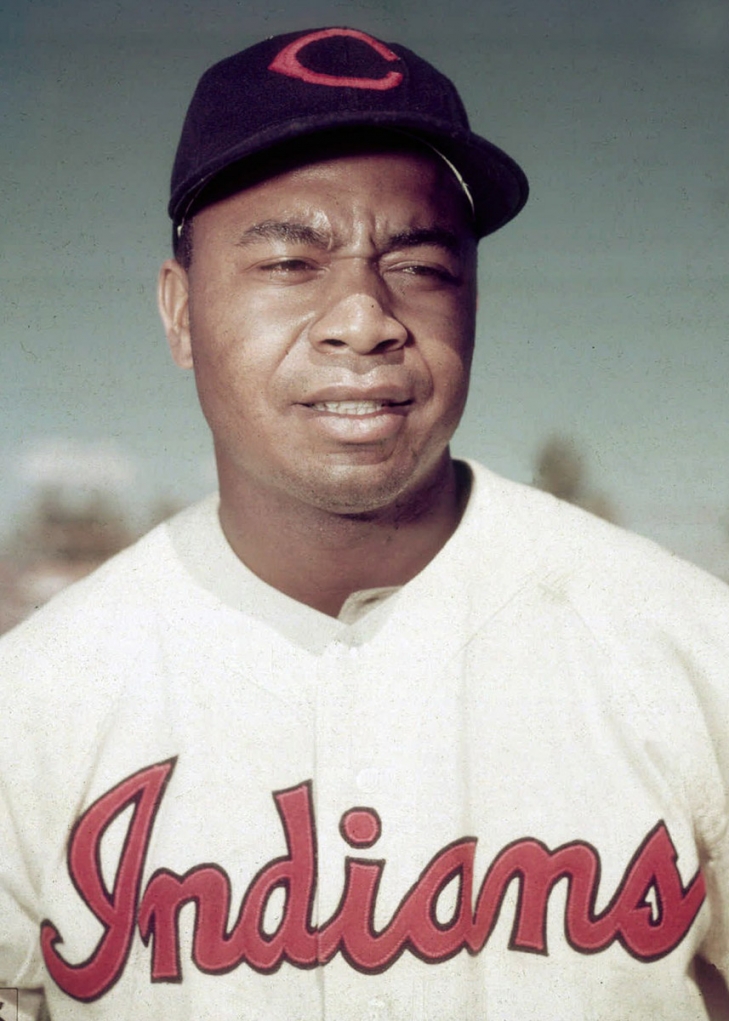
Doby’s journey in Cleveland began under the most intense scrutiny imaginable, but by 1948, he had matured into a foundational pillar of the franchise. He batted .301 that season, providing the offensive spark that helped propel the Indians to their historic World Series title. He arrived as a young star from the Newark Eagles and quickly evolved into a statistical titan, rattling off seven consecutive All-Star selections. During that remarkable stretch, Doby blasted at least 20 home runs in every single one of those seven seasons and twice captured the American League home run crown.
The peak of his efficiency was a masterclass in hitting. Doby was far more than a slugger; he was a sophisticated, patient technician at the plate. In 1950, he led the American League in both on-base percentage (.442) and OPS (.986), followed by a league-leading slugging percentage (.541) in 1952. He was a high-leverage nightmare for opposing pitchers, possessing a rare blend of plate discipline and raw strength that made him one of the most feared bats in the game. Whether he was tracking down fly balls in center or launching "taters" into the Cleveland night, he was the tactical engine of a lineup that consistently challenged for the pennant.
His identity was synonymous with a quiet dignity and a relentless pursuit of excellence. Doby spent the vast majority of his career in a Cleveland uniform, accumulating 215 home runs and serving as a model of consistency through the golden era of the franchise. Even after a brief stint with the White Sox, the pull of the lakefront brought him back for a second run in 1958, allowing him to add another chapter to a legacy built on breaking barriers and breaking records. He proved that greatness is the ultimate equalizer, silencing detractors with a swing that was as graceful as it was powerful.
The chapter of his playing days eventually transitioned into a period of historic reverence. The organization ensured his immortality by retiring his iconic number 14 in 1994, and he was inducted into the franchise Hall of Fame as early as 1964. The broader baseball world caught up in 1998 when the Veterans Committee elected him to the National Baseball Hall of Fame in Cooperstown.