


Committee Chairman
17. Albert Belle
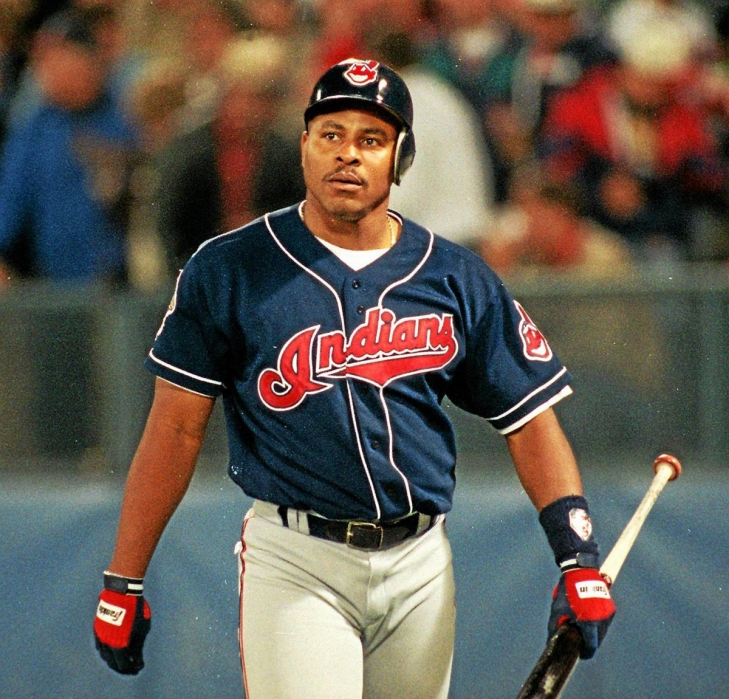
Albert Belle surfaced as a regular fixture in the Cleveland lineup in 1991 and matured instantly into the premier power threat in the American League. He emerged with a specialized, heavy-handed stroke that turned the "Jake" into a launching pad, embarking on a remarkable five-year run where he hammered at least 34 home runs and drove in over 100 runs annually. He was the definition of an efficiency outlier, a tactical weapon who anchored a lineup that led the franchise back to the World Series for the first time in over forty years.
In 1995, Belle had a season of such profound offensive dominance that it remains a statistical anomaly. That summer, Belle became the first and only player in Major League history to record 50 home runs and 50 doubles in the same season. He was a master of run production, leading the American League in homers (50), doubles (52), and runs scored (121) while authoring a massive .317/.401/.690 slash line. Despite this historic performance, he famously finished as the runner-up for the MVP, a result often attributed to his abrasive relationship with the media rather than a lack of competitive brilliance. He followed that masterpiece with another RBI title and a third-place MVP finish in 1996, proving that his value was rooted in a sustained, high-ceiling excellence that few could hope to contain.
Belle was synonymous with a relentless, focused aggression that made every at-bat a high-stakes event. Belle was a master of the inner half of the plate, using his legendary strength to pull balls into the left-field bleachers with terrifying frequency. Whether he was pointing to his hip after a controversial home run or lacing a double into the gap to spark a late-inning rally, he played with a visible intensity that made him a local immortal. Even as he sought a change of scenery and joined the Chicago White Sox as a free agent in 1997, he left behind a decade of production that defined the most successful era in the club's modern history.
As a member of the Indians, Belle compiled 1,014 hits, 242 home runs, and 751 RBIs with a .580 slugging percentage, and in 2016, the organization recognized the sheer magnitude of his contribution to the city's baseball renaissance by inducting him into their Hall of Fame.
19. Mike Garcia
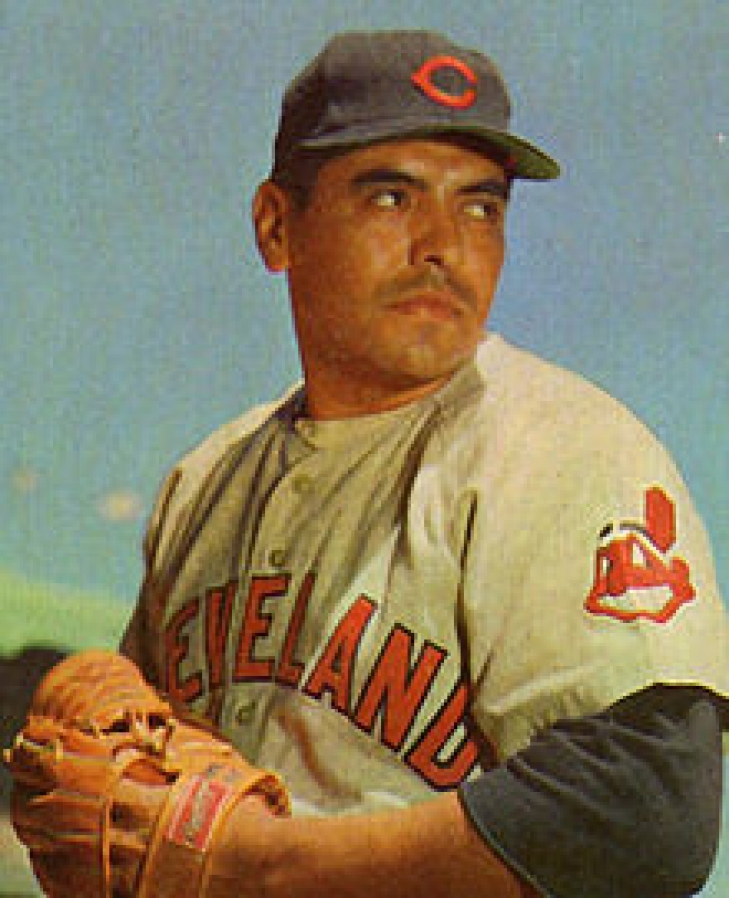
Mike Garcia, “The Big Bear”, emerged as a force in 1949, having returned from his service in World War II to claim a spot in the Cleveland rotation. He made an immediate statement by capturing the American League ERA title (2.36) as a rookie, proving that his game was built on a sophisticated blend of power and run suppression. He possessed a heavy, sinking fastball and a relentless work ethic that allowed him to anchor the staff during a period of historic franchise success. By the dawn of the 1950s, he had matured into a cornerstone of the organization, embarking on a stretch where he secured back-to-back 20-win seasons in 1951 and 1952.
The true magnitude of his effectiveness was often obscured by his teammates' win totals, yet he was a master of efficiency. Garcia stood as the American League leader in FIP on four separate occasions, demonstrating a tactical command of the strike zone that few could rival. This excellence reached a crescendo during the historic 1954 campaign, where he captured his second ERA title and served as a primary catalyst for a club that won 111 games and the American League Pennant. He was the staff’s quiet technician, a high-leverage producer who navigated the era’s most dangerous lineups with professional poise and an indomitable spirit.
Garcia remained a fixture in Cleveland for over a decade, navigating the transition from the post-war era into the late 1950s with a consistent, blue-collar approach. Whether he was grinding through a complete game to preserve the bullpen or leading the league in shutouts, he competed with an intensity that solidified his status as a local immortal. He proved that a player could become a franchise pillar by outworking the opposition and providing a steadying hand for a championship-caliber rotation. Garcia played for The Tribe until 1959, when he moved on to the White Sox, but he left the organization as one of its most successful and respected hurlers. He departed with 142 victories against 96 Losses with 1,095 Strikeouts in a Cleveland uniform, leaving behind a legacy of strength and statistical dominance that bridged the gap between the legends of the past and the stars of the future.
The ultimate punctuation on his career arrived nearly a half-century after he last stepped off the mound at Municipal Stadium. In 2007, the organization recognized his massive contribution to the greatest era of Cleveland pitching by inducting Mike Garcia into the Cleveland Guardians Hall of Fame.
18. Shoeless Joe Jackson
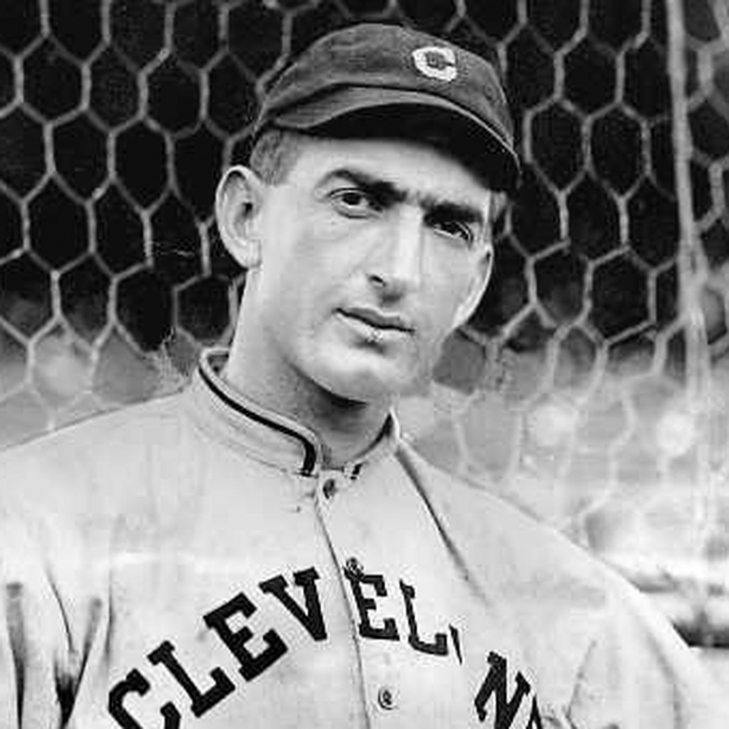
Shoeless Joe Jackson’s path to Cleveland was paved by his struggle to acclimate to the rigid environment of the Philadelphia Athletics. After appearing in just ten games across two seasons, his modest background and simple nature led to a disconnect with Connie Mack’s club. Regarded as an afterthought, he was sent to Cleveland as the "player to be named later" in a 1910 trade, a move that would become one of the most lopsided acquisitions in the history of the sport. Upon his arrival, Jackson found his footing and instantly matured into the most dangerous offensive force in the American League.
The three-year run that followed remains the high-water mark for hitting in a Cleveland uniform. In 1911, his first full campaign, Jackson produced a staggering .408 batting average with 233 hits and 19 triples, a performance that remains the franchise single-season record. He wasn't just a slap hitter; he was a master of the extra-base hit, leading the league in triples in 1912 and doubles in 1913. During this peak, he never saw his OPS dip below 1.000, and in 1913, he led the league in both on-base percentage and slugging, narrowly missing out on the MVP award. He treated the outfield gaps as his personal domain, punishing opposing pitchers with a level of consistency that defied the era’s low-scoring trends.
His presence on the field was defined by a quiet, uncomplicated brilliance and a defensive range in the outfield that often went overlooked because of his historic bat. Jackson was the heart of the Cleveland offense for six seasons, using "Black Betsy”, his legendary dark-stained bat, to command the respect of every peer in the game. Whether he was lacing a triple into the corner or maintaining a .375 career average with the club, he played with a raw, unrefined grace that made him a local immortal. He proved that a player could rise from the most humble beginnings to become the gold standard of professional hitting.
With the club struggling and Jackson’s production dipping slightly from his superhuman norms, the Indians traded their superstar to the Chicago White Sox for a package of players and cash. He left Cleveland as a statistical pillar whose .375 franchise average remains untouched to this day.
As a member of the Indians, Jackson compiled 937 hits, 168 doubles, and 89 triples with a historic .375/.441/.542 slash line.
Though the doors to Cooperstown were famously barred against him, the city where he truly flourished never forgot the man who made hitting look like art. In 1951, the organization provided the final punctuation to his local legacy by inducting "Shoeless" Joe Jackson into the inaugural class of the Cleveland Guardians Hall of Fame.
14. Jim Thome
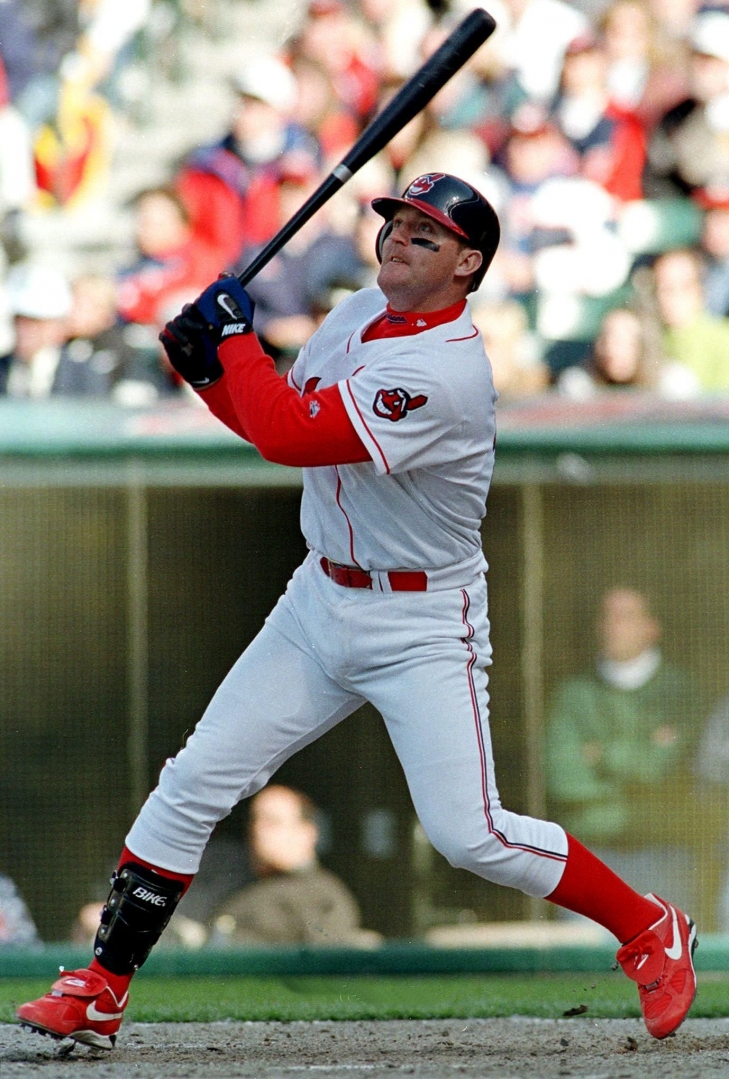
Thome’s maturation in Cleveland was a slow burn that eventually turned into a forest fire. While he debuted in 1991, the 1994 season saw him become a permanent fixture in a lineup that was quickly becoming the most feared in the American League. He arrived with a unique, pointed-bat stance, a tribute to the fictional Roy Hobbs, and instantly began a nine-year streak of 20-homer seasons. By the mid-90s, he had evolved from a tactical hitter into a statistical titan, providing the middle-of-the-order muscle that propelled Cleveland to five straight division titles and two World Series appearances.
The absolute pinnacle of his time in Cleveland arrived during a blistering run from the late 90s into the early 2000s. Thome rattled off seven consecutive seasons with at least 30 home runs, a period of high-ceiling dominance that culminated in a historic 2002 campaign. That year, he blasted a career-high 52 home runs, capturing the American League Slugging Title and finishing among the top ten in MVP voting for the fourth time in a Cleveland uniform. He wasn't just a volume-dense slugger; he was an efficiency machine, maintaining a staggering .414 on-base percentage and a .566 slugging mark that remains a gold standard in the franchise record books.
His identity was synonymous with a gentle-giant persona and a relentless, high-leverage bat. Thome was a master of the walk and the long ball, accumulating 937 RBIs and 337 home runs during his primary stay in the city. Whether he was launching a 511-foot blast or greeting a teammate at home plate with a signature grin, he was the emotional heart of the club. Even after moving on to Philadelphia and beyond in 2003, the pull of the lakefront remained; he returned for a 21-game encore in 2011, allowing a new generation of fans to witness the iconic stance one last time.
The chapter of his playing days eventually transitioned into a period of undisputed reverence. In 2018, the baseball world officially recognized his greatness with a first-ballot induction into the National Baseball Hall of Fame. Locally, the organization ensured his legacy would forever be part of the landscape, retiring his number 25 and erecting a bronze statue in his likeness—forever frozen in that iconic point toward center field.