


Committee Chairman
11. Kenny Lofton
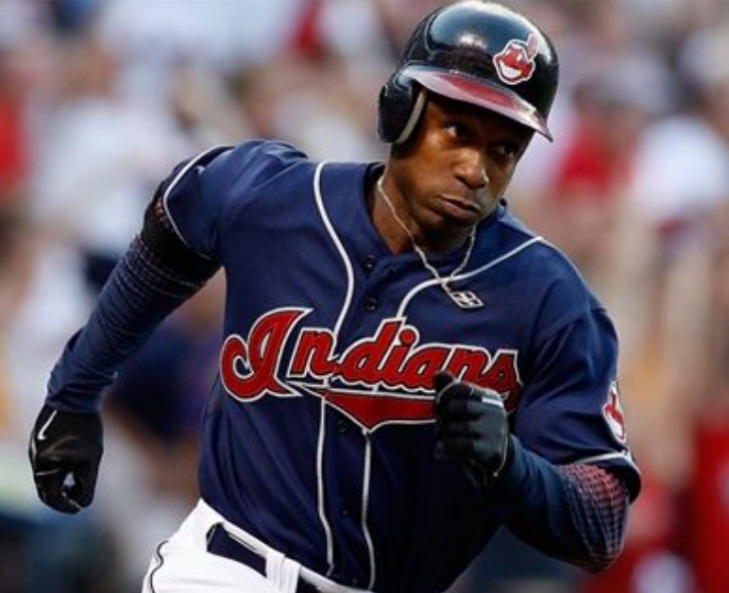
The trajectory of Cleveland baseball shifted forever in the winter of 1991 when the club acquired Lofton from Houston. He matured instantly into the premier leadoff threat in the American League, finishing as the Rookie of the Year runner-up while leading the league with 66 stolen bases. He arrived as a rare two-sport standout from the University of Arizona, having famously played point guard for the Wildcats in the 1988 Final Four—and he brought that same basketball player’s leaping ability and sprinter’s burst to the diamond. He quickly evolved into a tactical nightmare for opposing pitchers, ruling the basepaths as the league leader in steals for five consecutive seasons.
The absolute pinnacle of his career was marked by a rare, five-tool efficiency that garnered him four consecutive Gold Gloves and five straight All-Star nods during his initial run. Lofton wasn't just a speed merchant; he was a refined hitter who maintained a batting average over .310 in each of those first five seasons. He served as the defensive anchor for the legendary squads that reached the World Series in 1995 and 1997, proving that his value was rooted in a sophisticated balance of run production and elite run prevention. He possessed a national popularity that transcended the small-market labels of the era, becoming the face of a revitalized Cleveland brand.
His identity was inextricably linked to the shores of Lake Erie, as evidenced by his constant return to the organization. After a brief "megadeal" departure to Atlanta in 1997, he rejoined the Tribe in 1998 for a second four-year run, continuing his All-Star ways and remaining a vital, high-leverage presence at the top of the order. Even as he transitioned into the "cardboard box" phase of his career—suiting up for eight different teams in a seven-year span, he remained a productive force who seemed to be simply waiting for the path to lead back home.
The final chapter of his journey offered the ultimate poetic conclusion. In 2007, Lofton returned to Cleveland for a third and final stint, allowing him to retire in the uniform where he achieved his greatest heights. He concluded his time in Cleveland with a sterling .300 batting average, 1,512 hits, and a staggering 452 stolen bases, a volume of theft that remains the franchise benchmark. He proved that even for a global traveler, there is no place quite like the North Coast.
In recognition of his role as the engine of a dynasty, the organization inducted Lofton into the Cleveland Indians Hall of Fame in 2010.
10. Sam McDowell

The Cleveland rotation found a true outlier in 1961 when Sam McDowell debuted as a teenager, but it was the 1964 campaign where he matured into a full-time force. He possessed a rare, high-ceiling talent that enabled him to lead the American League in strikeouts five times during his tenure with the club. While legends like Koufax and Gibson were grabbing headlines in the Senior Circuit, "Sudden" Sam was the undisputed king of the whiff in the AL, twice eclipsing the 300-strikeout mark in a single season. He arrived as a raw prodigy and quickly became the pitcher that every hitter in the league dreaded facing on a Tuesday night.
The peak of his efficiency was a sight to behold, particularly during the 1965 season when he captured the American League ERA title with a microscopic 2.18 mark. His impact was further validated by his status as a six-time All-Star and a two-time league leader in bWAR for pitchers, proving that his value was rooted in much more than just a high radar gun reading. He was an efficiency machine when he found the zone, holding opponents to incredibly low hit totals and dominating the high-leverage moments of the mid-60s.
However, his dominance was often a double-edged sword. McDowell played with a wildness that was as legendary as his velocity, leading the league in walks five times during his Cleveland tenure. This tug-of-war between elite stuff and erratic control meant that while his 122-109 record with the club was solid, it rarely reflected the true terror he struck into the hearts of opposing lineups. He was a high-volume workhorse who frequently led the league in batters faced and innings pitched, serving as the most durable and dangerous southpaw of his generation.
The chapter eventually closed on his time in Cleveland following the 1971 season, leading to later stops in San Francisco, New York, and Pittsburgh. He left the organization as a statistical titan, having amassed 2,159 strikeouts in an Indians uniform, a total that remains a benchmark for every left-hander who has followed him. He proved that even with a lack of pinpoint command, a pitcher with enough "sudden" life on his heater could rule the league for a decade.
Recognition for his cornerstone status in the franchise finally arrived in 2010, when the organization inducted him into the Cleveland Indians Hall of Fame.
8. Earl Averill
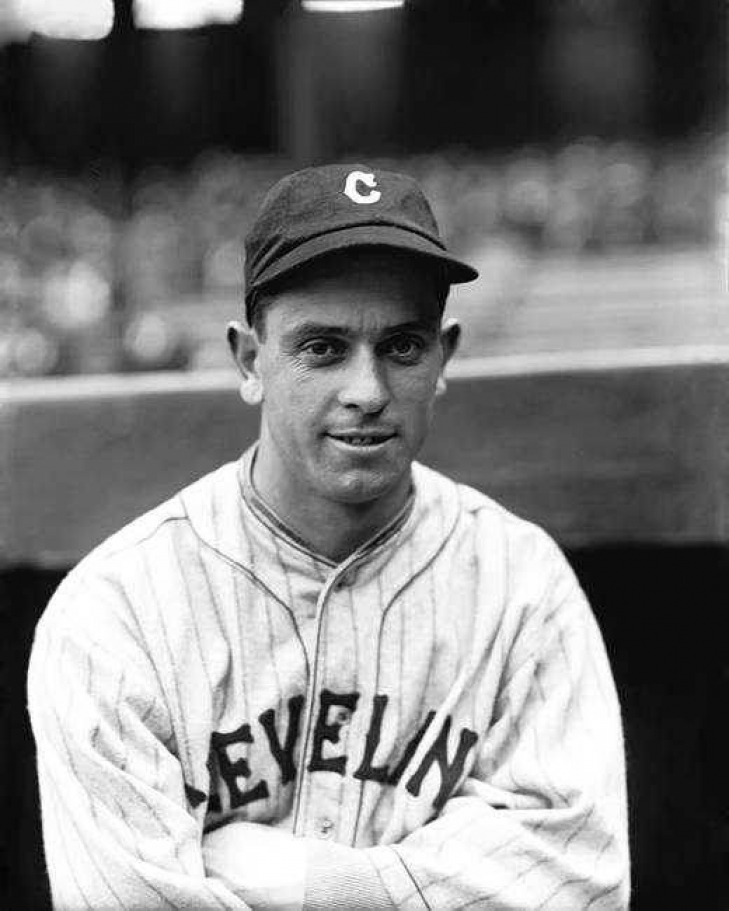
Cleveland’s decision to call up a 27-year-old rookie in 1929 might have raised eyebrows elsewhere, but Averill silenced the skeptics with his very first swing, launching a home run that signaled the arrival of a finished superstar. That debut season, a .332 average paired with 18 home runs, set the tone for a decade of relentless production. He anchored center field with a poise that suggested he had been playing at League Park for years, quickly maturing into the franchise's most potent offensive weapon.
The statistical pinnacle of his residency arrived in 1936, a season that remains a monument to pure hitting. While he had already established a baseline of excellence by batting over .300 in each of his first six years, this campaign was a true outlier. Averill terrorized American League pitching, hitting .378 and leading the league with 232 hits and 15 triples. As a six-time All-Star, he provided skills that few contemporaries could match, combining raw power with a clinical ability to find the gaps.
Traditional production remained his calling card throughout the decade, a consistency that kept the Indians in the hunt year after year. Averill surpassed the 20-home run mark five times and concluded his Cleveland tenure with 226 long balls and 1,084 RBIs. His final franchise slash line of .322/.399/.542 stands as a testament to his run-producing abilities. While a lack of defensive polish, often characterized by a high error count in the outfield, might have capped his ceiling on the all-time rankings, his bat was so vital that it rendered any fielding deficiencies a distant secondary concern.
A decade of dominance eventually came to an end in 1939, when the organization traded the aging icon to the Detroit Tigers. Averill left Cleveland as a pillar of the community, having authored a statistical resume that spoke to a year-over-year excellence few have replicated. He proved that the age on a player's birth certificate matters far less than the intensity they bring to every single plate appearance.
Recognition on the national stage finally arrived in 1975 when the Veterans Committee ushered Averill into the Baseball Hall of Fame. Cleveland responded with a gesture that cemented his legacy, retiring his number 3.
9. Early Wynn
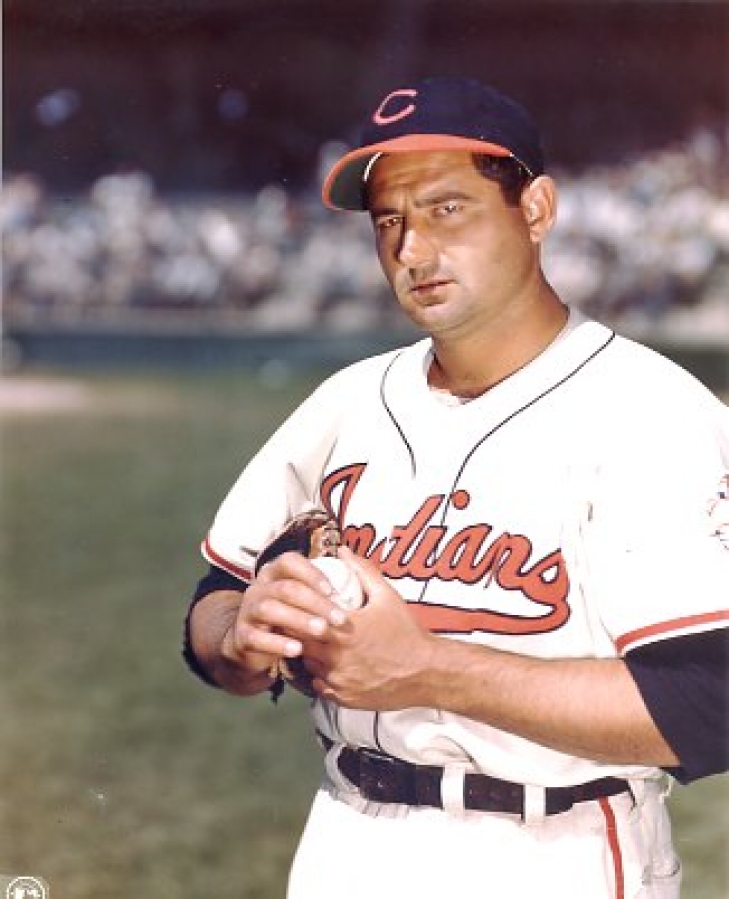
The American League landscape shifted in 1949 when Cleveland acquired Early Wynn, placing him alongside legends like Bob Feller and Bob Lemon. This environment pushed his game to a new stratosphere; after a solid debut season with the club, he authored a masterclass in efficiency in 1950. That year, he captured the ERA title while leading the league in WHIP, hits-per-nine innings, and strikeouts-per-nine. He arrived as a piece of the puzzle and instantly became an ace in his own right, providing a level of dominance that made the Cleveland staff the most feared unit in the sport.
The peak of his career was defined by a remarkable combination of durability and winning. Wynn rattled off four 20-win seasons in a Cleveland uniform, including a league-leading 23 victories during the historic 111-win campaign of 1954. His presence on the mound was defined by legendary toughness; he was a three-time All-Star for the Tribe and a perennial MVP candidate, finishing in the top six twice. He wasn't just piling up stats; he was the tactical hammer of the staff, a man who threw with a mean streak and a tireless arm that consistently led the league in innings pitched and batters faced.
Consistency remained his trademark even as he moved into his late thirties. Whether he was baffling hitters with a sharp curve or moving them off the plate with a purposeful fastball, Wynn was the ultimate professional workhorse. He concluded his primary stay in Cleveland following the 1957 season with a massive volume of production, including 164 wins and 1,277 strikeouts. His identity was that of a pitcher who refused to yield an inch of the plate, a mindset that eventually carried him through 23 Major League seasons.
The final chapter of his career offered a poetic return to the city where he enjoyed his greatest success. After being released by the White Sox in 1962, Wynn sat stuck at 299 career victories. Determined to reach the mountaintop, he signed back with the Indians for the 1963 season. In a moment of high-leverage drama, he secured that elusive 300th win in a Cleveland uniform before finally hanging up his cleats at the end of the year. It was a fitting conclusion for a man who had given his best years to the shores of Lake Erie.
The baseball world officially recognized his grit and greatness in 1972, electing him to the Hall of Fame in his fourth year of eligibility. That same year, the organization ensured his legacy would forever be part of the franchise fabric by inducting him into the Cleveland Indians Hall of Fame.