


Committee Chairman
6. Bob Lemon
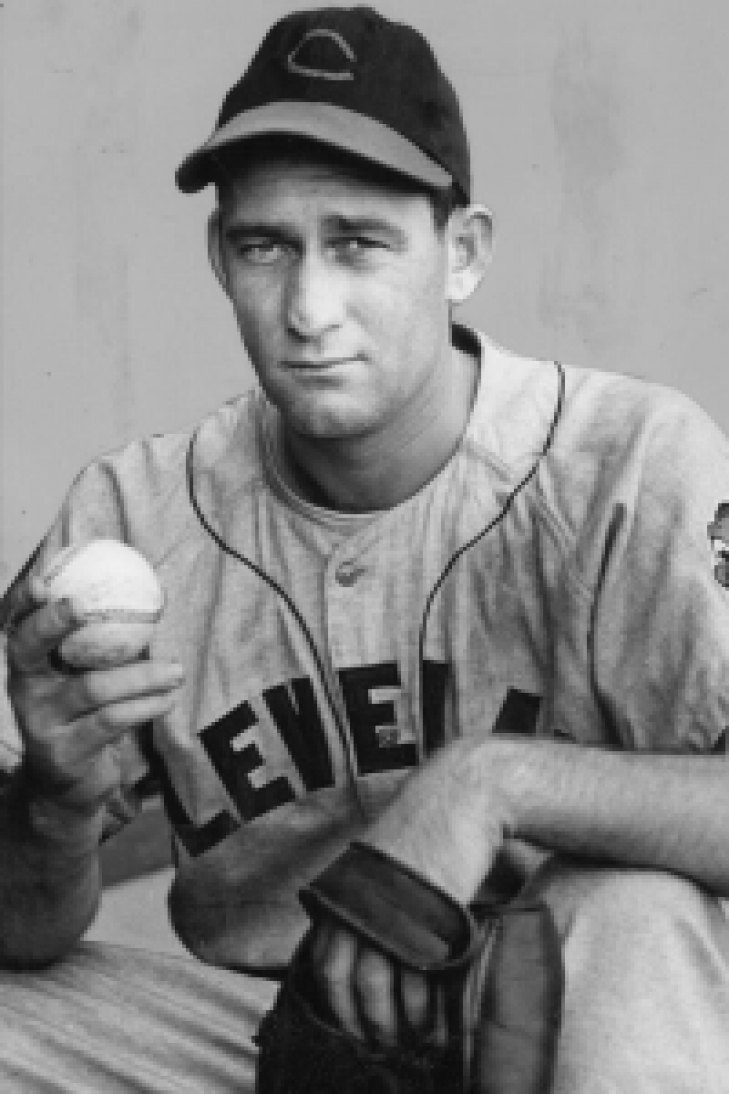
When Bob Lemon returned from military service in 1946, he had every intention of roaming center field for the Tribe. He even began the season with a spectacular diving catch that seemed to cement his future in the outfield. However, the Cleveland braintrust saw potential in his arm that surpassed his utility with a glove. In one of the most successful gambles in franchise history, they convinced Lemon to move to the mound full-time. He arrived as a middle-of-the-road outfielder and left his first few seasons as a developing project, but by 1948, the transformation was complete.
The peak of his residency, and the spark that ignited the last great Cleveland championship, arrived in 1948. Lemon didn't just transition to pitching; he dominated, tossing a no-hitter and winning 20 games while leading the American League in shutouts (10) and innings pitched (293.2). He was the high-efficiency engine of the World Series championship run, going 2-0 in the Fall Classic and proving that his run as a pitcher was no fluke. This began a staggering seven-year streak of All-Star selections, a period where Lemon became the definitive "Big Game" pitcher for the organization.
The middle of his journey was a masterclass in durability. Throughout the early 1950s, Lemon was a metronome of 20-win seasons, reaching that elite benchmark seven times in total. He was a workhorse in every sense of the word, leading the league in innings pitched four times and strikeouts once in 1950. While he was often overshadowed in the national media by flashier names, his peers knew the truth; he was named the Sporting News Pitcher of the Year three different times (1948, 1950, 1954). In the historic 111-win campaign of 1954, it was Lemon who led the staff with 23 wins, anchoring a rotation that is still whispered about in Cleveland as the greatest ever assembled.
Beyond the rubber, Lemon remained a dual-threat weapon. Because of his outfield roots, he was arguably the best-hitting pitcher of his era, batting .232 and collecting 274 hits as a Red. He spent all fifteen seasons of his playing career in a Cleveland uniform, finishing with 207 wins and a legacy of selflessness. He didn't just pitch for the Indians; he sacrificed his original dream to give the team the best chance to win.
The final walk toward the exit for Lemon came in 1958, but his relationship with the game was far from over, eventually leading him to a legendary managerial career. He was a first-ballot immortal in the hearts of Cleveland fans, entering the team Hall of Fame in 1960 and Cooperstown in 1976. The team rightfully retired his number 21 in 1998, a permanent tribute to the man who gave up his glove to give Cleveland a golden era.
7. Stan Coveleski
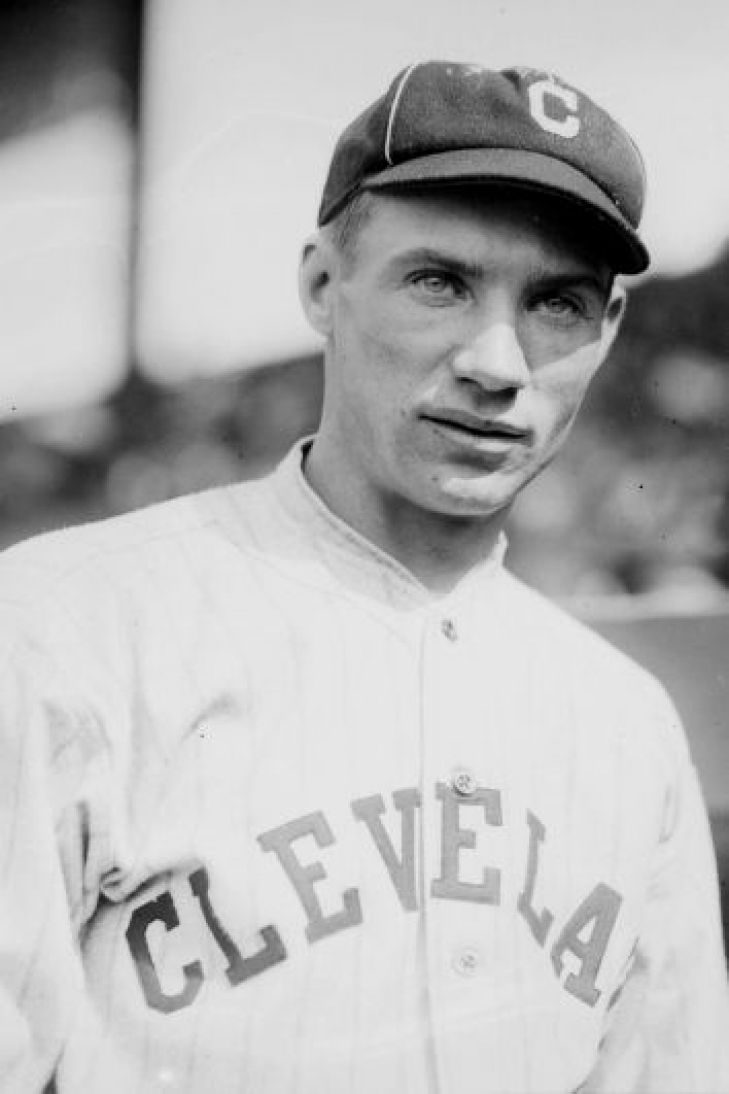
Stan Coveleski joined Cleveland in 1916, bringing a quiet, workmanlike intensity and a devastating "wet" delivery that moved on its own mind. He secured a permanent spot in the rotation with a 15-win rookie campaign, but it was the following season that he truly established himself as the tactical leader of the staff. He matured into a model of earning the W, putting together a staggering stretch from 1918 to 1921 in which he won at least 22 games in four consecutive seasons. During this window, his ERA dipped below 2.00 twice, proving that his control and movement were nearly impossible to solve.
The pinnacle of his career arrived in the 1920 World Series, a performance that remains etched in postseason lore. Coveleski was the undisputed architect of the championship, starting and winning three games while allowing only two runs over 27 innings. In an era before individual postseason awards, he was the consensus hero, navigating the pressure of the Fall Classic with a stoic calm that defined his Northern Ohio run. He wasn't just a volume producer; he was a big-game specialist who thrived when the margin for error was nonexistent.
His value was further validated by his advanced metrics, as he led the American League in Win Probability Added (WPA) four different times. This highlighted his ability to deliver in the most critical moments of a game. In 1923, he captured the ERA title with a 2.76 mark, showing that even as the league transitioned out of the Deadball Era, his tactical approach remained elite. He was a master of efficiency, often finishing games in under two hours by inducing weak contact and letting his defense do the work.
As the organization shifted into a rebuilding phase following the 1924 season, Coveleski was traded to the Washington Senators. He concluded his Cleveland tenure with 172 wins and a reputation as one of the most reliable right-handers to ever toe the rubber in the city. While he found immediate success in Washington, capturing another ERA title, his legacy was forged in the dirt of Dunn Field and League Park.
Stan Coveleski was ushered into Cooperstown in 1969 by the Veterans Committee, a long-overdue recognition of his status as one of the premier hurlers of his generation. Cleveland rightfully honored him by inducting him into the team Hall of Fame in 1966.
5. Lou Boudreau
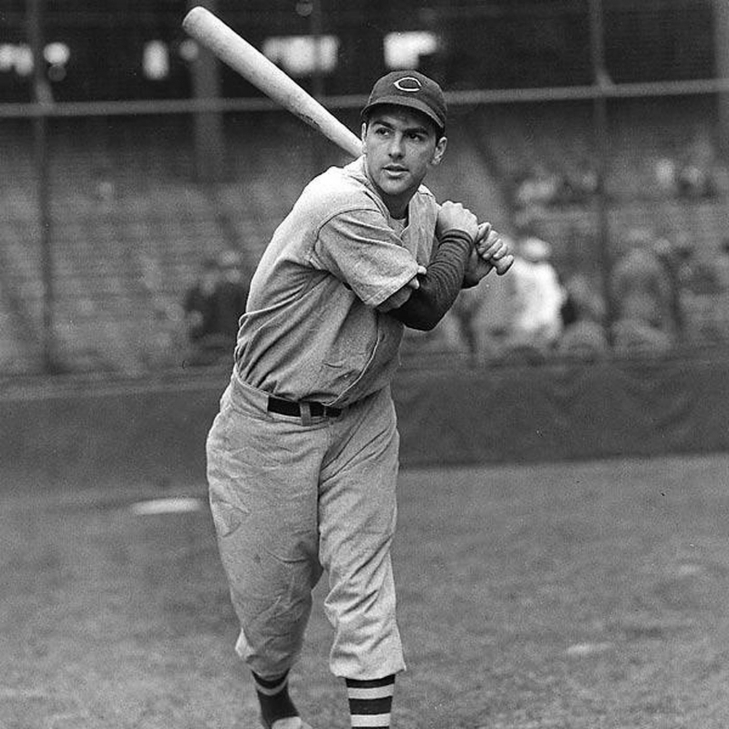
A two-sport star (Basketball and Baseball) at the University of Illinois, Lou Boudreau focused on Baseball, and the Cleveland Indians were blessed by that decision.
3. Tris Speaker
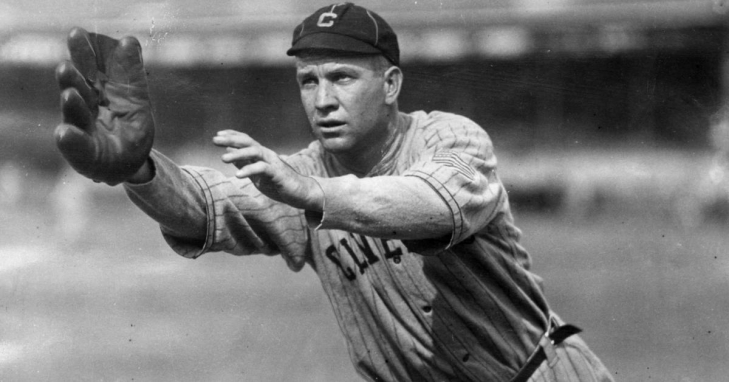
When Tris Speaker was traded to Cleveland in 1916, it was the result of a legendary insult. Despite batting .322, the Red Sox asked their superstar centerfielder to take a pay cut. Speaker’s refusal sent him to Cleveland, where he immediately set about dismantling American League pitching. In his debut season with the Indians, he proved his point with a thunderous campaign, capturing the 1916 Batting Title with a .386 average and leading the league in hits, doubles, and on-base percentage. He arrived as a disgruntled star and instantly became the premier face for a city hungry for a winner.
The peak of his residency saw Speaker revolutionize the way center field was played. Known as "The Gray Eagle," he played a notoriously shallow center field, so shallow that he frequently functioned as a fifth infielder, recording unassisted double plays and picking off runners at second base. He remains the all-time Major League leader in doubles, with 486 of his 792 career two-baggers coming in a Cleveland uniform. From 1916 to 1925, Speaker never batted below .310, serving as the most consistent high-volume producer in the organization's history.
The pinnacle of his leadership came in 1919, when he assumed the title of player-manager. Under the shadow of the tragic on-field death of teammate Ray Chapman in 1920, Speaker displayed a high level of leadership that willed the Indians to their first World Series title. He was a cerebral architect of the game, managing the rotation and the lineup while still batting .388 himself. He was the rare dual-threat who could out-think the opposing manager while simultaneously out-hitting the opposing pitcher.
However, the final walk toward the exit in 1926 was marked by a sudden resignation. While still a productive player, Speaker stepped down from his managerial post and was subsequently released, finishing his journey with brief stints in Washington and Philadelphia. He left Cleveland as a statistical titan, accumulating 1,965 hits and an incredible .354 average for the franchise, a mark that remains nearly untouchable in the record books.
Tris Speaker was a first-ballot immortal in the eyes of the baseball world, entering Cooperstown in 1937. Cleveland rightfully included him in their inaugural Hall of Fame class in 1951, forever cementing the "Gray Eagle" as the man who proved that loyalty is a two-way street, and that Boston’s loss was Cleveland’s eternal gain. He arrived as a man with a point to prove and left as a permanent monument to excellence on the lakefront.