


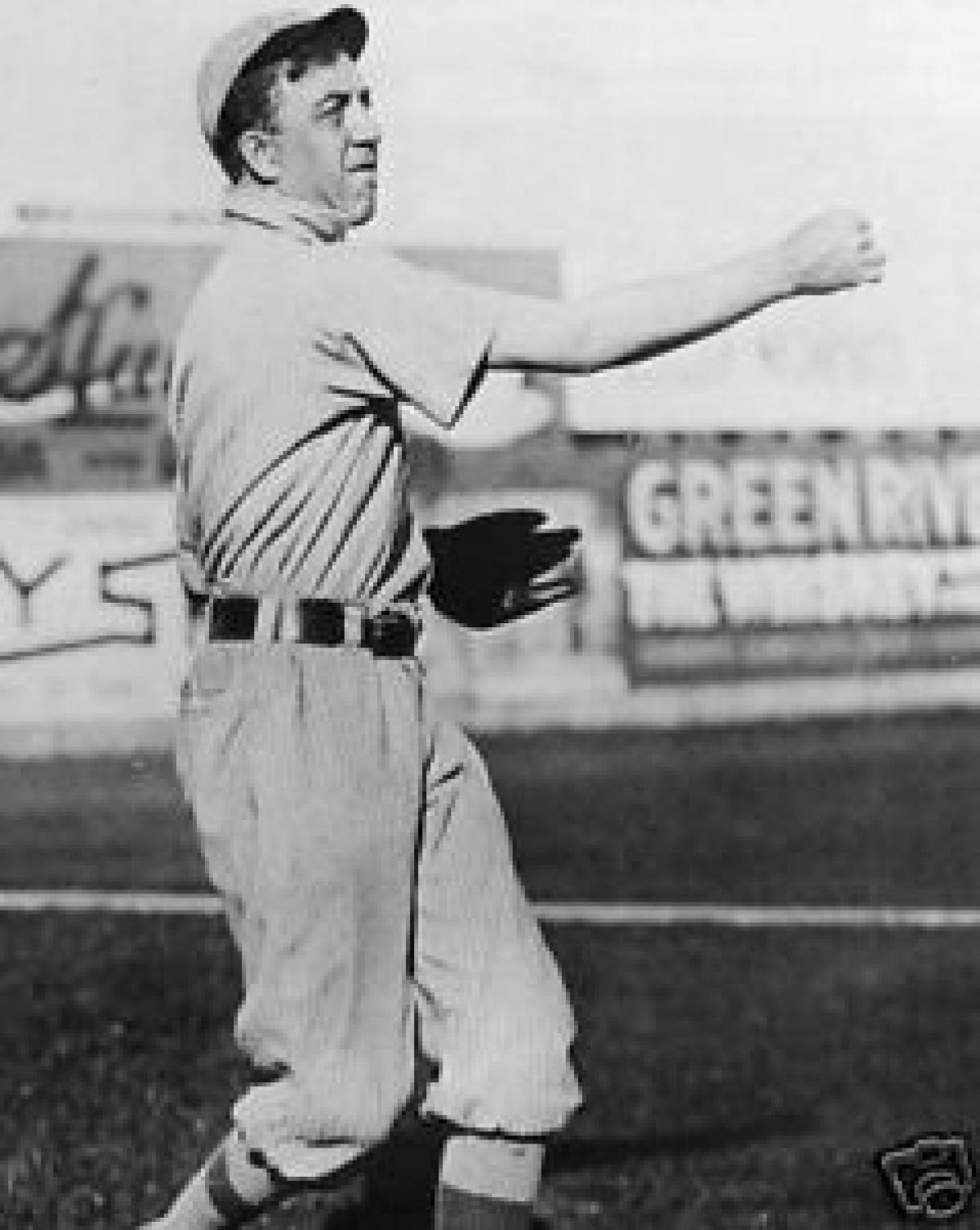

When Addie Joss arrived in 1902, he bypassed the usual maturation process, maturing instantly into a premier arm in the American League. He arrived with a "shadowing" delivery that hid the ball until the last possible second, and by 1903, he was already leading the league in WHIP. He was an efficiency machine from the jump, capturing his first ERA title in 1904 with a microscopic 1.59 mark. He wasn't just a finesse pitcher; he was a high-volume workhorse who rattled off four consecutive 20-win seasons, including a league-leading 27 victories in 1907.
The absolute pinnacle of his career, and perhaps the greatest individual season in franchise history, arrived in 1908. Joss was a statistical outlier that year, winning his second ERA title with a career-best 1.16 and leading the league with a 0.806 WHIP. The crowning achievement was a Perfect Game against the Chicago White Sox in the heat of a pennant race, a masterpiece of run suppression that remains one of only a handful in the game’s history. He was a master of the "Deadball" era tactical game, using his intelligence and poise to dismantle lineups with surgical precision.
His identity was defined by a quiet dignity and a level of performance that bordered on the impossible. Joss concluded his stay in Cleveland as a "Lifer," having spent all nine years of his professional career with the club. He amassed 160 wins and maintained a career 1.89 ERA—the second-best mark in baseball history. Even more staggering is his 0.968 lifetime WHIP, which stands as the best of all-time. He proved that you didn't need a decades-long career to leave an eternal mark on the game; you just needed to be perfect for every moment you were on the mound.
The chapter reached a heartbreaking and sudden conclusion in April of 1911. After battling various ailments, Joss passed away from tubercular meningitis at the age of 31. His loss was felt so deeply by his peers that his teammates famously went on strike to attend his funeral, an unprecedented show of respect for a man who was as beloved as he was dominant.
Recognition of his historic impact came in 1978, when the Veterans Committee elected him to the National Baseball Hall of Fame, notably waiving the ten-year service rule to honor his nine-year masterpiece. The organization ensured his local immortality by inducting him into the Cleveland Indians Hall of Fame in 2006.

Comments powered by CComment