

Committee Chairman
39. Hal Trosky
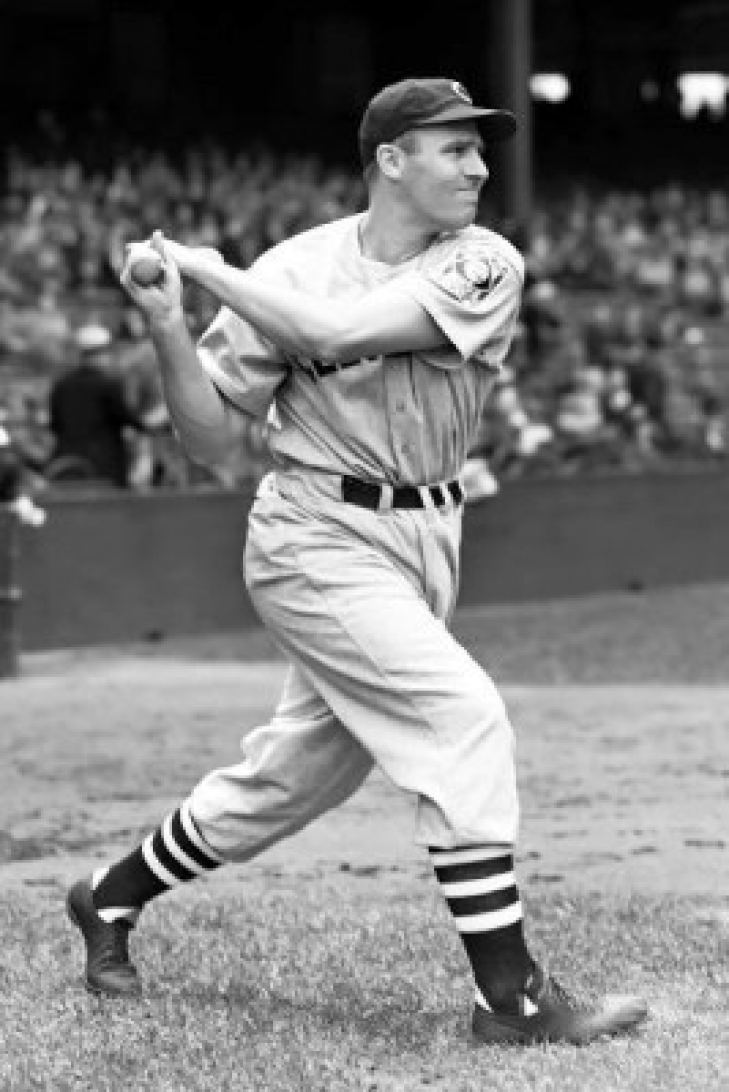
The narrative of Hal Trosky is one of the most compelling "what-if" stories in the history of the American League. Arriving on the North Coast in 1933, the Iowa native carried expectations that bordered on the impossible, with some observers prematurely labeling him the heir to Babe Ruth’s throne. While he never reached the mythical status of the "Bambino," Trosky established a baseline of specialized power that, in any other era, would have made him a perennial All-Star and a household name across the country.
Trosky’s tenure in Cleveland was a study in elite offensive efficiency during the most crowded era of talent in baseball history. He operated as a high-frequency run producer, anchoring the middle of the Tribe's lineup with a left-handed swing that generated at least 25 home runs in six of his first seven full seasons. He was a model of steady-state dominance, surpassing the 100-RBI plateau in six consecutive campaigns starting in 1934. In 1936, he blasted 42 home runs and led the American League with a staggering 162 RBIs while maintaining a .343 batting average, which remains one of the best power years in team history.
The most extraordinary aspect of his game was the consistency he maintained while playing in the shadow of legends like Gehrig, Foxx, and Greenberg. Trosky possessed a specialized athleticism that allowed him to finish among the league leaders in extra-base hits and total bases annually, providing the tactical stability required to keep Cleveland competitive in a powerhouse Junior Circuit. He served as the primary engine of the offense throughout the 1930s, demonstrating professional resilience to post a career .313 average in a Cleveland uniform. He proved that a player could become a franchise pillar by simply being one of the most dangerous hitters in the world, even if the All-Star ballots were crowded with future Hall of Famers.
His presence on the field was defined by a focused intensity that was tragically undermined by forces beyond his control. Beginning in 1938, Trosky was plagued by a series of debilitating migraines that began to impact his vision and his timing at the plate. Despite this physical toll, he continued to compete with a workmanlike approach until the condition forced a premature retirement in 1941.
The story in Cleveland concluded with 216 home runs, 911 RBI, and a reputation as one of the most underrated sluggers of all time. He left the organization with a career .551 slugging percentage, a mark that reflects nearly a decade of elite power hitting on the North Coast before he made a brief, wartime comeback in Chicago.
The organization recognized the sheer magnitude of his contribution by including him in the inaugural Cleveland Hall of Fame class in 1951.
35. Rocky Colavito

Colavito’s rise to stardom was nearly instantaneous, providing a jolt of electricity to the lineup when he took over a full-time role. He finished as the runner-up for the 1956 Rookie of the Year after launching 21 home runs in limited action, but his game reached a spectacular inflection point in 1958. That summer, he hit .303 and blasted 41 round-trippers, following it up in 1959 by leading the Junior Circuit with 42 homers. He possessed a specialized, high-leverage power that terrified opposing pitchers, and his craftsmanship in the field was equally feared; his arm was a high-velocity weapon that famously kept baserunners from testing the extra base.
The most controversial chapter of his journey was the 1960 trade to Detroit for Harvey Kuenn, a swap of a home run king for a batting champion that famously left the Cleveland faithful in mourning. The fans’ heartbreak was vindicated as Colavito continued to punish baseballs elsewhere while the "Curse of Rocky Colavito" allegedly took hold of the team. However, he authored a dramatic homecoming in 1965, returning to Cleveland via trade to a hero’s welcome. This second act was a genuine career renaissance; he led the American League with 108 RBIs and secured a fifth-place finish in the MVP race, proving that even as a veteran, he remained the tactical heartbeat of the organization.
Whether he was famously hitting four home runs in a single game at Memorial Stadium or drawing a league-leading 93 walks in 1965, he competed with a focused intensity that made him a local immortal. He showed that a player could become a franchise pillar by combining a legendary "cannon" of an arm with a swing that defined an entire era of Cleveland baseball.
With the Indians, Colavito compiled 190 home runs, 574 RBIs, and a .495 slugging percentage while earning three All-Star nods. The organization provided the ultimate punctuation on his legacy in 2006 by inducting him into the Cleveland Hall of Fame.
29. Omar Vizquel
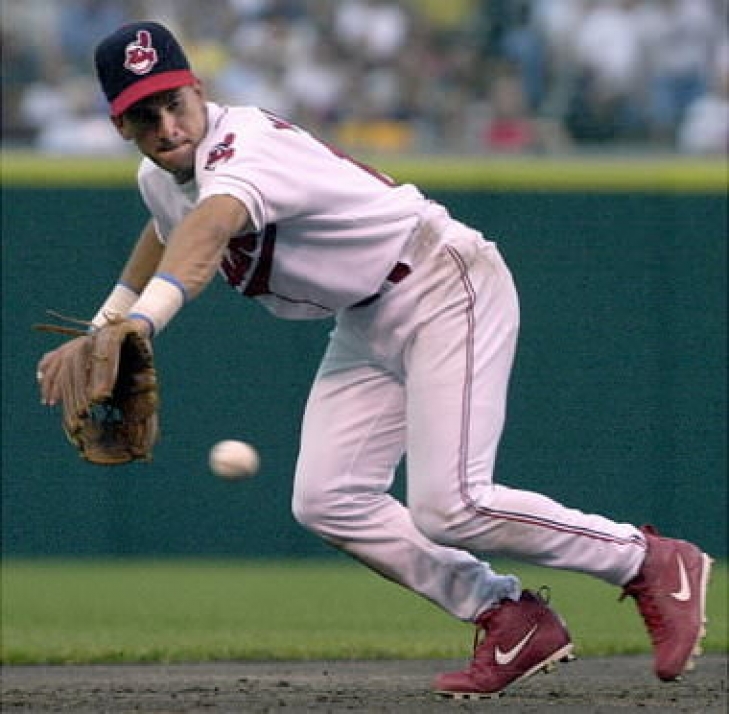
Omar Vizquel’s path to Cleveland was forged by a shrewd 1994 trade that sent Félix Fermín and Reggie Jefferson to the Mariners, a move that secured the franchise’s defensive identity for over a decade. He surfaced in 1994 and matured instantly into a premier run-preventer, authoring an incredible stretch of eight consecutive Gold Glove Awards in a Cleveland uniform. He possessed a specialized, rhythmic grace on the dirt, maintaining some of the highest fielding percentages in American League history. He wasn't just a steady glove; he was a tactical genius who understood the geometry of the field, consistently leading the league in double plays and range factor while providing defensive highlight reels on a regular basis.
The most impressive aspect of his tenure was an offensive evolution that allowed him to remain a high-frequency contributor for a championship contender. Vizquel was a master of the "small ball" game, possessing a specialized ability to manufacture runs through bat control and world-class speed. He authored eight different 150-hit seasons during his stay, accumulating 1,616 hits and serving as a high-leverage spark at the bottom or top of the order. This craftsmanship was complemented by a daring presence on the basepaths, where he swiped 279 bases for the club and used his veteran poise to turn routine singles into scoring threats.
His presence was defined by a charismatic, professional joy and a durability that saw him play in the Major Leagues until the age of 45. Whether he was making a leaping throw across his body or lacing a line drive into the gap, he competed with a focused brilliance that made him a local favorite. Vizquel signed with San Francisco after the 2024 season, leaving behind 1,616 hits and 279 stolen bases while securing eight Gold Glove Awards and three All-Star selections.
The organization provided the final punctuation on his legacy a decade after his departure. In 2014, Omar Vizquel was officially inducted into the Cleveland Guardians Hall of Fame.
30. C.C. Sabathia
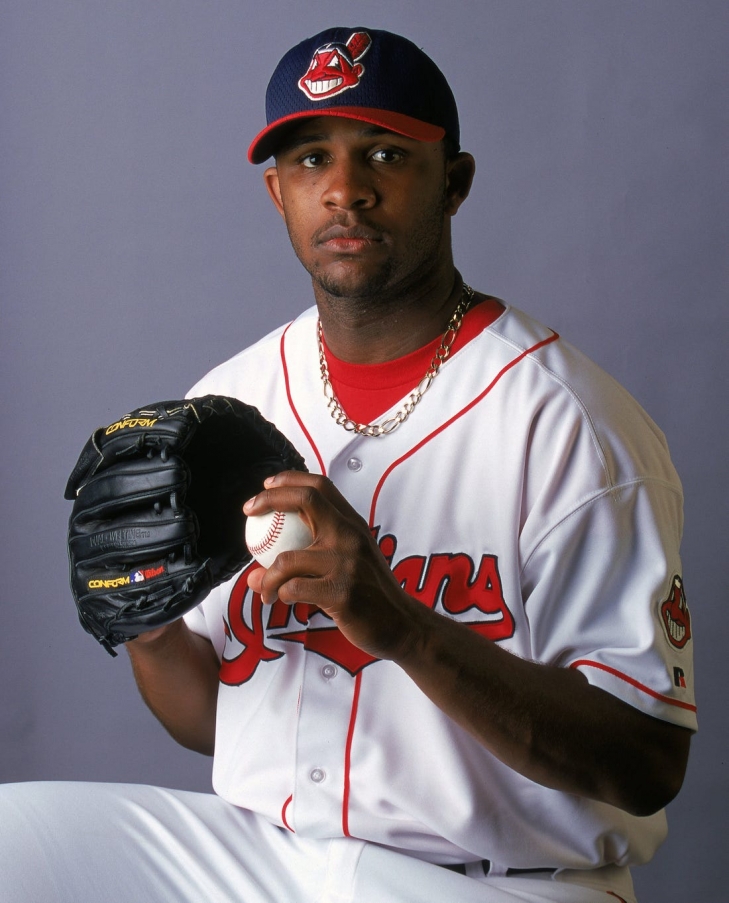
When a twenty-year-old C.C. Sabathia first stepped onto a Major League mound in 2001, he didn't just join the Cleveland rotation—he ignited it. Standing as a physical titan with a high-velocity arm to match, the young lefty authored a debut season for the ages, storming to a 17-5 record. While Ichiro Suzuki’s historic arrival in Seattle ultimately edged him out for Rookie of the Year honors, Sabathia’s presence in Cleveland was an immediate statement of intent. He possessed a specialized, heavy fastball that allowed him to navigate seven-and-a-half seasons in a Tribe uniform without ever recording a losing record, earning two All-Star nods before he had even reached his athletic prime.
The trajectory of his career reached its most dominant inflection point in 2007. That summer, Sabathia evolved from a raw power pitcher into a sophisticated tactical master, leading the American League with a staggering 241 innings pitched. He was the definition of a high-frequency workhorse, racking up 19 wins and a 5.65 strikeout-to-walk ratio on his way to capturing the Cy Young Award. His craftsmanship was the engine that powered Cleveland to the brink of a pennant, providing the veteran poise and high-leverage durability required to anchor a staff during a grueling postseason run.
Beyond the box scores, Sabathia’s legacy was defined by professional resilience and a genuine connection to the city. He remained the emotional heartbeat of the clubhouse until a June 2008 trade sent him to Milwaukee, but the foundation he built in Cleveland remained unshakable.
He exited the organization with 106 victories and 1,265 strikeouts, benchmarks that reflect a decade of sustained excellence off of Lake Erie.