


Committee Chairman
43. Grady Sizemore
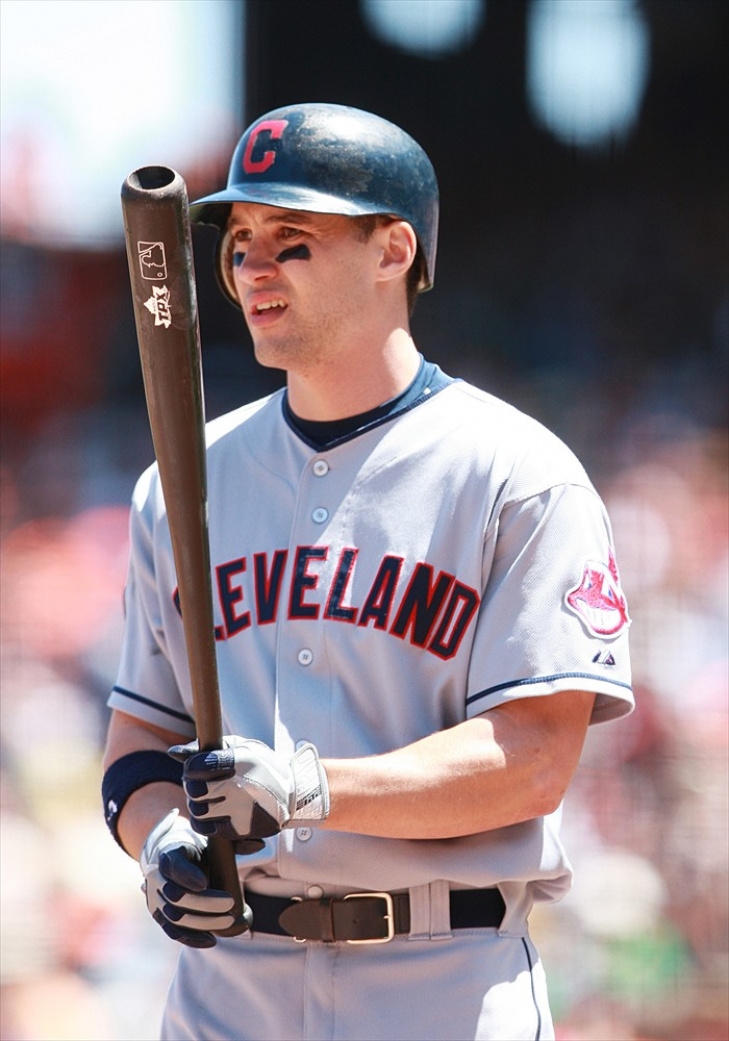
The arrival of Grady Sizemore in Cleveland was a masterstroke of organizational foresight, acquired as a "throw-in" in the legendary 2002 trade with Montreal that also brought Cliff Lee to the Indians. While he debuted in 2004, it was the following summer that signaled the dawn of a new era, as the dynamic center fielder combined a reckless, high-speed defensive style with a sophisticated offensive approach. For a brilliant, condensed window in the late 2000s, Sizemore was the undisputed engine of the franchise, a five-tool superstar who played with all-out intensity, making him the most electric talent in the American League.
Sizemore’s tenure in Cleveland was defined by a high-velocity ascent to the absolute top of the sport. By 2005, he had established himself as a model of specialized versatility, launching 22 home runs and batting .289 in his first full season. This was merely the prelude to a historic three-year stretch from 2006 to 2008, where he became a perennial All-Star and a fixture in the MVP conversation. In ’06, he led the American League in runs scored (134) and doubles (53) while maintaining a professional resilience that allowed him to play all 162 games.
The most profound aspect of his game was a rare combination of power and speed that few in Cleveland history have mirrored. Sizemore was a high-frequency producer of extra-base hits, belting at least 24 home runs in four consecutive seasons and twice reaching the 30-homer plateau. He possessed a specialized athleticism that earned him two Gold Gloves and a Silver Slugger, proving he was the most efficient run-preventer in the outfield and a tactical nightmare on the basepaths. He served as the primary engine for the 2007 squad that pushed within one game of the World Series, utilizing his high-leverage talent to ignite the offense from the leadoff spot.
His presence on the field was defined by a focused intensity that eventually took a heavy physical toll. Sizemore’s "collision-course" style of play led to a series of debilitating back and knee injuries that began to mount in 2009. Despite multiple surgeries and a two-year hiatus from the sport, he showed remarkable professional resilience by attempting comebacks with Boston, Philadelphia, and Tampa Bay later in his career.
With Cleveland, Sizemore compiled 948 hits, 139 home runs, and 115 stolen bases while twice winning the Gold Glove.
34. Willis Hudlin
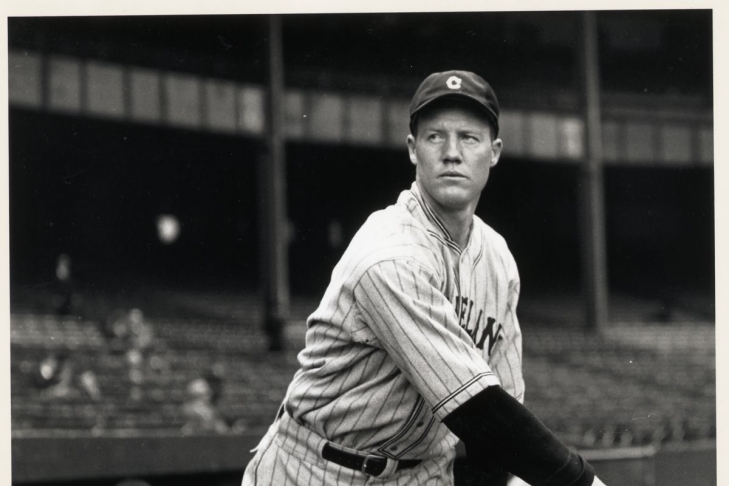
When Willis Hudlin stepped onto the mound at League Park in the late 1920s, he brought with him a pitch that was still a dark art to most hitters: the sinker. A mainstay of the Cleveland rotation for fifteen seasons, Hudlin wasn't the kind of fireballer who hunted headlines; he was the blue-collar engine of the staff, a dependable right-hander who could transition seamlessly from the starting block to the bullpen.
Hudlin’s career in Cleveland began with a splash in 1926, and by his first full season, he had established himself as a frontline winner, posting an 18-12 record as a rookie. He possessed a specialized, heavy sinker that became his trademark, allowing him to navigate the high-scoring environment of the "Live Ball" era with professional poise. His craftsmanship reached a statistical summit in 1929, a summer where he quietly became the most valuable pitcher in the Junior Circuit. That year, he led all American League hurlers with a massive 7.5 bWAR, proving that his game was built on a foundation of elite efficiency rather than raw velocity.
The most impressive aspect of his longevity was his role as a tactical bridge for the organization. Hudlin was a model of specialized versatility, earning five different seasons with at least 15 victories while splitting time between the rotation and high-leverage relief work. He was a high-frequency workhorse who consistently ranked in the top ten for games started and innings pitched, providing the Cleveland staff with an anchor during the transitional years of the 1930s.
With the Indians, Hudlin compiled 157 wins, 796 strikeouts, and 165 complete games across 15 seasons.
42. Jeff Heath
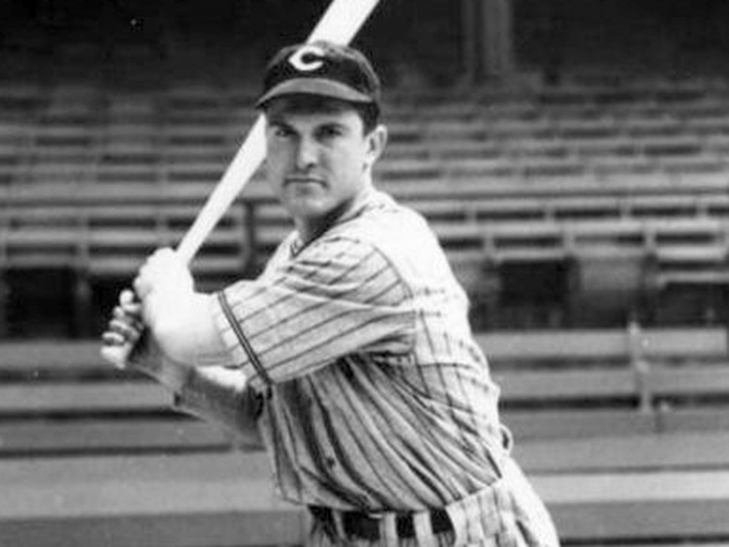
The arrival of Jeff Heath in Cleveland in 1936 brought a specialized blend of Canadian-born grit and explosive athletic power to the Indians. By the time he secured a full-time role in 1938, the left-handed outfielder had established himself as one of the most dangerous and efficient triple-threats in the American League.
Heath’s tenure in Cleveland was defined by an immediate and relentless offensive efficiency. During the 1938 campaign, a summer when he batted a staggering .343 and led the American League with 11 triples. This performance earned him an 11th-place finish in the MVP voting and signaled the arrival of a force in the Cleveland outfield. He was a model of specialized versatility, blending elite contact skills with a surprising power surge that saw him become a fixture in the heart of the Tribe's batting order.
The hallmark of his career was his unique ability to generate high-frequency extra-base hits. In 1941, Heath reached a statistical outlier status by leading the league in triples for a second time, recording a career-high 20 three-baggers while maintaining a .340 batting average. He was a model of steady-state dominance, earning All-Star selections in 1941 and 1943 and consistently ranking among the league leaders in total bases and slugging percentage. He possessed a specialized athleticism that allowed him to pressure opposing defenses in every facet of the game, providing the high-leverage production required to keep Cleveland competitive during the volatile years of the early 1940s.
After the 1945 season, he was traded to the Washington Senators, marking the end of a decade on the North Coast. He departed with a career .298 average, 1,040 hits, 122 home runs, and twice led the American League in triples.
33. Bobby Avila
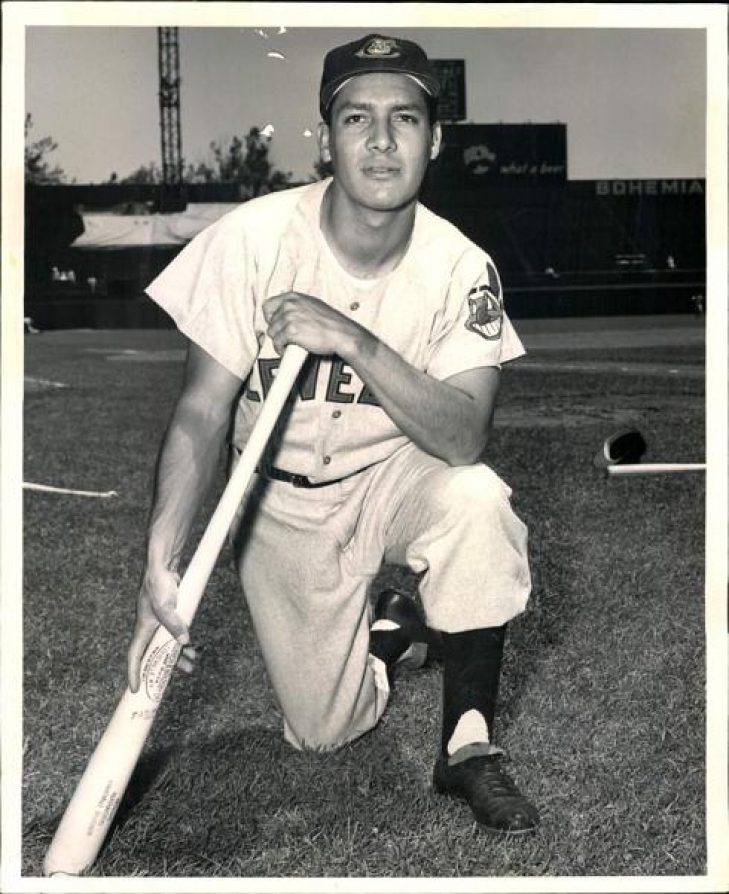
The 1949 arrival of Bobby Avila in Cleveland wasn't just a roster move; it was a watershed moment for international baseball. As the first Mexican-born player to truly seize a starring role in the Major Leagues.
Avila forced his way into the permanent starting lineup by 1951, immediately proving that his bat belonged at the top of a championship-caliber order. He possessed a specialized knack for finding gaps, hitting over .300 in each of his first two full seasons as a regular. His athleticism was on full display in 1952 when he led the Junior Circuit in triples and earned his first invitation to the Midsummer Classic. He was a model of specialized consistency, serving as the high-leverage spark plug for a Cleveland squad that featured some of the most storied pitching staffs in the game's history.
The definitive apex of his career arrived during the magical 1954 campaign. That summer, Avila authored a historic performance by capturing the American League Batting Title with a .341 average, becoming the first Latin American player to ever lead the league in hitting. His craftsmanship was the primary engine behind Cleveland’s record-setting 111-win season and its march to the World Series, earning him a third-place finish in the MVP voting. He was a high-frequency producer who combined elite bat control with a veteran poise, proving he could out-hit legends like Minnie Miñoso and Ted Williams over the course of a grueling pennant race.
Beyond the box scores, Avila’s presence was defined by a trailblazing resilience that made him a national hero in his homeland. He remained the tactical anchor of the Cleveland infield through 1957, utilizing a workmanlike approach to accumulate over 1,200 hits in a Tribe uniform. Whether he was lacing a line drive into the corner or providing sure-handed defense at the keystone, he competed with a focused intensity that solidified his status as a franchise pillar. He proved that a player could become an international icon by mastering the fundamental requirements of the "inside game" at the highest level.
Following a sharp decline in 1958, the team traded to Baltimore and finished its final lap in the league in 1959.