

 Not in Hall of Fame News
Yes, we know that this is taking a while! As many of…
 Not in Hall of Fame News
2002 SEMI-FINAL RESULTS: Thank you for your participation in the Pro Football…
 Not in Hall of Fame News
Yes, we know that this is taking a while! As many of…
 Not in Hall of Fame News
We are diligently working away at Notinhalloffame on revising our Football lists…
 Not in Hall of Fame News
We are diligently working away at Notinhalloffame on revising our Football lists…
 Not in Hall of Fame News
We are diligently working away at Notinhalloffame on revising our Football lists…
 From the Desk of the Chairman
Sports fans thrive on calculating strategy, reading momentum, and maximizing every tactical…
 From the Desk of the Chairman
The 2026 NFL season is two weeks old and the division races…
 From the Desk of the Chairman
Sports communities are often built around things that have nothing to do…
 From the Desk of the Chairman
Every hall of fame eventually faces the same problem. The selection process…
 From the Desk of the Chairman
Pete Rose died in 2024. On May 13, 2025, Commissioner Rob Manfred…
 From the Desk of the Chairman
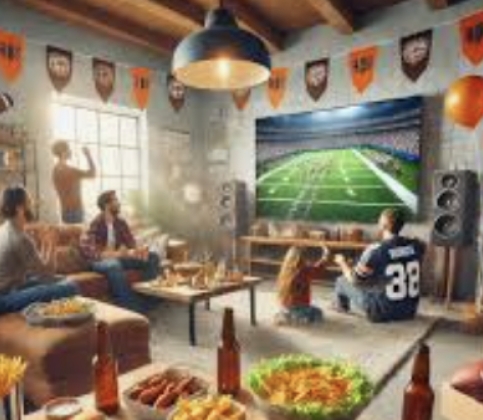
For NFL fans, game day offers much more than three hours of…

100 Active Potential Football Hall of Famers
-
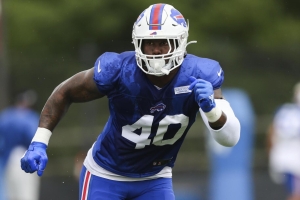 #8 Overall, Von Miller, Dallas Cowboys, #3 Defensive Lineman/Linebackers: Pass Rushers2025 Pre-Season Rank #6, 2024 Pre-Season Rank #7, 2023 Pre-Season Rank #4, 2022 Pre-Season Rank #7, 2021 Pre-Season Rank #8, 2020 Pre-Season Rank…
 -
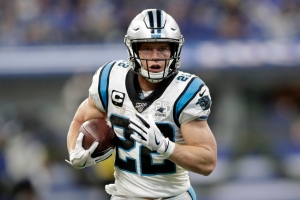 #17 Overall, Christian McCaffrey, San Francisco 49ers, #2 Running Back2025 Pre-Season Rank #21, 2024 Pre-Season Rank #16, 2023 Pre-Season Rank #55 Pre-Season Rank #66, 2021 Pre-Season Rank #76, 2020 Pre-Season Rank #81.…
 -
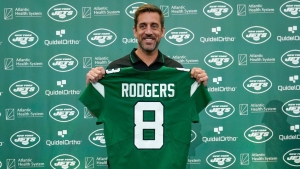 #2 Overall, Aaron Rodgers: Pittsburgh Steelers, #1 Quarterback2025 Pre Season Ranke #1, 2024 Pre-Season Rank #1, 2023 Pre-Season Rank #1, 2022 Pre-Season Rank #2, 2021 Pre-Season Rank #2, 2020 Pre-Season…in Quarterbacks
 -
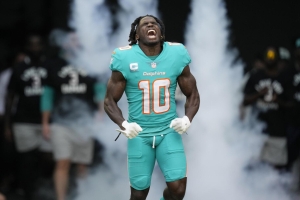 #25 Overall, Tyreek Hill, Free Agent, #3 Wide Receiver2025 Pre-Season Rank #18, 2024 Pre-Season Rank #8, 2023 Pre-Season Rank #28, 2022 Pre-Season Rank #35, 2021 Pre-Season Rank #53. Peak Period: 2019-23…
Visit the Fictitious Halls of Fame!


You May Also Like...
EDITOR’S CHOICE
 DDT's Pop Flies
When the veterans committee (VC), officially convening as the Contemporary Baseball Era…

 Live Music Head
Project/Objectan interview with André Cholmondeleyby Live Music HeadOriginally published at timessquare.com on…

LATEST RANKINGS



MOST POPULAR RANKINGS






Committee Chairman
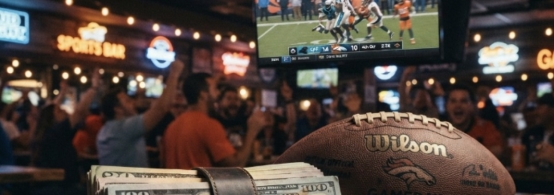
Backing the NFL Underdog: A Strategy Worth Considering
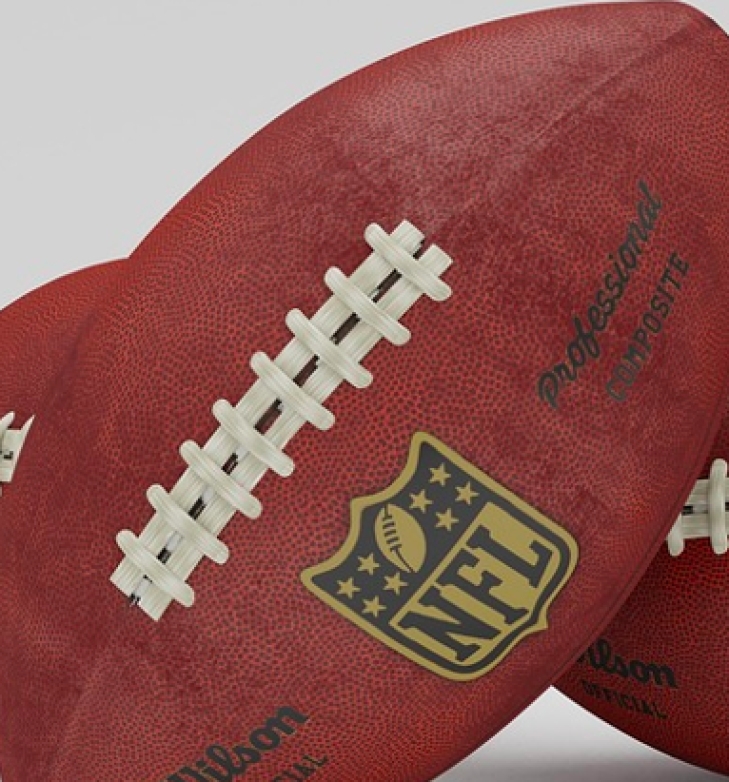
The NFL thrives on unpredictability, where even powerhouse teams can stumble, and underdogs rise to the occasion, surprising fans and analysts alike. While most bettors instinctively lean toward favorites, consistently backing underdogs can present opportunities that others often overlook. Betting on these less-favored teams isn’t just about risk—it’s about finding value and understanding the dynamics that make football so unique.
Why the Underdog Holds Value
Sports betting relies on odds, and odds are shaped by public perception. Most fans naturally favor stronger teams, creating skewed lines where the favorites are overvalued, and the underdogs get overlooked. This disparity means underdogs often come with better payouts while carrying less betting pressure.
In the NFL, margins are narrower than many expect. Games frequently come down to a few plays, turnovers, or clock management errors. Underdogs, while lower in ranking or recent performance, have the same chance of catching a break or capitalizing on their opponent's mistakes. A spread of three to seven points might sound definitive, but in a league of parity, those numbers can be deceiving. Recognizing this gap is where savvy bettors find an edge.
Spotting the Right Underdog
Not all underdogs are worth backing. The key lies in identifying teams with legitimate chances to outperform expectations. Here are a few factors to consider
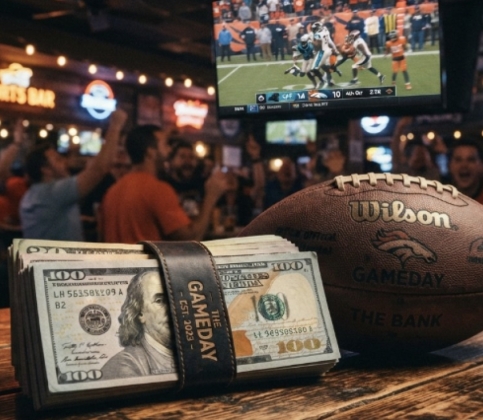
The Denver Broncos are a case in point. Over the past few seasons, they’ve been a team that often finds itself in the underdog role, especially when facing top-tier AFC competition. However, the Denver Broncos odds can sometimes be misleading when factoring in their strong defense or ability to compete in tight, low-scoring games. Against heavily favored opponents, this often presents opportunities for bettors looking to capitalize on undervalued teams.
- Situational Matchups: Football is a game of matchups. A strong offensive line can neutralize an elite pass rush, while a balanced running game can control the tempo against a weak run defense. Even the smallest advantage can tip the scale in the underdog’s favor.
- Injuries and Fatigue: Star players missing a game or returning at less than 100% can significantly alter a team’s outlook. Meanwhile, teams on short rest, like those coming off Monday Night Football, often struggle against well-rested opponents, regardless of their record.
- Motivation and Momentum: Teams labeled as underdogs often play with a chip on their shoulder, especially against divisional rivals or in high-stakes games. Emotion and determination to prove the pundits (and opposing fans) wrong drives momentum - and that can lift overlooked teams to unexpected victories.
By focusing on these nuances, bettors can filter out underdogs that merely “look good on paper” and identify those primed for an upset.
The Statistics Behind Underdog Success
NFL data reveals a consistent trend: underdogs often cover the spread more than favorites. While favorites win outright more often, their victories don’t always match the point spread, which makes underdogs particularly profitable in spread betting. Historically, underdogs in specific scenarios, like road games or divisional matchups, perform surprisingly well against the spread.
For instance, divisional NFL games boast unique dynamics because teams face each other twice a season. Familiarity reduces the gap between top and bottom teams, leveling the playing field. Similarly, underdogs playing at home tend to thrive, feeding off crowd energy and ignoring distractions.
These statistical insights underscore that blindly favoring the “better” team often ignores how competitive NFL matchups can be.
The Underdog Advantage
Backing NFL underdogs isn’t about blind contrarianism; it’s about recognizing value in a sport where anything can happen. Public perception, betting lines, and overlooked matchups create opportunities for those willing to dig deeper. Underdogs may not always win, but they frequently outperform expectations, rewarding those who recognize their potential. For anyone seeking a fresh approach to NFL betting, embracing the underdog may be the strategy worth considering.
Our All Time Top 50 Arizona Diamondbacks have been revised to reflect the 2024 Season
Yes, we know that this is taking a while!
As many of you know, we at Notinhalloffame.com are slowly generating the top 50 of each major North American sports team. That being said, we have existing Top 50 lists and consistently look to update them when necessary and based on necessity. As such, we are delighted to present our post-2024 revision of our top 50 Arizona Diamondbacks.
As for all of our top 50 players in baseball, we look at the following:
1. Advanced Statistics.
2. Traditional statistics and how they finished in the National League.
3. Playoff accomplishments.
4. Their overall impact on the team and other intangibles that are not reflected in a stat sheet.
Please note that our algorithm has changed, which yielded minor changes throughout the baseball lists.
Last year, the Diamondbacks had a good season, winning 89 Games, but they did not make the playoffs. As the team has only existed for 27 years, there is ample opportunity for new players to enter the list, which occurred in this cycle with three new entries.
As always, we present our top five, which saw a change based on the new structure:
3. Brandon Webb
You can find the entire list here.
Based on our new system, Gonzalez overtook Schilling for the #4 spot.
Ketel Marte, who finished third in MVP voting, remained at #6, as the chasm was too large to surpass Schilling at #5.
Zac Gallen, who went 14-6 last season, shot up to #7 from #12.
First Baseman Christian Walker advanced to #16 from #22.
Merrill Kelly, who missed a large part of last season, still moved up two spots to #21.
Corbin Carroll did not have a good follow-up to his 2023 Rookie of the Year award, but he still moved up significantly from #38 to #28.
The three debuts are Infielder Geraldo Perdomo at #42, Catcher Gabriel Moreno at #45, and Outfielder Lourdes Gurriel Jr. at #49.
We thank you for your continued support of our lists on Notinhalloffame.com.
37. Lourdes Gurriel Jr.
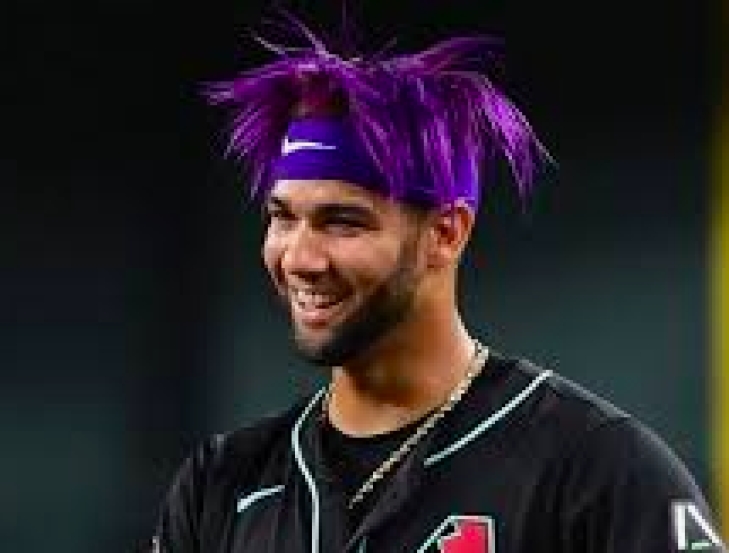
In 2016, Lourdes Gurriel Jr. defected from Cuba along with his brother, and he signed with the Toronto Blue Jays months later. Gurriel Jr. worked his way up the system and became a starter for the Blue Jays in 2021, but he was traded to Arizona in the 2023 offseason, and since that time, he has elevated his game to become a vital part of the Diamondbacks.
In Gurriel’s first year in the desert (2023), he made his first All-Star team, and had 144 Hits with 24 Home Runs, both career-highs. Arizona won the National League pennant with his help, and though the Diamondbacks failed to win the World Series, Gurriel Jr. had arrived as a valuable baseball commodity.
Gurriel has not been able to match that year, and he enters 2026 returning from a torn ACL. At 32, he may be past his prime, but he should still be able to produce for Arizona.
24. Geraldo Perdomo
From Santo Domingo in the Dominican Republic, Geraldo Perdomo made his MLB debut in Arizona in 2021 and was in the Majors to stay a year later. With an ability to play at Second, Third, and Short, Perdomo was an All-Star in 2023, helped the Diamondbacks make the World Series, and, like he was in 2022, was the league leader in Sacrifice Hits.
Perdomo proved his worth to the organization entering the 2025 season, but he had an unexpected offensive explosion. He smacked 20 Home Runs with 100 RBIs, while also swiping 27 bases, while batting .290 with an OPS of .851. He was the league-leader in bWAR (7.0) and captured the Silver Slugger while finishing fourth in MVP voting. Perdomo became a completely different offensive player, and what he might accomplish in 2026 is anyone’s guess!
