

 Not in Hall of Fame News
Yes, we know that this is taking a while! As many of…
 Not in Hall of Fame News
Yes, we know that this is taking a while! As many of…
 Not in Hall of Fame News
2002 SEMI-FINAL RESULTS: Thank you for your participation in the Pro Football…
 Not in Hall of Fame News
Yes, we know that this is taking a while! As many of…
 Not in Hall of Fame News
We are diligently working away at Notinhalloffame on revising our Football lists…
 Not in Hall of Fame News
We are diligently working away at Notinhalloffame on revising our Football lists…
 From the Desk of the Chairman
Unlike in the case of pre-match betting, where you have to pick…
 From the Desk of the Chairman
Kupu178 builds trust with people by using top-end end-to-end encryption. It checks…
 From the Desk of the Chairman
Sports fans thrive on calculating strategy, reading momentum, and maximizing every tactical…
 From the Desk of the Chairman
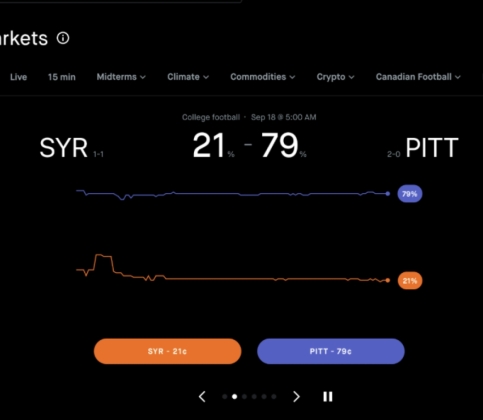
The 2026 NFL season is two weeks old and the division races…
 From the Desk of the Chairman
Sports communities are often built around things that have nothing to do…
 From the Desk of the Chairman
Every hall of fame eventually faces the same problem. The selection process…






100 Active Potential Football Hall of Famers
-
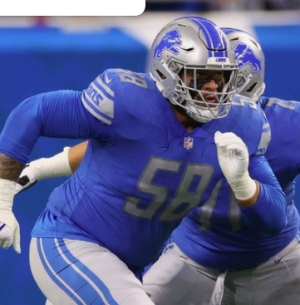 #38 Overall, Penei Sewell, Detroit Lions, Tackle, #4 Offensive Lineman2025 Pre-Season Rank #68, 2024: Pre-Season Rank: #121. Peak Period: 2021-25*Standing at 6'5” and 330 pounds, Penei Sewell can state that going into…
 -
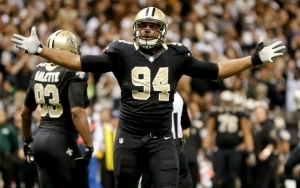 #15 Overall, Cameron Jordan, New Orleans Saints, Defensive End, #7 Defensive Lineman/Linebacker: Pass Rusher2025 Pre-Season Rank #14, 2024 Pre-Season Rank #21, 2023 Pre-Season Rank #27, 2022 Pre-Season Rank #25, 2021 Pre-Season Rank #36, 2020 Pre-Season Rank…
 -
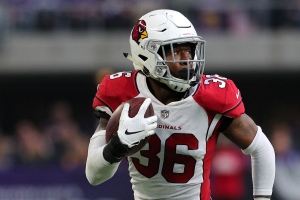 #24 Overall, Budda Baker, Arizona Cardinals, Free Safety, #1 Safety2025 Pre-Season Rank #28, 2024 Pre-Season Rank #43, 2023 Pre-Season Rank #78, 2022 Pre-Season Rank #86, 2021 Pre-Season Rank #113, 2020 Pre-Season Rank…in Safeties
 -
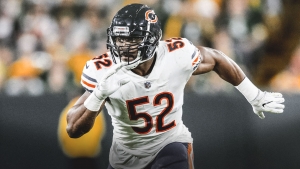 #13 Overall, Khalil Mack: Los Angeles Chargers, #5 Defensive Lineman/Linebacker: Pass Rusher2025 Pre-Season Rank #8, 2024 Pre-Season Rank #12, 2023 Pre-Season Rank #14, 2022 Pre-Season Rank #19, 2021 Pre-Season Rank #26, 2020 Pre-Season Rank…
Visit the Fictitious Halls of Fame!


You May Also Like...
EDITOR’S CHOICE

 DDT's Pop Flies
When the veterans committee (VC), officially convening as the Contemporary Baseball Era…



 Live Music Head
Project/Objectan interview with André Cholmondeleyby Live Music HeadOriginally published at timessquare.com on…

LATEST RANKINGS





MOST POPULAR RANKINGS
















Committee Chairman
34. Willis Hudlin
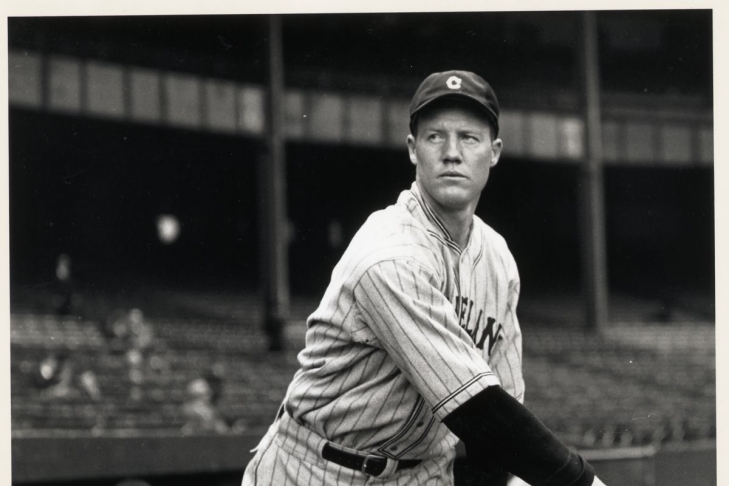
When Willis Hudlin stepped onto the mound at League Park in the late 1920s, he brought with him a pitch that was still a dark art to most hitters: the sinker. A mainstay of the Cleveland rotation for fifteen seasons, Hudlin wasn't the kind of fireballer who hunted headlines; he was the blue-collar engine of the staff, a dependable right-hander who could transition seamlessly from the starting block to the bullpen.
Hudlin’s career in Cleveland began with a splash in 1926, and by his first full season, he had established himself as a frontline winner, posting an 18-12 record as a rookie. He possessed a specialized, heavy sinker that became his trademark, allowing him to navigate the high-scoring environment of the "Live Ball" era with professional poise. His craftsmanship reached a statistical summit in 1929, a summer where he quietly became the most valuable pitcher in the Junior Circuit. That year, he led all American League hurlers with a massive 7.5 bWAR, proving that his game was built on a foundation of elite efficiency rather than raw velocity.
The most impressive aspect of his longevity was his role as a tactical bridge for the organization. Hudlin was a model of specialized versatility, earning five different seasons with at least 15 victories while splitting time between the rotation and high-leverage relief work. He was a high-frequency workhorse who consistently ranked in the top ten for games started and innings pitched, providing the Cleveland staff with an anchor during the transitional years of the 1930s.
With the Indians, Hudlin compiled 157 wins, 796 strikeouts, and 165 complete games across 15 seasons.
42. Jeff Heath
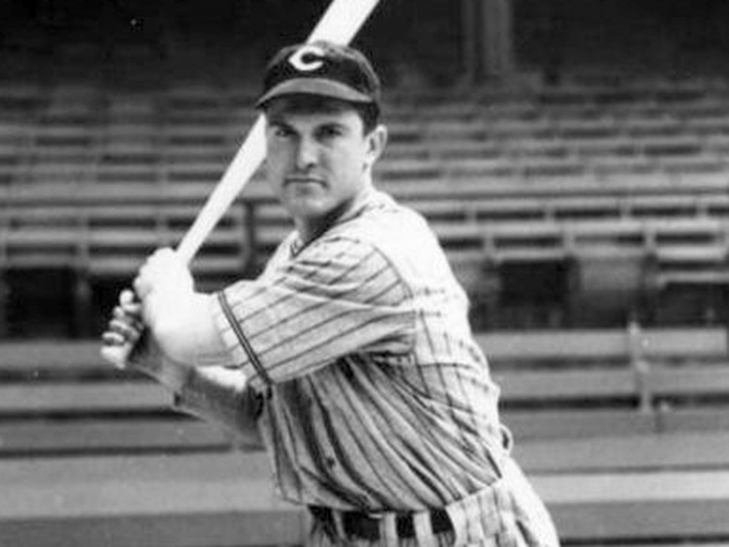
The arrival of Jeff Heath in Cleveland in 1936 brought a specialized blend of Canadian-born grit and explosive athletic power to the Indians. By the time he secured a full-time role in 1938, the left-handed outfielder had established himself as one of the most dangerous and efficient triple-threats in the American League.
Heath’s tenure in Cleveland was defined by an immediate and relentless offensive efficiency. During the 1938 campaign, a summer when he batted a staggering .343 and led the American League with 11 triples. This performance earned him an 11th-place finish in the MVP voting and signaled the arrival of a force in the Cleveland outfield. He was a model of specialized versatility, blending elite contact skills with a surprising power surge that saw him become a fixture in the heart of the Tribe's batting order.
The hallmark of his career was his unique ability to generate high-frequency extra-base hits. In 1941, Heath reached a statistical outlier status by leading the league in triples for a second time, recording a career-high 20 three-baggers while maintaining a .340 batting average. He was a model of steady-state dominance, earning All-Star selections in 1941 and 1943 and consistently ranking among the league leaders in total bases and slugging percentage. He possessed a specialized athleticism that allowed him to pressure opposing defenses in every facet of the game, providing the high-leverage production required to keep Cleveland competitive during the volatile years of the early 1940s.
After the 1945 season, he was traded to the Washington Senators, marking the end of a decade on the North Coast. He departed with a career .298 average, 1,040 hits, 122 home runs, and twice led the American League in triples.
33. Bobby Avila
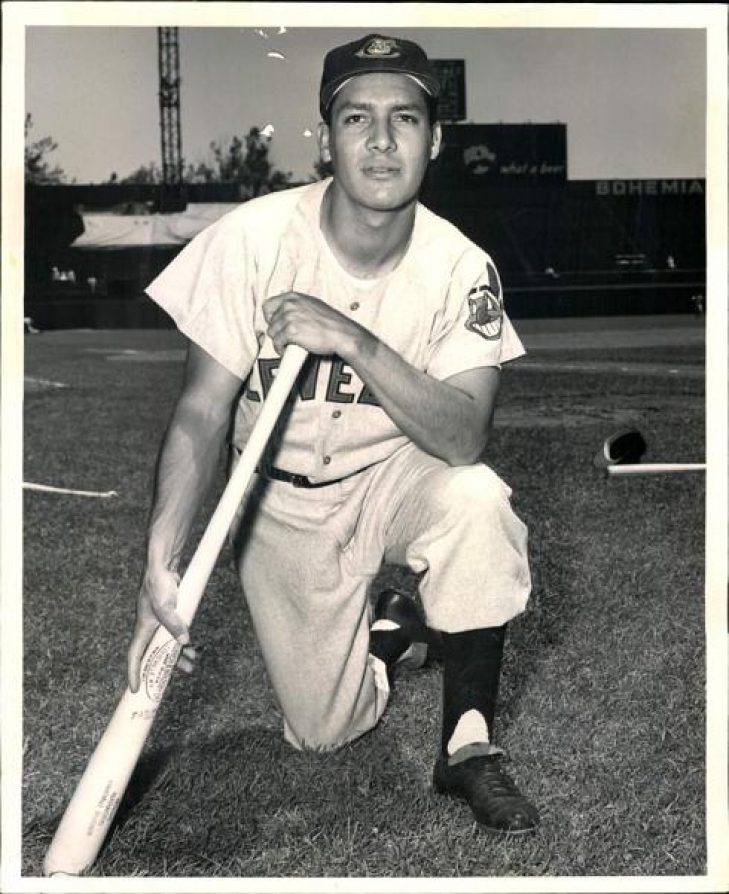
The 1949 arrival of Bobby Avila in Cleveland wasn't just a roster move; it was a watershed moment for international baseball. As the first Mexican-born player to truly seize a starring role in the Major Leagues.
Avila forced his way into the permanent starting lineup by 1951, immediately proving that his bat belonged at the top of a championship-caliber order. He possessed a specialized knack for finding gaps, hitting over .300 in each of his first two full seasons as a regular. His athleticism was on full display in 1952 when he led the Junior Circuit in triples and earned his first invitation to the Midsummer Classic. He was a model of specialized consistency, serving as the high-leverage spark plug for a Cleveland squad that featured some of the most storied pitching staffs in the game's history.
The definitive apex of his career arrived during the magical 1954 campaign. That summer, Avila authored a historic performance by capturing the American League Batting Title with a .341 average, becoming the first Latin American player to ever lead the league in hitting. His craftsmanship was the primary engine behind Cleveland’s record-setting 111-win season and its march to the World Series, earning him a third-place finish in the MVP voting. He was a high-frequency producer who combined elite bat control with a veteran poise, proving he could out-hit legends like Minnie Miñoso and Ted Williams over the course of a grueling pennant race.
Beyond the box scores, Avila’s presence was defined by a trailblazing resilience that made him a national hero in his homeland. He remained the tactical anchor of the Cleveland infield through 1957, utilizing a workmanlike approach to accumulate over 1,200 hits in a Tribe uniform. Whether he was lacing a line drive into the corner or providing sure-handed defense at the keystone, he competed with a focused intensity that solidified his status as a franchise pillar. He proved that a player could become an international icon by mastering the fundamental requirements of the "inside game" at the highest level.
Following a sharp decline in 1958, the team traded to Baltimore and finished its final lap in the league in 1959.
39. Hal Trosky
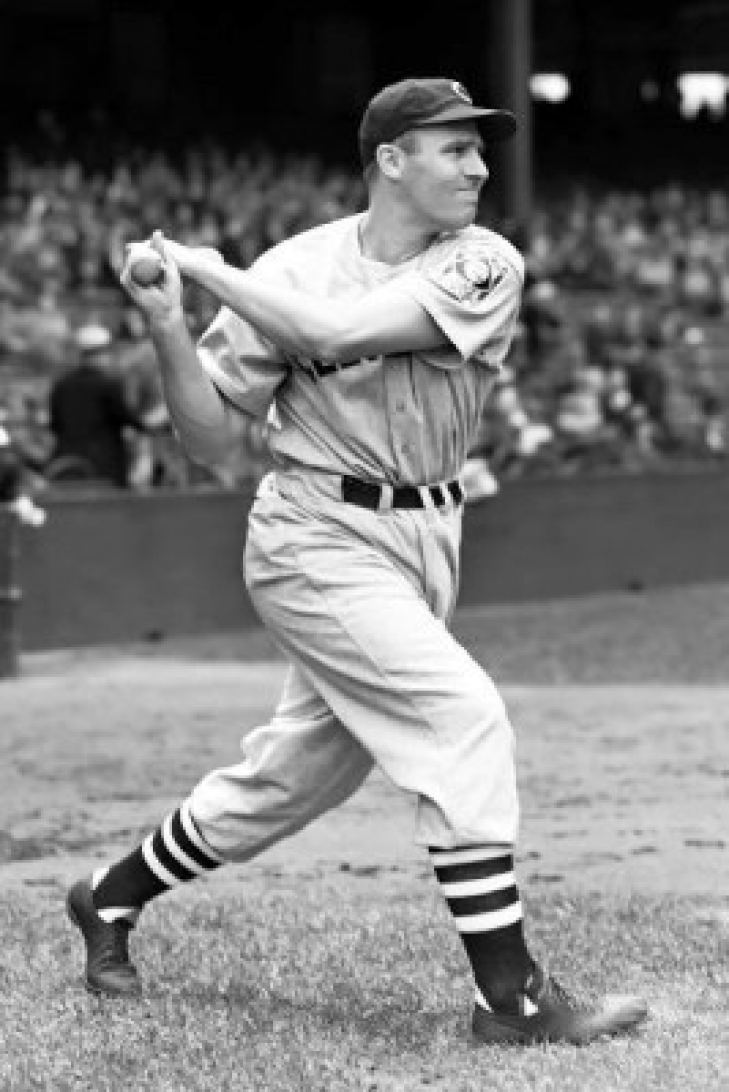
The narrative of Hal Trosky is one of the most compelling "what-if" stories in the history of the American League. Arriving on the North Coast in 1933, the Iowa native carried expectations that bordered on the impossible, with some observers prematurely labeling him the heir to Babe Ruth’s throne. While he never reached the mythical status of the "Bambino," Trosky established a baseline of specialized power that, in any other era, would have made him a perennial All-Star and a household name across the country.
Trosky’s tenure in Cleveland was a study in elite offensive efficiency during the most crowded era of talent in baseball history. He operated as a high-frequency run producer, anchoring the middle of the Tribe's lineup with a left-handed swing that generated at least 25 home runs in six of his first seven full seasons. He was a model of steady-state dominance, surpassing the 100-RBI plateau in six consecutive campaigns starting in 1934. In 1936, he blasted 42 home runs and led the American League with a staggering 162 RBIs while maintaining a .343 batting average, which remains one of the best power years in team history.
The most extraordinary aspect of his game was the consistency he maintained while playing in the shadow of legends like Gehrig, Foxx, and Greenberg. Trosky possessed a specialized athleticism that allowed him to finish among the league leaders in extra-base hits and total bases annually, providing the tactical stability required to keep Cleveland competitive in a powerhouse Junior Circuit. He served as the primary engine of the offense throughout the 1930s, demonstrating professional resilience to post a career .313 average in a Cleveland uniform. He proved that a player could become a franchise pillar by simply being one of the most dangerous hitters in the world, even if the All-Star ballots were crowded with future Hall of Famers.
His presence on the field was defined by a focused intensity that was tragically undermined by forces beyond his control. Beginning in 1938, Trosky was plagued by a series of debilitating migraines that began to impact his vision and his timing at the plate. Despite this physical toll, he continued to compete with a workmanlike approach until the condition forced a premature retirement in 1941.
The story in Cleveland concluded with 216 home runs, 911 RBI, and a reputation as one of the most underrated sluggers of all time. He left the organization with a career .551 slugging percentage, a mark that reflects nearly a decade of elite power hitting on the North Coast before he made a brief, wartime comeback in Chicago.
The organization recognized the sheer magnitude of his contribution by including him in the inaugural Cleveland Hall of Fame class in 1951.
