

 Not in Hall of Fame News
Yes, we know that this is taking a while! As many of…
 Not in Hall of Fame News
Yes, we know that this is taking a while! As many of…
 Not in Hall of Fame News
2002 SEMI-FINAL RESULTS: Thank you for your participation in the Pro Football…
 Not in Hall of Fame News
Yes, we know that this is taking a while! As many of…
 Not in Hall of Fame News
We are diligently working away at Notinhalloffame on revising our Football lists…
 Not in Hall of Fame News
We are diligently working away at Notinhalloffame on revising our Football lists…
 From the Desk of the Chairman
October baseball often turns individual pitching performances into lasting postseason memories. Strikeout…
 From the Desk of the Chairman
For decades, the sports debate ran on gut feeling. Barstool arguments, call-in…
 From the Desk of the Chairman
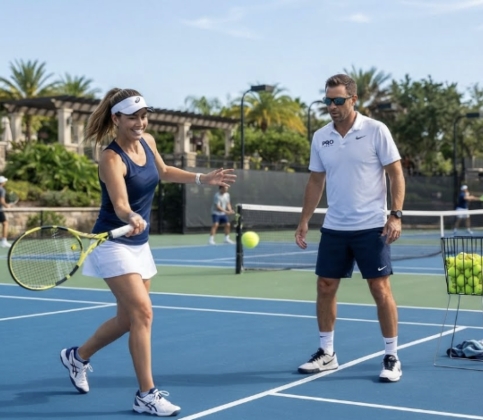
Introduction to Private Adult Tennis Camps in Prague Adult club players increasingly…
 From the Desk of the Chairman
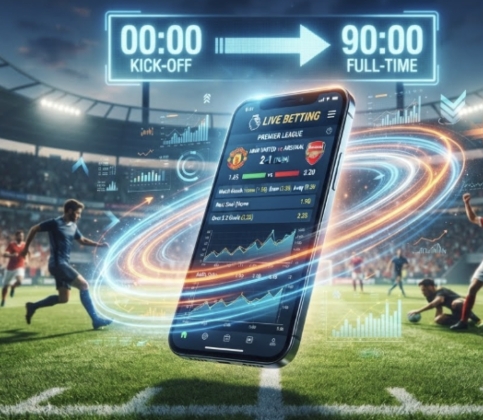
Unlike in the case of pre-match betting, where you have to pick…
 From the Desk of the Chairman
Kupu178 builds trust with people by using top-end end-to-end encryption. It checks…
 From the Desk of the Chairman
Sports fans thrive on calculating strategy, reading momentum, and maximizing every tactical…


100 Active Potential Football Hall of Famers
-
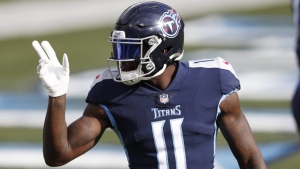 #50 Overall, A.J. Brown, New England Patriots, #9 Wide Receiver2025 Pre-Season Rank #49, 2024 Pre-Season Rank #76, #2023 Pre-Season Rank #106, 2022 Pre-Season Rank #142, 2021 Pre-Season Rank #141. Peak Period: 2020-24…
 -
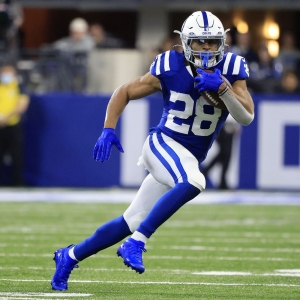 #47 Overall, Jonathan Taylor, Indianapolis Colts, #4 Running Back2025 Pre-Season Rank #70, 2024 Pre-Season Rank #98, 2023 Pre-Season Rank: #107, 2022 Pre-Season Rank #111. Peak Period: 2021-25 After a good rookie…
 -
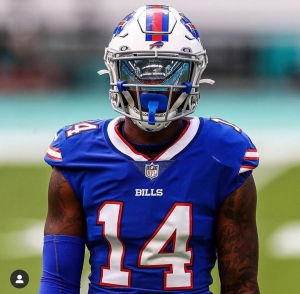 #43 Overall, Stefon Diggs, Washington Commanders, #7 Wide Receiver2025 Pre-Season Rank #40, 2024 Pre-Season Rank #38, 2023 Pre-Season Rank #48, 2022 Pre-Season Rank #57, 2021 Pre-Season Rank #118. Peak Period 2019-23…
 -
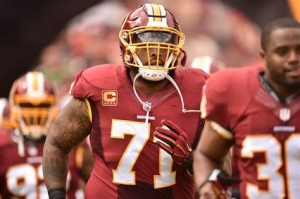 #6 Overall, Trent Williams, San Francisco 49ers, Offensive Tackle, #1 Offensive Lineman2025 Pre-Season Rank #5, 2024 Pre-Season Rank #6, 2023 Pre-Season Rank #6, 2022 Pre-Season Rank #20, 2021 Pre-Season Rank #33, 2020 Pre-Season Rank…
Visit the Fictitious Halls of Fame!
You May Also Like...
EDITOR’S CHOICE
 DDT's Pop Flies
When the veterans committee (VC), officially convening as the Contemporary Baseball Era…
 Live Music Head
Project/Objectan interview with André Cholmondeleyby Live Music HeadOriginally published at timessquare.com on…

LATEST RANKINGS


MOST POPULAR RANKINGS





Committee Chairman
Our All-Time Top 50 Los Angeles Angels are up
Yes, we know that this is taking a while!
As many of you know, we here at Notinhalloffame.com are slowly generating the 50 of each major North American sports team. We have a new one to unveil today, that of the Los Angeles Angels.
The Los Angeles Angels came into existence in 1961 as an expansion team, and while they were (and are) still secondary to the Dodgers, the constant name changes didn't help. They went from the Los Angeles Angels (1961-65) to the California Angels (1965-96), Anaheim Angels (1997-2004), Los Angeles Angels of Anaheim (2005-15), and back to the Los Angeles Angels.
The team did not go to their first postseason until 1979, and in 2002, they won their first Pennant, which is, to date, the only one they have captured. They made the most of their lone World Series appearance, winning it all.
Our Top 50 lists in Baseball look at the following:
1. Advanced Statistics.
2. Traditional statistics and how they finished in the American League.
3. Playoff accomplishments.
4. Their overall impact on the team and other intangibles not reflected in a stat sheet.
Remember, this is ONLY based on what a player does on that particular team and not what he accomplished elsewhere and also note that we have placed an increased importance on the first two categories.
This list is updated up until the end of the 2021 Season.
The complete list can be found here, but as always, we announce our top five in this article. They are:
1. Mike Trout
2. Nolan Ryan
3. Chuck Finley
4. Frank Tanana
5. Jared Weaver
We will continue our adjustments on our existing lists and will continue developing our new lists.
Look for our more material coming soon!
As always, we thank you for your support.
The Pro Football Hall of Fame announces four new groups for the Hall.
The Pro Football Hall of Fame has announced four new groups who will be honored by the Canton-based institution.
The four new categories are Assistant Coaches, Athletic Trainers, Equipment Managers and Public Relations. All winners will receive Awards of Excellence and their names will be displayed in a designated area starting in 2022.
There will be five members of the inaugural class for each group.
Committees have already been announced for each group.
Assistant Coaches Selection Committee:
Jimmy Raye, NFL consultant, retired offensive coordinator
Tony Dungy, NBC “Sunday Night Football” studio analyst, retired head coach
Bill Cowher, CBS studio analyst, retired head coach
Mike Holmgren retired NFL head coach and general manager
Terry Robiskie, retired offensive coordinator.
Athletic Trainer Selections Committee:
Justin Maher (Committee Chair), Physical Therapist/Assistant Athletic Trainer, New York Giants
Nate Weir Coordinator of Rehabilitation/Assistant Athletic Trainer, Green Bay Packers
James Collins Director of Football/Medical Services, Los Angeles Chargers
Jim Maurer, Head Athletic Trainer, Dallas Cowboys
Sonia Rauf Assistant Athletic Trainer, Pittsburgh Steelers
David Glover Assistant Athletic Trainer, Kansas City Chiefs
Katy Rogers Assistant Athletic Trainer, Carolina Panthers
Steve Antonopulos retired Director of Sports Medicine, Denver Broncos
Ronnie Barnes SVP of Medical Services/Head Athletic Trainer, New York Giants
Pepper Burruss retired Head Athletic Trainer, Green Bay Packers
H. Rod Martin retired Head Athletic Trainer, Oakland Raiders
Reggie Scott Vice President of Sports Medicine and Performance, Los Angeles Rams
Equipment Managers Selection Committee
Dan Simmons retired Equipment Manager, New Orleans Saints, and current Alumni and Legends Development Coordinator for Saints
Tony Medlin Equipment Manager, Chicago Bears
Mike McCord Equipment Manager, Dallas Cowboys
Gordan Batty Equipment Manager, Green Bay Packers
Mike Davidson retired Equipment Manager, Kansas City Chiefs, and current Associate Historian and Curator of Chiefs Hall of Honor
Public Relations Selection Committee:
Pete Abitante National Football League executive
Kevin Byrne retired Baltimore Ravens Executive Vice President
Rich Dalrymple Senior Vice President Public Relations & Communications, Dallas Cowboys
Charlie Dayton retired Vice President Public Relations, Carolina Panthers
Bill Keenist retired Vice President Public Relations, Detroit Lions
Artis Twyman Vice President Communications, Los Angeles Rams
Gary Wright retired Vice President Public Relations, Seattle Seahawks
We here are Notinhalloffame.com are excited with the new developments within the Pro Football Hall of Fame.
The Black College Football Hall of Fame announce the 2022 Finalists
The Black College Football Hall of Fame announced 29 Finalists for the Class of 2022. They will announce the Class on December 28.
The Finalists were chosen from 200 nominees by an 11-member committee.
The Player Finalists are:
Joe Adams: Quarterback, Tennessee State, 1977-80.
Antoine Bethea: Defensive Back, Howard, 2002-05.
Verlon Biggs: Defensive End, Jackson State, 1962-64.
Dwaine Board: Defensive End, North Carolina State, 1975-78.
Vince Buck: Central State University. 1986-89.
Ben Coates: Tight End, Livingstone College, 1987-90.
Clem Daniels: Running Back, Prairie View A&M, 1956-59.
Kevin Dent: Wide Receiver, Alcorn State, 1995-98.
Donald Evans: Defensive Lineman, Winston-Salem State, 1984-87.
Leslie Frazier: Defensive Back, Alcorn State, 1978-80.
Richard Huntley: Running Back, Florida A&M, 1992-95.
Henry Lawrence: Offensive Lineman, Florida A&M, 1970-73.
Albert Lewis: Defensive Back, Grambling State, 1979-82.
Jim Marsalis: Defensive Back, Tennessee State, 1962-65.
Rashean Mathis: Defensive Back, Bethune-Cookman, 1999-02.
Tyrone McGriff: Offensive Lineman, Florida A&M, 1976-79.
John Moody: Running Back, Morris Brown College, 1939-41.
Nate Newton: Offensive Lineman, Florida A&M, 1979-82.
Jacquay Nunnally: Wide Receiver, Florida A&M, 1997-00.
Elijah Pitts: Running Back, Philander Smith College, 1958-61.
Tyrone Poole: Defensive Back, Fort Valley State, 1991-94.
Jake Reed: Wide Receiver, Grambling State, 1987-90.
Johnnie Walton: Quarterback, Elizabeth City State, 1965-68.
Sammy White: Wide Receiver, Grambling State, 1972-74.
The Coach Finalists:
Rudy Hubbard: Florida A&M, 1974-85.
William Nicks: Morris Brown College 1930-35, 1937-39, 1941-42, Prairie View A&M 1945-47, 1952-65.
Doug Porter: Mississippi State Valley State 1961-65, Howard 1974-85, Fort Valley State 1987-96.
The Contributor Finalist:
Roscoe Nance: Reporter for Jackson Clarion-Ledger 1978-85 & USA Today 1985-07.
The Black College Football Hall of Fame was founded in 2009 and currently has 96 members.
What to Look for When Choosing a New Betting Site

If you are looking for a new site to bet on, you have come to the right place. Betting is a popular form of entertainment all over the world because it adds that little extra excitement to any sports match. With a good betting site, you can bet from anywhere you want, and on any sport you like. However, finding just the right site can be a hassle, and also a time-consuming task. This is why we have created this guide to what you should look for in a betting site.
Safety first
First of all, you need to make sure that the site you want to use is safe. There are many sites out there, and some of them are not as good. If you ever find yourself on a site that does not look legit, then you should exit immediately. You can spot unsafe sites in different ways, for example by reading the terms and conditions, looking at payment options, and best of all, reading reviews and feedback from others.
Good offers
Now that you have narrowed down your choice to only the safe sites, it is time to look for some extra good offers that make it more fun to bet. An example is at BetMGM, where you can enter promo codes to get a $250 risk-free bet. You can read more about the offer at https://www.denverpost.com/2021/11/18/betmgm-promo-codes/. These are the kind of features that can really kick-start your betting career. However, remember to always read the guidelines for each offer thoroughly.
Available sports
If you want to bet on football, soccer, baseball, or basketball, chances are that you will find these sports on any betting site. You can for example bet on DeMarcus Ware, one of the greatest defensive players in Sun Belt Conference history, most places. However, if you are interested in less common sports like dog racing and darts, you might need to look specifically after these when choosing.
In-app betting?
Many bettors might prefer to wager in apps, to make it even more convenient. Many betting sites have also launched apps for customers to have easy access to any bet they want to make. This is the golden age of sports betting, and we have seen a rise in people who choose to wager on sports lately. This is partly due to how easy it is. You can place any bet directly from your phone with a few taps. This is also why betting apps can be something you should look for when choosing your platform.
Live to bet
Live betting is for anyone that wants to make the experience even more exciting. Here you bet on events or happenings within a short period of time, while the match is being played. It can for example be if someone will score within the next 15 minutes. For some, it is too stressful, but for others, it is that perfect rush of adrenaline. Make sure the betting site you choose offers live wagering if it is something you want to try.
