

 Not in Hall of Fame News
Yes, we know that this is taking a while! As many of…
 Not in Hall of Fame News
Yes, we know that this is taking a while! As many of…
 Not in Hall of Fame News
2002 SEMI-FINAL RESULTS: Thank you for your participation in the Pro Football…
 Not in Hall of Fame News
Yes, we know that this is taking a while! As many of…
 Not in Hall of Fame News
We are diligently working away at Notinhalloffame on revising our Football lists…
 Not in Hall of Fame News
We are diligently working away at Notinhalloffame on revising our Football lists…
 From the Desk of the Chairman
October baseball often turns individual pitching performances into lasting postseason memories. Strikeout…
 From the Desk of the Chairman
For decades, the sports debate ran on gut feeling. Barstool arguments, call-in…
 From the Desk of the Chairman
Introduction to Private Adult Tennis Camps in Prague Adult club players increasingly…
 From the Desk of the Chairman
Unlike in the case of pre-match betting, where you have to pick…
 From the Desk of the Chairman
Kupu178 builds trust with people by using top-end end-to-end encryption. It checks…
 From the Desk of the Chairman
Sports fans thrive on calculating strategy, reading momentum, and maximizing every tactical…

100 Active Potential Football Hall of Famers
-
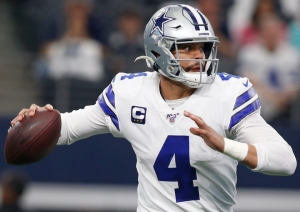 #37 Overall, Dak Prescott, Dallas Cowboys, #7 Quarterback2025 Pre-Season Rank #40, 2024 Pre-Season Rank #32, 2023 Pre-Season Rank #44, 2022 Pre-Season Rank #55, 2021 Pre-Season Rank #63, 2020 Pre-Season Rank…in Quarterbacks
 -
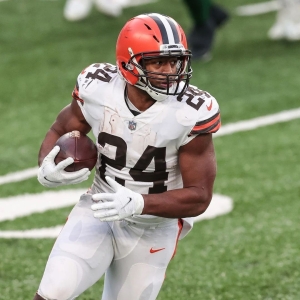 #40 Overall, Justin Jefferson, Minnesota Vikings, #5 Wide Receiver2025 Pre-Season Rank #38, 2024 Pre-Season Rank #50, 2023 Pre-Season Rank #101, 2022 Pre-Season Rank #130. Peak Period: 2020-24 Since he debuted in…
 -
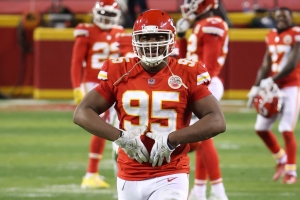 #19 Overall, Chris Jones, Kansas City Chiefs, Defensive Tackle, #8 Defensive Lineman/Linebacker: Pass Rusher2025 Pre-Season Rank #15, 2024 Pre-Season Rank #15, 2023 Pre-Season Rank #58, 2022 Pre-Season Rank #100. Peak Period 2020-24. When you think of…
 -
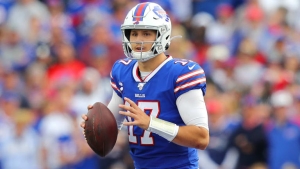 #16 Overall, Josh Allen, Buffalo Bills, #5 Quarterback2025 Pre-Season Rank #17, 2024 Pre-Season Rank #39, 2023 Pre-Season Rank #69, 2022 Pre-Season Rank #98, 2021 Pre-Season Rank #117. Peak Period: 2020-24.…in Quarterbacks
Visit the Fictitious Halls of Fame!

You May Also Like...
EDITOR’S CHOICE
 DDT's Pop Flies
When the veterans committee (VC), officially convening as the Contemporary Baseball Era…


 Live Music Head
Project/Objectan interview with André Cholmondeleyby Live Music HeadOriginally published at timessquare.com on…

LATEST RANKINGS

MOST POPULAR RANKINGS


Committee Chairman
34. Joey Gallo
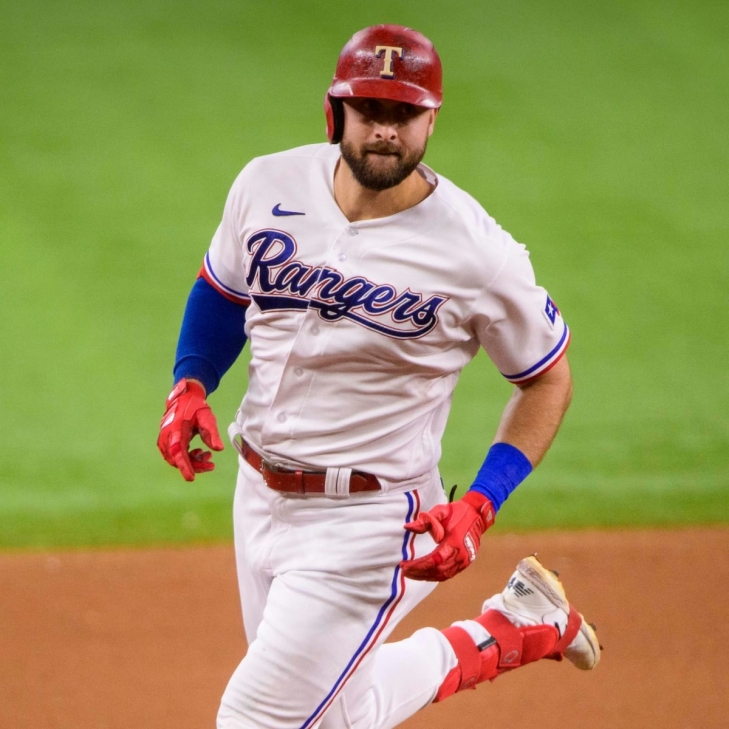
Few athletes in the history of the sport have ever challenged the limits of the "Three True Outcomes" quite like Joey Gallo. Selected by the Texas Rangers in the first round of the 2012 draft, this imposing, left-handed power hitter possessed a formidable, legendary power before making his debut in Arlington. It required a diligent five-year progression through the minor leagues to secure a permanent spot on the major league roster. Upon achievement, Gallo profoundly transformed the understanding of a contemporary middle-of-the-order hitter, turning every at-bat into a significant and high-pressure event.
Gallo's offensive profile exhibited considerable volatility, favoring long-distance power hitting over conventional contact and demonstrating disciplined plate approach. He assumed a full-time starting position with consecutive outstanding performances, hitting 41 home runs in 2017 and repeating with 40 additional home runs in 2018. Although these substantial totals were accompanied by a regrettably low batting average below .210, his exceptional capacity to draw walks sustained his overall offensive contribution.
His performance demonstrated a remarkable offensive development during the 2019 season. Gallo was selected for his first career American League All-Star team, posting a career-high batting average of .253, along with 23 home runs and an impressive 1.401 OPS in the first half of the season. These achievements indicated his potential to become a well-rounded offensive player, although an oblique injury prematurely curtailed his summer to merely 70 games.
However, an exclusive focus on his low batting average and high strikeout count overlooks a significant analytical asset within his skill set: his exceptional defensive efficiency. Despite his height of 6-foot-5, Gallo consistently demonstrated remarkable agility and athleticism as an outfielder, complemented by an impeccable internal clock and a cannon of a throwing arm. When his offensive performance declined during the pandemic-impacted 2020 season, his defensive capabilities fully sustained his value. He was awarded his inaugural Gold Glove Award in right field and led all Major League Baseball players with 12 Total Zone Runs, thereby providing an essential safety net for the Texas pitching staff.
His final chapter in Arlington arrived during a bizarre, high-octane 2021 campaign. Showcasing his signature paradox nightly, Gallo was selected to his second All-Star Game and secured a second consecutive Gold Glove. Yet his statistical profile was a historic anomaly; he batted just .199 while leading the American League in both walks (111) and strikeouts (213), along with 25 home runs. With his free agency looming and the franchise entering a rebuilding phase, the front office traded him to the New York Yankees just before the July deadline.
Gallo had 408 hits, 145 home runs, 317 RBIs, and drew 359 walks while generating a unique .211/.336/.497 slash line (113 OPS+) in Texas.
Our All-Time Top 50 Washington Nationals have been updated to reflect the 2021 Season
Yes, we know that this is taking a while!
As many of you know, we here at Notinhalloffame.com are slowly generating the 50 of each major North American sports team. That being said, we have existing Top 50 lists out and we always consistently look to update them when we can and based on necessity. As such, we are very happy to present our pre-2022 revision of our top 50 Washington Nationals.
As for all of our top 50 players in hockey we look at the following:
1. Advanced Statistics.
2. Traditional statistics and how they finished in the National League.
3. Playoff accomplishments.
4. Their overall impact on the team and other intangibles not reflected in a stat sheet.
Please note, that this is our first revision, reflective of the last year.
The Nationals went into full rebuilding mode, trading many of their stars during the season. There were no new entries, but were some rank elevations.
As always, we present the top five immediately, which has no changes.
1. Gary Carter
2. Tim Raines
3. Max Scherzer
4. Andre Dawson
5. Steve Rogers
You can find the entire list here.
Scherzer almost supplanted Raines at #2, and he completed the season with the Nationals, he likely would have.
Ryan Zimmerman moves up from #9 to #6. This could be the end of the climb for Zimmerman, as it is speculated that he might soon retire.
Infielder, Trea Turner, was traded to the Los Angeles Dodgers during the season. Despite, not playing all of the year with Washington, he was fantastic this year, and moves up to #14 from #22.
Juan Soto, who was this year’s National League MVP runner-up, rockets up to #17 from #36.
We welcome your input and comments and as always, we thank you for your support.
The Veterans Committees select six new people into the Baseball Hall of Fame
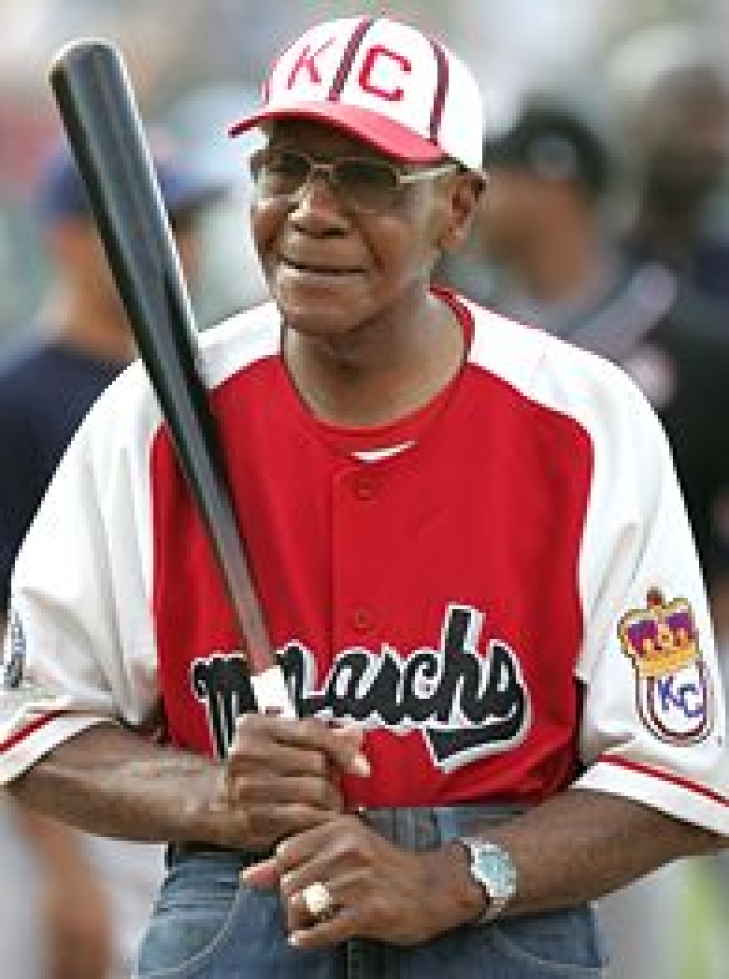
The Baseball Hall of Fame has announced the results of the 10-man ballots from both the Early Baseball Era Committee and Golden Days Era Committee for the Class of 2022, and it is a loaded group with six new names inducted.
Bud Fowler and Buck O’Neill were chosen by the Early Baseball Era Committee and Jim Kaat, Minnie Minoso, Tony Oliva and Gil Hodges were selected by the Golden Days Era Committee.
Bud Fowler, P, 3B, 2B, MAN. Fowler not only had a long career in the late 1800s, he is considered to be one of the first African-American baseball players in history. He received 75 percent of the vote.
Buck O’Neil, 1B. Memphis (NAL 1937), Kansas City (NAL 1938-43 & 1946-48). O’Neill was a two-time All-Star and Negro League Champion, but more importantly became the voice of the Negro Leagues. O’Neil played a large part in the creation of the Negro League Baseball Museum, and he became the first African-American to become a Coach in MLB. He received 81.3% of the vote.
Those not selected were:
Bill Dahlen, SS, 3B. Chicago (NL 1891-1898), Brooklyn (NL 1899-1903) & New York (NL 1904-1911).
John Donaldson, CF, P. Kansas City (NNL 1920-24)*.
Vic Harris, OF. Pittsburgh (NNL 1922), Cleveland (NNL 1924), (Chicago NNL 1924), Homestead (ANL 1929), Homestead (EWL 1932), Detroit (EWL 1932), Homestead (NN2 1933), Pittsburgh (NN2 1933), Homestead NN2 1935-45 & 1947)*.
Grant “Home Run” Johnson, SS, 2B.
Lefty O’Doul, OF, P. New York (AL 1919-20 & 1922), Boston (AL 1923), New York (NL 1928 & 1933-34), Philadelphia (NL 1929-30), Brooklyn (NL 1931-33).
Dick “Cannonball” Redding, P. Brooklyn (ECL 1923-27).
Allie Reynolds, P. Cleveland (AL 1942-46), New York (1947-54).
George “Tubby” Scales, 3B. 2B. 1B, P. St. Louis (NWL 1921-23), New York (EVL 1923-28), Newark (EVL 1926), New York (ANL, 1926), Homestead (ANL 1926), Homestead (NN2 1935), New York (NN2 1936, 1939 & 1945), Baltimore (NN2 1940-44 & 1946).
The four chosen from the Golden Days Era consists of four names, two of which, Kaat and Oliva are still alive.
The Golden Days Era nominees are:
Gil Hodges, 1B, OF. Brooklyn/Los Angeles (NL 1943 & 1947-61), New York (NL 1962-63). Hodges was an eight-time All-Star who smacked 370 Home Runs with 1,274 RBIs. He also twice led the Dodgers to World Series Championships. Hodges was on the ballot for the full fifteen years, peaking at 63.4% in his final year (1983). He received 75% of the ballot.
Jim Kaat, P. Washington/Minnesota (AL 1959-73), Chicago (AL 1973-75), Philadelphia (NL 1976-79), New York (AL 1979-80), St. Louis (NL 1980-83). Kaat was a three-time All-Star, and a 16-time Gold Glove winner. He had a record of 283-237 with 2,471 Strikeouts. Kaat was on the ballot for fifteen years, with his highest total coming in 1993 with 29.6%. He received 75% of the vote,
Minnie Minoso, OF, 1B. New York (NN2 1946-48), Cleveland (AL 1949, 1951 & 1958-59), Chicago (AL 1951-47, 1960-61, 1964, 1976 & 1980), St. Louis (NL 1962) & Washington (AL 1963). The only player to appear in five different decades, Minoso had 2,110 Hits, 195 Home Runs and was a 13-time All-Star. Minoso was on the ballot for 15 years, with his highest total coming in 1988 with 21.1%. He received 87.5% of the vote.
Tony Oliva, OF. Minnesota (AL 1962-76). Oliva was a three-time Batting Champion, five-time leader in Hits and eight-time All-Star. He had 1,917 career Hits with a lifetime Batting Average of .304. Oliva was on the ballot for 15 years, and peaked at 47.3% in 1988. He received 75% of the ballot.
The other nominees were:
Dick Allen, 1B, 3B, OF. Philadelphia (NL 1963-69 & 1975-76), St. Louis (NL 1970), Los Angeles (NL 1971), Chicago (AL 1972-74) & Oakland (AL 1977).
Ken Boyer, 3B, OF. St. Louis (NL 1955-65), New York (NL 1966-67), Chicago (AL 1967-68) & Los Angeles (NL 1968-69).
Roger Maris, OF. Cleveland (AL 1957-58), Kansas City (AL 1958-59), New York (AL 1960-66) & St. Louis (NL 1967-68).
Danny Murtaugh, MAN. Pittsburgh (NL 1957-64, 1967, 1970-71 & 1973-76).
Billy Pierce, P. Detroit (AL 1945 & 1948), Chicago (AL 1949-61) & San Francisco (NL 1962-64).
Maury Wills, OF. Los Angeles (NL 1959-66 & 1969-72), Pittsburgh (NL 1967-68) & Montreal (NL 1969).
These six men will (potentially) be joined by those from the writer’s ballot on January 25. Following that, we will revise our Notinhalloffame.com Baseball List.
We here a Notinhalloffame.com would like to congratulate the newest members of the Baseball Hall of Fame.
RIP: Claude Humphrey
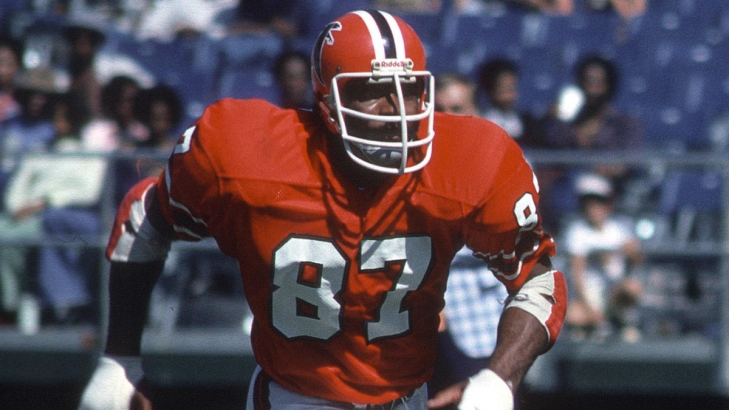
Pro Football lost a great one today as Hall of Fame Defensive End, Claude Humphrey, passed away. He was 77 years old.
A First Round Pick from Tennessee State in 1968 by the Atlanta Falcons, Humphrey won the Defensive Rookie of the Year and would be named to six Pro Bowls. A two-time First Team All-Pro, Humphrey played for Atlanta until 1978, joining the Philadelphia Eagles for three seasons before he retired in 1981. He had 130.0 Sacks over his career.
Humphrey was inducted into Canton in 2014 as a senior candidate, and he is also a member of the Atlanta Falcons Ring of Honor.
We here at Notinhalloffame.com would like to extend our condolences to the friends, family and fans of Claude Humphrey.
