

 Not in Hall of Fame News
Yes, we know that this is taking a while! As many of…
 Not in Hall of Fame News
Yes, we know that this is taking a while! As many of…
 Not in Hall of Fame News
2002 SEMI-FINAL RESULTS: Thank you for your participation in the Pro Football…
 Not in Hall of Fame News
Yes, we know that this is taking a while! As many of…
 Not in Hall of Fame News
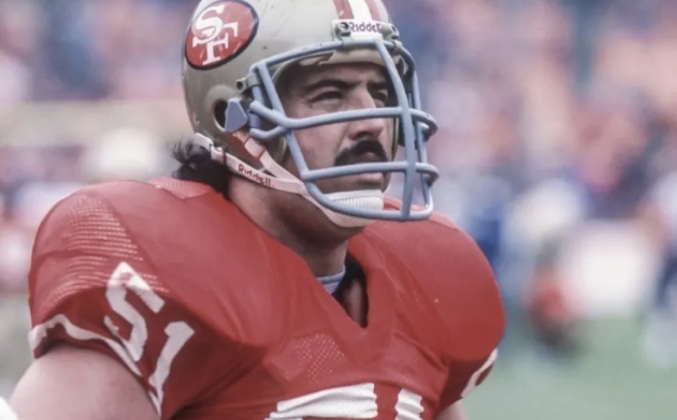
We are diligently working away at Notinhalloffame on revising our Football lists…
 Not in Hall of Fame News
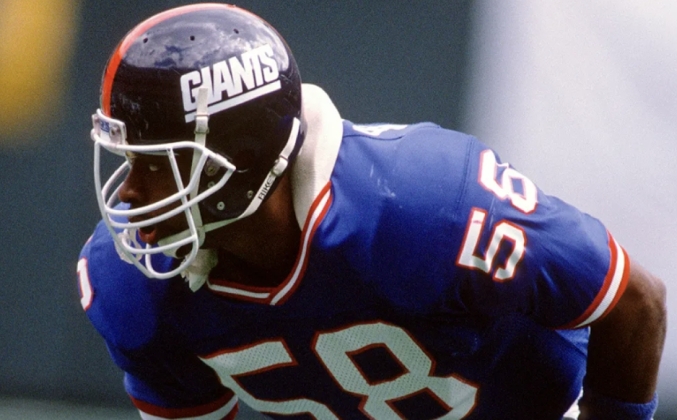
We are diligently working away at Notinhalloffame on revising our Football lists…
 From the Desk of the Chairman
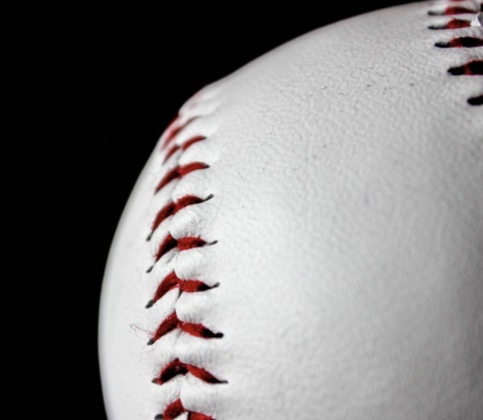
October baseball often turns individual pitching performances into lasting postseason memories. Strikeout…
 From the Desk of the Chairman
For decades, the sports debate ran on gut feeling. Barstool arguments, call-in…
 From the Desk of the Chairman
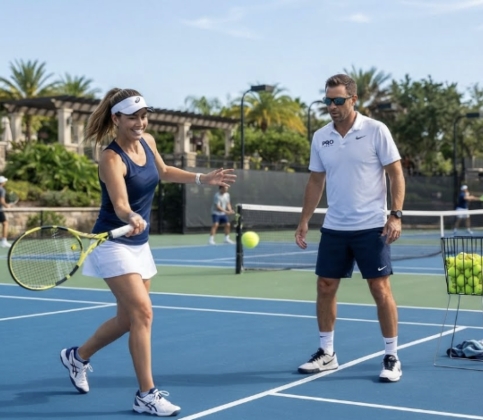
Introduction to Private Adult Tennis Camps in Prague Adult club players increasingly…
 From the Desk of the Chairman
Unlike in the case of pre-match betting, where you have to pick…
 From the Desk of the Chairman
Kupu178 builds trust with people by using top-end end-to-end encryption. It checks…
 From the Desk of the Chairman
Sports fans thrive on calculating strategy, reading momentum, and maximizing every tactical…
100 Active Potential Football Hall of Famers
-
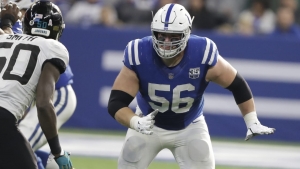 #22 Overall, Quenton Nelson, Indianapolis Colts, Left Guard, #2 Offensive Lineman2025 Pre-Season Rank #2025, 2024 Pre-Season Rank #29, 2023 Pre-Season Rank #42, 2022 Pre-Season Rank #51, 2021 Pre-Season Rank #78, 2020 Pre-Season Rank…
 -
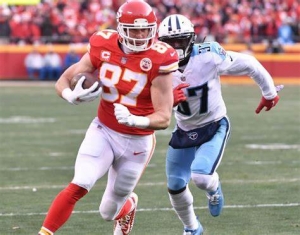 #5 Overall, Travis Kelce: Kansas City Chiefs, #1 Tight End2025 Pre-Season Rank #4, 2024 Pre-Season Rank #5, 2023 Pre-Season Rank #7, 2022 Pre-Season Rank #12, 2021 Pre-Season Rank: #20, 2020 Pre-Season Rank…in Tight Ends
 -
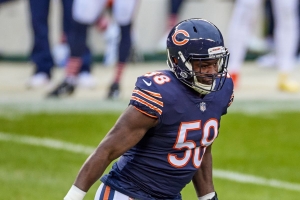 #31 Overall, Roquan Smith, Baltimore Ravens Linebacker, #3 Defensive Lineman/Linebacker: Interior Lineman2025 Pre-Season Rank #39, 2024 Pre-Season Rank #62, 2023 Pre-Season Rank #92, 2022 Pre-Season Rank #133, 2021 Pre-Season Rank #146. Peak Period: 2020-24…
 -
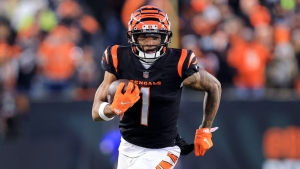 #42 Overall, Ja'Marr Chase, Cincinnati Bengals, #6 Wide Receiver2025 Pre-Season Rank #55, 2024 Pre-Season Rank #111, 2023 Pre-Season Rank #134, 2022 Pre-Season Rank #145. Peak Period: 2021-25* Ja’Marr Chase has been…
Visit the Fictitious Halls of Fame!
You May Also Like...
EDITOR’S CHOICE
 DDT's Pop Flies
When the veterans committee (VC), officially convening as the Contemporary Baseball Era…

 Live Music Head
Project/Objectan interview with André Cholmondeleyby Live Music HeadOriginally published at timessquare.com on…

LATEST RANKINGS

MOST POPULAR RANKINGS

Committee Chairman
How Will Next Year's NHL Hall of Fame Class Go?

It is a tradition that dates back to 1945: the annual induction class to the NHL Hall of Fame. Aside from winning the Stanley Cup, it is the ultimate honor for players of the game and a way to immortalize themselves amongst the greatest players to ever hit the ice. The Hockey Hall of Fame enshrines a maximum of four players every year along with spots for builders as well. It has also recently started to induct female hockey players. The Hockey Hall of Fame has 289 players inducted which include eight female players and more being added each year!
Next year’s NHL Hall of Fame class is going to be extra competitive with nearly double the candidates than a normal year. Why is this the case? Due to the lack of HOF during 2021 thanks to the pandemic, next year's event will be packed full of legends of the sport. It will take place in June of 2022 in the city of Toronto, Canada. If you are in the area around that time you can go to the Hockey HOF museum that is located in Toronto, go to a live hockey game from the hometown or bet on your favorite team at William Hill Canada. Ontario is one of the provinces that has recently signed single-game betting into law, which allows sports bettors to bet on a single game at a time.
For the most competitive odds, generous bonuses, and easy payment methods, William Hill Canada is a name that has global recognition in the sports betting industry. The William Hill brand has been in the business since 1961, where it originated in Gibraltar, United Kingdom. William Hill is an iconic and legendary brand amongst online sportsbooks, and even offers an easy to use mobile app that allows you to play even when you are on the go. With the new legislation for single-game betting coming into effect across Canada, there has been no better time to check out William Hill Canada to bet on your favorite NHL games.
Who Will Be Inducted in 2022?
There is a long list of players that have been waiting for the call now for a few years. There are some important names on that list, but two new potential inductees are likely heading into the Hall of Fame together. Let’s take a look at who we believe will be providing an acceptance speech at next year’s NHL Hall of Fame induction ceremony.
Henrik and Daniel Sedin
These super twins from Ornskoldsvik, Sweden headline next year’s potential class of Hall of Fame inductees. The Sedins played every game of their career for the Vancouver Canucks, and both finished with over 1,000 points scored in just over 1,300 games played. At times, the two players were dominant, and were famous for holding the puck between them for minutes on end. The Sedins led the Canucks all the way to game seven in the 2011 Stanley Cup Finals before falling to the Boston Bruins. Both Henrik and Daniel have their jerseys retired in Vancouver, and are now in acting roles with upper management for the team. The Sedin twins won Olympic gold medals with Sweden in 2006 and a silver medal in 2014.
Daniel Alfredsson
The long-time captain of the Ottawa Senators, Alfredsson played seventeen of his eighteen seasons with the team. Alfredsson exploded onto the scene in his rookie campaign, winning the Calder Memorial Trophy for the best rookie in the league. Alfredsson scored over 1,150 career points and also won Olympic medals in 2006 and 2014 alongside the Sedin twins for Sweden.
Alexander Mogilny
Another former Vancouver Canuck that has an excellent chance of making it into the Hall of Fame next summer. Mogilny was a trailblazer for young Russian players as he was the first Soviet player to defect to North America to play in the NHL. Who could ever forget his season in 1992-1993 where he went toe to toe with Finnish legend Teemu Selanne, and the two snipers tied for the league lead in goal scoring with 76 each. The next year, Mogilny was named the first European captain in the history of the NHL, and is an IIHF triple-crown winner with an Olympic gold medal, World Junior Championship gold medal, and a Stanley Cup with the New Jersey Devils in 2000.
Caroline Oullette
An iconic Canadian women’s hockey player, Oullette has an impressive resume that boasts four Olympic gold medals and six World Championship gold medals as well. Oullette dominated the women’s NCAA divisions as well, as she ranks in the top ten of all-time NCAA women’s scorers with 229 points. But it will be Oullette’s international success that she will be remembered for, in an age that was dominated by Canadian women’s hockey.
Roberto Luongo
The march of ex-Canucks continues as long-time Vancouver goalie Roberto Luongo also appears on the list this year. In terms of on-ice performance, Luongo ranks amongst the top goaltenders in history. Bobby Lu never won a Vezina or Hart trophy for individual successes but did take the Canucks to game seven of the Stanley Cup Finals in 2011. He sits fourth in NHL history in all-time wins with 489, and also ranks in the top ten in total shutouts. Luongo is also only one of three goaltenders to play over 1,000 games and won Olympic Gold medals with Canada in both 2010 and 2014.
Rod Brind’Amour
Could this be the year for Rod the Bod? The current head coach of the Carolina Hurricanes was one of the best two-way forwards in NHL history. Brind’Amour amassed a total of 1,184 points and also won two Selke trophies for the league’s best defensive forward. It also helps that Brind’Amour lifted the Stanley Cup with the Hurricanes back in 2006. Brind’Amour has coached the Hurricanes to an impressive 20-7 record to start this NHL season and maybe up for some Jack Adams award buzz which is awarded to the best coach in the league each season.
Best Sporting Moments of 2021
The world of sport is forever surprising and entertaining its fans with twists and turns. After all, it is these unpredictable moments that add something special to respective sports. If every match up was written in stone before the beginning of the competition, there is a good chance that sport wouldn’t have any fans. Luckily enough this isn’t the case and fans are always treated to great moments and stories in the world of sport.
When it comes to the year 2021, a lot has happened. The world stopped for the vast majority of 2020. There were no crowds in stadiums, leagues and competitions were postponed, the future of some sports was uncertain, it was a dark time. You can ask nearly any sports fan in the world what the worst part of the lockdown was and there is a good chance they will mention a lack of sport or being able to attend live events. However, 2021 saw the return of all the sports. The Olympics, Euros, and Super Bowl all got to go ahead this year, which gave fans a massive boost. But when looking back on the year, what were the stand out moments of the year? Here are just some of the best sporting moments of 2021.
Verstappen and Lewis Go to the Final Lap
Formula 1 has taken off massively in terms of popularity. Although it has always been a widely appreciated sport, plenty of fresh eyes has been on the sport for the past season. This is largely down to the quality and excitement of the 2021 season. All the way through the season, various drivers gave great performances. However, when it came down to the last day, there were two men that everybody was talking about. Both Lewis Hamilton and Max Verstappen went through the whole season neck and neck. When it came down to the last race in Abu Dhabi, both men had an equal share of the points. It seemingly looked over for the Dutch man to claim his first world title until a crash and safety car incident allowed him to gain on Hamilton. After an entire season of being neck-and-neck, the championship would come down to the final lap. A bold move from Verstappen’s team would end up being the decisive factor as his soft tires saw him through to become champion.
This was one of the most exciting F1 season to date, and with it over, you might struggle to find something to entertain you. If you’re looking for high-ocatain action and excitement, then it might be worth trying an online casino until the new season rolls around.
Buccaneers Win Super Bowl
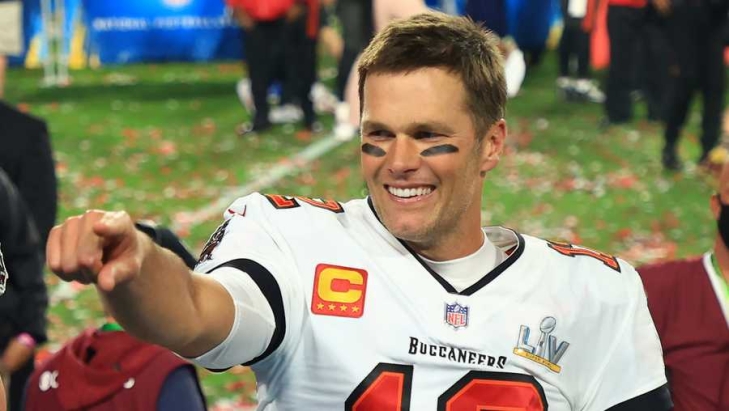
The Super Bowl is one of the most anticipated sporting events of the year. This is largely down to the occasion, as well as the quality of players who take the field. However, a phenomenal Buccaneers performance blew the Kansas City Chiefs out of the water. Thanks to some help from legend Tom Brady of course, who picked up his seventh Super Bowl.
Milwaukee Bucks Win NBA Championship
Milwaukee Bucks had only one NBA championship to their name before 2021. However, a great 4-2 over the Phoenix Suns would see them claim their first title in 50 years. Their comeback was truly amazing, becoming the first team to win after losing the opening two games.
NFL Profiles: Chicago Bears
The Chicago Bears are a professional American football team based in Chicago. The Bears compete in the National Football League as a member club of the league's National Football Conference North division
To both complement and supplement Fanduel.com's Super Bowl betting odds, we will be documenting all the key facts and figures surrounding your favorite teams. We will uncover the history, statistics, and relevant landmark moments. Alongside that, we uncover both players and staff from the current regime and days gone by to provide the overall fan-focused article you desire.
Our extensive NFL coverage turns its attention to Chicago Bears in this piece, so sit back and enjoy the read and prepare to get educated about everything you need to know regarding the Chicago Bears football team;
Fun Facts
- The Bears have retired 14 uniform numbers, which is the most in the NFL
- In the Pro Football Hall of Fame, the Bears have the most enshrined primary members with 30; the club also has had seven Hall of Famers spend a minor portion of their career with the franchise. Founder, owner, head coach, and player George Halas, halfback Bronko Nagurski, and Red Grange were a part of the original class of inductees in 1963
- The franchise saw 14 individuals inducted into the Hall of Fame from 1963 to 1967. Offensive tackle Jim Covert and defensive end Ed Sprinkle are the most recent Chicago Bear inductees, both being inducted as seniors as part of the Pro Football Hall of Fame's centennial class of 2020
- In 2012, Charles Tillman set the record for most forced fumbles in a single game with 4 against the Tennessee Titans. Also against the Titans, Chicago became the first team in league history to score a touchdown pass, a touchdown run, an interception return for a touchdown, and a blocked kick/punt for a score in the same quarter. Tillman and teammate Lance Briggs became the first pair in NFL history to return an interception for a touchdown in consecutive games against the Jacksonville Jaguars and Dallas Cowboys.
Club Background
Founded:
September 17, 1920
Team Colors:
Navy blue, burnt orange, white
Mascot:
Staley Da Bear
Nicknames:
- Da Bears
- The Monsters of the Midway
Stadium:
Soldier Field
Capacity:
61,500
Record Attendance:
66,944 (1994)
Owner:
Virginia Halas McCaskey
Recent History
Last Trophy:
NFC North 2018
All-time Top Scorer:
Robbie Gould is the Chicago Bears career leader in points scored with 1,207
Notable Former Players:
- Walter Payton
- Dick Butkus
- Bronko Nagurski
- Sid Luckman
- Gale Sayers
- Mike Ditka
- Bill George
- Clyde "Bulldog" Turner
- Doug Atkins
- Danny Fortmann
- Dan Hampton
- Richard Dent
- Jim Covert
- Brian Urlacher
- Mike Singletary
- Bill Hewitt
- Stan Jones
- Jay Hilgenberg
- Steve McMichael
- Devin Hester
- Joe Stydahar
- George Connor
- George McAfee
- Joe Fortunato
- Ed Sprinkle
- Ed Healey
- Olin Kreutz
- Lance Briggs
- Rick Casares
Notable Former Coaches:
- George Halas
- Hunk Anderson
- Luke Johnsos
- Paddy Driscoll
- Jim Dooley
- Abe Gibron
- Mike Ditka
- Dave Wannstedt
Record Signing:
Eddie Jackson agreed to a four-year, $58.4 million contract extension with the Bears in 2020
Current Performance
Last Five Results:
LLWLL
Last Five Finishing Positions:
2016 NFL NFC North 4th 3 13 0 — —
2017 NFL NFC North 4th 5 11 0 — —
2018 NFL NFC North 1st 12 4 0 Lost to Philadelphia Eagles in NFC Wild Card Game. —
2019 NFL NFC North 3rd 8 8 0 — —
2020 NFL NFC North 2nd 8 8 0 Lost to New Orleans Saints in NFC Wild Card Game. —
Chairman:
George McCaskey
Coach:
Matt Nagy
Notable Current Players:
Quarterbacks
- 14 Andy Dalton
- 1 Justin Fields
- 9 Nick Foles
Running backs
- 24 Khalil Herbert
- 32 David Montgomery
- 35 Ryan Nall
- 8 Damien Williams
Wide receivers
- 10 Damiere Byrd
- 84 Marquise Goodwin
- 17 Jakeem Grant
- 11 Darnell Mooney
- 12 Allen Robinson
Tight ends
- 80 Jimmy Graham
- 81 J. P. Holtz
- 87 Jesper Horsted
- 18 Jesse James
- 85 Cole Kmet
Offensive linemen
- 64 Alex Bars
- 75 Larry Borom
- 68 James Daniels
- 76 Teven Jenkins
- 67 Sam Mustipher
- 71 Jason Peters
- 73 Lachavious Simmons
- 65 Cody Whitehair
Defensive linemen
- 90 Angelo Blackson
- 96 Akiem Hicks
- 93 Margus Hunt
- 98 Bilal Nichols
- 95 Khyiris Tonga
Linebackers
- 99 Trevis Gipson
- 55 Bruce Irvin
- 45 Joel Iyiegbuniwe
- 92 Caleb Johnson
- 57 Christian Jones
- 44 Alec Ogletree
- 94 Robert Quinn
- 58 Roquan Smith
Defensive backs
- 26 Deon Bush
- 23 Marqui Christian
- 21 Xavier Crawford
- 38 Tashaun Gipson
- 4 Eddie Jackson
- 33 Jaylon Johnson
- 37 Teez Tabor
- 22 Kindle Vildor
Special teams
- 16 Pat O'Donnell
- 2 Cairo Santos
- 48 Patrick Scales
Our All-Time Top 50 Detroit Tigers have been updated to reflect the 2021 Season
Yes, we know that this is taking a while!
As many of you know, we here at Notinhalloffame.com are slowly generating the 50 of each major North American sports team. That being said, we have existing Top 50 lists out and we always consistently look to update them when we can and based on necessity. As such, we are very happy to present our pre-2022 revision of our top 50 Detroit Tigers.
As for all of our top 50 players in baseball we look at the following:
1. Advanced Statistics.
2. Traditional statistics and how they finished in the National/American League.
3. Playoff accomplishments.
4. Their overall impact on the team and other intangibles not reflected in a stat sheet.
The Tigers are coming off another sub-.500 season, and with a team over a century old, it is hard for any new additions to emerge.
It did not happen, and as of this writing, there is only one active Tiger in the top 50.
As always, we present the top five, which are:
1. Ty Cobb
2. Al Kaline
You can find the entire list here.
The active Tiger on this list is Miguel Cabrera, who at #6 did not make the top five.
We welcome your input and comments and as always, we thank you for your support.
