

 Not in Hall of Fame News
Yes, we know that this is taking a while! As many of…
 Not in Hall of Fame News
Yes, we know that this is taking a while! As many of…
 Not in Hall of Fame News
2002 SEMI-FINAL RESULTS: Thank you for your participation in the Pro Football…
 Not in Hall of Fame News
Yes, we know that this is taking a while! As many of…
 Not in Hall of Fame News
We are diligently working away at Notinhalloffame on revising our Football lists…
 Not in Hall of Fame News
We are diligently working away at Notinhalloffame on revising our Football lists…
 From the Desk of the Chairman
Unlike in the case of pre-match betting, where you have to pick…
 From the Desk of the Chairman
Kupu178 builds trust with people by using top-end end-to-end encryption. It checks…
 From the Desk of the Chairman
Sports fans thrive on calculating strategy, reading momentum, and maximizing every tactical…
 From the Desk of the Chairman
The 2026 NFL season is two weeks old and the division races…
 From the Desk of the Chairman
Sports communities are often built around things that have nothing to do…
 From the Desk of the Chairman
Every hall of fame eventually faces the same problem. The selection process…



100 Active Potential Football Hall of Famers
-
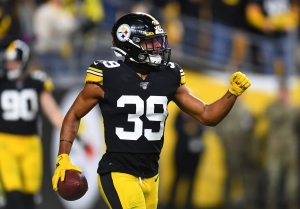 #44 Overall, Minkah Fitzpatrick, New York Jets, Free Safety, #3 Safety2025 Pre-Season Rank #43, 2024 Pre-Season Rank #56, 2023 Pre-Season Rank #63, 2022 Pre-Season Rank #99, 2021 Pre-Season Rank #108, 2020 Pre-Season Rank…in Safeties
 -
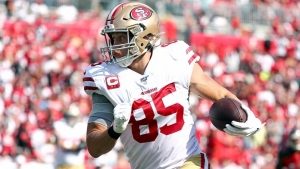 #26 Overall, George Kittle, San Francisco 49ers, #2 Tight End2025 Pre-Season Rank #34, 2024 Pre-Season Rank #42, 2023 Pre-Season Rank #59, 2022 Pre-Season Rank #74, 2021 Pre-Season Rank #86, 2020 Pre-Season Rank…in Tight Ends
 -
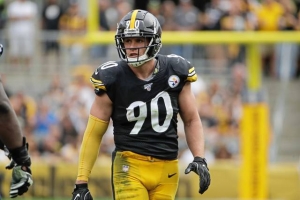 #10 Overall, T.J. Watt, Pittsburgh Steelers, #4 Defensive Lineman/Linebacker Pass Rusher2025 Pre-Season Rank #7, 2024 Pre-Season Rank #11: 2023 Pre-Season Rank #15, 2022 Pre-Season Rank #24, 2021 Pre-Season Rank #68, 2020 Pre-Season Rank…
 -
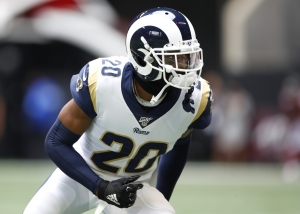 #23 Overall, Jalen Ramsey, Pittsburgh Steelers, #1 Cornerback2025 Pre-Season Rank #20, 2024 Pre-Season Rank #20, 2023 Pre-Season Rank #23, 2022 Pre-Season Rank #35, 2021 Pre-Season Rank #54, 2020 Pre-Season Rank…in Cornerbacks
Visit the Fictitious Halls of Fame!


You May Also Like...
EDITOR’S CHOICE
 DDT's Pop Flies
When the veterans committee (VC), officially convening as the Contemporary Baseball Era…


 Live Music Head
Project/Objectan interview with André Cholmondeleyby Live Music HeadOriginally published at timessquare.com on…

LATEST RANKINGS


MOST POPULAR RANKINGS


Committee Chairman
37. Jake Daubert
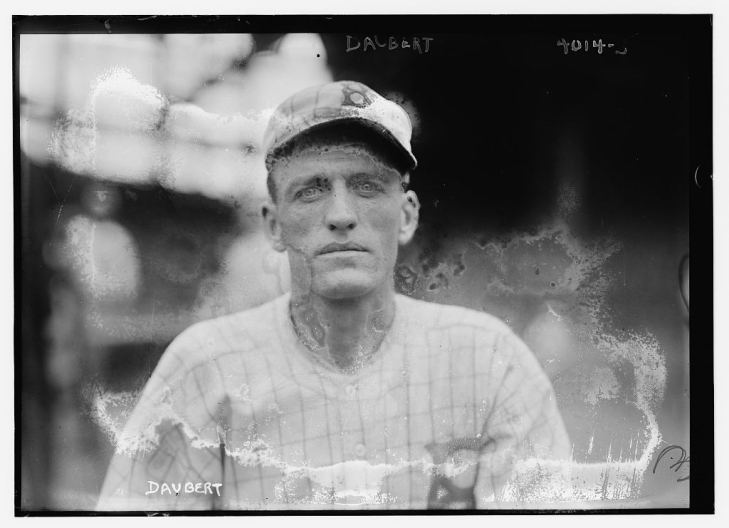
Jake Daubert didn't look like a ballplayer when he first emerged from the coal mines of Pennsylvania. After a false start in Cleveland, where he was discarded before ever seeing a pitch, the Brooklyn Superbas, the precursor to the Dodgers, took a chance on the quiet first baseman in 1910. He arrived as a "slashing chop hitter" with a game built on precision rather than power.
After a quiet start, Daubert experienced an impressive six-year streak of batting over .300, making him a regular presence at the top of the leaderboards. His peak occurred between 1913 and 1914, when he won consecutive National League Batting Titles. His 1913 season was particularly outstanding; he hit a career-high .350 and received the Chalmers Award, the precursor to the MVP. Besides his batting prowess, his speed was a significant advantage, often surprising opponents, as he stole 20 or more bases in six seasons with Brooklyn.
Beyond just the statistics, Daubert was a key figure in the era of “small ball.' He was especially skilled at bunting, setting a National League record with 392 career sacrifices, a record that still stands at the top of NL history. He combined outstanding bunt control with exceptional defense, often being compared to the legendary Hal Chase for his range and hands at first base. Daubert led the 1916 team to its first National League pennant, providing veteran leadership that helped transition the team from the rough early years to the organized success under Wilbert Robinson.
Daubert was traded to Cincinnati in 1919, leaving Brooklyn with 1,387 Hits and a Batting Average of .305.
31. Watty Clark
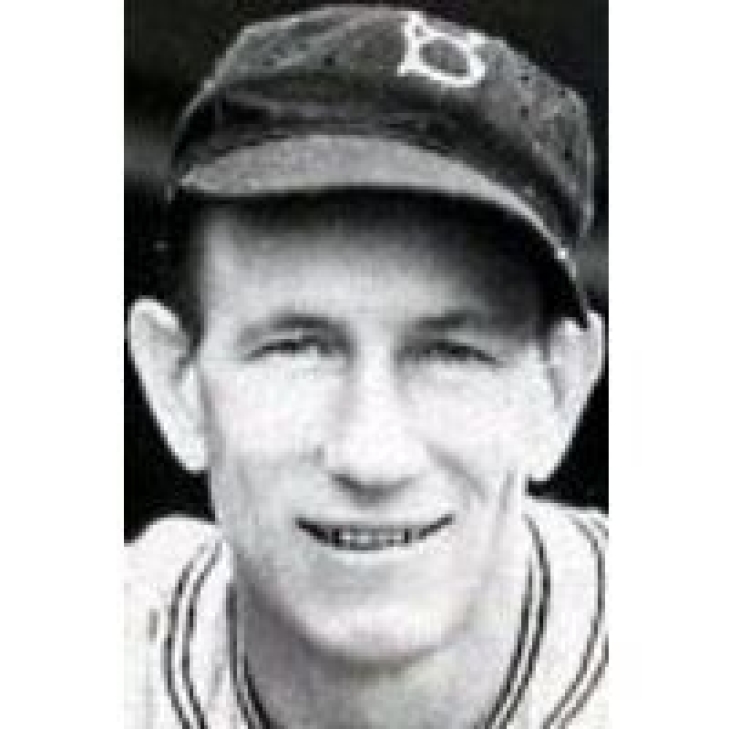
After a brief run with the Cleveland Indians in 1924, it was back to the Minors for two years before the Brooklyn Robins signed Watty Clark in 1927.
A left-handed workhorse who returned from two years in the minors to anchor a struggling staff. Known for a high-leg kick and control, he led the Robins during a tough stretch in the National League. In 1929, Clark matched few in durability, leading NL in innings (279.0) and starts. Despite league-leading losses for a mediocre team, he showcased command by leading NL in FIP (3.24), proving his performance was a valuable asset. He then had a stellar 1931 season, finishing 20th in MVP voting, with 14 wins and a 3.20 ERA.
In the 1932 season, he became a 20-game winner for the only time and led the league in FIP (3.13) for the second time. He was a giant in the rotation, logging 19 complete games and demonstrating the specialized precision that made him a nightmare for opposing hitters; however, he was traded to the New York Giants during the 1933 season, where he won a World Series. A year later, Brooklyn reacquired Clark, and he would finish out his career with the now-named Dodgers in 1937.
For the Dodgers, Clark went 106-88 with a 3.55 ERA.
27. Justin Turner
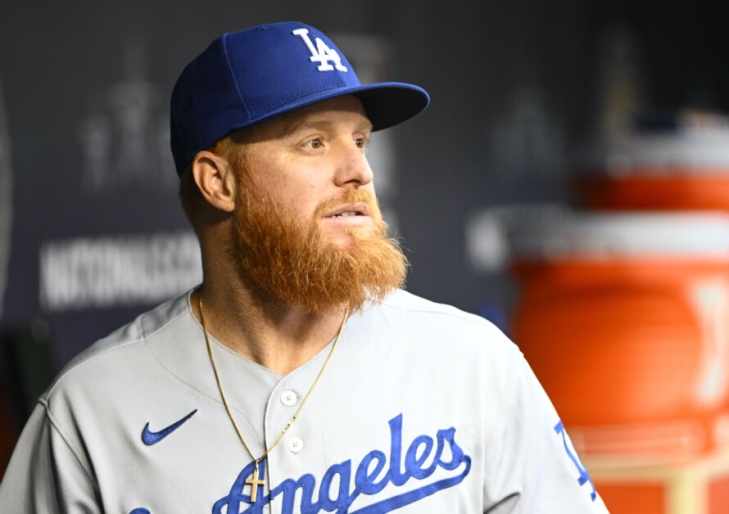
Can you imagine Justin Turner as anything other than a Los Angeles Dodger? He was, and it can also be argued that he was lucky to ever play in L.A., as Turner seemed to have two steps away from the diamond.
Turner first made the Majors in 2009 with Baltimore and would later spend time with the Mets, but he was not impressive for either team and was non-tendered in 2013, making him a Free Agent. He was signed by the Dodgers after starring in a Cal State Fullerton alumni Game, made the Los Angeles roster in 2014, and was set to erase his past performance.
In 2014, Turner seized an opportunity due to injuries and achieved an unexpected high performance, batting .340 over 109 games. He quickly became a key player, demonstrating that his improved swing mechanics were a reliable asset rather than a coincidence. By 2016, he reached a new level of individual recognition, hitting a career-high 27 home runs and placing ninth in MVP voting. He nearly matched this success in 2017, batting .322 with a .945 OPS and earning his first All-Star appearance.
Turner became a postseason legend, creating iconic moments in Chavez Ravine. In the 2017 NLCS, he hit a walk-off home run on Kirk Gibson’s anniversary, earning NLCS MVP. He provided leadership and clutch production that helped the Dodgers reach three World Series in four years, winning in 2020. During this run, he set franchise records in postseason hits, home runs, and RBIs, demonstrating mastery in high-stakes games.
Despite his status as the "Face of the Franchise" and his recent win of the Roberto Clemente Award, the organization chose not to exercise his $16 million option, favoring a younger, more flexible roster. Turner compiled 1,088 hits, 156 home runs, and a .296 batting average for the team.
32. Davey Lopes
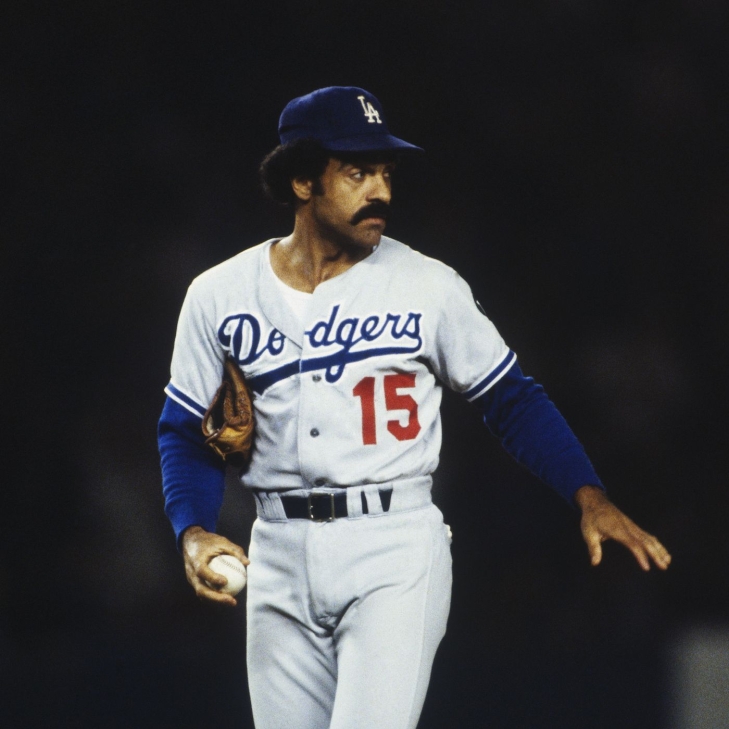
A 2nd-round draft pick, Davey Lopes made his Major League debut with Los Angeles in 1972 and won the starting job at Second Base the following year.
Lopes established dominance on the basepaths, winning back-to-back National League Stolen Base titles with 77 steals in 1975 and 63 in 1976. He set a major league record by successfully converting 38 consecutive stolen base attempts without being caught. As a leadoff hitter, he proved to be a formidable threat, capable of manufacturing a run immediately.
As the 70s went on, Lopes became even more powerful in his game. In 1979, he hit a career-high 28 home runs, tying with teammates Steve Garvey and Ron Cey for the team lead. He was a regular presence at the All-Star Game during that time, earning four straight selections from 1978 to 1981 and even receiving the Gold Glove Award in 1978. His time in Los Angeles reached a memorable peak in 1981, when he played a key role in helping the Dodgers win the World Series over the Yankees. His performance that season marked a fitting ending to his impressive ten-year journey with the team.
After the 1982 season, Lopes was traded to Oakland. With the Dodgers, Lopes batted .262 with 1,204 Hits and 418 Stolen Bases.
Lopes parlayed his leadership skills into a successful career as a Coach, winning a second World Series Ring with the Phillies in 2008.
