

 Not in Hall of Fame News
Afrika Bambaataa, the legendary DJ, producer, and widely recognized "Godfather" of hip-hop…
 Not in Hall of Fame News
Would you like to know what we love the most about the…
 Not in Hall of Fame News
1993 SEMI-FINAL RESULTS: Thank you for your participation in the Pro Football…
 Not in Hall of Fame News
Regular visitors of Notinhalloffame.com know that we are slowly working on the…
 Not in Hall of Fame News
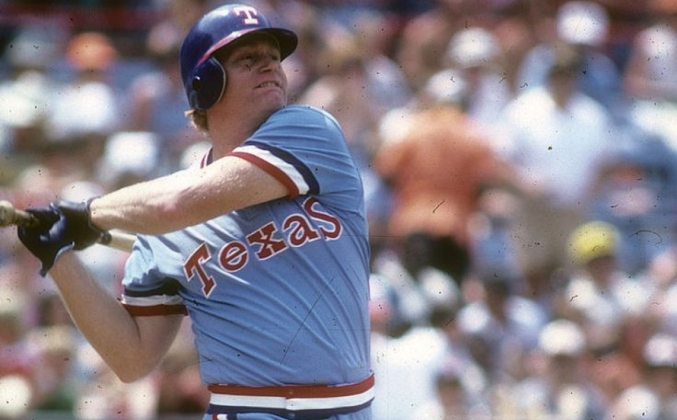
Last January, the Baseball Hall of Fame announced the Class of 2026,…
 Not in Hall of Fame News
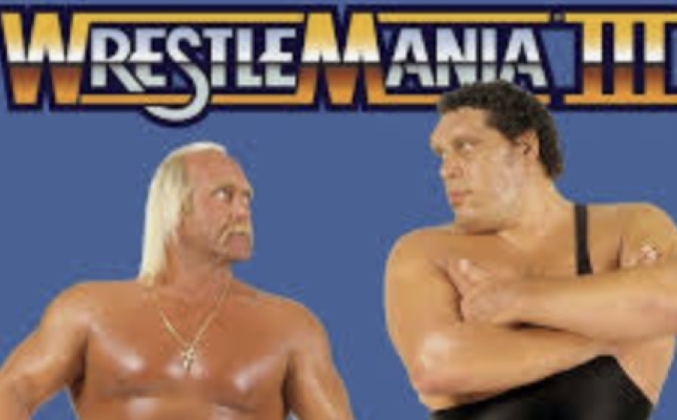
The WWE Hall of Fame announced that the Hulk Hogan vs Andre…
 The Buck Stops Here
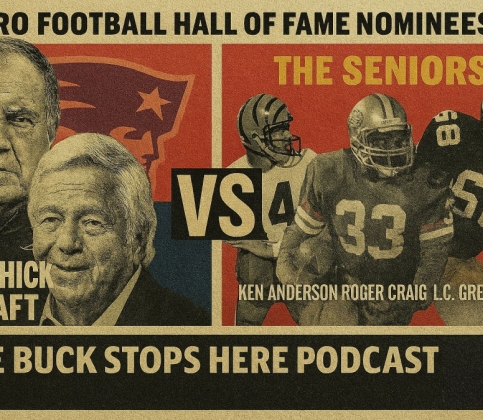
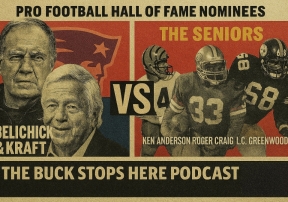
Bill Belichick & Robert Kraft vs. The Seniors: Analyzing the ProFootball Hall of Fame Class Nominees
The Pro Football Hall of Fame voting process is more complicated than…
 From the Desk of the Chairman
Recreational cannabis laws have changed how adults can buy cannabis in many…
 From the Desk of the Chairman
Synthetic turf has become an increasingly familiar surface in the sports world.…
 From the Desk of the Chairman
Athletic performance is shaped by discipline, training, and resilience, but motivation often…
 From the Desk of the Chairman
The first month of the MLB season always feels a bit unsettled.…
 From the Desk of the Chairman
Sports and regular physical activity are widely celebrated for building strength, improving…
 The Buck Stops Here
Bill Belichick & Robert Kraft vs. The Seniors: Analyzing the ProFootball Hall of Fame Class Nominees
The Pro Football Hall of Fame voting process is more…
100 Active Potential Football Hall of Famers
-
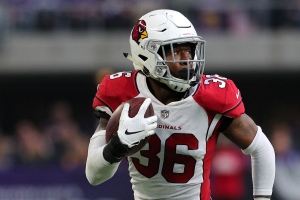 #28 Overall, Budda Baker, Arizona Cardinals, Free Safety, #1 Safety2024 Pre-Season Rank #43, 2023 Pre-Season Rank #78, 2022 Pre-Season Rank #86, 2021 Pre-Season Rank #113, 2020 Pre-Season Rank #147. Peak Period: 2020-24.…in Safeties
 -
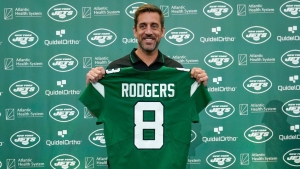 #1 Overall, Aaron Rodgers: Pittsburgh Steelers, #1 Quarterback2024 Pre-Season Rank #1, 2023 Pre-Season Rank #1, 2022 Pre-Season Rank #2, 2021 Pre-Season Rank #2, 2020 Pre-Season Rank #3. PEAK PERIOD: 2008-12.…in Quarterbacks
 -
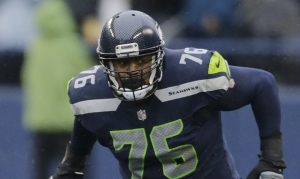 #60 Overall, Duane Brown, Free Agent, Offensive Tackle, #6 Offensive Lineman2024 Pre-Season Rank #54, 2023 Pre-Season Rank #86, 2022 Pre-Season Rank #90, 2021 Pre-Season Rank #95, 2020 Pre-Season Rank #122. Peak Period: 2011-15…
 -
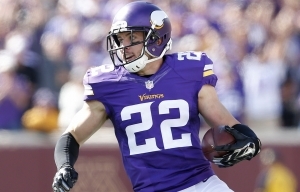 #38 Overall, Harrison Smith, Minnesota Vikings, Strong Safety, #2 Safety2024 Pre-Season Rank #50, 2023 Pre-Season Rank #72, 2022 Pre-Season Rank #79, 2021 Pre-Season Rank #90, 2020 Pre-Season Rank #72. Peak Period: 2015-19.…in Safeties
Visit the Fictitious Halls of Fame!

You May Also Like...
EDITOR’S CHOICE
 DDT's Pop Flies
When the veterans committee (VC), officially convening as the Contemporary Baseball Era…



 Live Music Head
Project/Objectan interview with André Cholmondeleyby Live Music HeadOriginally published at timessquare.com on…

LATEST RANKINGS


MOST POPULAR RANKINGS

Site Admin
12. Ed Macauley
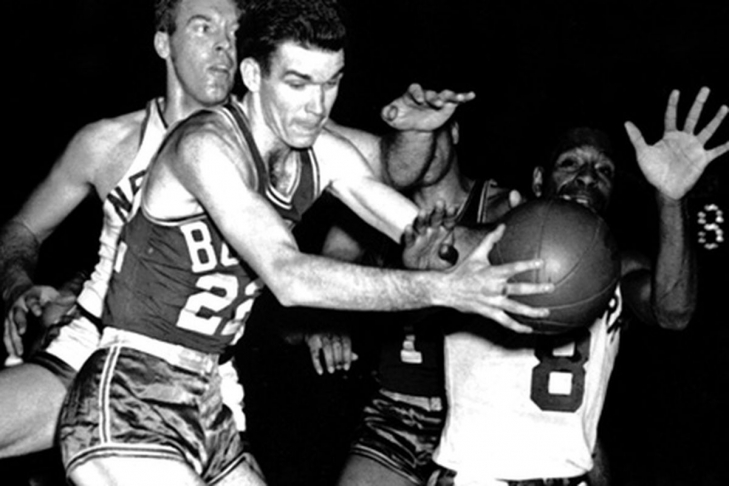
While this ranking might seem high considering that Ed Macauley did not win the NBA Championship with the Boston Celtics, this was a man who would become a Naismith Basketball Hall of Fame inductee primarily from what he did in Boston before they would become the franchise that we all know and (maybe) love.)
10. Dave Cowens
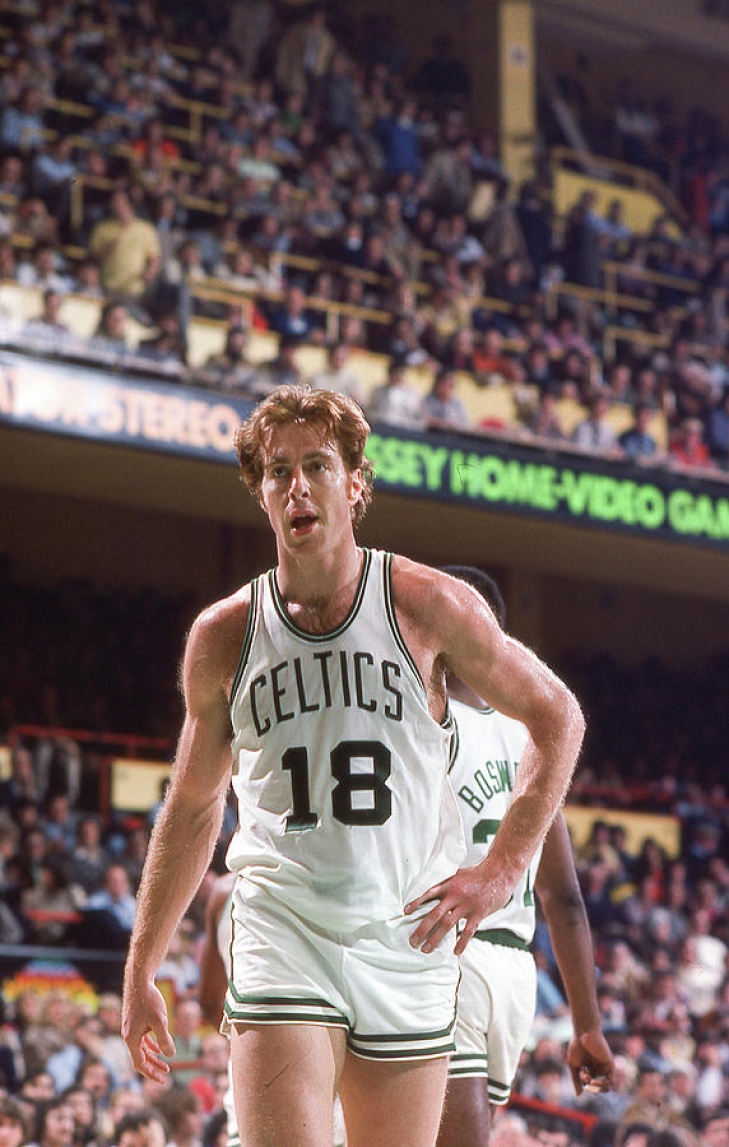
Dave Cowens stood at 6'9", which, while it is undoubtedly a tall frame, he played at Center, making him a little undersized for that position in the 1970s. Cowens made up for that with sheer determination, savvy, and every inch of his body to be one of the most complete players in the game, and this was showcased immediately, as he was the Rookie of the Year in 1970-71. Cowens would become a two-time NBA Champion with Boston in 1974 and 1976 and was a surprise MVP in 1973 (he was not a First Team All-Pro that year). An eight-time All-Star, Cowens holds the distinction of being one of the few players in NBA history to lead his team in all five major statistical categories (Points, Rebounds, Assists, Steals, and Blocks) in a season (1977-78). At the point of his retirement (he would come out of retirement and play with Milwaukee for half a season), he averaged 18.6 points and 14.0 Rebounds per Game.
9. Bill Sharman
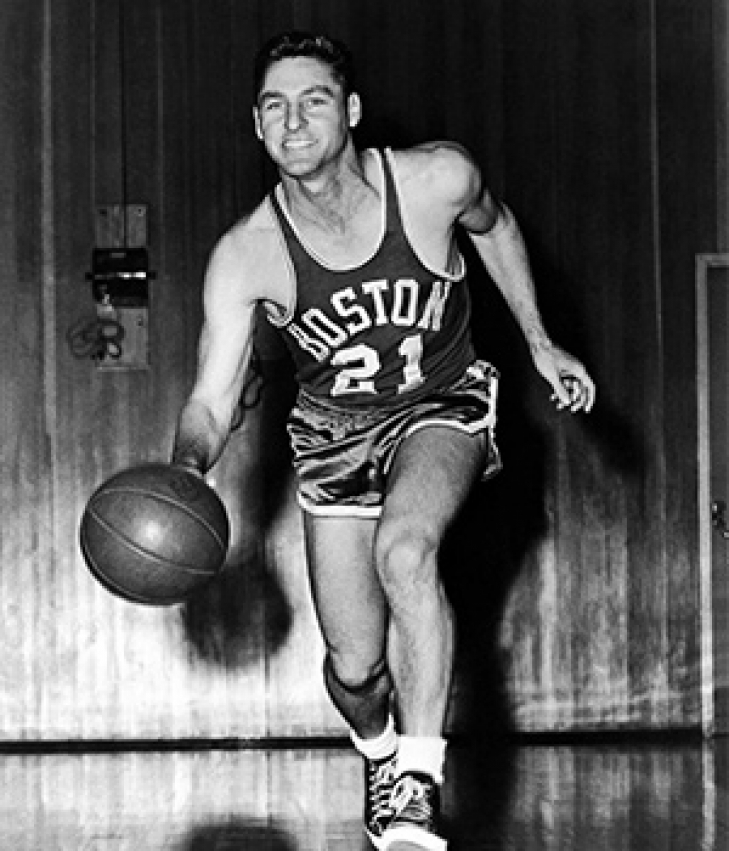
Bill Sharman's path to the Boston Celtics arrived when he was traded from the Fort Wayne Pistons, who acquired him in the dispersal draft of the Washington Cougars. It worked out well for Boston as Sharman entered his second year as a pro, and in his third season, he began an eight-year streak as an All-Star, including three First Team and four Second Team All-NBA Selections. Sharman, who would help the Celtics win four NBA Championships, would prove to be one of the most efficient shooters of his era and was in the top ten in Points per Game seven times and Field Goal Percentage six times. Sharman was deadly at the charity stripe as the Shooting Guard would lead the NBA in Free Throw Percentage seven seasons, which included a five-year consecutive streak from 1952-53 to 1956-57.
8. Sam Jones

Sam Jones played at North Carolina Central, not the University of North Carolina, so he was not highly recruited at the NBA level, but Red Auerbach took a chance on him after his scouts told him this was, in fact, the best player in the state. The gamble proved fruitful as the versatile Jones would prove to be one of the best clutch shooters of his era, so much so that he was nicknamed "Mr. Clutch."