

 Not in Hall of Fame News
Would you like to know what we love the most about the…
 Not in Hall of Fame News
1993 SEMI-FINAL RESULTS: Thank you for your participation in the Pro Football…
 Not in Hall of Fame News
Regular visitors of Notinhalloffame.com know that we are slowly working on the…
 Not in Hall of Fame News
Last January, the Baseball Hall of Fame announced the Class of 2026,…
 Not in Hall of Fame News
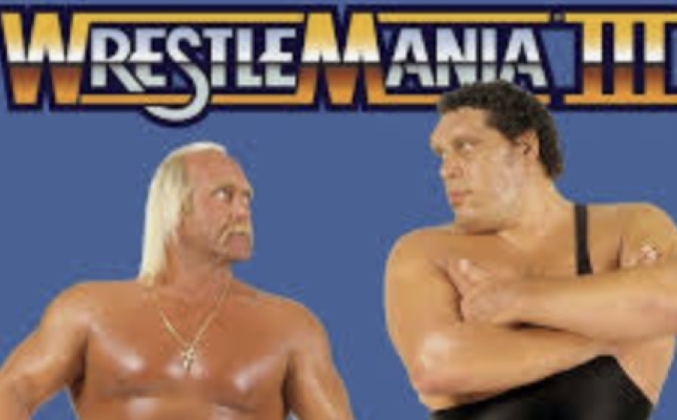
The WWE Hall of Fame announced that the Hulk Hogan vs Andre…
 Not in Hall of Fame News
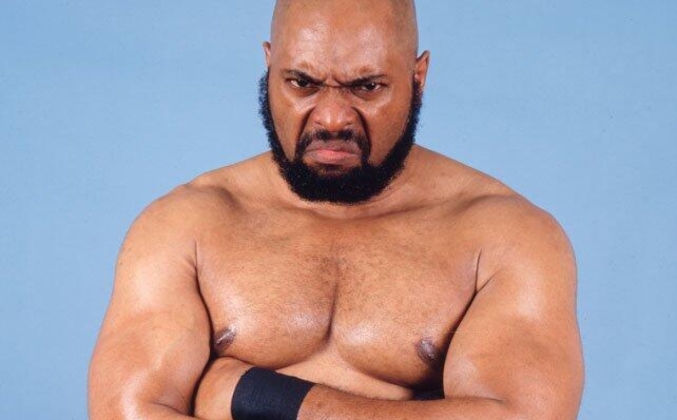
It was announced that Bad News Brown will be inducted into the…
 From the Desk of the Chairman
Recreational cannabis laws have changed how adults can buy cannabis in many…
 From the Desk of the Chairman
Synthetic turf has become an increasingly familiar surface in the sports world.…
 From the Desk of the Chairman
Athletic performance is shaped by discipline, training, and resilience, but motivation often…
 From the Desk of the Chairman
The first month of the MLB season always feels a bit unsettled.…
 From the Desk of the Chairman
Sports and regular physical activity are widely celebrated for building strength, improving…
 The Buck Stops Here
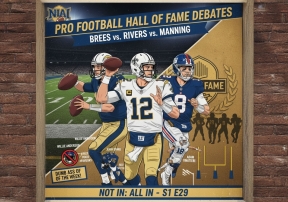
The wait is over! Join the NotInHallOfFame.com crew—Kirk Buchner, Evan Nolan, and…


100 Active Potential Football Hall of Famers
-
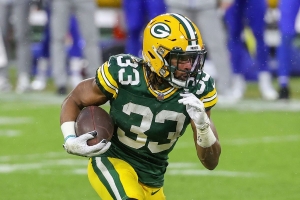 #99 Overall, Aaron Jones: Minnesota Vikings: #10 Running Back2024 Pre-Season Rank #110, 2023 Pre-Season Rank #115, 2022 Pre-Season Rank #122, 2021 Pre-Season Rank #127. Peak Period: 2019-20/22-24 The first season in…
 -
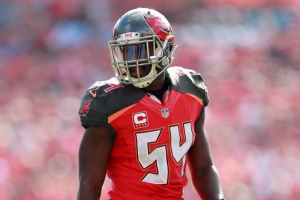 #35 Overall, Lavonte David, Tampa Bay Buccaneers Linebacker, #3 Defensive Lineman/Linebacker: Interior Lineman2024 Pre-Season Rank #2023 Pre-Season Rank: #53, 2022 Pre-Season Rank #63, 2021 Pre-Season Rank #83, 2020 Pre-Season Rank #94. Peak Period: 2012-16 We…
 -
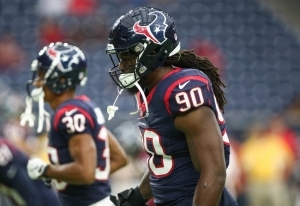 #86 Overall, Jedeveon Clowney, Free Agent, Defensive End, #19 Defensive Linemann/Linebackers: Pass Rushers2024 Pre-Season Rank #92,2023 Pre-Season Rank #89, 2022 Pre-Season Rank #87, 2021 Pre-Season Rank #89, 2020 Pre-Season Rank #85. Peak Period: 2015-19.More of a…
 -
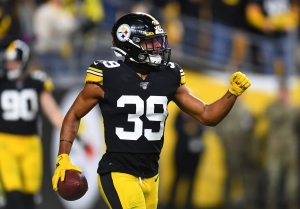 #43 Overall, Minkah Fitzpatrick, Pittsburgh Steelers, Free Safety, #3 Safety2024 Pre-Season Rank #56, 2023 Pre-Season Rank #63, 2022 Pre-Season Rank #99, 2021 Pre-Season Rank #108, 2020 Pre-Season Rank #140. Peak Period 2019-23.…in Safeties
Visit the Fictitious Halls of Fame!

You May Also Like...
EDITOR’S CHOICE
 DDT's Pop Flies
When the veterans committee (VC), officially convening as the Contemporary Baseball Era…



 Live Music Head
Project/Objectan interview with André Cholmondeleyby Live Music HeadOriginally published at timessquare.com on…
LATEST RANKINGS


MOST POPULAR RANKINGS


Site Admin
42. Larry Gardner
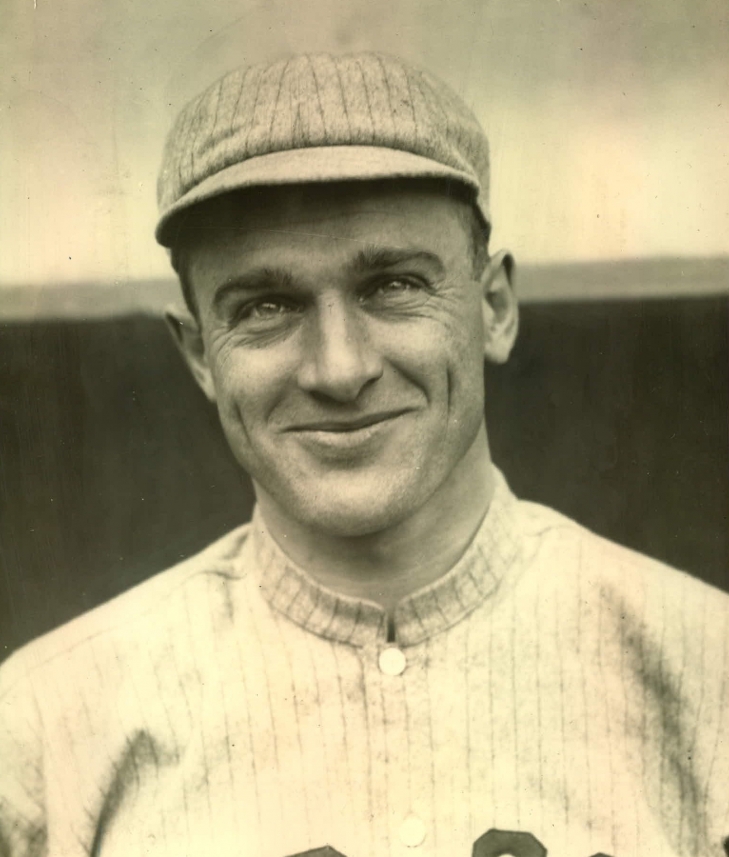
Larry Gardner arrived in Boston in 1908 as a lost kid from the green hills of Vermont, but he quickly became a foundational piece of a powerhouse. By 1910, he had earned his spot as the starting second baseman, but it was his move to the hot corner in 1911 that defined his legacy. Gardner wasn't just a third baseman; he was a tactical defender whose prowess in fielding bunts drew comparisons to the legendary Jimmy Collins. In an era where small ball was king, Gardner’s glove was a high-leverage weapon that protected thin leads and stifled rallies.
The 1912 season remains Gardner's best year in a Red Sox uniform. He batted .315 and led the team with 86 RBIs, but it was his October heroics that etched his name in Fenway lore. Despite playing with a broken finger on his throwing hand, he delivered the Series-winning sacrifice fly in the 10th inning of Game 8 against the New York Giants. That moment, scoring Steve Yerkes off the great Christy Mathewson, remains one of the most clutch performances in the history of the Fall Classic.
As the decade progressed, Gardner remained the steady pulse of the "Impossible Dream" of the 1910s. He was a central figure in the 1915 and 1916 championships, proving his rare power surge in the 1916 Series. Facing the Brooklyn Robins, he launched two home runs—including a dramatic three-run inside-the-parker—matching his entire regular-season home run total in just five games. This ability to elevate his game when the stakes were highest made him an indispensable figure for the club's first golden age.
Though he was traded to Philadelphia after the 1917 season, Gardner’s impact on Boston was indelible. He left the franchise with 1,106 hits, a .282 average, and three rings. He would eventually win a fourth title with Cleveland, but his heart remained tied to the Northeast, where he eventually returned to coach at his alma mater, the University of Vermont. Inducted into the Red Sox Hall of Fame in 2000, Gardner is remembered as the "Vermont Marvel”, a player whose career was defined by winning, stability, and the ability to come through when the city of Boston needed him most.
50. Pete Runnels
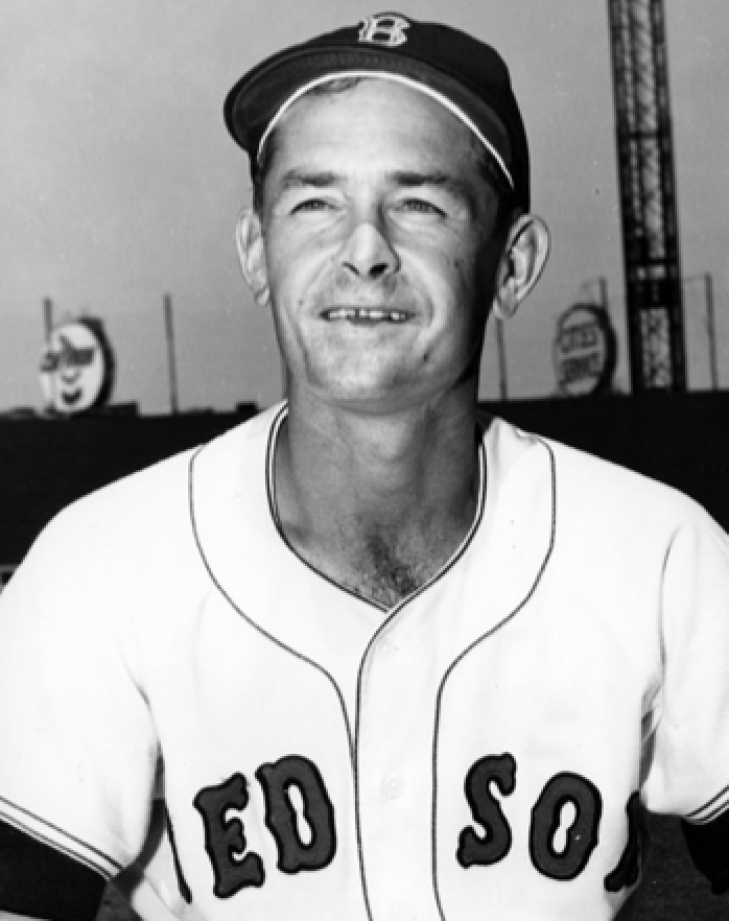
When Pete Runnels arrived in Boston in 1958, he was a versatile infielder who had struggled to find his offensive ceiling in the cavernous Griffith Stadium in Washington. He brought a "swing at everything" mentality to the Fens, but his arrival coincided with a life-changing apprenticeship. Under the tutelage of Ted Williams, Runnels abandoned his pull-heavy approach and began treating the Green Monster like a magnet. He didn't just find his plate discipline; he found a home for his line drives.
His five-year run in Boston was a clinic in pure hitting. Runnels didn't just flirt with the .300 mark—he lived well above it, never batting below .314 during his entire Red Sox tenure. He became a fixture at the top of the American League leaderboard, finishing in the top three for batting average in four of his five seasons. The climax of this evolution came in 1960 and 1962, when he captured two American League Batting Titles. His 1960 crown was a testament to his grit; playing through the agonizing pain of stomach ulcers, he refused to sit out the stretch run, famously telling his manager he wanted to "win this thing the right way."
Beyond the bat, Runnels provided the Red Sox with a defensive safety net. He was the rare player who could lead the league in fielding percentage at second base one year (1960) and at first base the next (1961). He was the steady hand on a team that was often searching for its identity in the post-Williams era.
The final chapter arrived after the 1962 season when, at Runnels' own request to be closer to his Texas roots, the Red Sox traded their reigning batting champion to the expansion Houston Colt .45s. It was a rare "mercy trade" by owner Tom Yawkey, and it proved to be a perfectly timed exit for Boston. Once away from the friendly confines of Fenway, Runnels’ production plummeted, and he was out of the game within two years. He left Boston with a sterling .320 average and a legacy of professional excellence that was finally immortalized in the Red Sox Hall of Fame in 2004. He arrived as a raw talent and left as a two-time champion of the box score.
46. Jackie Jensen
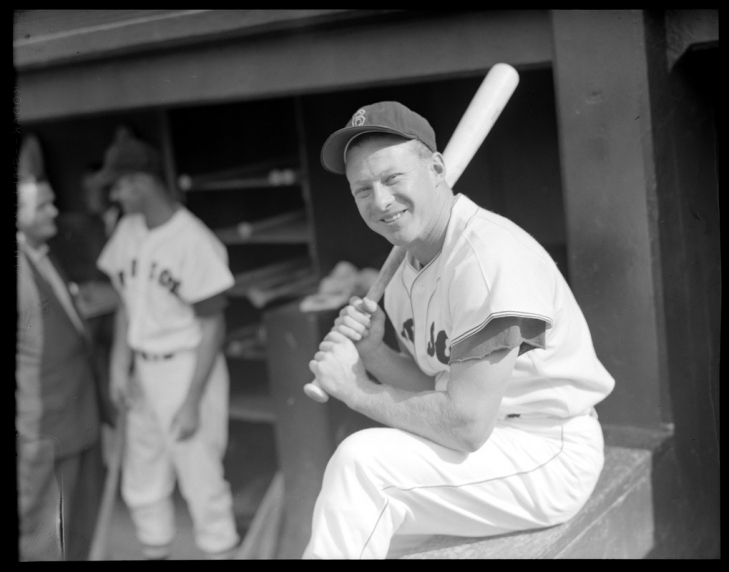
Before he ever stepped into the batter’s box at Fenway Park, Jackie Jensen was already a myth. He arrived in Boston in 1954 via trade from the Senators, carrying a resume that sounded like a tall tale: the first man to play in a Rose Bowl, a World Series, and an MLB All-Star Game. But while his athleticism was legendary, it was in a Red Sox uniform that he finally channeled that raw talent into sustained, elite dominance.
From the moment he arrived, Jensen became the engine of the Boston offense. For six consecutive seasons, he was the model of run-producing consistency, never dipping below 20 home runs and driving in at least 100 runs in five of those years. He didn't just participate in the American League leaderboards; he owned them, leading the league in RBIs three separate times. The pinnacle of this "Golden Boy" era came in 1958, an MVP campaign where he reached career highs in home runs (35) and OPS (.931), proving he was the premier run-producer in the junior circuit.
However, the story of Jensen’s run with the team is also one of internal conflict. At the height of his powers in 1959, coming off another RBI title, he stunned the baseball world by walking away. Driven by a deep desire to be with his family in California and an intensifying, paralyzing fear of flying, he chose peace over the diamond.
He attempted a brief, one-year comeback in 1961, but the "Golden Boy" couldn't outrun the anxiety of the travel schedule. He retired for good that year, leaving behind a stat line—170 home runs and a .282 average—that suggested he had so much more left to give. It took decades for the franchise to fully recognize the weight of his contributions, finally inducting him into the Red Sox Hall of Fame in 2000. He remains one of the great "what-ifs" in Boston history: a man who conquered every sport he touched, only to be grounded by the very skies that carried him to greatness.
43. Josh Beckett
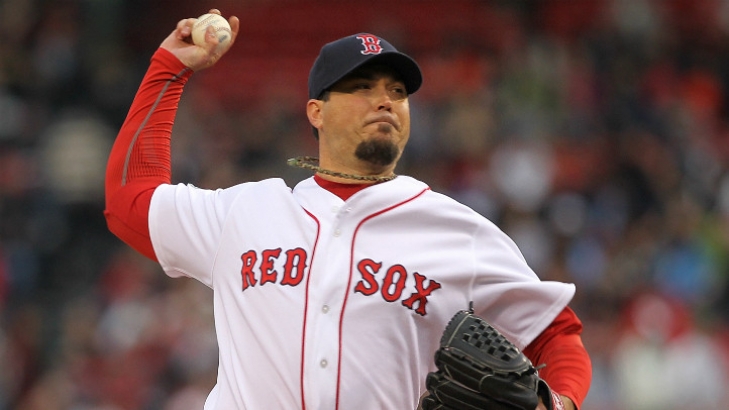
Josh Beckett arrived in Boston in 2006 with a reputation already carved in pinstriped stone. As a 23-year-old with the Marlins, he had famously walked into Yankee Stadium and shut out the Bronx Bombers to clinch a title, a moment of pure intimidation. When he joined the Red Sox as the centerpiece of a blockbuster trade, Boston didn't just get a pitcher; they got a firebrand who lived for the highest possible stakes. After a turbulent first year adjusting to the American League, Beckett found his rhythm in 2007, and the league had no answer for him.
That 2007 season was Beckett’s apex. He stormed through the summer to a 20–7 record, becoming the first Red Sox pitcher to reach the 20-win plateau in nearly a decade. He finished as the runner-up for the Cy Young Award, but his true value was revealed in the postseason. Faced with a 3-games-to-1 deficit against Cleveland in the ALCS, Beckett took the mound in Game 5 and delivered a cold-blooded performance, striking out 11 over eight innings to save the season. He was named the ALCS MVP, having essentially willed the Red Sox back to the World Series.
Beckett’s efficiency during that October run was legendary: he went 4–0 with a 1.20 ERA, striking out 35 batters while walking only two. He was simply unhittable when it mattered most. He would go on to earn two more All-Star nods in Boston (2009 and 2011), continuing to anchor the rotation with a blend of power and precision. Even in 2011, he posted a stellar 2.89 ERA, proving that when his mechanics were locked in, he remained one of the most difficult puzzles for hitters to solve.
Though his tenure in Boston ended with a trade to the Dodgers in 2012, Beckett’s legacy is secured by the hardware he brought to Fenway. He left the club with an 89–58 record and 1,108 strikeouts, but his impact is best measured in the silence he forced upon opposing crowds in October. He was the quintessential big-game hunter, a pitcher who didn't just participate in championship runs; he dictated them.