

 Not in Hall of Fame News
Would you like to know what we love the most about the…
 Not in Hall of Fame News
1993 SEMI-FINAL RESULTS: Thank you for your participation in the Pro Football…
 Not in Hall of Fame News
Regular visitors of Notinhalloffame.com know that we are slowly working on the…
 Not in Hall of Fame News
Last January, the Baseball Hall of Fame announced the Class of 2026,…
 Not in Hall of Fame News
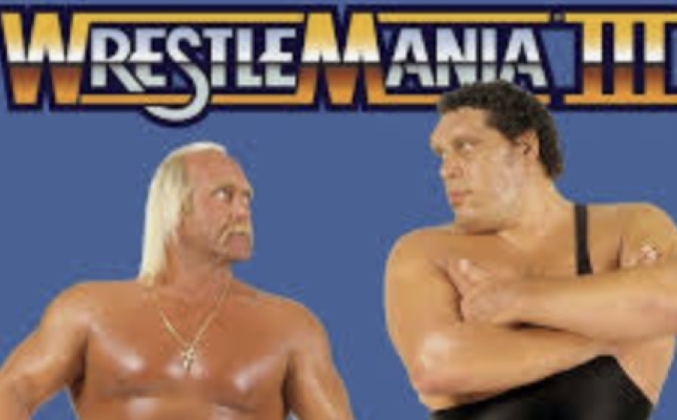
The WWE Hall of Fame announced that the Hulk Hogan vs Andre…
 Not in Hall of Fame News
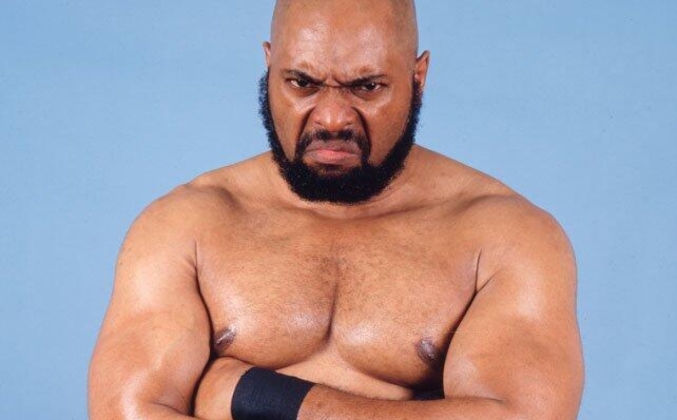
It was announced that Bad News Brown will be inducted into the…
 From the Desk of the Chairman
Recreational cannabis laws have changed how adults can buy cannabis in many…
 From the Desk of the Chairman
Synthetic turf has become an increasingly familiar surface in the sports world.…
 From the Desk of the Chairman
Athletic performance is shaped by discipline, training, and resilience, but motivation often…
 From the Desk of the Chairman
The first month of the MLB season always feels a bit unsettled.…
 From the Desk of the Chairman
Sports and regular physical activity are widely celebrated for building strength, improving…
 The Buck Stops Here
The wait is over! Join the NotInHallOfFame.com crew—Kirk Buchner, Evan Nolan, and…


100 Active Potential Football Hall of Famers
-
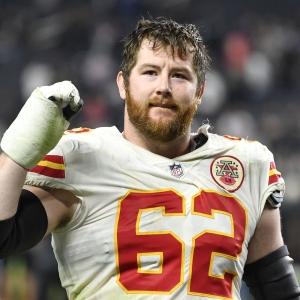 #64 Overall, Joe Thuney, Chicago Bears, Left Guard, #8 Offensive Lineman2024 Pre-Season Rank #75, 2023 Pre-Season Rank #120, 2022 Pre-Season Rank: #140. Peak Period: 2020-24 Joe Thuney is finally getting his due as…
 -
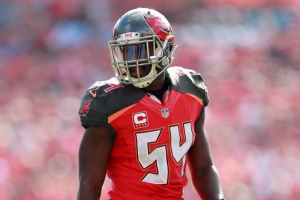 #35 Overall, Lavonte David, Tampa Bay Buccaneers Linebacker, #3 Defensive Lineman/Linebacker: Interior Lineman2024 Pre-Season Rank #2023 Pre-Season Rank: #53, 2022 Pre-Season Rank #63, 2021 Pre-Season Rank #83, 2020 Pre-Season Rank #94. Peak Period: 2012-16 We…
 -
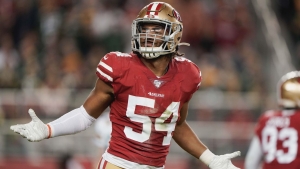 #22 Overall, Fred Warner, San Francisco 49ers Linebacker, #2 Defensive Lineman/Linebacker: Interior Lineman2024 Pre-Season Rank #49, 2023 Pre-Season Rank #79, 2022 Pre-Season Rank #118, 2021 Pre-Season Rank #142. Peak Period: 2020-24 When you face the…
 -
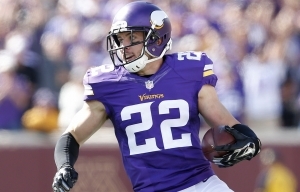 #38 Overall, Harrison Smith, Minnesota Vikings, Strong Safety, #2 Safety2024 Pre-Season Rank #50, 2023 Pre-Season Rank #72, 2022 Pre-Season Rank #79, 2021 Pre-Season Rank #90, 2020 Pre-Season Rank #72. Peak Period: 2015-19.…in Safeties
Visit the Fictitious Halls of Fame!


You May Also Like...
EDITOR’S CHOICE
 DDT's Pop Flies
When the veterans committee (VC), officially convening as the Contemporary Baseball Era…



 Live Music Head
Project/Objectan interview with André Cholmondeleyby Live Music HeadOriginally published at timessquare.com on…
LATEST RANKINGS


MOST POPULAR RANKINGS

Site Admin
23. Harry Hooper
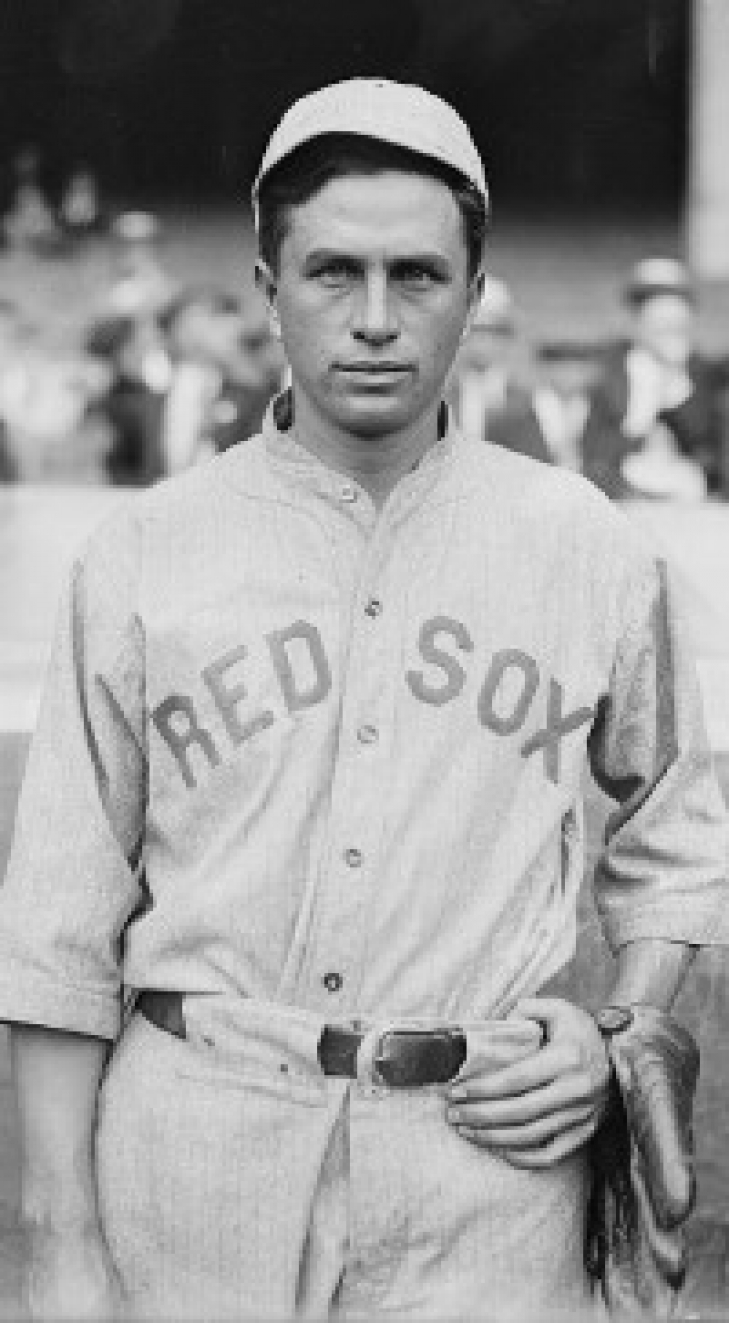
Harry Hooper debuted for the Red Sox in 1909 and quickly became the defensive heartbeat of the most legendary outfield in baseball history. Alongside Tris Speaker and Duffy Lewis, Hooper formed the "Million-Dollar Outfield," a trio whose collective range and intelligence redefined how the game was played in the early 20th century. While he was a model of consistency at the plate, it was his legendary glove and his revolutionary "rump-slide" catch that made him a centerpiece of the Red Sox dynasty.
Hooper’s value to the Red Sox was rooted in his dominance as a leadoff man and defensive specialist. Over his 12 seasons in Boston, he amassed 1,707 hits and set franchise records that still stand today, including 130 triples and 300 stolen bases. On May 30, 1913, he achieved a feat that wouldn't be matched for 80 years: hitting a leadoff home run in both games of a doubleheader. This ability to ignite the offense from the first pitch made him the ideal table-setter for the Deadball Era.
Nowhere was Hooper’s impact more apparent than in the World Series. He was a four-time World Champion with the Red Sox, consistently raising his game when the stakes were highest. In the 1915 World Series against the Phillies, Hooper became the first player in history to hit two home runs in a single World Series game (the decisive Game 5), including the game-winner that clinched the title. His .293 average over 24 World Series games proves he was a high-leverage outlier during the team’s most successful decade in its long history.
Though he was eventually traded to the Chicago White Sox in 1921, Hooper’s legacy remained firmly planted in Boston. He was the first Red Sox player to ever take an at-bat at the opening of Fenway Park in 1912, and he remains the franchise leader in many of the game's "hustle" categories. Recognizing his defensive mastery—including a major-league record for double plays and assists by a right fielder—the Veterans Committee inducted him into the Baseball Hall of Fame in 1971.
29. Tex Hughson
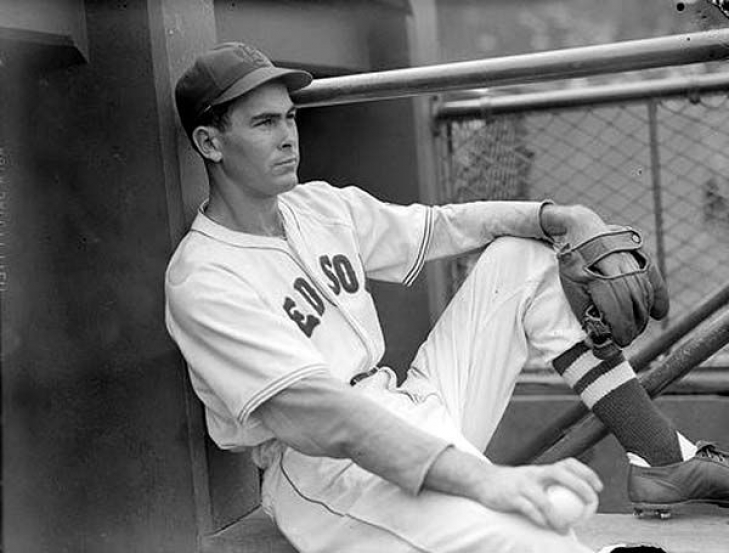
Cecil "Tex" Hughson arrived in Boston in 1941 and quickly established himself as the workhorse of the Red Sox rotation. By 1942, he authored a strong finish via traditional means, leading the American League in Wins (22), Complete Games (22), Innings Pitched (281), and Strikeouts (113). This rare "quadruple crown" of volume and performance earned him an All-Star nod and a sixth-place finish in the MVP voting, which confirmed his status as an elite arm.
While 1942 was his most famous year, his 1944 campaign was statistically his most efficient. Hughson posted a career-low 2.26 ERA and led the league in FIP (2.33), WHIP (1.048), and SO/BB (2.73). He was a surgical technician on the mound, utilizing a heavy sinker and impeccable control to stifle hitters. Like many of his peers, he sacrificed a year of his prime to military service in 1945, but he returned in 1946 to win 20 games and lead the Red Sox to their first pennant in nearly thirty years.
Hughson’s impact was vital to the Red Sox's post-war resurgence. He was the staff ace for the 1946 squad, pitching 14 high-leverage innings in the World Series against the Cardinals. However, the heavy workload of the early 40s—including those 22 complete games in a single season—eventually took its toll. Arm and shoulder trouble hampered his effectiveness in the late 1940s, forcing an early retirement after only eight seasons, all spent in a Boston uniform.
Hughson retired with a stellar 96–54 record and a reputation as one of the finest "Lifer" pitchers in franchise history. Despite a career shortened by injury, his peak dominance was so concentrated that the Red Sox inducted him into the Red Sox Hall of Fame in 2002.
25. Rico Petrocelli
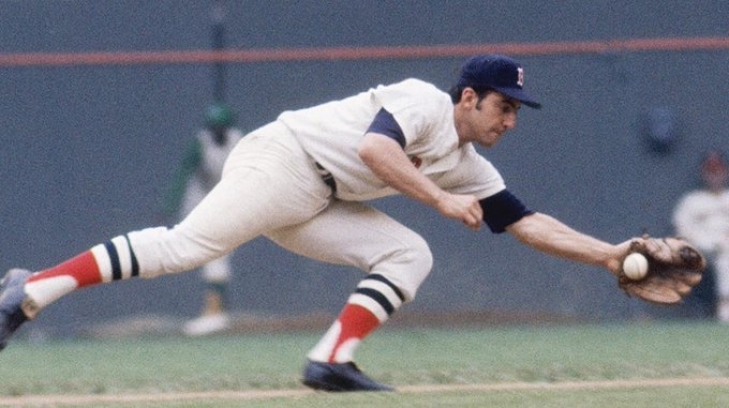
After a brief debut in 1963 and a final polish in Triple-A, he became the bedrock of the Boston infield in 1965. While he was initially known for his steady glove, Petrocelli evolved into the most dangerous offensive shortstop of his era. By the "Impossible Dream" season of 1967, he was an All-Star and a defensive wizard, finishing in the top six for defensive bWAR for four consecutive seasons (1966–1969).
The 1969 campaign stands as one of the greatest individual seasons in franchise history. Petrocelli shattered the expectations for his position, launching 40 home runs—a record for American League shortstops that would stand for decades. His batting efficiency was staggering: he batted .297 with a .403 OBP and led all Major League position players with a 10.0 bWAR.
Petrocelli’s versatility was highlighted by his seamless transition to third base in 1971 to accommodate the arrival of Luis Aparicio. Rather than decline, Rico mastered the "hot corner," leading the league in fielding percentage and continuing to provide double-digit home run power. A Red Sox mainstay, he appeared in two World Series (1967 and 1975), notably hitting two home runs in the '67 Fall Classic. He remained a productive force until his retirement in 1976, finishing his Red Sox journey with 1,352 hits and 210 home runs.
He was Inducted into the Red Sox Hall of Fame in 1997.
26. Johnny Pesky
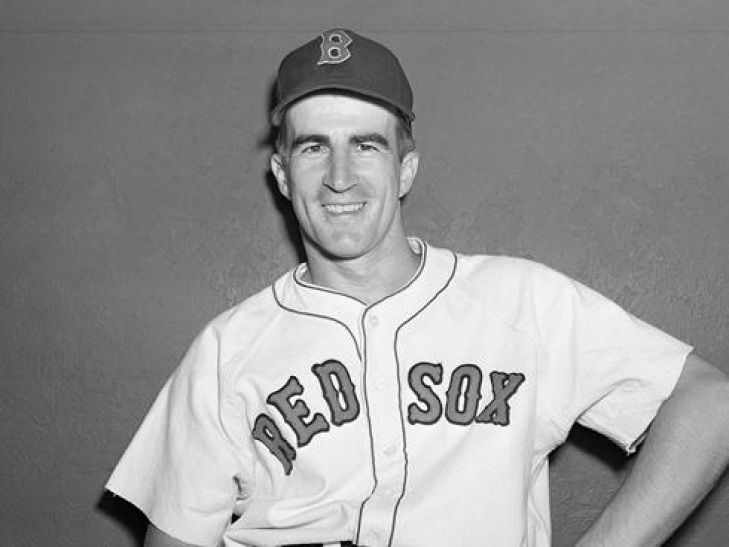
Johnny Pesky authored what many consider the greatest rookie season in Red Sox history. Debuting in 1942 as the starting shortstop, he immediately dismantled American League pitching, leading the league with 205 hits and batting a blistering .331. He finished third in the MVP voting, a peer comparison marker that signaled the arrival of a generational table-setter. However, like so many of his era, Pesky sacrificed his physical prime to military service, missing the next three seasons (1943–1945) due to World War II.
When Pesky returned in 1946, he picked up exactly where he left off, leading the AL in hits in both 1946 (208) and 1947 (207). This made him the first player in MLB history to record 200+ hits in each of his first three seasons. During this stretch, he was the primary catalyst for the 1946 pennant-winning team, batting .313 and posting a massive .401 career On-Base Percentage in a Red Sox uniform.
Pesky’s identity eventually transcended his playing days. Though he was traded to Detroit in 1952 as his production began to wane, he returned to the organization to serve as a manager, coach, and goodwill ambassador for over 60 years. It is estimated that his three-year military absence likely cost him upwards of 600 hits, which would have easily pushed his Boston total past the 2,000-hit threshold. Despite the lost time, his impact was so profound that the Red Sox retired his Number 6 in 2008, an honor usually reserved for Hall of Famers.
He left Boston with 1,277 hits and a reputation as the most beloved figure in the clubhouse. Inducted into the Red Sox Hall of Fame in 1995.