

 Not in Hall of Fame News
Would you like to know what we love the most about the…
 Not in Hall of Fame News
1993 SEMI-FINAL RESULTS: Thank you for your participation in the Pro Football…
 Not in Hall of Fame News
Regular visitors of Notinhalloffame.com know that we are slowly working on the…
 Not in Hall of Fame News
Last January, the Baseball Hall of Fame announced the Class of 2026,…
 Not in Hall of Fame News
The WWE Hall of Fame announced that the Hulk Hogan vs Andre…
 Not in Hall of Fame News
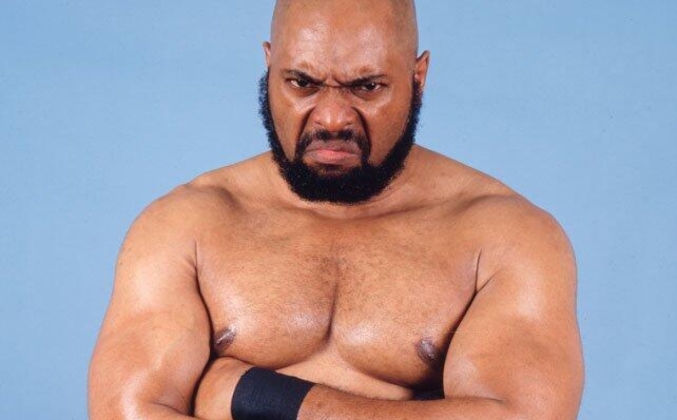
It was announced that Bad News Brown will be inducted into the…
 From the Desk of the Chairman
Synthetic turf has become an increasingly familiar surface in the sports world.…
 From the Desk of the Chairman
Athletic performance is shaped by discipline, training, and resilience, but motivation often…
 From the Desk of the Chairman
The first month of the MLB season always feels a bit unsettled.…
 From the Desk of the Chairman
Sports and regular physical activity are widely celebrated for building strength, improving…
 The Buck Stops Here
The wait is over! Join the NotInHallOfFame.com crew—Kirk Buchner, Evan Nolan, and…
 The Buck Stops Here
Join Kirk Buchner and Evan Nolan from NotInHallOfFame.com for a special roundtable…






100 Active Potential Football Hall of Famers
-
 #59 Overall, CeeDee Lamb, Dallas Cowboys, #12 Wide Receiver2024 Pre-Season Rank #75, 2023: Pre-Season Rank #148. Peak Period: 2020-24 CeeDee Lamb has been the top weapon for the Dallas Cowboys over…
 -
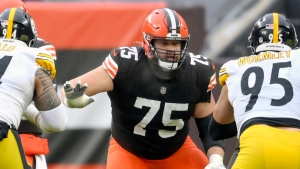 #36 Overall, Joel Bitonio, Cleveland Browns, Left Guard, #5 Offensive Lineman2024 Pre-Season Rank #46, 2023 Pre-Season Rank #60, 2022 Pre-Season Rank #91, 2021 Pre-Season Rank #143. Peak Period: 2018-22 Bitonio is now on…
 -
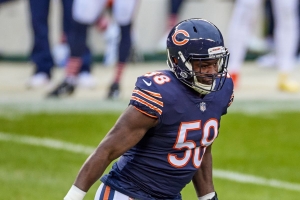 #39 Overall, Roquan Smith, Baltimore Ravens Linebacker, #4 Defensive Lineman/Linebacker: Interior Lineman2024 Pre-Season Rank #62, 2023 Pre-Season Rank #92, 2022 Pre-Season Rank #133, 2021 Pre-Season Rank #146. Peak Period: 2020-24 Smith was a Second-Team…
 -
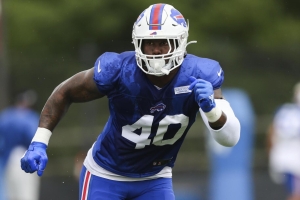 #6 Overall, Von Miller, Washington Commanders, #1 Defensive Lineman/Linebackers: Pass Rushers2024 Pre-Season Rank #7, 2023 Pre-Season Rank #4, 2022 Pre-Season Rank #7, 2021 Pre-Season Rank #8, 2020 Pre-Season Rank #10. Peak Period: 2011-12/2014-16.As…
Visit the Fictitious Halls of Fame!


You May Also Like...
EDITOR’S CHOICE
 DDT's Pop Flies
When the veterans committee (VC), officially convening as the Contemporary Baseball Era…



 Live Music Head
Project/Objectan interview with André Cholmondeleyby Live Music HeadOriginally published at timessquare.com on…

LATEST RANKINGS



MOST POPULAR RANKINGS











Site Admin
Ales Hemsky

From the Czech Republic, Ales Hemsky played in 845 Regular Season Games in the NHL, mostly with the Edmonton Oilers. The Right Wing was in Northern Alberta for roughly three quarters of his NHL career, and he would have three 65 Point plus years for the Oilers.
33. Gerrit Cole

Gerrit Cole joined the Houston organization in January 2018 via a blockbuster trade with the Pittsburgh Pirates, a move that sent four players—including Joe Musgrove and Colin Moran to the National League. While Cole was a former All-Star in Pittsburgh, he arrived in the Space City with a reputation as a talent waiting to be fully unlocked. For two historic seasons in a Houston uniform, he transitioned from a solid starter into a tactical nightmare for hitters, proving that a high-velocity arm paired with modernized pitch sequencing could dominate.
Upon his arrival in 2018, he demonstrated a specialized ability to miss bats at a historic rate, leading the American League in strikeouts per nine innings (12.4). He surged to a 15-5 record and a 2.88 ERA in his debut year, finishing fifth in the Cy Young voting and providing the high-frequency production needed to push the Astros back to the ALCS. This period of rapid growth served as the essential lead-in to his 2019 campaign, showing that when a pitcher pairs a triple-digit heater with an elite spin rate, he can become a foundational force that alters the geometry of the strike zone.
Cole’s journey reached a historic peak of efficiency and outlier value during the 2019 season. That summer, he evolved into a statistical titan, leading the American League in ERA (2.50), strikeouts (326), and ERA+ (186). He demonstrated a specialized ability to carry a workload in the modern game, recording a 20-5 record and a microscopic 0.895 WHIP. He showed the organization that he was a big-game performer by navigating the 2019 postseason with a 4-1 record and a 1.72 ERA, nearly single-handedly propelling the club to within one game of a second World Series title. Though he narrowly finished as the runner-up to teammate Justin Verlander for the Cy Young Award, his season remains a benchmark for single-season greatness in the 21st century.
He departed following the 2019 World Series, as Cole signed a landmark nine-year contract with the New York Yankees. In Houston, Cole compiled a 35-10 record, 602 strikeouts, and a 2.68 ERA.
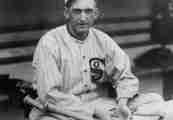
50. Buck Weaver
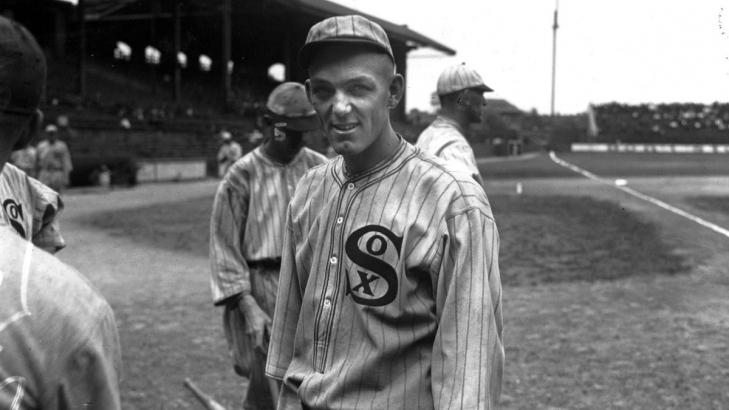
Arriving in the Chicago lineup in 1912, Buck Weaver rapidly established himself as a fixture of the infield. He arrived with a reputation for a relentless, aggressive style of play, transitioning from shortstop to third base, where his range and arm strength became a cornerstone of the club’s run prevention. He was a model of defensive reliability, never posting a negative defensive bWAR throughout his nine seasons and consistently shrinking the field for opposing hitters. He was the rare talent who understood the nuances of the "deadball" era, twice leading the American League in sacrifice hits and swiping 173 bases during his tenure.
The true magnitude of his value was on full display during the franchise's most successful stretch. Weaver was a primary catalyst for the 1917 World Series champions, providing the veteran poise and defensive stability that allowed the Pale Hose to capture the crown. His game reached a new level of sophistication by 1919; he had matured into a dangerous high-frequency hitter, and during the infamous World Series of that year, he was arguably the best player on the field. He recorded 11 hits and played flawless defense, a performance that remains the central piece of evidence for those who argue he never participated in the fix.
His presence was defined by a jovial, competitive nature that made him a favorite among both fans and peers. Weaver remained a standout through the 1920 campaign, authoring a career-high .331 batting average and accumulating over 1,300 hits before the legal and administrative storm broke over the club. Whether he was charging a bunt to cut down a runner or lacing a line drive into the gap, he competed with a visible joy that made his sudden exile all the more tragic. He proved that a player could anchor a championship team through a rare combination of grit, speed, and tactical intelligence.
His playing career reached a sudden, forced conclusion after the 1920 season. Despite his stellar play and his insistence that he had no part in the conspiracy, Commissioner Kenesaw Mountain Landis banned him for life for his "guilty knowledge" of the scandal. He left the organization as a statistical titan of the era, a man who spent his entire professional life in a White Sox uniform only to be cast out in his athletic prime.
With the White Sox, Weaver compiled 1,308 hits, 173 stolen bases, and 563 runs scored with a .272 batting average.
47. Jim Landis
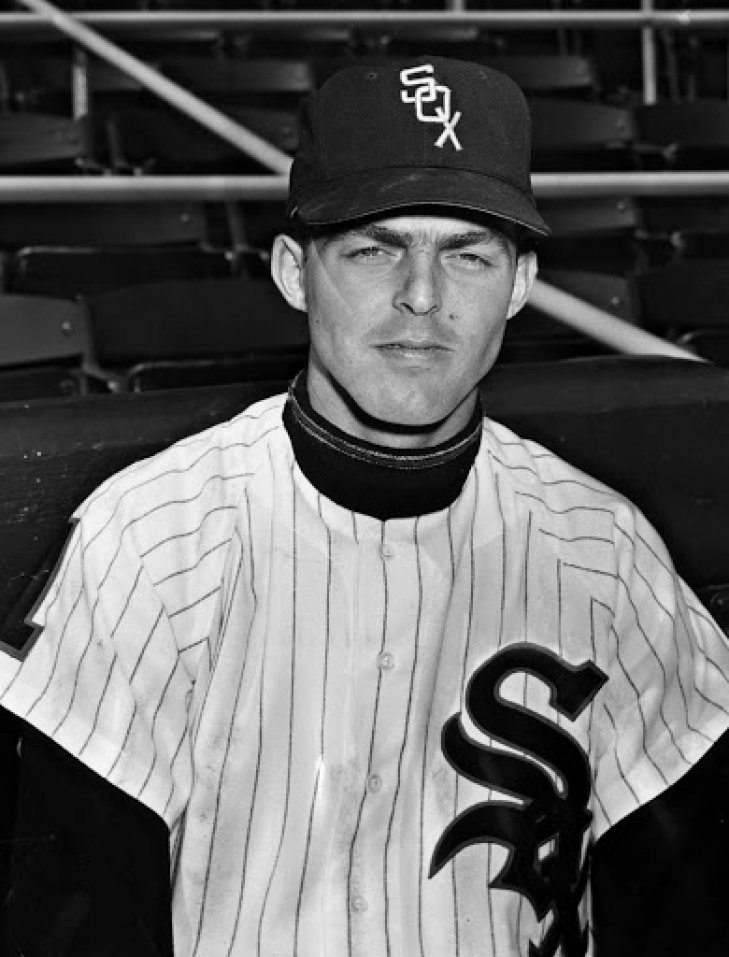
Landis emerged in the Chicago lineup in 1957 and matured into the premier defensive presence of the era by the following spring. He possessed a specialized ability to read the ball off the bat, a gift that allowed him to patrol the vast gaps of Comiskey Park with a grace that few could replicate. During the historic 1959 campaign, he became the engine of the "Go-Go" spirit, leading the American League with 25 Total Zone Runs while adding a dynamic spark to the offense with 140 hits and 20 stolen bases. He was the rare talent who could win a game with his legs in the eighth inning and save it with a diving catch in the ninth.
The most impressive aspect of his career was the iron-clad grip he held on the American League's defensive awards during the early 1960s. Landis authored a remarkable five-year run of Gold Glove excellence, securing the trophy annually from 1960 through 1964. He was a master of the "uncomfortable" out, a technician who shrank the field for opposing hitters and provided the White Sox pitching staff with a massive margin for error. His craftsmanship reached a peak in 1962, a season in which he was officially recognized as an All-Star and hit a career-high 15 home runs, proving that his game had matured into a well-rounded force.
In 1965, Landis was traded to the Kansas City Athletics. He left the organization having established himself as perhaps the finest defensive outfielder to ever wear the South Side pinstripes. With Chicago, Landis compiled 892 hits, 83 home runs, 127 stolen bases, and five Gold Glove Awards.