


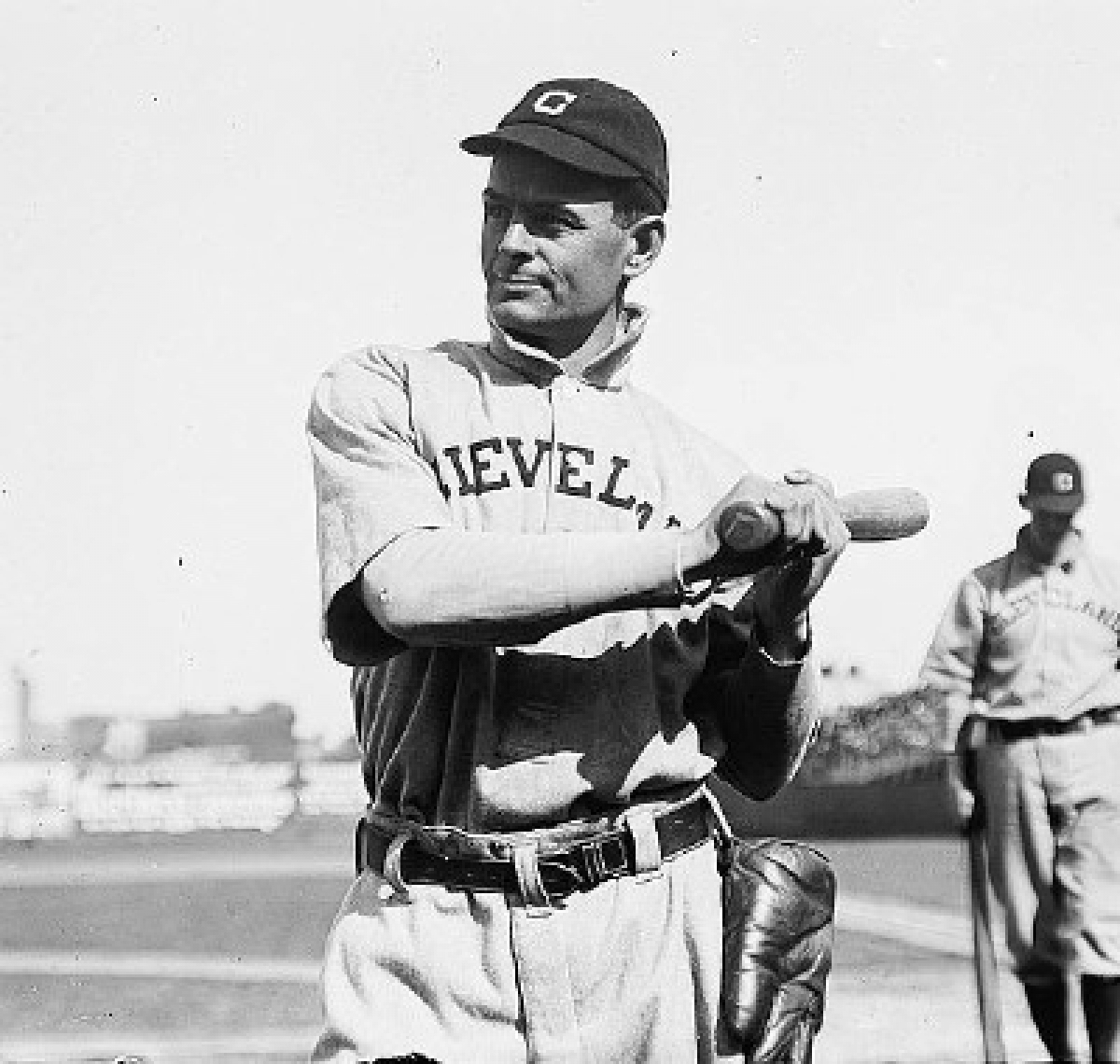
Flick’s path to Cleveland was forged in the chaos of the American League's birth. After jumping from the Phillies to the cross-town Athletics, a Pennsylvania injunction prohibited him from playing for any team within the state. To keep his career alive, he was sent to Cleveland alongside Lajoie in 1902—a move that secured the club's offensive identity for the next nine years. He emerged with a specialized, contact-heavy approach that relied on elite acceleration, maturing instantly into a premier leadoff threat. By 1905, he had reached a remarkable apex, capturing the American League Batting Title with a .308 average and proving that he was the most efficient table-setter in the Junior Circuit.
The most impressive aspect of his tenure was his total command of the most difficult hit in baseball. Flick was a master of the triples alley, authored by a historic three-year stretch from 1905 to 1907, where he led the American League in three-baggers annually. He wasn't just a threat to find the gaps; he was a tactical nightmare once he reached base, twice capturing the Stolen Base crown in 1904 and 1906. He was a model of specialized speed, serving as a high-frequency run producer who used his legs to pressure opposing batteries and turn routine singles into scoring opportunities.
Flick’s presence was defined by a quiet, professional resilience and a defensive grace that made him one of the premier right fielders of the early twentieth century. Flick remained the heart of the Cleveland outfield until 1910, navigating the era’s physical demands with a consistent, blue-collar approach that kept his career average at a near-elite .299 throughout his tenure. Whether he was manufacturing a run with a daring dash on the basepaths or lacing a line drive into the corner for another league-leading triple, he competed with a focused intensity that made him a central figure in the franchise’s formative years. He proved that a player could anchor a lineup through a rare combination of high-frequency contact and world-class velocity.
In 1910, health issues forced him to retire, but he left the organization as a statistical pillar of the deadball era. He departed with over 1,000 hits in a Cleveland uniform, having established a standard for speed and durability that few contemporaries could match.
With the Indians, Flick compiled 1,058 hits, 75 triples, and 188 stolen bases while maintaining a .299 batting average.. In 1963, both the organization and the game at large recognized his greatness; Flick was inducted into the National Baseball Hall of Fame in Cooperstown and simultaneously enshrined as a legend in the Cleveland Guardians Hall of Fame.

Comments powered by CComment