


Site Admin
22. Mario Soto
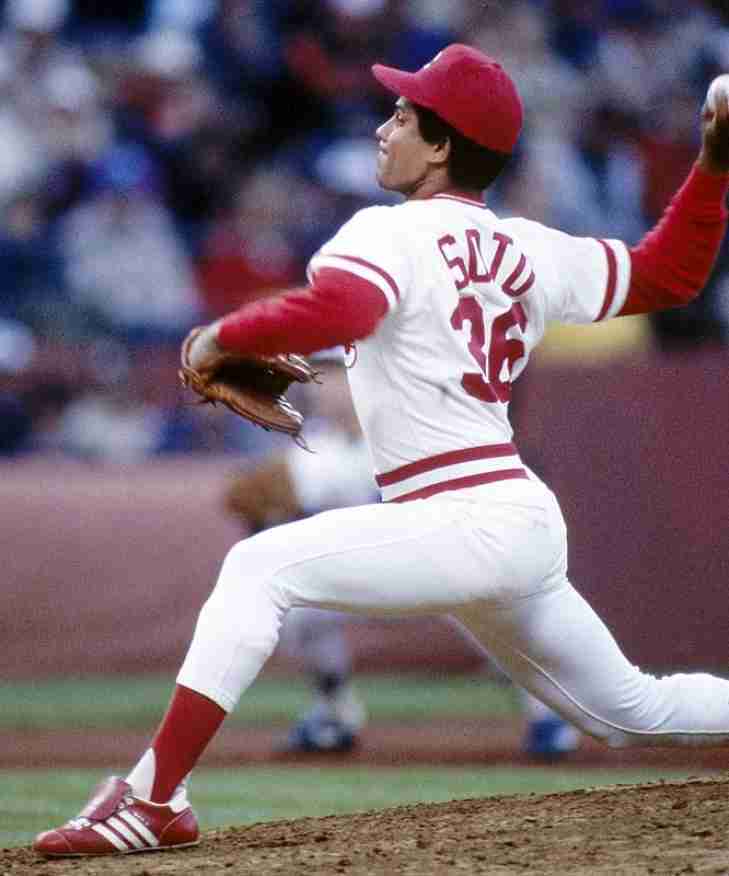
Mario Soto’s professional baseball journey in Cincinnati began in the late 1970s, but it was the dawn of the 1980s when he matured instantly into a cornerstone of the franchise. He arrived with a "power-finesse" duality, relying on a heavy fastball and a devastating circle changeup that fell off the table just as hitters committed to their swing. He quickly evolved into a statistical titan, proving that his raw stuff was matched only by a fiery, high-stakes competitiveness. Between 1980 and 1985, he served as the tactical heartbeat of a staff that desperately needed his ability to miss bats and navigate deep into ballgames.
The absolute pinnacle of his career came in 1983, a season in which he was the undisputed ace of the staff and the runner-up for the National League Cy Young Award. Soto was an efficiency machine that summer, leading the league in WHIP (1.058) and proving to be a master of run suppression. He wasn't just a volume producer; he was a high-leverage nightmare for opposing hitters, twice leading the National League in strikeouts per nine innings and once in strikeout-to-walk ratio. Despite playing for a club that often struggled to provide him with adequate run support, he rattled off three consecutive All-Star selections and finished in the top ten of the Cy Young voting four times.
His identity was synonymous with a relentless, "never-back-down" mentality that occasionally boiled over into a fiery temper, a trait that kept him in the headlines as much as his sinking changeup. Soto spent his entire twelve-year career in a Cincinnati uniform, remaining a fixture in the Queen City through its various iterations. He concluded his run with exactly 100 wins and 1,449 strikeouts, a total that likely would have been much higher had his arm not shouldered such a massive workload during his peak years. Whether he was freezing a hitter with a backdoor heater or inducing a helpless swing on a changeup, he played with a visible passion that made him a local immortal.
Soto’s career wound down in 1988 after injuries finally sapped the "disappearing" life from his pitches. In recognition of his decade of dominance, the organization inducted Soto into the Cincinnati Reds Hall of Fame in 2001.
21. Ted Kluszewski
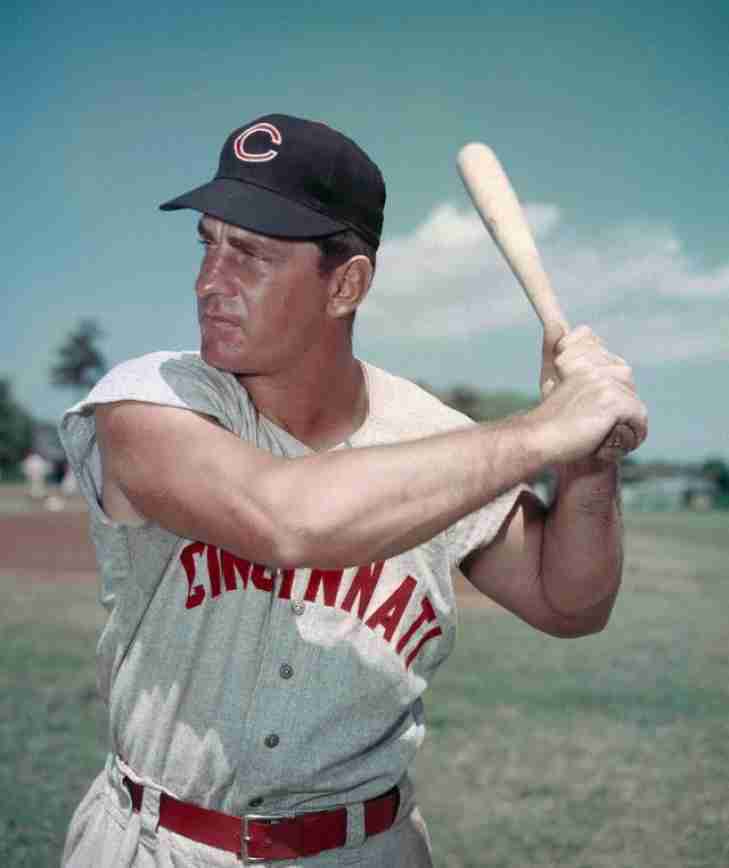
Ted Kluszewski’s journey in Cincinnati began with a legendary adjustment to his wardrobe. He arrived with a physique that was years ahead of its time, famously cutting the sleeves off his jersey because the fabric constricted his massive biceps when he swung the bat. This utilitarian fashion choice matured instantly into a signature look, but it was his production that truly resonated. By 1953, he had evolved from a steady contributor into a statistical titan, embarking on a four-year run of dominance that saw him eclipse 35 home runs and 100 RBIs in every single campaign.
The absolute pinnacle of his career came in 1954, a season in which he stood as the undisputed king of the National League batter's box. That year, "Big Klu" was an efficiency machine, capturing both the Home Run (49) and RBI (141) titles. Most remarkably, he achieved these towering totals while striking out only 35 times—a ratio of power to plate discipline that is almost incomprehensible in the modern game. He finished as the runner-up for the National League MVP, proving that his value was rooted in a sophisticated balance of raw strength and professional poise. He wasn't just a pure slugger; he was a tactical weapon who anchored the Cincinnati lineup during one of its most productive eras.
His identity was synonymous with a quiet, gentle-giant persona and a relentless, high-leverage bat. Kluszewski was a master of the strike zone, accumulating 251 home runs and a career .302 batting average during his stay in the city. Whether he was launching a moonshot into the Crosley Field laundry or providing a veteran presence in the dugout, he played with a visible strength that made him a local immortal. Even as back injuries eventually sapped his legendary power, he remained a foundational piece of the franchise’s history, eventually returning to the club as a highly influential coach for the "Big Red Machine" of the 1970s.
The chapter of his playing days eventually transitioned into a legacy of undisputed reverence. The organization ensured his immortality by retiring his number 18 in 1998, decades after he had been enshrined in the Cincinnati Reds Hall of Fame in 1962.
20. Frank McCormick
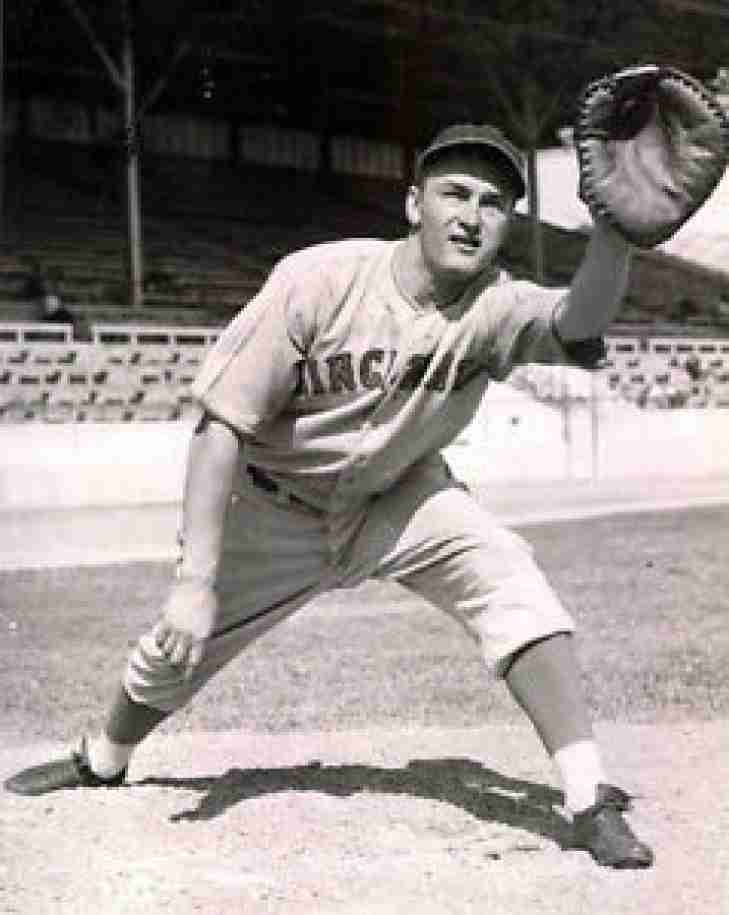
When Frank McCormick finally secured a regular spot in the lineup in 1938, he bypassed the usual maturation process and immediately became a statistical titan. He matured instantly into an elite run-producer, earning an All-Star selection in every single season from 1938 to 1944. He arrived with a disciplined approach and a smooth swing that made leading the league in hits look routine, a feat he accomplished for three consecutive years, starting with his breakout campaign. He was a model of consistency, providing the backbone for a team that was rapidly ascending to the top of the senior circuit.
The absolute pinnacle of his career arrived in 1940, a season of such profound impact that he was named the National League’s Most Valuable Player. That year, McCormick was the primary architect of a Reds offense that marched all the way to a World Series championship, exorcising the ghosts of years past. He wasn't just a high-average hitter; he was a tactical master of the strike zone and a defensive standout at first base, famously going long stretches without committing an error. His efficiency was staggering, maintaining a career .301 average during his stay in Cincinnati while providing the high-leverage hits that defined the club's championship pedigree.
Reliability was the hallmark of his identity. McCormick was a fixture in the middle of the order, accumulating 1,439 hits and 110 home runs while serving as the emotional and statistical anchor of the clubhouse. He proved that a player could be both a volume-dense workhorse and a refined technician at the plate, a balance that made him one of the most respected players of the wartime era. He concluded his run with the Reds in 1945 after being traded to Philadelphia, leaving behind a legacy of professionalism that set the standard for every Cincinnati infielder who followed.
In a fitting tribute to his historic brilliance, the organization named him as one of the four inaugural members of the Cincinnati Reds Hall of Fame in 1958.
19. Jose Rijo
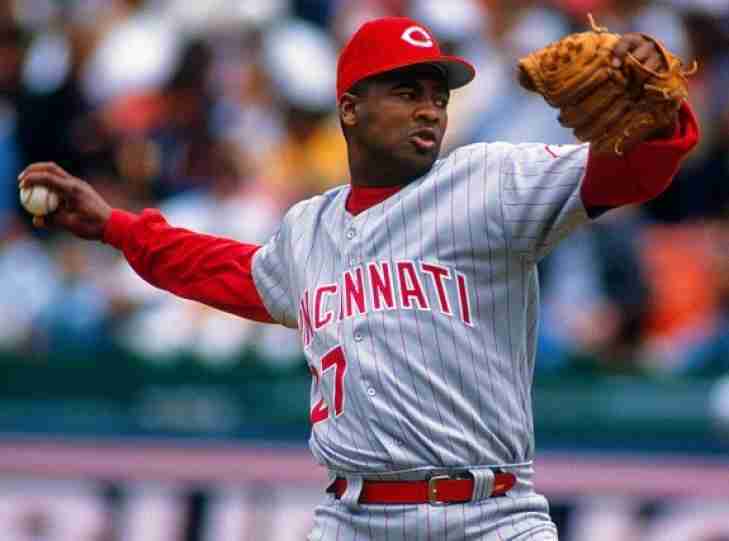
When Jose Rijo arrived in 1988, he was a pitcher looking to harness elite raw tools, but he quickly matured into a tactical ace who thrived under the brightest lights. Though surprisingly only recognized as an All-Star once, his efficiency was undeniable. He was a perennial fixture at the top of the leaderboards, finishing in the top five in ERA four times during his stay. He arrived as a hard-thrower and evolved into an efficiency machine, leading the National League in WHIP in 1991 and in strikeouts and overall bWAR for pitchers in 1993.
The absolute pinnacle of his career, and a defining moment for the franchise, arrived during the 1990 World Series. Facing a heavily favored Oakland Athletics dynasty, Rijo authored a masterpiece of run suppression. He went 2-0 with a microscopic 0.59 ERA in the Fall Classic, essentially silencing the Oakland bats and earning World Series MVP honors as the Reds completed a shocking four-game sweep. He wasn't just a part of the rotation; in that moment, he was the most dangerous man on a baseball diamond, providing the high-leverage excellence that delivered a championship to the South Ohio faithful.
His identity was synonymous with a relentless competitive spirit, though his body eventually struggled to keep pace with his arm. After a series of elbow issues seemingly ended his career in the mid-90s, Rijo made a historic and unprecedented return to the mound five years later, becoming the first player to ever return to the Majors after having already appeared on a Hall of Fame ballot. This two-year stint in middle relief served as a testament to his durability and love for the organization, allowing him to finish his journey where it mattered most.
The chapter finally reached its formal conclusion after the 2002 season, but his impact on the franchise remained indelible. He left the organization as a statistical titan of the modern era, a man whose peak performance was as brilliant as any in the team's long history. He proved that greatness isn't always about accumulating 300 wins; sometimes, it’s about being the absolute best in the world when the world is watching.
In 2005, the Reds ensured his immortality by inducting him into the Cincinnati Reds Hall of Fame.