


Site Admin
41. Bob Ewing
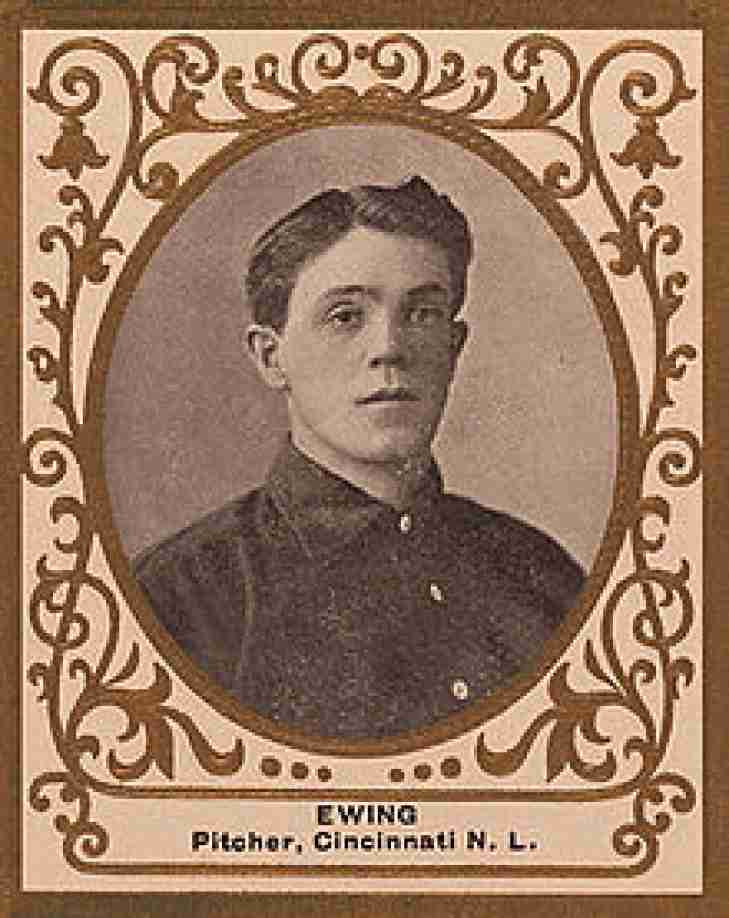
In an era when the "spitball" was a legal and lethal weapon, "Long" Bob Ewing emerged as its most sophisticated practitioner for the Cincinnati Reds. Standing tall on the mound during the first decade of the 1900s, he utilized his height and a deceptive delivery to keep the National League in a state of perpetual frustration.
Ewing’s tenure in Cincinnati was defined by a remarkable three-year stretch of dominance beginning in 1905, a summer where he secured 20 victories and established himself as a premier tactical force. During this window, he was a model of specialized excellence, consistently ranking among the top five National League pitchers in bWAR. He possessed a rare ability to neutralize hitters through movement rather than just velocity, utilizing the dampened baseball to create unpredictable breaks that led to a sustained run of top-ten finishes in FIP.
The true magnitude of his skill was found in his surgical command of the strike zone. Ewing was a master of the "free pass" refusal, appearing in the top ten for strikeout-to-walk ratio six times during his nine seasons in a Reds uniform. This craftsmanship was not merely about volume; it was a high-frequency display of precision that kept his career FIP among the elite in the sport's history. He served as the primary engine of the Cincinnati rotation, providing the high-leverage durability required to navigate over 1,900 innings for the franchise, despite the era’s physical demands.
The story in Cincinnati drew to a close in 1909 when he was traded to the Phillies, but he left behind a legacy as the most refined right-hander of the club’s first great decade. He departed with 108 wins and a reputation for being the ultimate "pitcher's pitcher" of the early 20th century.
With the Reds, Ewing compiled 108 wins and 159 complete games while maintaining a historic top-tier ranking in career FIP. The organization provided the ultimate punctuation on his career nearly a century after his final pitch by inducting him into the Cincinnati Reds Hall of Fame in 2001.
42. Billy Rhines
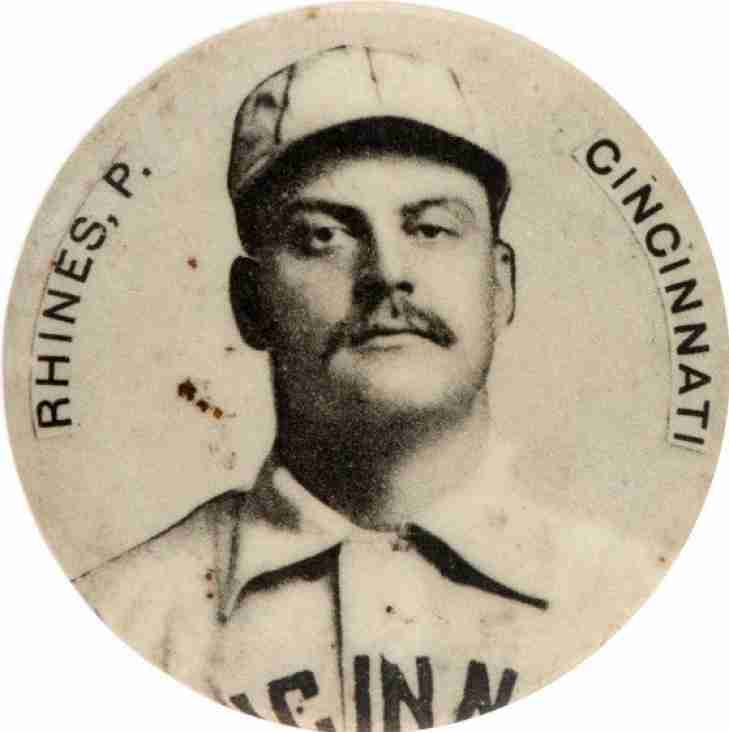
In the rugged landscape of 1890s baseball, few pitchers arrived with the same immediate, submarine-fueled impact as Billy Rhines. Known as "Bunker" to his teammates, he utilized a deceptive underhanded delivery that confounded hitters during two distinct stretches in Southern Ohio.
Rhines burst onto the major league scene in 1890 with a performance that remains a cornerstone of franchise history. As a twenty-one-year-old rookie, he navigated an immense workload, hurling over 400 innings and securing 28 victories for a Reds squad that was just finding its footing in the National League. This initial stay reached its summit immediately, as he captured both the ERA (1.95) and WHIP (1.121) titles for the Senior Circuit. He possessed a specialized "rise ball" that shot toward the plate before jumping above the bats of frustrated hitters, a craftsmanship that earned him a staggering 11.0 bWAR in his debut season alone.
After a brief departure from the club, Rhines returned in 1895 to reclaim his status as the rotation’s most refined tactician. While the league had moved the pitching rubber back to its modern distance of 60 feet, 6 inches, he adapted his underhanded style to remain a premier force. His second stint was highlighted by a masterful 1896 campaign, a summer where he once again led the National League in ERA (2.45) and WHIP (1.231). He was a model of specialized efficiency, serving as a high-leverage anchor for a staff that relied on his professional resilience to neutralize the explosive offenses of the late 19th century.
The story in Cincinnati concluded after the 1897 season, leaving behind a legacy of 96 wins and a reputation as the most dominant right-hander of the club's inaugural decade in the National League. He departed the organization with a career 3.28 ERA, a mark that reflects six seasons of elite run prevention during one of the highest-scoring periods in the history of the sport.
With the Reds, Rhines compiled 96 wins and 153 complete games while capturing two ERA titles and two WHIP crowns.
43. Cy Seymour
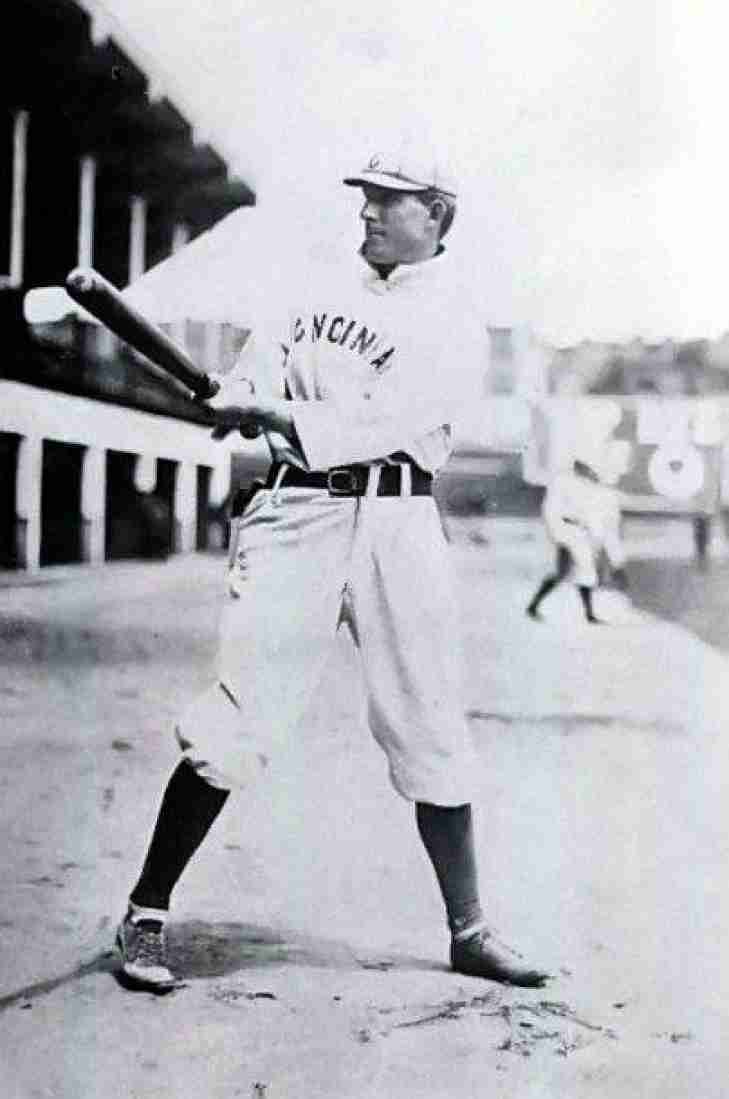
In the annals of early 20th-century baseball, few players bridged the gap between pitching phenom and offensive juggernaut quite like Cy Seymour. While he initially established himself as a flamethrowing strikeout king for the Giants, it was his transformation into a full-time center fielder in Cincinnati that produced some of the most lopsided statistical seasons the Queen City has ever witnessed.
Seymour’s arrival in Cincinnati signaled a radical shift in his career, as he moved away from the mound to focus exclusively on his left-handed swing. This transition bore fruit immediately, but the true pinnacle arrived in 1905, a summer where he effectively conquered every meaningful offensive category. That year, he hit a scorching .377 to claim the batting title while also leading the Senior Circuit in hits (219), doubles (40), triples (21), RBIs (121), and slugging percentage (.522). It was a performance of such specialized dominance that, in any other era, he would have walked away with a unanimous MVP trophy.
The consistency Seymour maintained during his tenure was as impressive as his explosive peak. He was a model of specialized efficiency, serving as a high-leverage engine for a lineup that relied on his ability to drive the ball into the gaps of the Palace of the Fans. Over his 556 games with the club, he maintained a spectacular .332 batting average, proving that his 1905 explosion was no statistical anomaly.
In 1906, when he was traded back to the Giants for a then-record sum, he left behind a statistical footprint that continues to loom large. He departed the organization with 738 hits and a reputation as the most dangerous left-handed hitter of his generation.
The organization provided the final punctuation on his legacy in 1998 by inducting him into the Cincinnati Reds Hall of Fame.
37. Ken Griffey Sr.
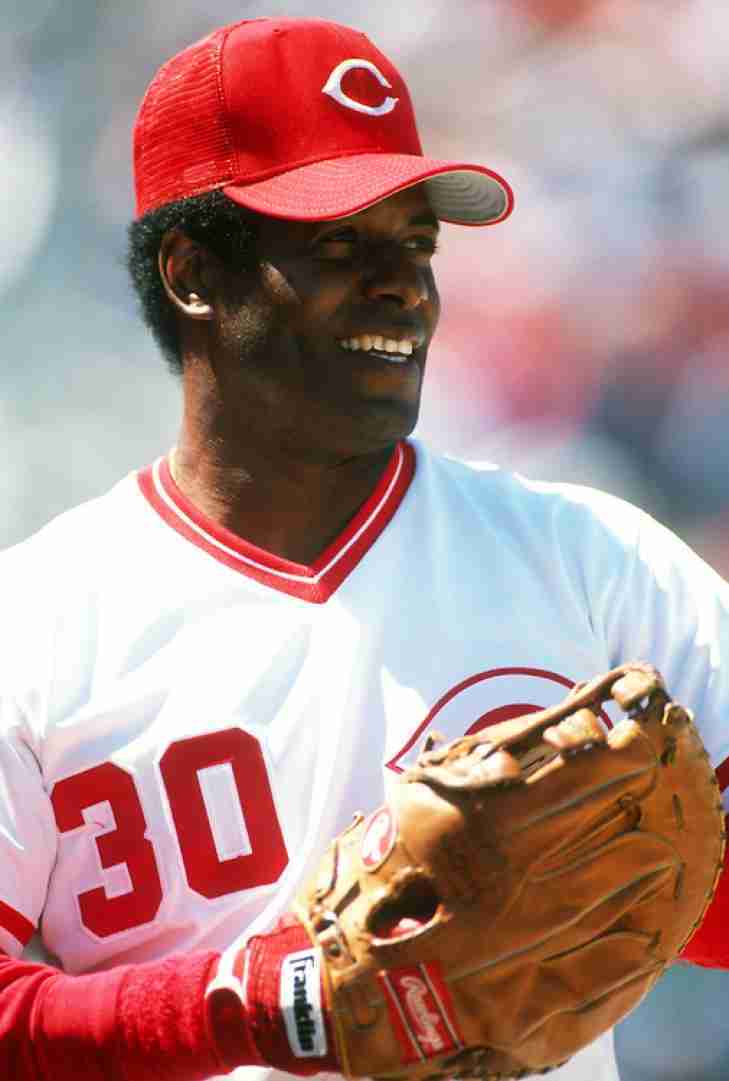
Ken Griffey’s path to the majors was a testament to the Reds' scouting department, which plucked him from Pennsylvania specifically to exploit the artificial surface of their new stadium. He surfaced as a regular in 1975 and matured instantly into the perfect complement to the legendary middle-of-the-order. He possessed a specialized ability to handle high-velocity pitching, reaching an incredible peak during the historic 1976 campaign. That summer, he engaged in a breathtaking race for the National League batting title, ultimately finishing with a career-best .336 average and 189 hits. His value was officially recognized with an eighth-place finish in the MVP voting, proving he was a superstar in his own right amidst a roster of Hall of Famers.
The most impressive aspect of his tenure was the relentless consistency with which he reached base and pressured opposing defenses. Griffey was a master of the "small ball" era, during which he recorded five different .300 seasons in a Reds uniform. He wasn't just a slap hitter; he was a high-frequency run producer who finished in the top ten in runs scored six times, using his 34-stolen-base speed to turn walks and singles into scoring opportunities. This craftsmanship earned him three All-Star selections during his stay, as he served as the tactical engine that enabled Bench, Morgan, and Pérez to post record-breaking totals.
Griffey remained the primary right fielder through the pinnacle of the franchise's success, providing the veteran poise and high-leverage baserunning that aided the 1975 and 1976 World Series champions.
In 1981, he was traded to the New York Yankees, though he would later return for a sentimental second stint in the late 80s. With the Reds, Griffey amassed 1,275 hits and 156 stolen bases while maintaining a historic .303 batting average. The organization provided the ultimate punctuation on his legacy decades after the "Machine" stopped rolling, as in 2004, Ken Griffey Sr. was officially inducted into the Cincinnati Reds Hall of Fame.