


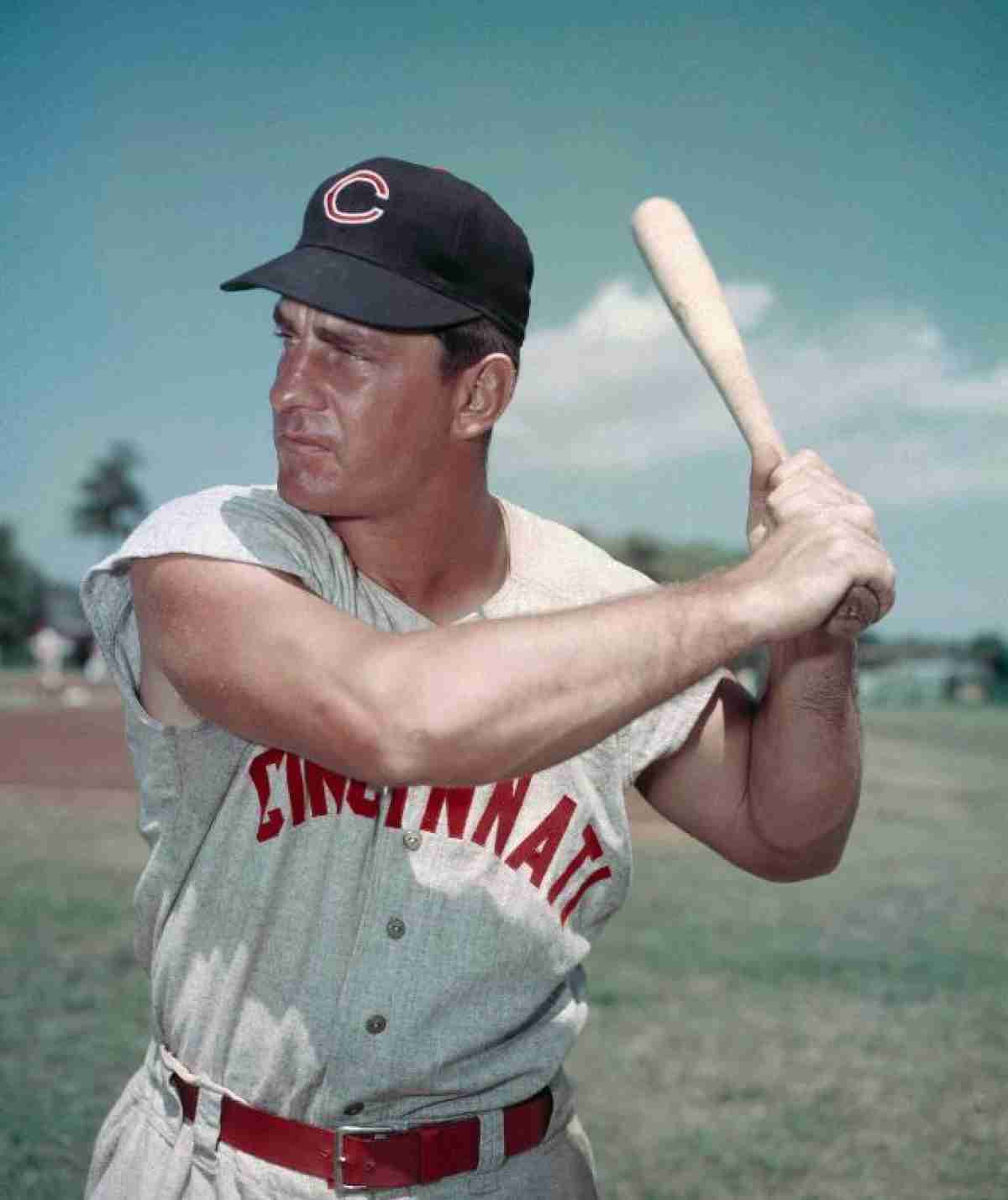


Ted Kluszewski’s journey in Cincinnati began with a legendary adjustment to his wardrobe. He arrived with a physique that was years ahead of its time, famously cutting the sleeves off his jersey because the fabric constricted his massive biceps when he swung the bat. This utilitarian fashion choice matured instantly into a signature look, but it was his production that truly resonated. By 1953, he had evolved from a steady contributor into a statistical titan, embarking on a four-year run of dominance that saw him eclipse 35 home runs and 100 RBIs in every single campaign.
The absolute pinnacle of his career came in 1954, a season in which he stood as the undisputed king of the National League batter's box. That year, "Big Klu" was an efficiency machine, capturing both the Home Run (49) and RBI (141) titles. Most remarkably, he achieved these towering totals while striking out only 35 times—a ratio of power to plate discipline that is almost incomprehensible in the modern game. He finished as the runner-up for the National League MVP, proving that his value was rooted in a sophisticated balance of raw strength and professional poise. He wasn't just a pure slugger; he was a tactical weapon who anchored the Cincinnati lineup during one of its most productive eras.
His identity was synonymous with a quiet, gentle-giant persona and a relentless, high-leverage bat. Kluszewski was a master of the strike zone, accumulating 251 home runs and a career .302 batting average during his stay in the city. Whether he was launching a moonshot into the Crosley Field laundry or providing a veteran presence in the dugout, he played with a visible strength that made him a local immortal. Even as back injuries eventually sapped his legendary power, he remained a foundational piece of the franchise’s history, eventually returning to the club as a highly influential coach for the "Big Red Machine" of the 1970s.
The chapter of his playing days eventually transitioned into a legacy of undisputed reverence. The organization ensured his immortality by retiring his number 18 in 1998, decades after he had been enshrined in the Cincinnati Reds Hall of Fame in 1962.

Comments powered by CComment