
The St. Louis Cardinals HOF announce their 2020 Finalists
One of our favorite franchise Hall of Fames is that of the St. Louis Cardinals, which was only established in 2014, but has quickly earned a place as a must-see for baseball fans. For the Class of 2020, the fan vote is now available, where the top two vote getters of seven former Cardinals will become part of the organization’s Hall of Fame.
Steve Carlton 1965-71. Carlton would play the first seven seasons of his career with St. Louis, and he was a three-time All-Star while playing there. Carlton helped St. Louis win the 1967 World Series, and he was a 20 Game winner in his final year as a Cardinal. With St. Louis, he had a record of 77-62 with 951 Strikeouts and a 3.10 ERA. Carlton would be elected into the Baseball Hall of Fame in 1994.
Keith Hernandez 1974-83. Playing at First Base, Hernandez was one of the better defensive players at that position of all-time. A Cardinal for the first decade of his career, Hernandez went to two All-Star Games and won six Gold Gloves as a Cardinal. A key member of the 1982 World Series Championship team, Hernandez was the co-winner of the 1979 MVP. With the Cards, the First Baseman had 1,217 Hits with a Batting Average of .299.
Tom Herr 1979-88. Herr was an All-Star in 1985, and he was part of the 1982 World Series Championship Team. He would have 1,021 Hits for the team with a .274 Batting Average.
Matt Morris 1997-05. A St. Louis Cardinal for eight years, Morris was second in Rookie of the Year voting in 1997. He was sidelined in 1999 due to Tommy John Surgery, but he rebounded well, leading the National League in Wins (22), going to the All-Star Game, and finished third in Cy Young voting. Morris was an All-Star again in 2002, and he would have a record of 101-62 overall with 986 Strikeouts in St. Louis.
Edgar Renteria 1999-04. Renteria was a Cardinal for six years, and he was an All-Star for three of them. The Columbian Shortstop had at least 10 Home Runs in each of his seasons, and had 71 overall for the Redbirds. Renteria also stole 148 bases, and won two Silver Sluggers and two Gold Gloves. He had 93 Hits with a .290 Batting Average in St. Louis.
Lee Smith 1990-93. Three times an All-Star with the Cardinals, Smith led the National League in Saves in both 1991 and 1992, and was in the top four in Cy Young voting in both seasons. He would have 160 Saves for the team. Smith would enter the Baseball Hall of Fame in 2018.
John Tudor 1985-88 & 1990. In Tudor’s first year in St. Louis he went 21-8 and led the league in Shutouts (10) and finished second in Cy Young voting. He would have a sparkling record of 62-26 for the Cardinals with a 2.52 ERA and a WHIP of 1.080.
The vote will be open until April 17, with the results televised on FOX Sports Midwest on May 8.
We know we will be voting, and we would like to congratulate the seven Finalists.
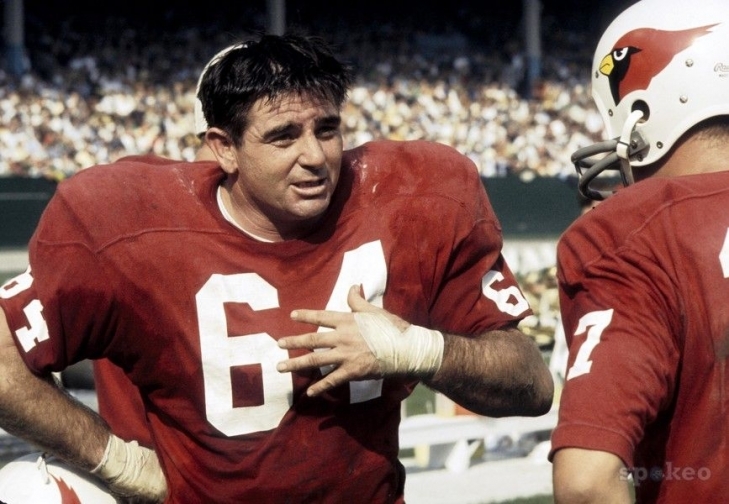
264. Ken Gray
317. Jerry Norton
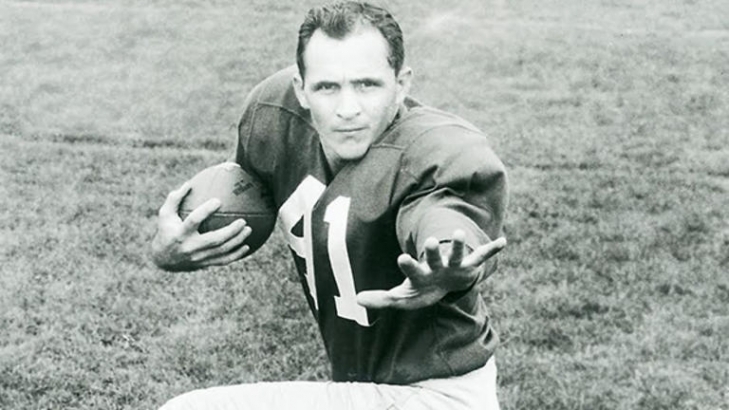
Jerry Norton began his professional football career in 1954 with the Philadelphia Eagles, starting as a Safety, then playing halfback before returning to safety. Norton was also an excellent Punter, and in 1957 he would lead the league in Punts and Punting Yards. He was traded to the Chicago Cardinals (which would become the St. Louis Cardinals) before 1959, where he played safety and Punter, and he continued a five-year streak of Pro Bowls that began in Philadelphia. Norton again led the NFL in Punts and Punting Yards in 1960, the same season he led the league in Interceptions (10). He would accumulate 35 picks in total.
Late in his career as a Green Bay Packer, he would act solely as a Punter.
164. John David Crow
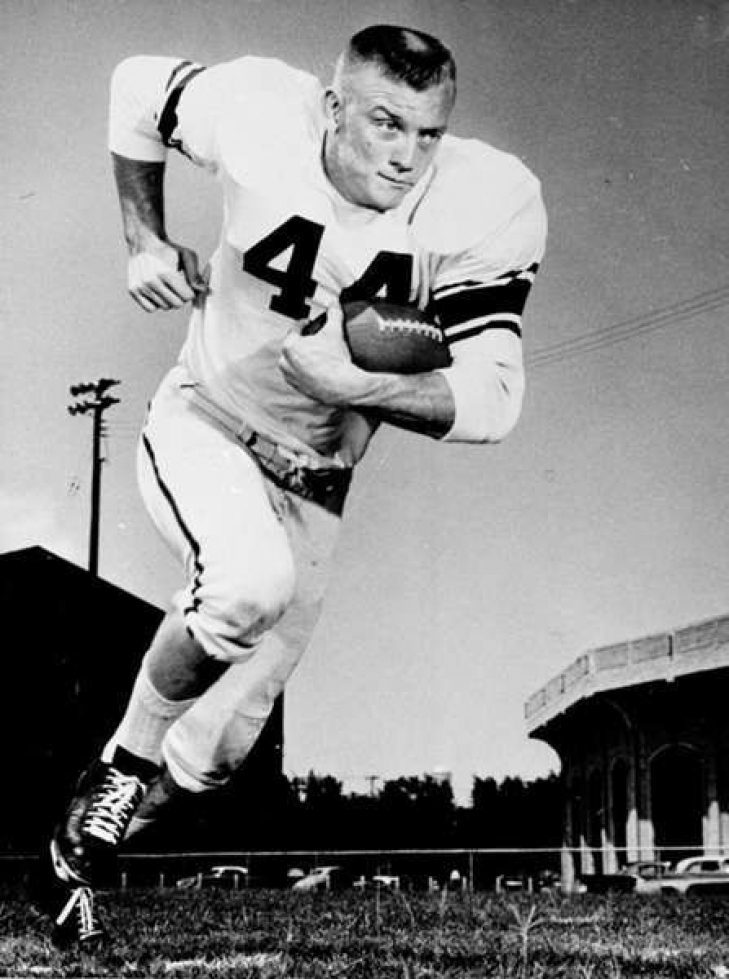
The winner of the 1957 Heisman Trophy at Texas A&M, John David Crow, would be drafted 2nd overall by the Chicago Cardinals and would blossom into one of the most versatile offensive players of his era. Used at Halfback, Fullback, and Tight End over his pro career, he played half of his career with the Chicago (later St. Louis) Cardinals and the San Francisco 49ers, but he was never blessed with a loaded group around him, as most of his teams were not particularly good. Crow was, however, very good, and he adapted effortlessly to his team's offensive needs. A four-time Pro Bowl Selection, Crow scored 74 Touchdowns, splitting them between rushing and 35 from the air. He would have 8,662 Yards from Scrimmage over his career, which is a great number for the 1960s, a decade in which he was named to the 1950’s All-Decade Team.
132. Pat Fischer
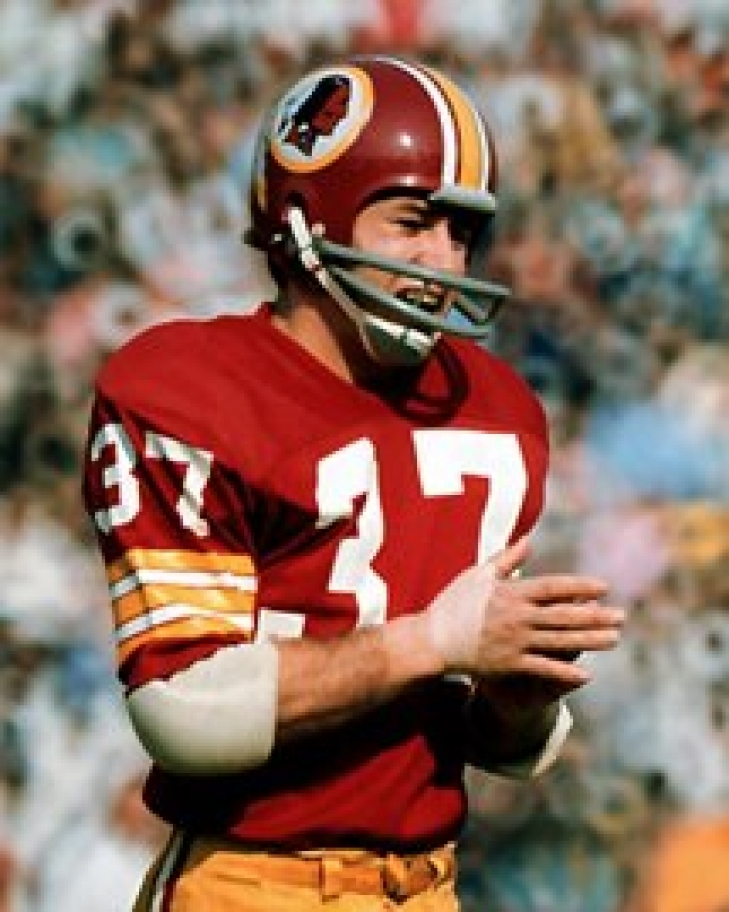
Pat Fischer was not a tall man, standing at only 5' 9", which was likely why the multi-talented star at Nebraska fell to the 17th Round. The St. Louis Cardinals chose him, and after initially using him as a Returner, he forced his way into a starting Cornerback Role and was named to the Pro Bowl in 1964 and 1965. The certified ballhawk would later sign with the Washington Redskins and brought a veteran presence to their secondary and was a large part of their appearance in Super Bowl VII. Fischer played until 1977 and accumulated 56 Interceptions.
At the time of his retirement, Fischer’s 213 Games Played were a record for a Cornerback.
43. Bob Forsch
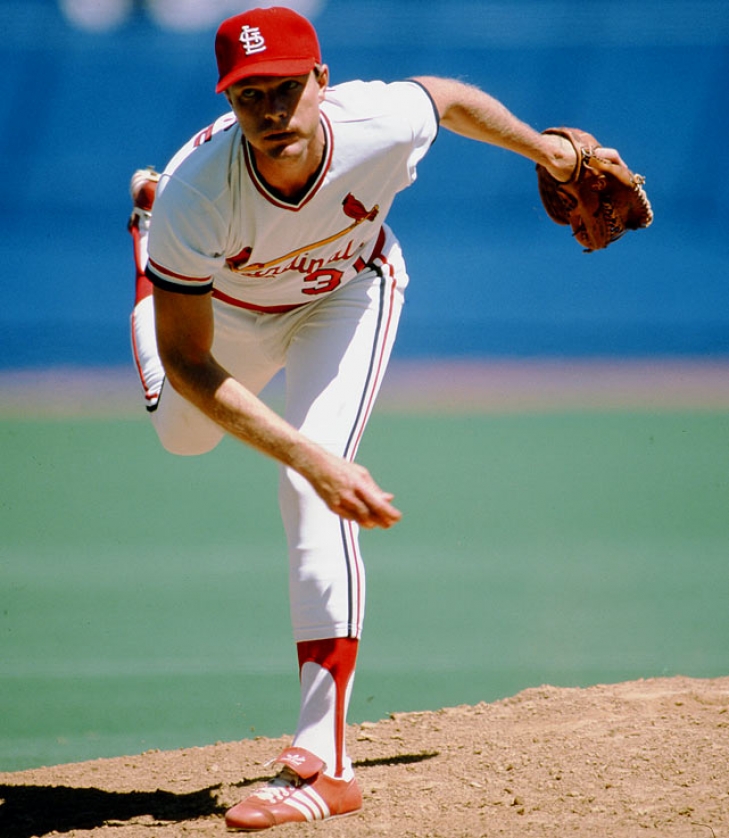
42. Pepper Martin
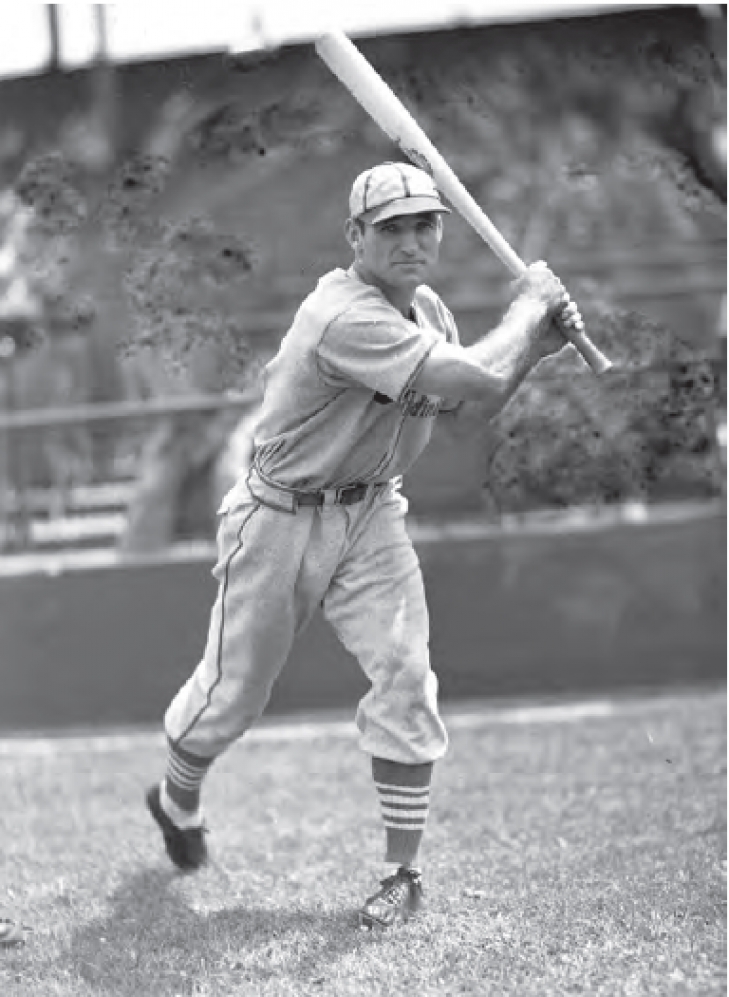
Johnny Leonard Roosevelt Martin went by "Pepper," but the name that captured his essence best was "The Wild Horse of the Osage." When you trace the DNA of the legendary, mud-splattered "Gashouse Gang" teams of the 1930s, it was Martin's unhinged, headfirst style that powered them. He didn't just play baseball; he attacked it, tearing up the basepaths with a reckless abandon that mirrored the gritty, hardscrabble spirit of a Depression-era fan base that absolutely adored him.
A career-long Cardinal, Martin made a couple of fleeting cameos in 1928 and 1930 before permanently kicking the door down in 1931. While he went on to earn four All-Star selections and topped the National League in stolen bases three separate times—pacing the circuit with modest but opportunistic totals of 26, 23, and 23 swipes—his true genius lay in his ability to weaponize his speed when the lights were brightest.
Nowhere was that more evident than in the 1931 World Series against a heavily favored Philadelphia Athletics squad. Martin turned the Fall Classic into a personal playground, torturing legendary catcher Mickey Cochrane by stealing five bases and punishing Philly pitching for a .500 batting average alongside a staggering 1.330 OPS. Reporters covering the series noted that his relentless energy single-handedly shifted the momentum, dragging the Cardinals to a world title. He repeated the October magic in 1934, hitting .355 to help St. Louis capture another championship banner.
While those early October runs made him a legend, 1933 stood out as the absolute peak of his regular-season powers. Rebounding from an injury-plagued sophomore slump, Martin shifted to third base and put together a monster campaign that earned him a starting nod in the inaugural MLB All-Star Game. He terrorized the National League from the leadoff spot, hitting a stellar .316 and pounding out 189 hits—including a May afternoon against the Phillies when he hit for the cycle. He used his lightning speed to lead the league with 122 runs scored and a career-high 26 stolen bases, fueling a top-five finish in the National League MVP race.
Yet, as magnetic as Martin was on the basepaths and at the plate, where he authored a lifetime .298 average, his placement in historical rankings faces a distinct hurdle. This evaluation framework places an uncompromising premium on defense, and that is where Martin’s ledger runs into trouble. He split his career between the outfield and third base, and frankly, he was a liability at both. His hands were rigid, his internal clock was erratic, and his aggressive nature frequently betrayed him, leading to ugly fielding percentages and a persistent defensive deficit that caps his overall value.
The relentless physical toll of his headfirst playing style eventually caught up to him. By 1941, injuries had entirely sapped his mobility, forcing him to step away from the major leagues to transition into a minor league player-manager role. However, the manpower shortage of World War II gave his Cardinals story one final, unexpected chapter. St. Louis called the 40-year-old veteran back up for a 40-game cameo in 1944.
Martin played in 1,189 games, racking up 1,227 hits, 756 runs scored, 59 home runs, and 501 RBIs. He authored a .298/.358/.443 slash line with a 113 OPS+, stole 146 bases
The Cardinals chose Martin for their franchise Hall of Fame in 2017.
47. Ed Konetchy
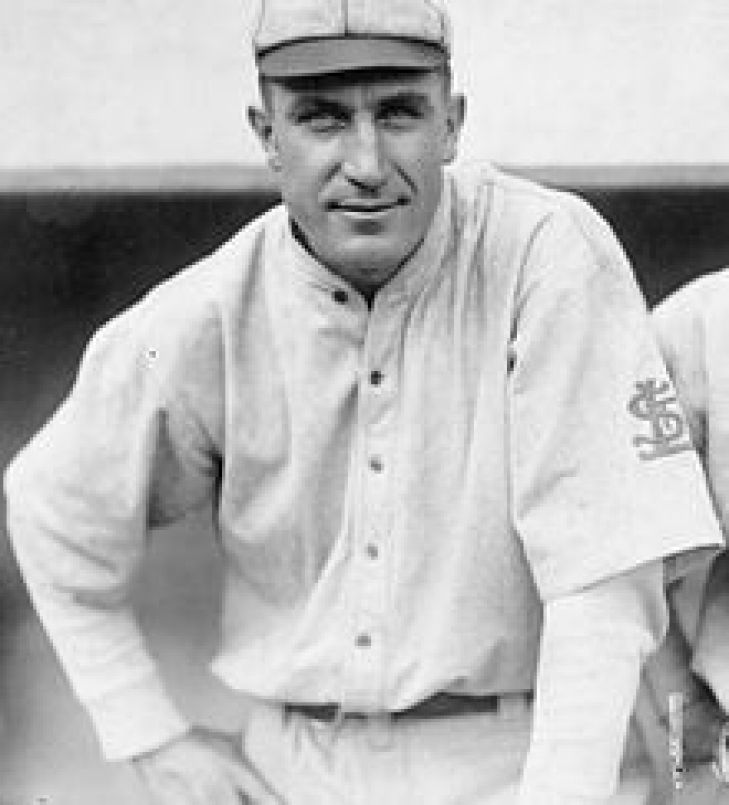
Long before the Cardinals became a regular force in the National League, they struggled to find their identity during the Deadball Era. Amid this challenging period, Edward Joseph "Big Ed" Konetchy arrived to serve as the franchise’s first significant cornerstone. When he became a full-time player in 1908, the strong first baseman rapidly gained admiration from renowned managers like John McGraw, who once said that Konetchy alone was almost worth the entire St. Louis team.
Although the Cardinals often finished near the bottom during his seven seasons, Konetchy quietly established himself as one of the most underrated stars of his time. He consistently appeared on the National League leaderboards, ranking in the top ten in batting average three times and driving in enough runs to achieve four top-ten RBI finishes. His only standout achievement was in 1911 when he led the league with 38 doubles, but his overall offensive contribution was evident, earning him four top-ten finishes in bWAR among position players.
What set Konetchy truly apart and elevated him to elite status was his exceptional defense at the cold corner. Using his impressive 6-foot-2 build, he redefined what was expected from a first baseman's defense. Konetchy was incredibly effective, leading National League first basemen in both fielding percentage and range factor per game four times during his time with the St. Louis Cardinals. His reliable hands and strategic positioning turned what was an otherwise weak infield into a solid defensive unit.
Despite his impressive skills, his departure was sudden. Before the 1914 season, contract disagreements and conflicts resulted in his trade to Pittsburgh, and he eventually moved to the rebellious Federal League. His career, spread across six different teams, often causes his significant achievements in St. Louis to be overlooked, especially when compared to the long-time players who came after him. However, at the time of his departure, Konetchy was the franchise's all-time leader in hits, runs, and total bases—serving as a vital source of elite production during critical moments for the team.
In seven seasons in St. Louis (1907–1913), Konetchy played 982 games, with 1,013 hits, 158 doubles, 94 triples, and 36 home runs. He posted a .283/.353/409 line, a 125 OPS+, and stole 151 bases.
48. Ripper Collins
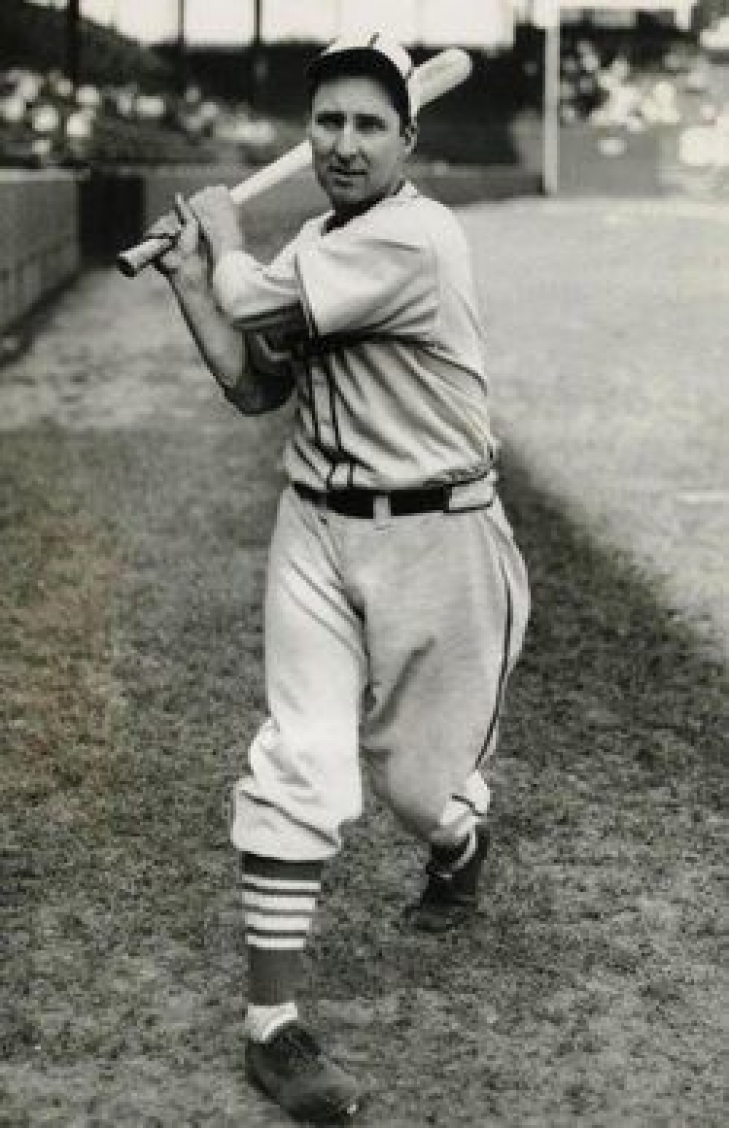
Ripper Collins gained his intimidating nickname as a minor leaguer when a line drive from his bat tore the cover off a baseball. However, when he stepped into the major leagues full-time, fans were taken aback to learn that the powerful hitter was actually a modest 5-foot-9, 165-pound player. Despite his average size, this switch-hitting first baseman compensated with lightning-quick wrist movements and a fierce style of play that perfectly suited the rough and unpolished culture of the 1930s "Gashouse Gang."
His journey to the big leagues officially started with a supporting role, as he appeared in 89 games as a rookie during the Cardinals' 1931 World Series victory. Recognizing his potential, St. Louis management traded veteran Jim Bottomley to make way for Collins. By 1932, he had become the regular first baseman, winning over fans at Sportsman's Park with his energetic play and playful clubhouse antics.
Everything came into a historic alignment during the remarkable 1934 season. Collins assembled an exceptional offensive performance, dominating National League pitching with a .333 batting average, a league-leading .615 slugging percentage, and an OPS of 1.008. He hit 35 home runs, tying Mel Ott for the league lead—making Collins the inaugural switch-hitter in Major League history to surpass 30 home runs in a single season. This extraordinary achievement earned him sixth place in the National League Most Valuable Player voting and propelled the Cardinals to another World Series appearance. In the 1934 World Series against Detroit, he demonstrated unwavering determination, batting .367 and achieving four hits in the decisive Game 7 victory, thereby securing his second world championship ring.
The intensive production persisted throughout the subsequent two summers, resulting in Collins securing a pair of All-Star selections in 1935 and 1936 as he upheld his reputation as a premium run producer. Nevertheless, as Branch Rickey's renowned developmental pipeline began to overflow with younger talent, the management seized the opportunity to leverage Collins' high trade value by trading him to the rival Chicago Cubs prior to the 1937 season. Given that his peak period in St. Louis lasted only six seasons before transferring to Chicago and Pittsburgh, his cumulative totals are somewhat modest compared to those of players with careers spanning multiple decades. Nonetheless, the exceptional and historic peak of his 1934 performance remains one of the most dynamic single-season displays in the extensive history of the franchise.
Across six seasons in St. Louis (1931–1936), Collins played 777 games, with 852 hits, 106 home runs, and 516 RBIs. He posted a .307/.370/517 slash line, with a 134 OPS+.
31. Bill White
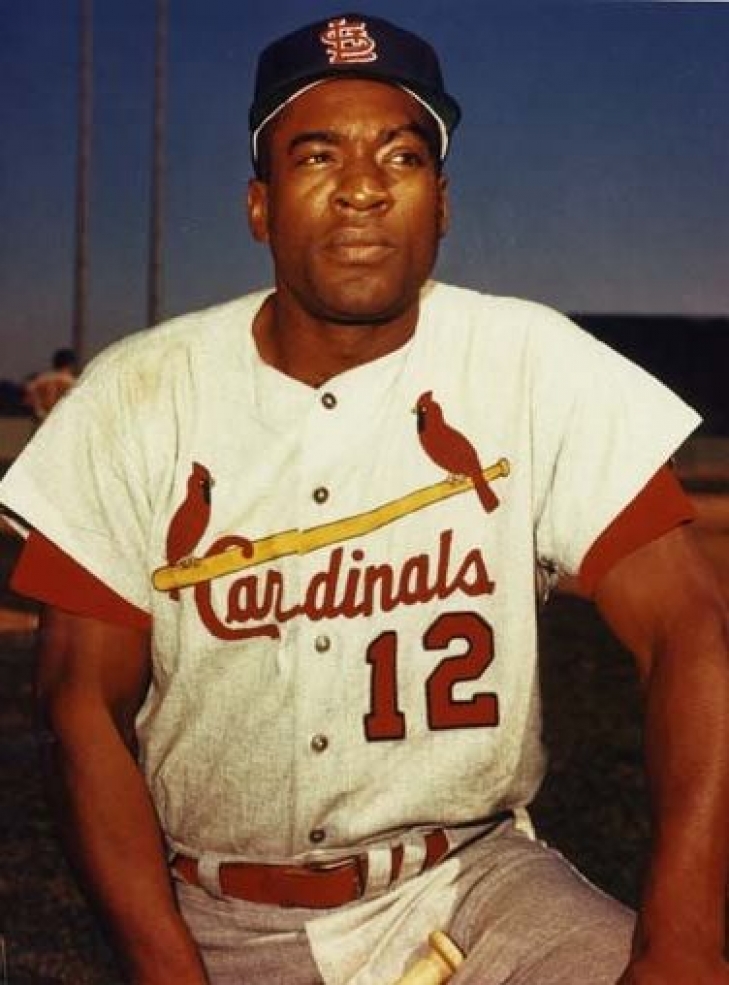
Some of the most meaningful legacies in baseball history are created by men who didn't originally see the sport as their lifelong passion, but rather as an unexpected turn in their journeys. Bill White was a talented pre-med student at Hiram College, aiming for medical school when a simple tryout suddenly changed everything. Leo Durocher, known for knocking down giants, was so captivated by White’s natural athletic skill that he signed him immediately. As one of the first Black players to navigate the highly segregated Carolina League in the early 1950s, White faced significant racial challenges but handled them with remarkable dignity. Even after earning a spot on the major-league team, a period in the U.S. Army and the rise of Willie McCovey made him feel blocked in San Francisco. Recognizing his exceptional talent, the St. Louis Cardinals made their move, trading for White in March 1959 and welcoming him into their main team right away.
Though the Cardinals initially experimented with White in the outfield to accommodate Stan Musial, he permanently seized the first-base bag by 1960 and instantly set a new gold standard for defensive excellence in the National League. For the next six seasons, White put on an absolute clinic at the cold corner, sweeping six consecutive Rawlings Gold Glove Awards in a Redbird uniform. He wasn’t just a defensive vacuum; he was an exceptionally steady metronome at the plate. Across his seven consecutive seasons as a core pillar in St. Louis, White never failed to reach 150 hits in a season, and he cleared the elusive .300 batting average four separate times.
Between 1961 and 1965, he demonstrated excellent power hitting in the middle of the lineup, achieving five consecutive seasons with 20 or more home runs. His most outstanding season was in 1963 when he set personal bests with 200 hits, 27 home runs, and led the league with 109 RBIs, showcasing a remarkable performance.
White’s exceptional production and elite defensive skills were the cornerstone of the legendary 1964 world championship team. During that summer, he earned one of his five All-Star selections as a Cardinal, amassing 191 hits and 102 RBIs. His solid infield defense was vital in leading St. Louis to a dramatic seven-game victory in the Fall Classic against the New York Yankees.
Although his playing career ended after a brief, late-career stint in 1969, White’s influence on baseball grew into groundbreaking and historic realms. Known for his clear, composed style and sharp baseball intellect, he broke racial barriers by becoming the first African-American play-by-play announcer for the Yankees in 1971. He reached the top of the sport's executive ranks in 1989, making history again as the first person of color to serve as President of the National League.
White finished his St. Louis career with 1,241 hits, 140 home runs, 651 RBIs, and a.298 average over 1,046 games. His notable impact was recognized in 2020 when he was inducted into the St. Louis Cardinals Hall of Fame.
45. Matt Holliday
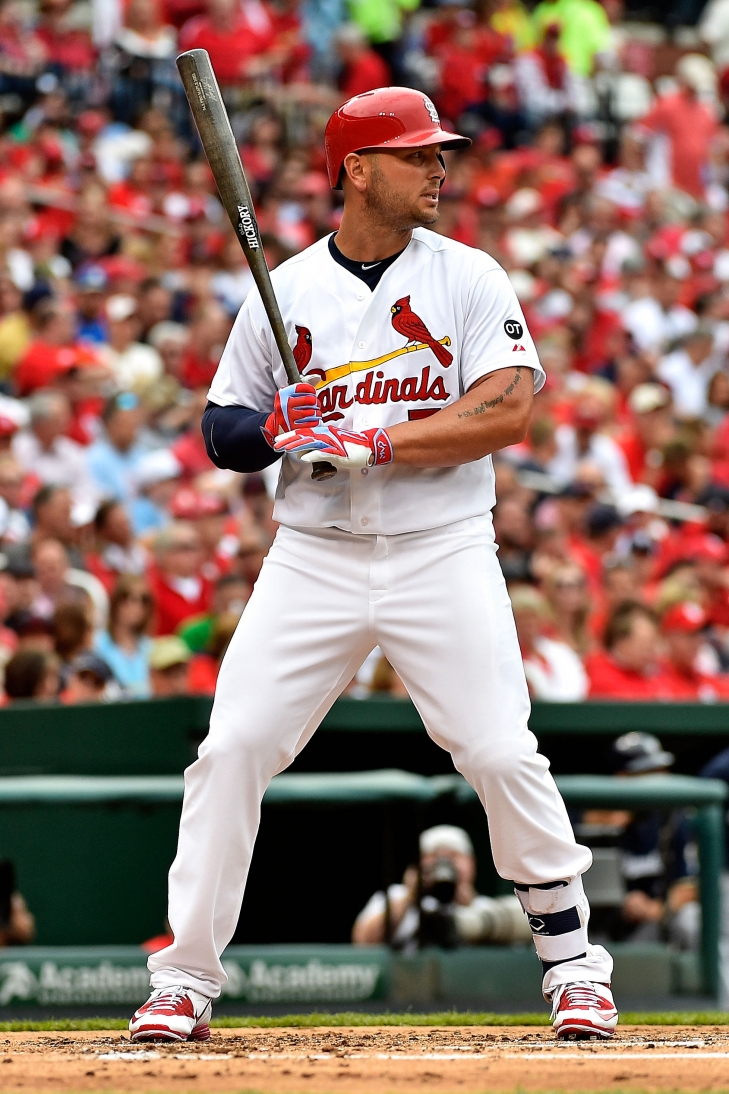
During the zenith of his abilities with the Colorado Rockies, Matt Holliday accomplished a historic 2007 season, securing a batting title and finishing as the close runner-up for the National League Most Valuable Player award. Since this remarkable individual peak occurred in Denver, casual observers often perceive his subsequent transfer to Missouri as a secondary phase. Nonetheless, the reality presents a markedly different narrative. Although he may have concluded his highest single-season MVP performance at Coors Field's altitude, Holliday's career was significantly extended with the St. Louis Cardinals, where he developed a considerably more substantial and statistically dense body of work.
Holliday initially joined the St. Louis team during the 2009 season through a trade with Oakland, and he promptly demonstrated exceptional performance by maintaining a batting average of .353 across his first 63 games in a Redbirds uniform. The management efficiently secured his services by signing him to a substantial seven-year contract during that winter. For the subsequent seven seasons, Holliday functioned as the physical and competitive cornerstone of the St. Louis lineup. He was not characterized by flashiness or high maintenance; instead, he exemplified consistent performance, challenging National League pitchers with a powerful, muscular swing that resulted in six seasons with at least 20 home runs in St. Louis.
While wearing the birds on the bat, Holliday earned four All-Star selections and consistently commanded the respect of the league. He didn't repeat a second-place MVP finish, but he remained a permanent fixture in the conversation, receiving MVP votes in four separate seasons as a Cardinal. His true value lay in his ability to couple that heavy power with elite on-base skills, creating a terrifying middle-of-the-order presence alongside Albert Pujols. Holliday's steady production culminated in a vital contribution to the magical 2011 World Series championship run, cementing his status as a winner on the sport's biggest stage.
By the end of his successful tenure in St. Louis after 2016, Holliday had rewritten his legacy, leaving with 1,048 hits, 156 home runs, and a .293/.380/494 slash line.
33. Matt Carpenter
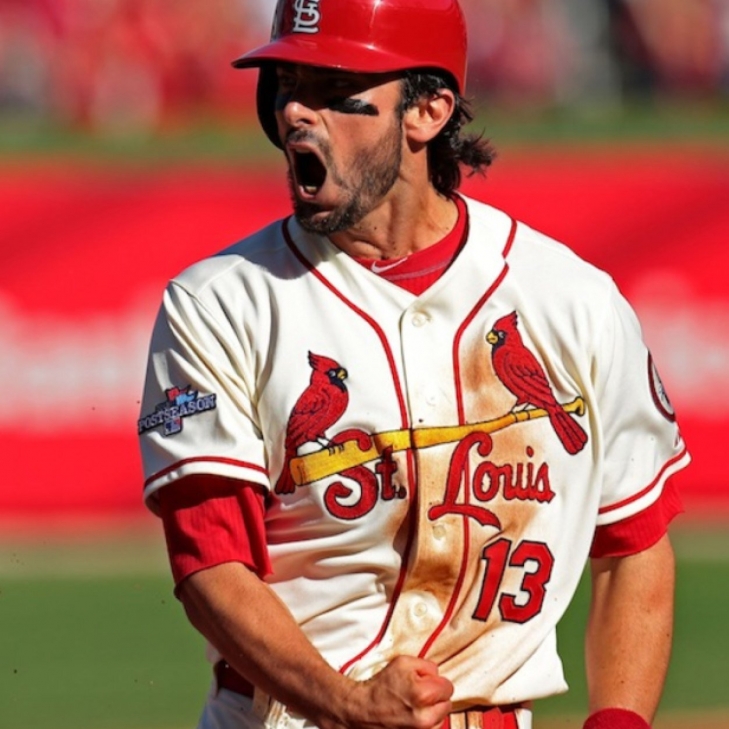
Few trajectories in contemporary baseball history can compare to the compelling self-reinvention of Matt Carpenter. Drafted in the 13th round of the 2009 Major League Baseball draft from Texas Christian University, he was not distinguished by a prestigious prospect pedigree. Rather, he depended on an unwavering, highly efficient plate approach and an indefatigable work ethic to secure a position within the long-term plans of the St. Louis Cardinals. Having made his full-time debut in the major leagues by 2012, Carpenter dedicated the first eleven years of his career to establishing himself as one of the most exceptionally versatile and high-leverage catalysts to grace the batter's box at Busch Stadium.
Initially identified as a premium line-drive contact hitter, Carpenter’s inaugural standout performance came during the historic 2013 season. Transitioning to the second base position, he functioned as the high-velocity catalyst at the top of the lineup, significantly surpassing the league's baseline metrics for a leadoff hitter. Carpenter excelled in challenging opposing pitchers, leading the National League in hits (199), runs scored (126), and doubles (55). Achieving a remarkable batting line of .318/.392/.481, he received the Silver Slugger Award, his first All-Star selection, and finished in an impressive fourth place in the National League MVP voting, while guiding the St. Louis team to a pennant.
As the sport shifted its analytical emphasis toward launch angle and extra-base hits, Carpenter skillfully transformed his playing style from a contact-oriented approach to that of a genuine power hitter in the middle of the lineup. Transitioning across the diamond to both third and first base, he unlocked significant over-the-fence power. He recorded four distinct seasons with a minimum of 20 home runs, refining his mechanics to produce substantial pull-side power. Carpenter reached his power peak during the 2018 campaign. Backed by a legendary, team-wide obsession with his homemade garden salsa, he caught absolute lightning in a bottle. Hammering a career-high 36 home runs and pacing the Senior Circuit with 42 doubles, his scorching era dominance earned him a ninth-place finish in the National League MVP race.
The extreme pull-and-lift approach, combined with natural aging, triggered a sharp drop in his efficiency metrics as the decade closed. His bat-to-ball utility slowed down considerably over his final three summers in Missouri, prompting a level-headed parting of ways. After a brief minor-league stint with the Texas Rangers organization early in 2022, a mid-season signing with the New York Yankees sparked a stunning, short-term power renaissance in the Bronx, followed by subsequent major-league stops in San Diego and a poetic, late-career reserve reunion back in St. Louis.
Carpenter compiled 1,185 hits, 308 doubles, 159 home runs, and 767 runs scored across 1,388 total games with the Redbirds.
36. Scott Rolen
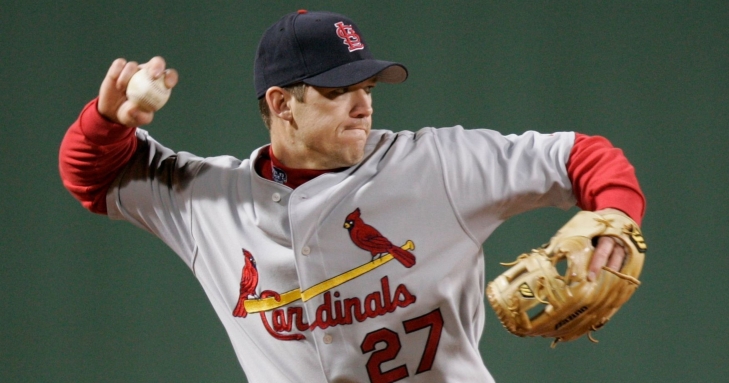
Scott Rolen arrived in St. Louis partway through the 2002 season through a major trade with the Philadelphia Phillies. He quickly took a key spot in the Redbirds' lineup and immediately showcased his exceptional athleticism, elevating his reputation to a new level in baseball history. Rolen had already earned an All-Star nod while with the Phillies in July, but his move to Missouri sparked a multi-year period of exceptional, well-rounded play that forever changed the third base position in the Gateway to the West. He achieved four straight All-Star selections during his first four full summers with the Cardinals, blending a powerful, middle-of-the-order bat with defensive skills that redefined the playing field at Busch Memorial Stadium.
Rolen achieved his career peak during the historic 2004 season, delivering one of the most comprehensive and efficient performances by a modern third baseman. He surpassed his previous metrics with a career-high 34 home runs and 124 RBIs, supported by an impressive .314/.409/598 slash line.
While his offensive performance contributed to a strong fourth-place finish in the National League MVP race, Rolen’s true dominance was in his exceptional defensive range. That summer, he led the entire National League in Defensive bWAR and earned one of his three Rawlings Gold Glove Awards as a Cardinal, constantly stopping extra-base hits along the third-base line with diving plays and a powerful, accurate throwing arm.
His crucial contribution shined brightest during the remarkable 2006 postseason. Overcoming persistent shoulder injuries that had hampered his regular season play, Rolen became an essential, cool-headed force for Tony La Russa's championship team. He crushed AL pitchers with a fierce .421 batting average in the World Series, playing a key role in leading the Cardinals to an exciting victory over the Detroit Tigers.
Persistent physical friction and notable philosophical disagreements with management eventually resulted in an off-season trade to the Toronto Blue Jays before the 2008 season. Rolen would later end his career on a high note with the Cincinnati Reds, winning an eighth Gold Glove award before retiring in 2012.
Rolen’s numbers as a Cardinal would see him belt 150 home runs, record 880 hits, and post a .282 batting average. He entered the Cardinals Hall of Fame in 2019 and, in 2023, received the ultimate accolade when he was chosen for the Baseball Hall of Fame.
38. Mark McGwire
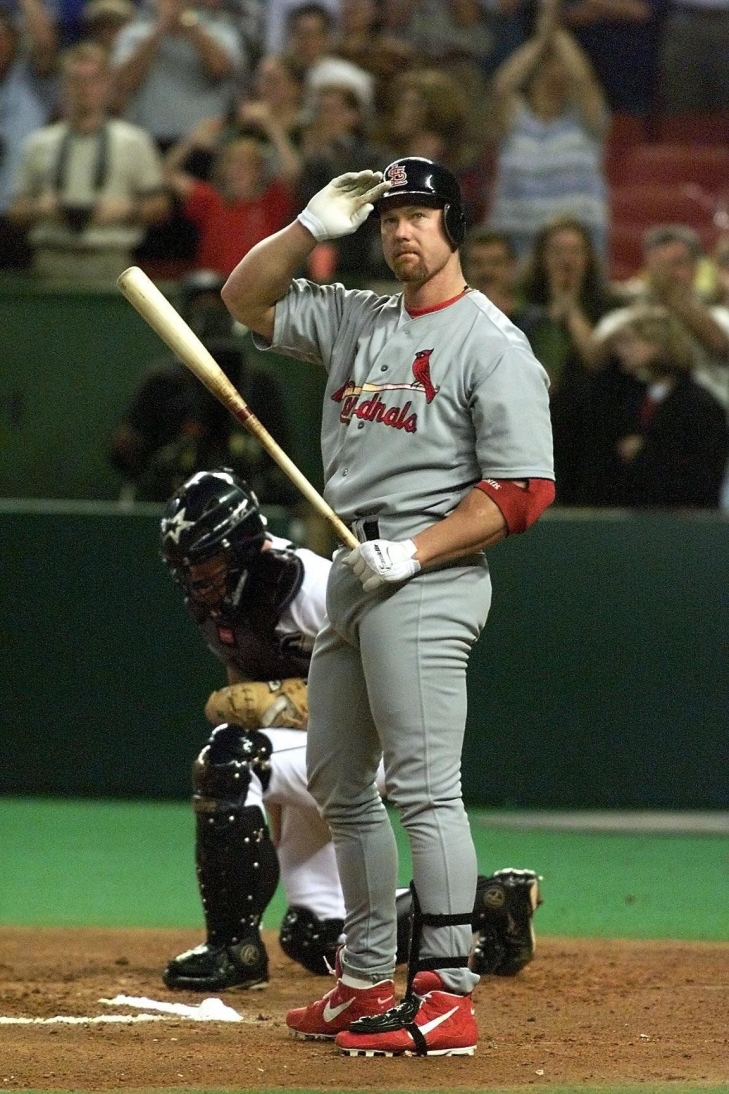
The arrival of Mark McGwire in downtown St. Louis midway through the 1997 season completely shifted the franchise's gravity. Coming over in a trade from Oakland, he brought a cartoonish brand of power that instantly made Busch Stadium a nightly destination. For baseball fans who didn't live through the era, it is difficult to overstate the monoculture McGwire created. In a sport still recovering from the wounds of the 1994 strike, he forced everyone—from diehards to casual evening news viewers—to tune in every time he stepped into the batter's box. He single-handedly made baseball central to the cultural conversation again.
That cultural wave peaked in 1998. In a summer-long chase that captivated the sports world, McGwire shattered Roger Maris’ single-season record by launching an unfathomable 70 home runs. He didn't just clear fences; he paired that historic power with a staggering .299/.470/752 slash line and 147 RBIs. Although he finished as the runner-up for the National League MVP, the season remains a monumental moment in modern sports history. He proved it wasn't a fluke the following year, backing it up with a 1999 campaign in which he bashed another 65 home runs and posted a .278/.424/697 line, earning a fifth-place finish in the MVP voting.
The final two years of his tenure saw a sharp decline as severe knee injuries and age finally caught up to his massive frame, limiting his playing time and efficiency. Yet across his four and a half seasons wearing the birds on the bat, the sheer concentration of his impact was staggering: 220 home runs and a massive .683 slugging percentage.
Evaluating a tenure like McGwire's requires looking beyond traditional longevity templates. For those arguing that performance-enhancing drugs should disqualify him, that is outside the scope of this project; he played in an era of rampant, tacitly permitted use, with leadership looking the other way. Conversely, for those who feel his raw home run totals should elevate him even higher in the franchise ranks, the reality of his overall game serves as a tether. His St. Louis years offered virtually nothing defensively, and the brevity of his peak naturally caps his volume-based value compared to multi-decade franchise icons. He was a short, blinding burst of pure offense—an unforgettable chapter of unmatched peak impact.
The permanent stamp on his legacy in Missouri came later. In 2017, the organization recognized the indelible mark he left on the city by inducting McGwire into the St. Louis Cardinals Hall of Fame.
37. Joe Torre
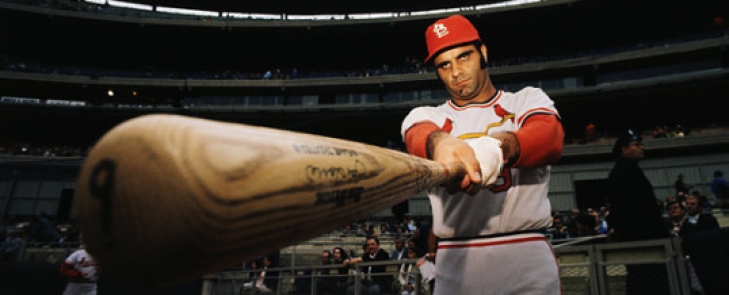
Joe Torre's legacy is forever tied to his role as the calm, stoic manager of the late 1990s Bronx dynasty, leading the Yankees to four world titles from the dugout. However, this iconic chapter often clouds just how formidable he was when wielding a bat himself. Long before he crafted lineups, Torre was a top-tier threat in the National League. As a five-time All-Star catcher with the Braves, a significant March 1969 trade sent him to the St. Louis Cardinals in exchange for Orlando Cepeda. In St. Louis, his exceptional versatility became a key asset for the team. To keep his powerful bat active, he was moved to first base, then to behind the plate after a Tim McCarver trade, and finally across the field to third base—all while maintaining his effective offensive output.
Torre consistently stayed a prominent figure on the national stage, earning All-Star honors in four of his six summers in Missouri. He combined reliable contact with a powerful swing, nearly reaching elite levels in 1970 with 203 hits and a .325 batting average.
Where Torre truly shone was his unforgettable 1971 season. Playing at third base, he challenged and conquered opposing National League pitchers, winning the batting title with a fantastic .363 average, while also topping all of baseball with 230 hits and driving in 137 RBIs. His relentless era dominance in 1971 made him an absolute lock for postseason accolades. Registering a massive .421 on-base percentage and a heavy .552 slugging mark, Torre easily captured the 1971 National League Most Valuable Player Award, cementing his status as the premier offensive engine in the country.
Although his offensive numbers gradually declined to more typical levels in his later summers with St. Louis, his reliable contact-hitting ability stayed an essential constant. Following the 1974 season, the front office traded the veteran star to the New York Mets, where he became a player-manager and embarked on the legendary coaching career that shaped his later years.
In St. Louis, Torre accumulated 1,087 hits, 98 home runs, and 558 RBIs alongside a superb .308 batting average across 920 games. In 2014, he was inducted into the Baseball Hall of Fame for his contributions as a Manager.
39. Larry Jackson
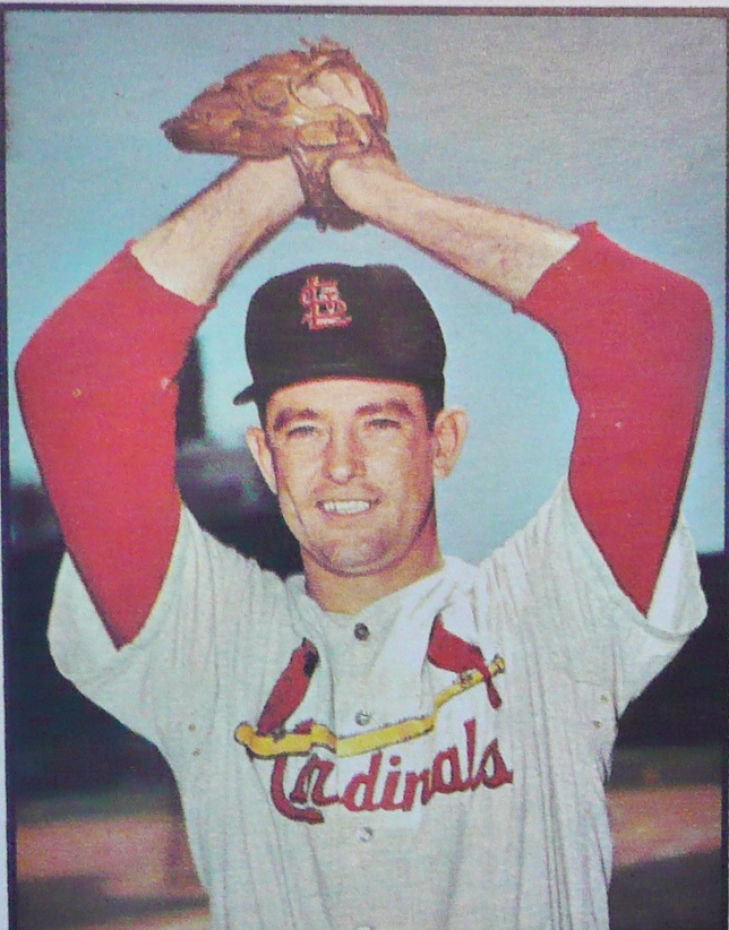
When Mr. Larry Jackson debuted in Major League Baseball with the St. Louis team in 1955, the organization was experiencing ongoing instability. Engulfed in a continual cycle of managerial and executive turnover, the team spent several years attempting to ascertain the true capabilities of this durable right-hander, fluctuating him between the starting rotation and high-leverage bullpen roles. Nonetheless, despite the organizational disorder surrounding him, Jackson maintained focus and established himself as a pillar of dependability for a franchise undergoing a transitional period.
Once he permanently secured his place in the rotation in 1957, Jackson blossomed into the quiet workhorse of the staff. Over his eight seasons in St. Louis, he secured three All-Star selections, including a memorable nod in 1957 when he got to pitch in front of the home crowd at Sportsman's Park. He was a model of steady, volume-heavy production, rolling up a 101–86 record and tossing 70 complete games as a Cardinal.
Paradoxically, his finest hour in a Redbird uniform was completely ignored by the All-Star voters. In 1959, pitching for a seventh-place club that finished twelve games under .500, Jackson turned in a masterpiece that only modern sabermetrics could fully appreciate. On the surface, his 14–13 record and 3.30 ERA looked standard. Under the hood, he was the most dominant pitcher in the National League. Jackson led all senior circuit arms with a whopping 7.3 Baseball-Reference WAR, anchored by league-best marks in both Fielding Independent Pitching (2.87) and home run prevention (0.50). He took the ball for 256 innings and simply refused to let opposing hitters clear the fences.
The outstanding 1959 campaign launched a three-year period during which he pitched an average of 250 innings annually, culminating in a 16-win season in 1962. However, by that time, a new generation of top young pitchers, headed by a rising star named Bob Gibson, was prepared to take over the rotation. To find a power hitter to replace the aging Stan Musial, the front office traded Jackson to Chicago that winter.
Jackson compiled a 101–86 record with a 3.52 ERA over 315 appearances (198 starts). He threw 1,601 innings, racked up 828 strikeouts, recorded 70 complete games, and tossed 14 shutouts while accumulating 23.5 bWAR as a Cardinal.
44. Bill Sherdel
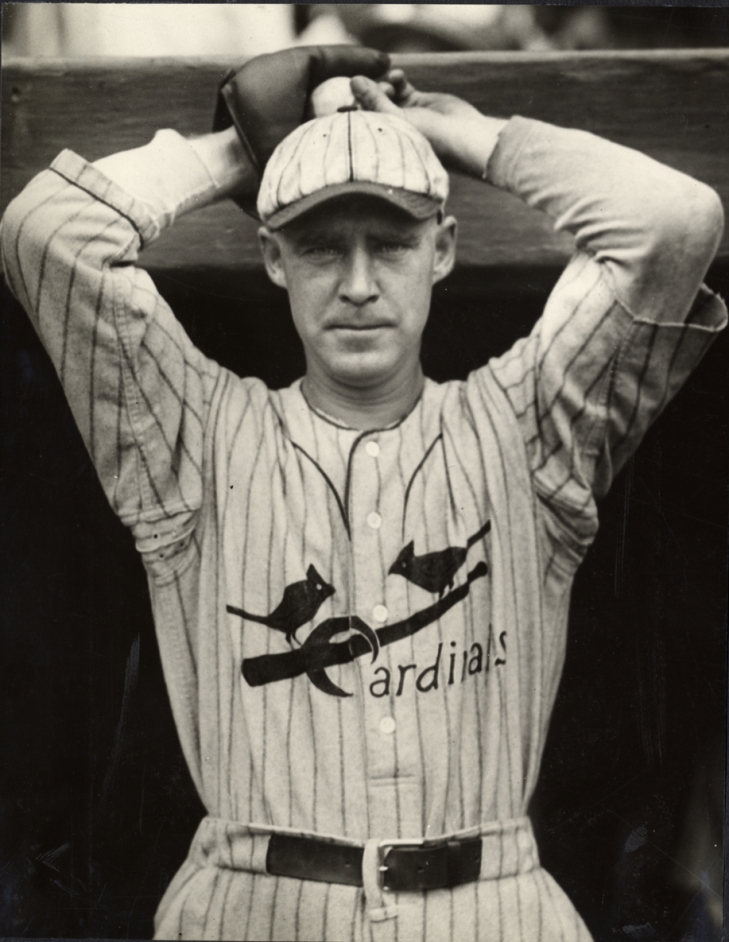
Before the modern bullpen car or specialized late-inning relievers became common, Bill Sherdel was redefining pitching strategies in St. Louis. Joining in 1918, this small left-hander, known as "Wee Willie," had a fourteen-year career characterized by remarkable resilience and adaptability. Although he didn't throw as fast as the league’s top pitchers, his effective slowball and quick delivery allowed him to serve as a versatile pitcher capable of calming rallies in the seventh inning or pitching a complete game just two days later.
Sherdel spent nearly his entire career with the Cardinals, accumulating an impressive statistical record. As a consistent and reliable figure during multiple periods of Redbirds baseball, he quietly built a resume that places him among the franchise’s top pitchers. Today, he ranks in the top five in franchise history for wins (153), games pitched (465), and innings pitched (2,450.2), with his 242 starts just outside that group. His 153 wins still stand as the franchise record for most wins by a left-handed pitcher.
Although he was never the most flashy pitcher in the rotation, his unconventional deployment gave him an advantage that typical starters lacked. Managed by Branch Rickey, Sherdel often served as the team’s go-to reliever in critical moments. He led the National League in saves three times—in 1920, 1927, and 1928. While the official save totals from the 1920s are modest and often single digits, leading the league in this category three times highlights his reliability and trustworthiness in high-pressure, decisive situations.
His dependability was key to the franchise's early success in modern times. Sherdel played a vital role in winning the 1926 World Series, pitching significant innings and delivering two outstanding games in the Fall Classic against the New York Yankees. Despite facing some unlucky losses on the big stage, his readiness to take the mound in any situation helped lead the Cardinals to victory. He wasn't an overpowering star who relied on raw intimidation but a classic, adaptable workhorse whose durability helped build a path to championships.
Sherdel made 465 appearances (242 starts). He compiled a 153–131 record with a 3.64 ERA, throwing 2,450.2 innings over 14 seasons.
46. Chick Hafey
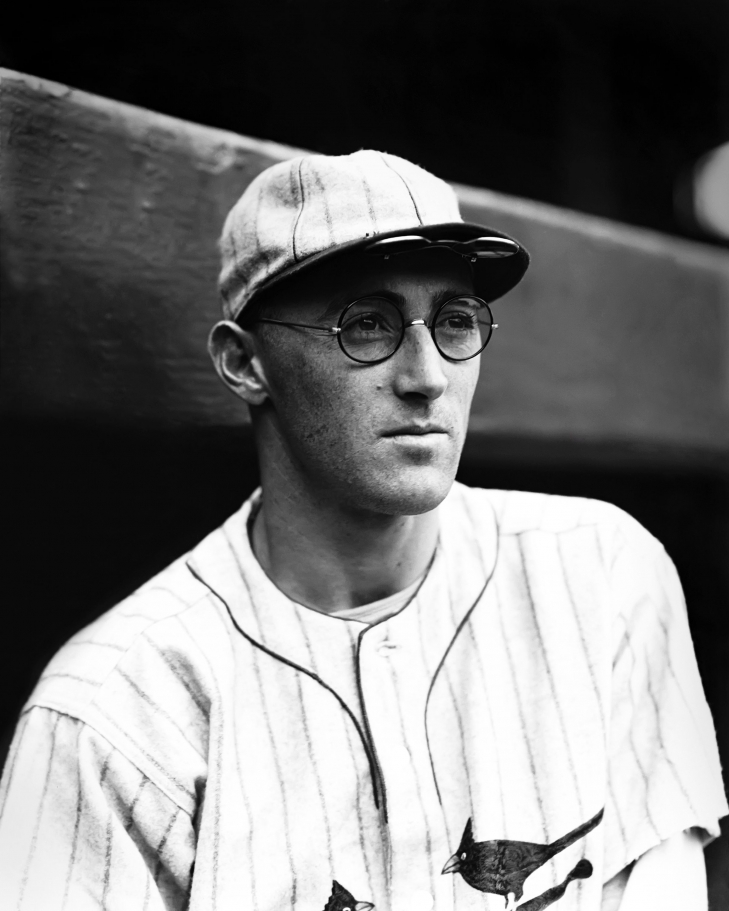
Chick Hafey's story stands out as one of the most distinctive and hard-won tales of the 1920s and 30s. A natural, line-drive hitter, he had an offensive potential rivaling anyone in the National League. Yet, his career was marred by chronic sinus problems and deteriorating eyesight. To adapt, Hafey became one of the earliest major league players to wear glasses while on the field. This change did not hinder his batting; instead, it sparked a period of dominance that struck fear into opposing pitchers for over five years.
Arriving in St. Louis full-time in the mid-1920s, Hafey transformed into an elite offensive threat by 1927. That summer, he captured the National League slugging title with a blistering .590 mark, pairing it with 18 home runs and a .329 batting average. It marked an astonishing five-year stretch during which he simply refused to drop below the .329 threshold in any single season. From 1928 to 1930, he functioned as a middle-of-the-order run producer, delivering three consecutive seasons with at least 26 home runs and over 100 runs batted in.
The peak of his regular-season brilliance arrived in 1931 during one of the most dramatic batting title races in baseball history. Hafey went down to the final day of the schedule alongside teammate Jim Bottomley and New York’s Bill Terry. On the strength of a clutch hit in his very last at-bat, Hafey secured the crown with a magnificent .349 average, edging Terry by a mere .0002. That individual crown served as the catalyst for a team success story, as Hafey helped anchor a Cardinals squad that went on to win the 1931 World Series—the second championship banner he helped bring to St. Louis, alongside the 1926 title.
However, a fierce contract dispute with team executive Branch Rickey ahead of the 1932 season abruptly ended his time in Missouri, resulting in a trade to the Cincinnati Reds. His counting totals in St. Louis remain somewhat compressed because of his constant health setbacks and the brief eight-year window he spent with the team. Consequently, his raw volume doesn't match the standard multi-decade icons on the franchise leaderboard, but the sheer concentration of his peak value remains undeniably historic.
He logged 963 hits, 127 home runs, and 618 RBIs with a .326/.379/.568 slash line as a Cardinal. Hafey was chosen for the Baseball Hall of Fame in 1971 when he was selected by the Veterans Committee, and he was also named to the Cardinals’ inaugural Hall of Fame class in 2014.
29. Jesse Haines
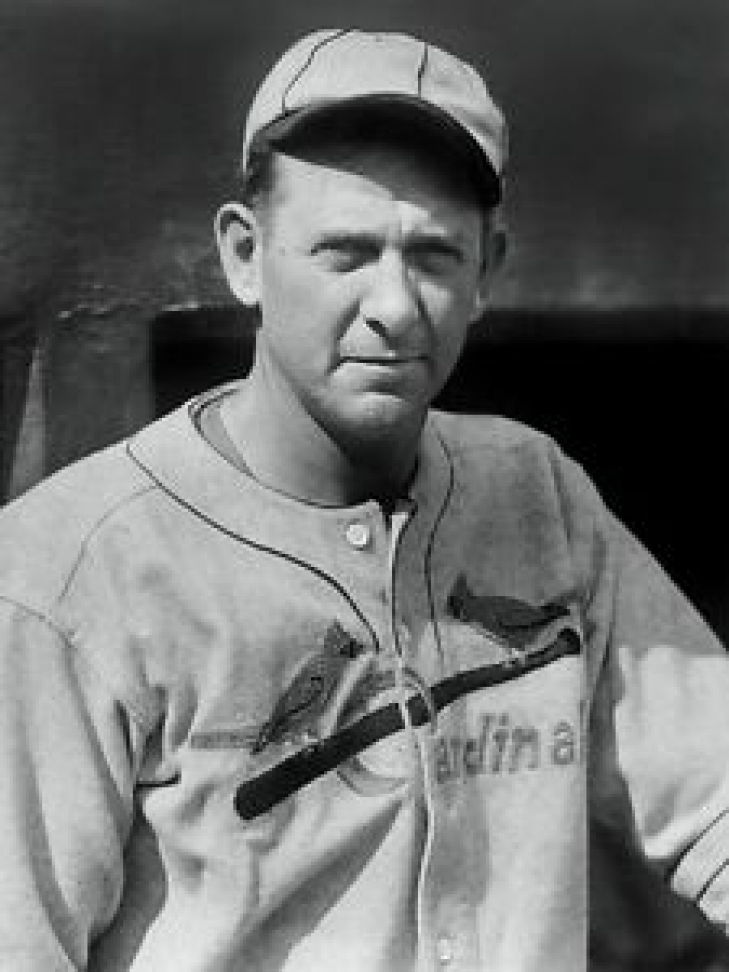
Before the St. Louis Cardinals became a consistent Powerhouse of the National League, they needed a strong, determined leader to elevate their pitching staff from obscurity. Jesse "Pop" Haines offered exactly that endurance as a foundation. Acquired from Kansas City of the American Association in 1920 for $10,000—almost draining the young franchise's funds—the durable right-hander joined the starting rotation. Over 18 seasons, Haines was the organization's reliable workhorse, helping them rise from a struggling second-division team to World Series champions.
Haines’ rise to historical prominence was largely due to his elite, powerful knuckleball, which he threw with much higher velocity than today's versions. Instead of employing it as a slow, fluttering pitch, he grasped it firmly with his knuckles, producing a sharp, downward movement that frequently shattered bats of his era.
His personal breakthrough happened swiftly, but his first major professional masterpiece came on July 17, 1924. Playing against the Boston Braves at Sportsman's Park, Haines completely shut down the opposition to throw a historic 5–0 no-hitter—the first solo no-hit game in the franchise's modern era.
Haines attained his peak as the key player of the "Gashouse Gang" predecessors in the late 1920s. In the notable 1927 season, he delivered an outstanding performance, pitching 300.2 innings and achieving a 24–10 record with a 2.72 ERA and 25 complete games.
Haines didn't merely amass regular-season stats; he excelled on the biggest stages. He was instrumental in leading St. Louis to its first modern world championship in 1926, notably defeating the New York Yankees with two complete-game wins in the Fall Classic, including a vital shutout in Game 3—even while dealing with badly blistered fingers. He later earned two more World Series rings with the team in 1931 and 1934.
As the physical toll of compiling nearly 1,000 career innings caught up to his arm, his availability decreased to a valuable long-relief and spot-starting role in the mid-1930s. He endured his final MLB appearances at age 43 in 1937, ending a nearly two-decade career in a single uniform.
He finished his St. Louis residency with a 210–158 record, 3.64 ERA, and 981 strikeouts in 555 appearances, ranking high on franchise leaderboards with 209 complete games and 24 shutouts. His contributions were validated in 1970 when the Veterans Committee inducted him into the Baseball Hall of Fame, and posthumously in 2014 as part of the Cardinals' first Hall of Fame class.
40. Whitey Kurowski
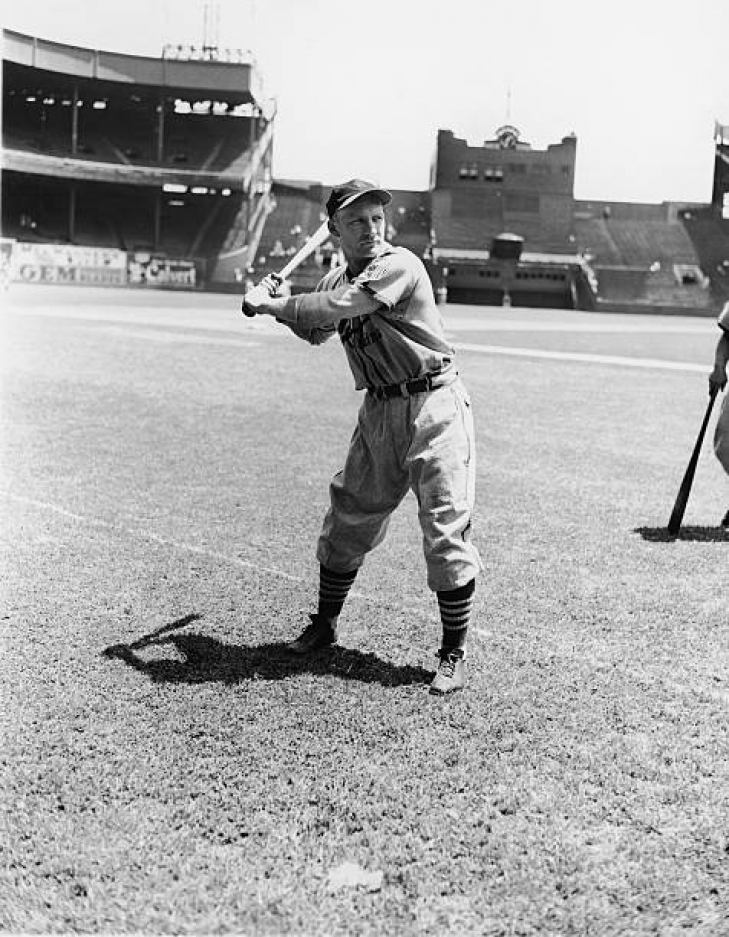
When Whitey Kurowski became the regular third baseman for St. Louis in 1942, he entered a lineup aimed at building a dynasty. Although many note his rise coincided with the talent loss during World War II, Kurowski was more than just a temporary substitute. He played a key role on three pennant-winning teams and was selected as an All-Star five years in a row from 1943 to 1947, thanks to his consistent defense and unexpected power at the plate.
His rise paralleled the swift progression of the "St. Louis Swifties" under Billy Southworth's leadership. Kurowski was not a top-ranked prospect when he joined, but he quickly established himself as a key player on a team that won 106 games in 1942 and surprised the Yankees in the World Series. As a rookie, he capped that memorable season with a dramatic moment by hitting a breaking ball from Red Ruffing over the left-field roof at Yankee Stadium in the ninth inning of Game 5. This game-winning hit secured the title for the Cardinals and made him a favorite among St. Louis fans.
During his prime five-year period, Kurowski demonstrated remarkable consistency, accumulating over 150 hits each summer. Unlike the typical slap hitter of his time, he hit more than 20 home runs three times and posted a batting average above .300 in three seasons. His standout season was in 1945, when he led the offense with 21 homers and a .323 batting average, finishing fifth in the National League MVP voting.
Beyond his hitting, Kurowski’s glove provided the Cardinals with a top-tier defensive presence at third base. He twice led all National League third basemen in fielding percentage and ranked among the top four four other times, anchoring an infield that had to handle the expansive and challenging terrain of Sportsman's Park. What makes this defensive consistency even more impressive is that Kurowski played his entire career with part of his right elbow bone missing due to childhood osteomyelitis. Despite this physical limitation, his arm remained a powerful weapon across the diamond.
Just as he was establishing himself as a top third baseman of the 1940s, shoulder problems hampered his performance. The injury led to an early retirement after 1949, ending his nine-year career. Playing his whole career with the Cardinals, Kurowski amassed 925 hits, a .286 average, and three World Series titles.
