
17. Jim Bottomley
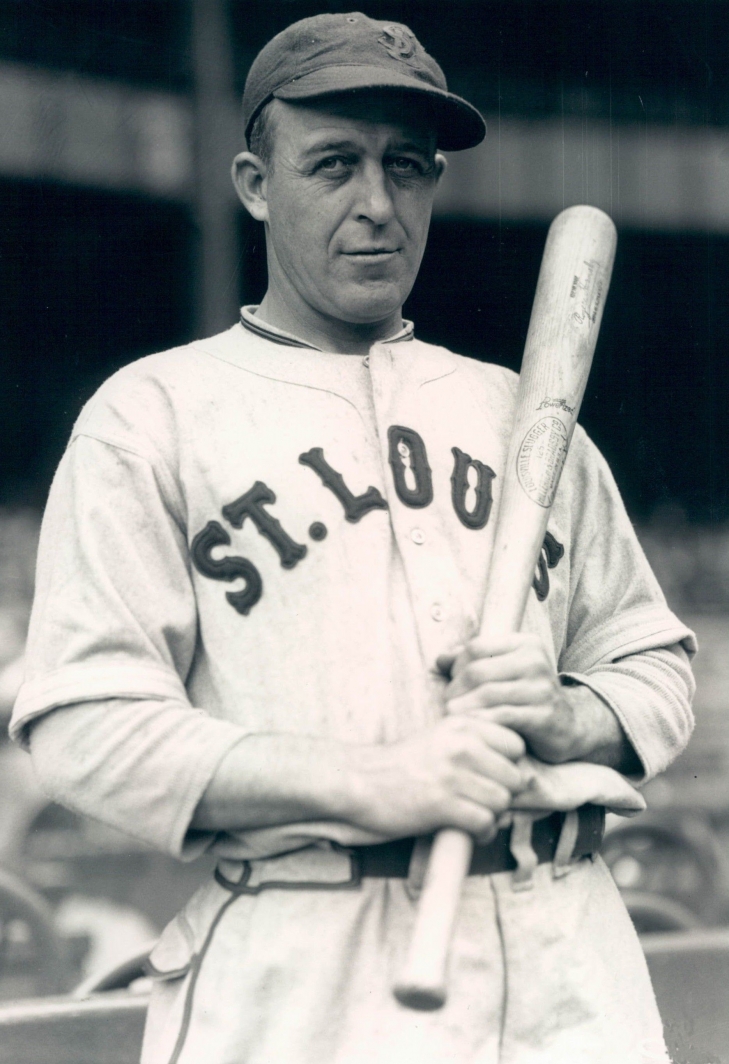
Jim Bottomley entered the scene in eastern Missouri in late 1922, immediately bringing a sense of confidence to the franchise. Fondly known as "Sunny Jim" because of his consistently cheerful demeanor and genuine passion for the sport, he combined this vibrant personality with a powerful, high-volume left-handed batting style. He rapidly became the leading run-scorer for the team's initial generation of modern World Series champions, establishing a period of formidable middle-of-the-order hitting that made a lasting impact on the Senior Circuit.
Becoming a regular in 1923 threw the entire league into an absolute frenzy. Bottomley turned hitting line drives off the wall into a daily routine, batting a blistering, career-high .371 with a stellar .425 on-base percentage during his first full summer in the big leagues.
Rather than peaking early, he simply used that contact foundation to systematically unlock a devastating power and clutch-hitting game as the roster matured around him. Sunny Jim recorded a total of eight .300 batting campaigns during his 11-season tenure with the St. Louis Cardinals, functioning as a consistent RBI producer. He commenced an impressive six-year streak of surpassing the 100-RBI mark beginning in 1924, a sequence initiated by a legendary September afternoon that season when he drove in an extraordinary, major-league record 12 runs in a single game against the Brooklyn Robins.
As his additional-base leverage increased, he led the National League in doubles consecutively in 1925 and 1926, providing the essential offensive foundation that contributed to the franchise's inaugural modern World Series victory over the New York Yankees in 1926. The definitive zenith of his career occurred during an outstanding, award-recognized 1928 regular season. Bottomley overwhelmingly dominated the Senior Circuit, hitting 42 doubles whilst leading the league with 20 triples, 31 home runs, and an impressive 136 runs batted in. This remarkable demonstration of power and speed secured his unanimous selection for the 1928 National League Most Valuable Player Award. He beautifully maintained his frontline baseline through the turn of the decade, driving in 137 runs in 1929 and hitting .348 in 1931 to help pilot the Redbirds to their second world championship banner.
By the conclusion of the 1932 campaign, a sudden transactional crossroads materialized. With the emergence of young star Ripper Collins at first base, management executed a definitive business departure, trading the 32-year-old veteran to the Cincinnati Reds to initiate the late-career chapter of his journey before he eventually wrapped up his playing days with the cross-town St. Louis Browns.
Across his 11 seasons strictly representing the Cardinals, he accumulated exactly 1,727 hits, 344 doubles, 122 triples, 181 home runs, and 1,105 runs batted in, entirely validated by a spectacular .325 batting average and a robust .537 slugging mark. The baseball world beautifully formalized his legacy decades later, as the Veterans Committee officially punched his first-class ticket to Cooperstown in 1974.
Ensuring his cheerful dominance remains permanently etched in team history, the organization added the final, perfect punctuation to his story by triumphantly enshrining Jim Bottomley as a proud member of the inaugural St. Louis Cardinals Hall of Fame class in 2014.
10. Joe Medwick
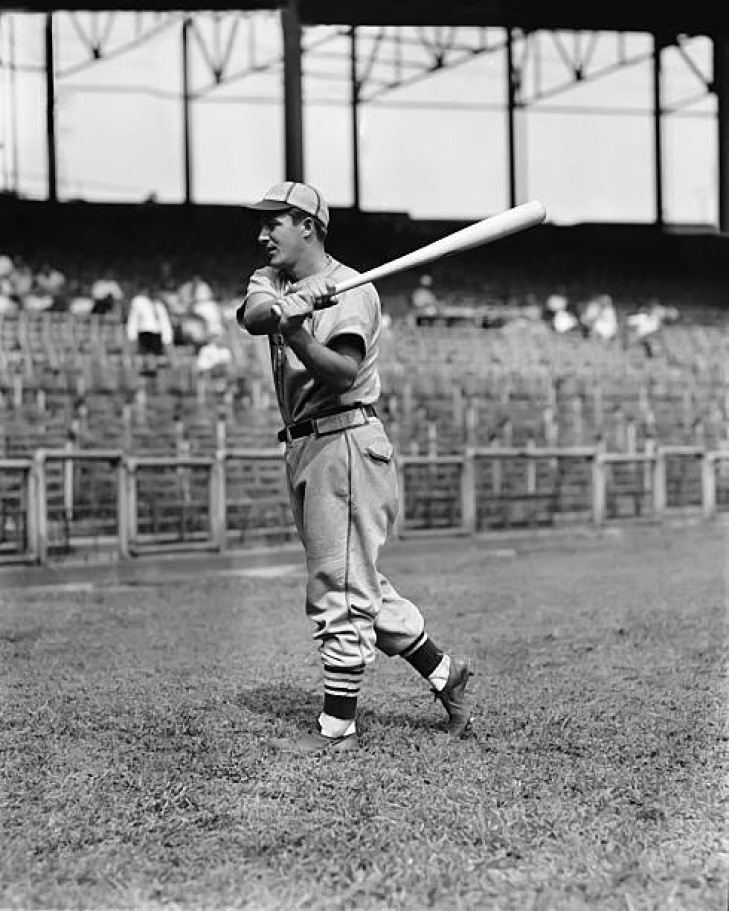
Debuting with the St. Louis Cardinals in 1932, Joe “Ducky” Medwick (thus nicknamed because he apparently walked like that aforementioned bird) would become a major star through the 1930s. Before he was traded midway through the 1940 season he would have seven full seasons where he batted over .300 with four 200 Hit campaigns. While in relative terms, Medwick was not known as an elite power hitter he did blast 152 dingers for St. Louis including a league-leading 31 in 1937. We will get back to that year later. In addition to decent power, he was a doubles leader three times (1936-38) and had seven straight years with 40 Doubles, and was also a Triples champion in 1934.
11. Adam Wainwright
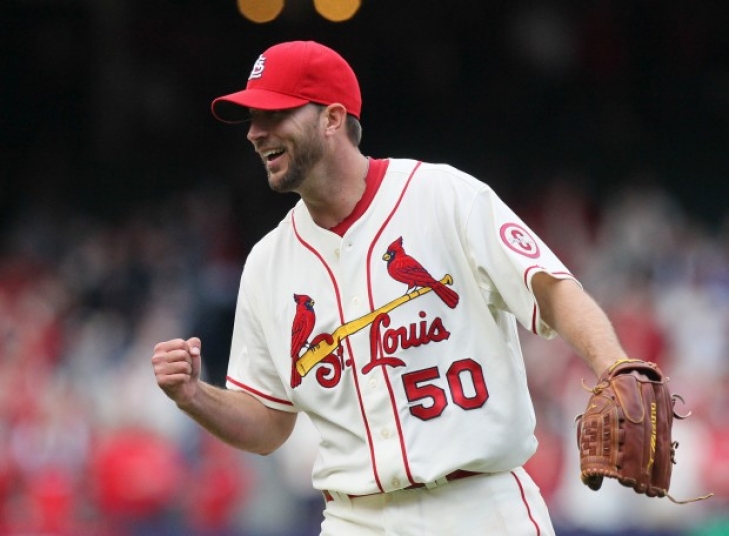
The modern history of the St. Louis Cardinals is closely linked to a highly loyal and dominant right-handed pitcher from Georgia. Originally drafted in the first round by the Atlanta Braves, Adam Wainwright was traded to Missouri in December 2003. This trade became one of the most significant and franchise-changing deals in baseball history. Known for his powerful sinker and a legendary 12-to-6 curveball called "Uncle Charlie," Wainwright spent over twenty years becoming a cornerstone of the team. He not only posted impressive stats but also demonstrated relentless competitive spirit and loyalty to the organization. Over time, he transformed from a postseason hero to the standout ace of his era.
After two games with the parent club in 2005, Wainwright became a permanent fixture in 2006, emerging in high-leverage bullpen roles. When veteran closer Jason Isringhausen was injured late in 2006, manager Tony La Russa played the rookie, who responded flawlessly, allowing zero runs over nine postseason appearances. Most famously, he froze Carlos Beltrán with a legendary, physics-defying curveball to capture the National League pennant, before striking out Brandon Inge to secure the 2006 World Series title.
Once he returned to his natural starting role ahead of the 2007 season, Wainwright transformed into a metronomic force at the top of the rotation. His absolute individual peak of regular-season execution erupted during a phenomenal multi-year run surrounding the turn of the decade. He led the National League with a career-high 19 victories in 2009 to claim a close third-place finish in the Cy Young voting.
He truly shined during an incredible 2010 season, earning his first 20-win game with a dazzling 2.42 ERA and 213 strikeouts over 230.1 innings. It was a season that earned him his first career All-Star selection and a close second place in the Cy Young voting behind Roy Halladay.
However, his extensive career must be viewed in light of the serious physical challenges that nearly ended his prime. A torn elbow ligament led to Tommy John surgery, causing him to miss the entire 2011 season—yet he was richly rewarded later with his second World Series ring when his team won the championship that fall.
Proving any doubts about his physical leverage entirely wrong, he engineered a spectacular second act of frontline dominance upon his return.
He dominated the Senior Circuit in 2013 with 19 wins and a league-high 241.2 innings, then obliterated National League lineups in 2014 with 20 wins and a remarkable 2.38 ERA, finishing second and third in consecutive Cy Young races. Wainwright’s legacy was built on exceptional, multi-faceted contributions that set him apart from typical pitchers. He was also a top defender, earning two Gold Glove Awards for his perfect positioning and exceptional internal clock. He was equally dangerous with a bat in his hands, famously launching a home run on the very first pitch he ever saw in the major leagues and capturing a Silver Slugger Award in 2017.
While his final 2023 victory lap was highly suspect due to a severe performance leak—navigating his age-41 season with an ERA near 8.00 and a negative 2.0 bWAR—he displayed incredible baseline resilience to secure his historic, milestone 200th career victory in his final home start against the Milwaukee Brewers.
Across his 18 seasons strictly representing the Cardinals as a true "Lifer," he compiled an even 200–128 record, 2,202 strikeouts, and a stellar 3.38 career ERA over 2,668.1 innings of work.
13. Johnny Mize
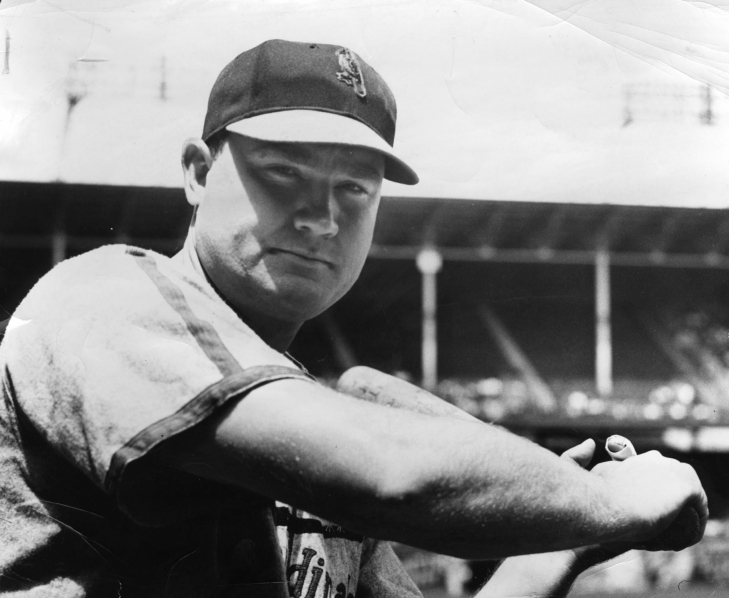
In chronicling the historic, multi-stage career of a baseball player, it is uncommon to encounter a legacy precisely segmented into three definitive acts of excellence. For John Robert Mize, his illustrious journey manifested through three distinct phases: as a structural powerhouse for the St. Louis Cardinals, as a prominent mid-career figure for the New York Giants, and as a distinguished late-career role player who contributed significantly to five consecutive World Series victories with the New York Yankees. However, an exclusive examination of his initial foundational act in eastern Missouri reveals an extraordinary peak of run production that exemplifies exemplary batting mechanics—a legendary apex that nearly diminished before it genuinely commenced.
The entire trajectory nearly shattered during a high-stakes transaction at a pivotal juncture in late 1934. While playing in the minor leagues for Rochester, the young first baseman attracted the interest of the Cincinnati Reds, who agreed to purchase his contract from the Cardinals for an astounding sum of $55,000—an exorbitant amount during the peak of the Great Depression. Nevertheless, Mize sustained a severe, incapacitating injury to his leg and groin, which restricted his mobility. Subsequent medical examinations revealed painful bone spurs, prompting the Reds to annul the agreement and return him to St. Louis. At merely 22 years of age, many commentators believed "The Big Cat" was at the end of his career.
Instead, Cardinals general manager Branch Rickey appointed a specialist to perform surgery, establishing a seminal technical shift. Due to his ongoing recovery, Mize was unable to cope with the routine demands of a minor-league schedule, which resulted in his promotion to the major-league roster in 1936 solely to serve as a part-time pinch hitter. He fundamentally defied expectations by achieving a remarkable .329 batting average over 126 games, thereby securing a regular position in the starting lineup.
By 1937, his iconic, picture-perfect left-handed swing became the most feared weapon in the National League. Mize turned punishing inside fastballs and maintaining supreme plate discipline into a strict daily routine. That summer, he lashed out a .364 batting average with 25 home runs, a .427 on-base percentage, and a commanding .595 slugging mark.
Rather than hitting a ceiling, he systematically unlocked even greater power leverage over the next three seasons, establishing an era of unadulterated dominance. He captured the National League batting title in 1939 with a brilliant .349 average while pacing the Senior Circuit with 28 home runs.
He beautifully backed that up during a magnificent 1940 campaign, hammering a league-high 43 round-trippers and driving in a spectacular 137 runs. His complete dominance is beautifully validated by advanced efficiency metrics; Mize led the National League in slugging percentage and total OPS for three consecutive summers from 1938 to 1940, capturing consecutive MVP runner-up finishes.
The final chapter of his initial run arrived following the 1941 schedule. Eager to transition toward a younger, more flexible roster, ownership executed a sudden business departure, trading their premier first baseman to the New York Giants.
Mize walked away from Sportsman's Park, leaving behind a concentrated statistical fortress that commands profound reverence from modern purists. Across his six seasons strictly representing the Redbirds, he accumulated an astonishing localized slash line of .336/.419/.600, hammering 158 home runs and driving in 531 runs over 854 games.
His immortal contributions were formally immortalized when the Veterans Committee officially punched his first-class ticket to Cooperstown in 1981. Decades later, the organization added the final, beautiful punctuation to his legacy, triumphantly enshrining Johnny Mize as a member of the inaugural St. Louis Cardinals Hall of Fame class in 2014.
8. Ken Boyer
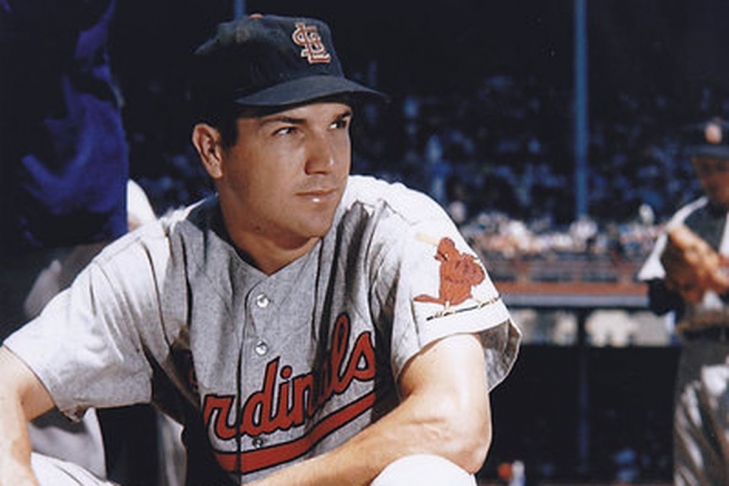
When establishing the definitive benchmark for excellence in the modern hot corner, esteemed baseball historians often scrutinize beyond the most flamboyant personalities to emphasize a player who epitomized durability and possessed an exceptional, middle-of-the-order power. Ken Raymond Boyer was initially signed by the St. Louis Cardinals as a pitcher; however, a swift organizational transition to third base during his second minor league season proved to be an unequivocal strategic success for both the athlete and the franchise. Making his eagerly awaited Major League debut in 1955, the highly athletic and physically commanding native of Missouri not only solidified the left side of the infield but also evolved into the silent yet authoritative cornerstone of the entire team. Throughout a distinguished decade-long tenure, the esteemed team captain set a benchmark for multidimensional consistency, ranking among the most exemplary eras in the extensive history of the St. Louis Cardinals.
6. Enos Slaughter
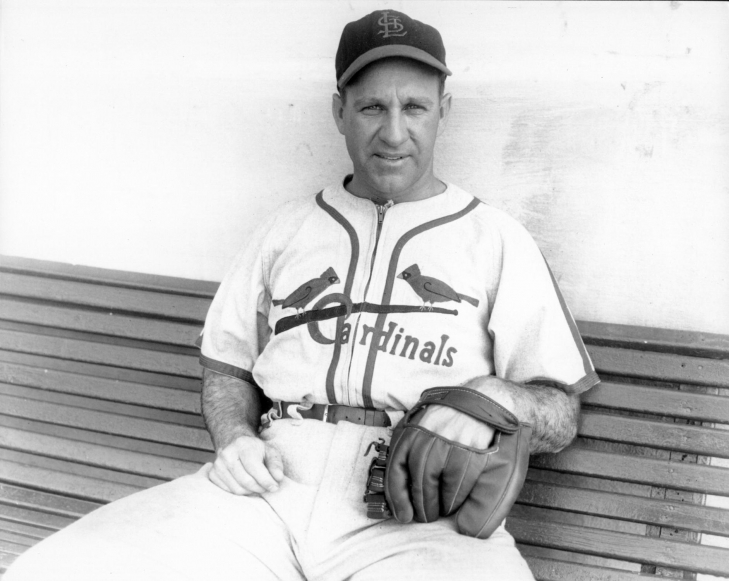
If you are a regular reader of Notinhalloffame.com, you know that the editorial staff is an absolute sucker for great sports names. Enos Slaughter is a fantastic identifier all on its own, but when you inject his timeless, rustic moniker, you get Enos “Country” Slaughter—a combination of words so beautifully evocative of a bygone era that the temptation to artificially elevate him in the historical ledger was immense. We didn't do that, of course, but his performance on the grass didn't require any favoritism anyway.
Emerging from the Redbirds' minor league talent pipeline, the broad-shouldered, highly aggressive right fielder was known for his unwavering refusal to walk, sprinting to first base even after taking a walk. Throughout his notable yet interrupted career in Missouri, he served as the competitive spark and high-energy driver for three pennant-winning teams, consistently delivering solid line-drive production that cemented his legendary status in local lore.
His 1938 debut season served as an impressive introduction, as he posted a .276 batting average over 112 games. Interestingly, this would remain his lowest single-season batting average during his main years with the Cardinals, highlighting his remarkable consistency over the next decade and a half. In 1939, he became a key player, regularly dismantling National League pitching and leading the league with 52 doubles while maintaining a .320 batting average. He sustained that upward trajectory directly into the 1940s, capturing a well-deserved runner-up finish in the 1942 National League Most Valuable Player balloting after pacing the circuit in hits (188) and triples (177) to propel St. Louis to a world championship.
Then, at the absolute evolutionary zenith of his physical peak, the broader geopolitical realities of World War II engineered a sudden, three-year competitive blackout. Slaughter completely stepped away from the sport from 1943 through 1945 to serve his country in the Army Air Forces. Had those three prime summers not been sacrificed, he would have easily compiled eleven individual .300 campaigns for the organization rather than eight.
Demonstrating the legendary grit that defined his entire identity, his 1946 return to civilian life marked a remarkable moment of athletic redemption. Slaughter dominated the Senior Circuit leaderboards by hitting 18 home runs and driving in a league-high 130 runs, finishing just behind in the NL MVP voting. The peak of his baseball achievements occurred in October during Game 7 of the 1946 World Series against the Boston Red Sox. With the game tied at 3–3 in the eighth inning, Slaughter sparked a memorable hit-and-run from first base on a line drive to left-center field by Harry Walker. Bypassing standard strategic caution and charging through a visible stop sign from his third-base coach, he executed "Slaughter's Mad Dash"—a relentless, full-throttle sprint from first base all the way to home plate. Catching the Boston defense entirely off guard and sliding across the plate to score the world-championship-winning run, the iconic play remains one of the most celebrated, high-leverage moments in the history of global sports.
Slaughter remained a frontline fixture through the turn of the decade, recording another spectacular third-place MVP finish in 1949 by leading the league with 13 triples while batting a brilliant .336.
The inevitable business exit materialized in April 1954 when management initiated a youth movement, shocking the local community by trading the aging icon to the New York Yankees, where he would secure two more championship rings as a highly effective utility hand. Over his 1,751 games representing St. Louis, he accumulated exactly 2,064 hits, 366 doubles, 135 triples, 146 home runs, and 1,148 runs batted in, completely validated by an exceptional .305/.384/.463 franchise slash line.
He entered the Baseball Hall of Fame via the Veterans Committee in 1985. Eleven years later, Slaughter's number 9 was retired by the team, and in 2014, he was part of the Cardinals’ inaugural Hall of Fame class.
7. Dizzy Dean
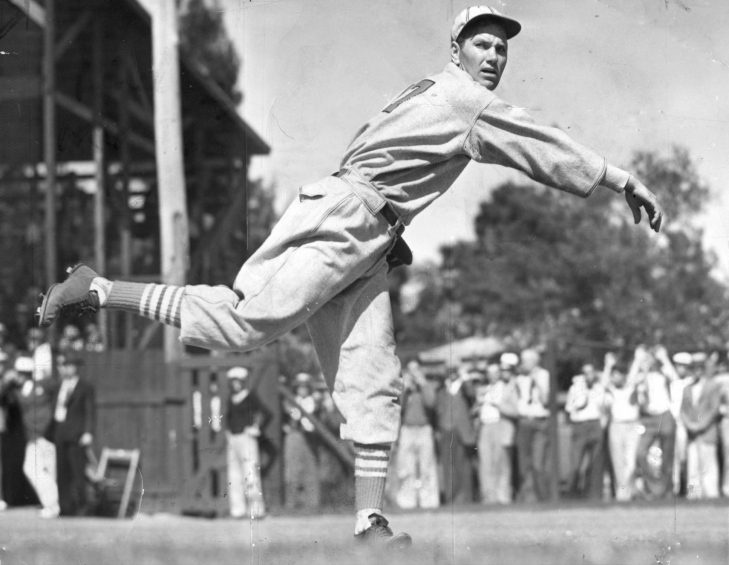
When we declare that Bob Gibson was the preeminent pitcher in the history of the St. Louis Cardinals, we substantiate this assertion; however, longevity and overall career significance constitute separate considerations. If the discussion pertains to the most rapid, overwhelmingly dominant peak performance by a Redbirds pitcher, that accolade unquestionably belongs to another individual. Born Jay Hanna Dean, but widely known as “Dizzy” due to his flamboyant, assertive, and humorously self-assured demeanor, the nation’s prodigious right-hander regarded Major League Baseball as his personal domain. Following a brief debut involving one game in 1930 and a swift stint in the minor leagues for further development, he secured a permanent position in the rotation for the 1932 season. He did not merely take the mound; he became a cultural icon and a high-velocity workhorse who set the pace throughout the National League, leading an enduring multi-era peak that illuminated the sport's history with exceptional brilliance.
His introductory 1932 campaign was a remarkable display of extensive endurance. Dean transformed logging numerous innings into a disciplined daily routine, leading the Cardinals to a competitive record of 18–15 and ranking third among all National League pitchers with a bWAR during his rookie season, owing to his 191 strikeouts and four shutouts over a league-high 286 innings. Advanced analytical metrics strongly substantiate his immediate influence on the team.
He maintained that the frontline trajectory directly into the 1933 schedule, achieving his first 20-win campaign (20–18) and securing another league-leading strikeout crown, thereby paving the way for the historic pinnacle of his career on the mound.
The pinnacle of his hardware-certified legacy was reached during an exceptional 1934 regular-season performance. This period marked the summer when the Cardinals earned the affectionate nickname "Gashouse Gang”, a rugged and dirt-stained assembly of characters, with Dean serving as the unequivocal representative of the franchise. He delivered an exemplary demonstration of defensive mastery, culminating in an impressive 30–7 record, making him the last National League pitcher to achieve 30 wins in a single season. His advanced efficiency metrics dominated the era; he led Major League Baseball with seven shutouts and an outstanding 9.0 bWAR, thereby securing the National League Most Valuable Player award. His prowess in high-stakes games translated directly into world championship titles awarded in October. Dean posted a 2–1 record in the 1934 World Series against Detroit, concluding his performance with a historic, complete-game shutout in Game 7 to definitively secure the championship for St. Louis.
Far from a single-season peak, "Ol' Diz" maintained an unrivaled baseline of elite dominance over the next two summers, finishing as the runner-up for the National League MVP in both 1935 and 1936. He systemically dismantled opposing lineups to win 28 games in 1935 and 24 more in 1936, running his streak of National League strikeout crowns to four consecutive seasons. From 1932 to 1937, he never finished lower than third in pitching bWAR across the Senior Circuit, showcasing a concentrated era of dominance that left opposing managers completely helpless.
A single pitch ultimately led to a sudden, career-altering crossroads during the 1937 All-Star Game. A line drive struck by Earl Averill resulted in Dean sustaining a fractured toe; in an attempt to pitch through the injury prematurely, he modified his mechanics, leading to an immediate arm injury. The organizational departure occurred prior to the 1938 season when the front office traded their declining ace to the Chicago Cubs in exchange for a substantial package of players and cash. Chronic bursitis and a dead arm diminished his effectiveness significantly during his tenure with Chicago, marking a quiet conclusion to his peak years.
Across his 213 appearances as a Cardinal, Dean accumulated exactly 134 wins against just 75 losses, maintaining a brilliant 3.43 ERA, 120 complete games, 23 shutouts, and 924 strikeouts over 1,595.2 innings of work.
Dean would enter the Baseball Hall of Fame in 1953, and 19 years later, his #17 was retired by St. Louis. The franchise also inducted Dean as part of their first Hall of Fame class in 2014.
5. Ozzie Smith
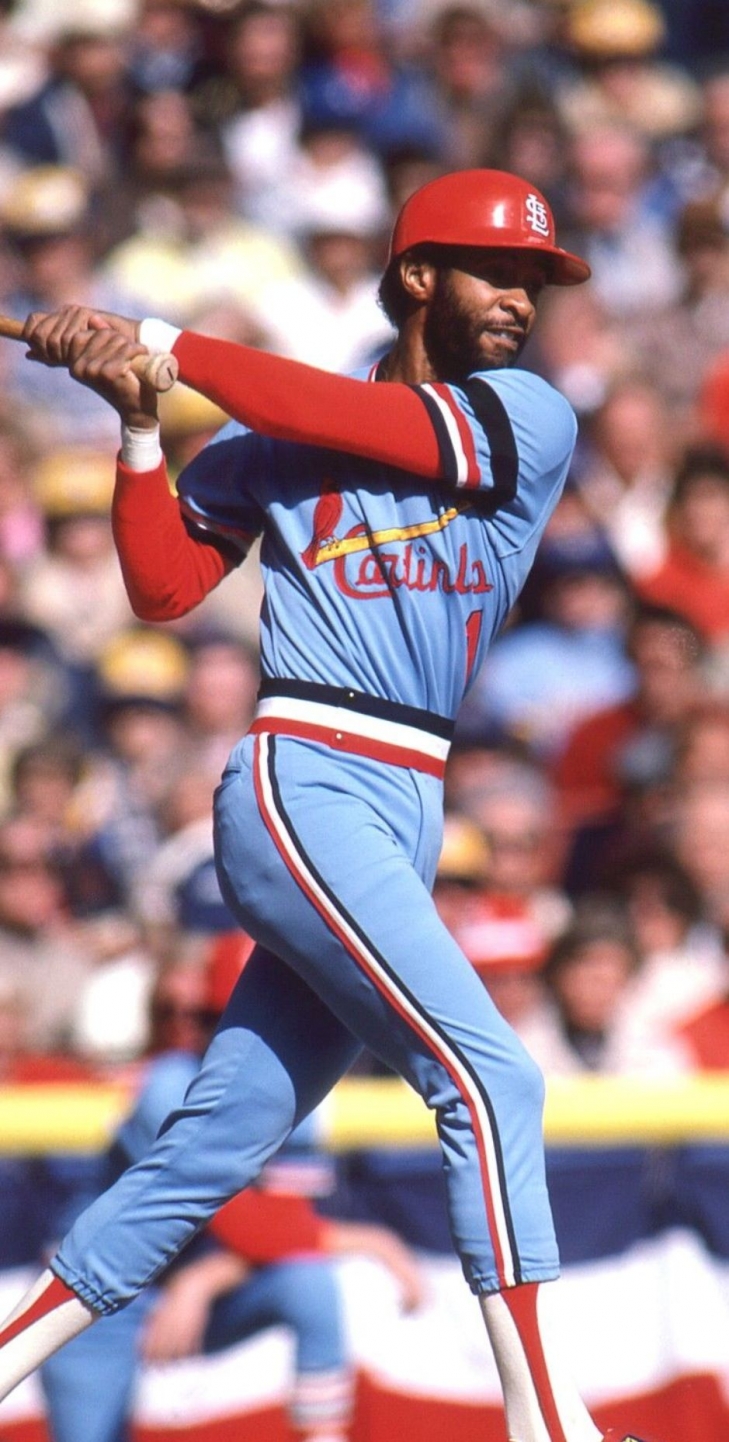
When looking at the most impactful moments in the sport's history, the December 1981 trade that changed the balance of the National League really stands out as a major event. The San Diego Padres gave up their promising young shortstop, thinking he was only good at defense and would never be a strong hitter. They couldn’t have been more mistaken. Ozzie Smith was sent to Missouri in a historic trade for Garry Templeton. He didn’t just step into a spot on the infield; he became the energetic, acrobatic heart of the Redbirds’ exciting resurgence. Over an incredible 15 seasons, "The Wizard" completely transformed how his position was played on defense and gradually developed his offensive skills into a top-tier weapon at the top of the lineup.
His initial phase in St. Louis immediately confirmed Whitey Herzog's vision of emphasizing speed, aggressive defense, and generating runs. Although Smith’s compact swing never suggested a power hitter, he dedicated himself to improving his offensive game, transforming his approach under the Gateway Arch. He made consistently making high-velocity contact a daily habit, accumulating 1,944 of his 2,460 career hits while with the Cardinals. Once on the bases, he leveraged his exceptional acceleration to produce 13 consecutive seasons with at least 20 stolen bases, amassing 433 of his 580 career steals with the team and continually challenging opposing pitchers.
The pinnacle of his evolutionary development as a comprehensive, multidimensional athlete was demonstrated during a remarkable 1987 regular season. Acting as the driving force behind a pennant-winning team, Smith delivered an exceptional offensive performance that exceeded conventional expectations. He achieved a remarkable batting average of .303, his career high, supplemented by 40 doubles and 104 runs scored across 158 games. Most notably, he attained this high level of offensive output without recording a single home run throughout the summer. His exceptional discipline at the plate was unmatched; he drew 89 walks compared to only 36 strikeouts, resulting in an impressive on-base percentage of .392. This performance merited the receipt of a Silver Slugger Award and contributed to a strong second-place finish in the National League Most Valuable Player voting, surpassed only by Andre Dawson.
Nevertheless, while his offensive development solidifies his overall value, it is his extraordinary, gravity-defying defensive prowess that sustains his standing in the sport’s enduring zeitgeist. "The Wizard of Oz" did not merely play shortstop; he did so with a predatory, awe-inspiring artistic flair that transformed routine grounders into a literal human highlight reel, famously executing his iconic pre-game backflip to the utmost delight of the Busch Stadium spectators. He secured 13 of his 15 career Gold Glove Awards while solely representing St. Louis, thereby establishing a standard that remains unparalleled.
His advanced analytical filters strongly affirm his defensive dominance as the greatest to ever wear leather. He led National League shortstops in Total Zone Runs eight times—ranking first all-time at the position—and led the league in fielding percentage seven times. As a Redbird, he was the league leader in defensive bWAR five times, retiring as the sport's all-time top defensive player, conclusively establishing himself as the greatest defensive asset in baseball history.
His steady hand and unmatched instinct directly translated into historic team success, guiding the franchise to three National League pennants and the ultimate world-championship crown during a magical 1982 Fall Classic run, highlighted by his unforgettable, walk-off home run in Game 5 of the 1985 NLCS that triggered Jack Buck's immortal "Go crazy, folks!" broadcast.
Across his 1,990 games representing St. Louis, he accumulated exactly 1,944 hits, 991 runs scored, 876 bases on balls, and 433 stolen bases. Smith would enter the Baseball Hall of Fame in 2002 on his first year of eligibility, and was also named to the inaugural Cardinals Hall of Fame Class in 2014. Smith's #1 was retired in 1996, right after he hung up the cleats.
3. Rogers Hornsby
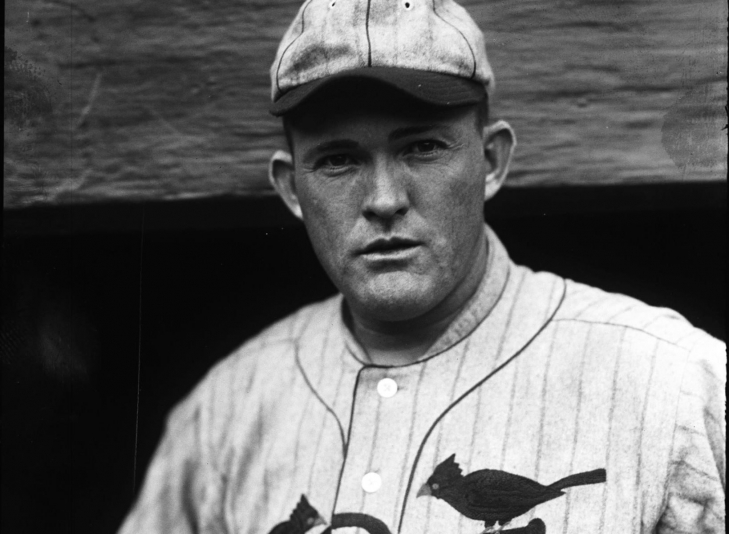
Although debates regarding the definitive placement of contemporary baseball giants relative to historic icons can incite endless discussions across stadium concourses, the sheer mathematical improbability of the accomplishments in the batter's box during the 1920s in St. Louis remains entirely unmatched. Rogers Hornsby not only accumulated hits but also manipulated the physics of right-handed batting to an unparalleled extent in the century since. Upon his arrival in St. Louis in 1915, "Rajah" combined a fierce, resolute personality with a wide, deep-in-the-box batting stance that enabled him to cover the outer half of the plate with formidable leverage. By the advent of the live-ball era, he had established an offensive baseline so overwhelmingly dominant that it fundamentally redefined the scoring ceiling for the entire National League.
His legendary tenure with the Cardinals was characterized by an unprecedented six-year dominance, representing the highest level of sustained offensive output. From 1920 to 1925, Hornsby secured six consecutive National League batting titles, effectively treating the league's pitching staff as a personal testing ground. During this breathtaking stretch, his average mark across more than 3,300 plate appearances was a mind-boggling .402. He systematically commanded every single efficiency filter available, leading the league in on-base percentage and slugging percentage in all six of those magnificent summers.
The crown jewel of this run erupted during a magnificent 1924 regular-season masterpiece, where he terrorized the league to post a spectacular .424 batting average—the highest single-season mark recorded in the modern era of Major League history.
Hornsby was a truly remarkable player, not just a singles hitter who relied on quick, precise hits into the grass. He combined incredible bat control with powerful, high-leverage strength. During his Career, he won two National League home run titles. In the exciting summers of 1922 and 1925, he achieved the prestigious feat of the National League Triple Crown, showcasing his outstanding all-around talent. His 1922 showcase was an unadulterated clinic in run production, as he clobbered 42 home runs and drove in 152 runs while racking up 250 hits.
His advanced analytical anchors are staggering; he finished second all-time in batting average (.358), eighth in on-base percentage (.434), and tenth in slugging (.577), showing unmatched skill in deep counts. Hornsby’s hardware-certified authority directly translated into historic franchise leadership when the front office named him player-manager midway through the 1925 schedule. The following autumn, Hornsby orchestrated the ultimate pinnacle of team success when he guided St. Louis to a World Series Championship.
His combative nature led to a sudden career exit after a contract dispute with Sam Breadon over exhibition games. Traded to the Giants in the offseason, he ended his peak years in St. Louis. He played as a hired gun, earning MVP with the Cubs and excelling with the Giants and Braves, ending as player-manager for the Browns.
Across his 13 active seasons with the franchise, Hornsby accumulated 2,110 hits, 367 doubles, 169 triples, and 143 home runs alongside a spectacular .359 batting average in 1,580 games. He was elected to the Baseball Hall of Fame in 1942, and the Cardinals named him as one of the members of their franchise Hall of Fame in 2014. The Redbirds also honored him on the left field wall in 1997 with a logo and his name.
4. Bob Gibson
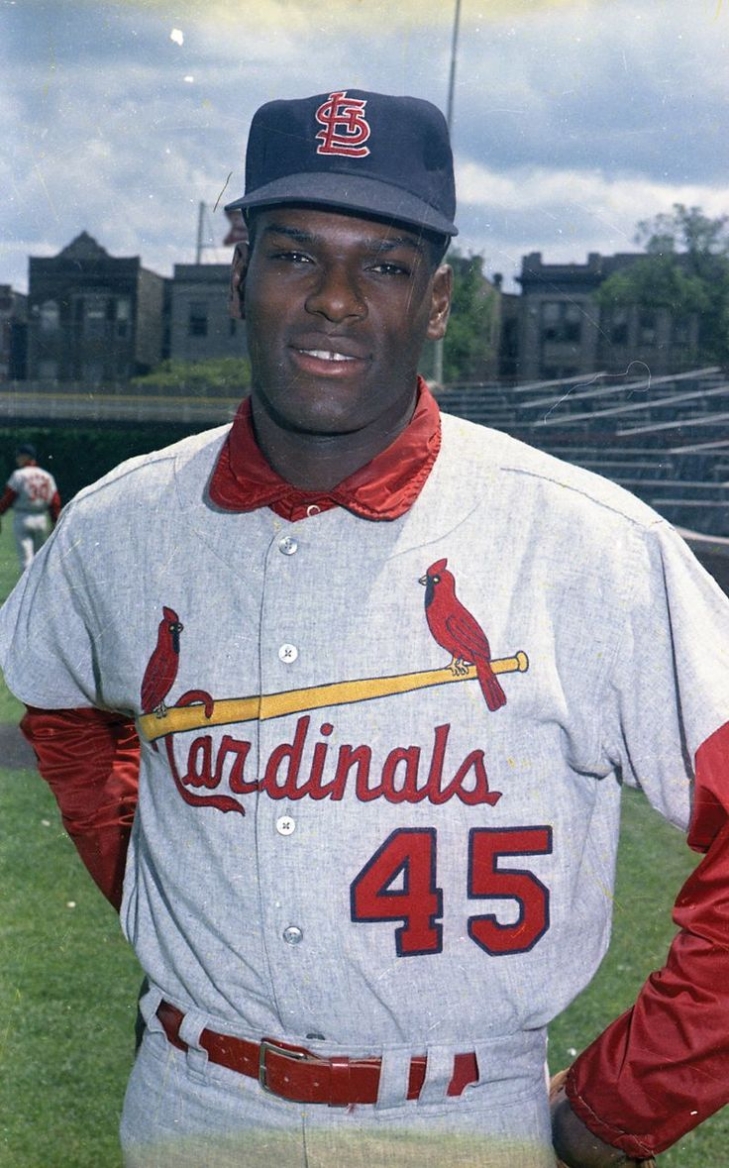
When evaluating a franchise that has spent more than a century accumulating championship banners, debates over the greatest players to ever wear the uniform can linger for decades. Yet when the conversation turns to the mound, it begins and ends with a singular, fiercely competitive presence from Omaha, Nebraska. Bob Gibson did not merely pitch for the St. Louis Cardinals; he commanded the entire diamond through sheer intimidation and unparalleled physical execution. Signed as an amateur free agent ahead of the 1957 season—following a brief, legendary stint showcasing his athleticism with the Harlem Globetrotters—the muscular right-hander became a permanent fixture in the starting rotation by 1961, embarking on a legendary run that remains the gold standard for pitching excellence in Midwestern baseball history.
Calling Gibson the greatest hurler in the club's long history is not a stretch; it is a mathematical certainty. He is the franchise's all-time leader in pitching bWAR (81.7), total wins (251), strikeouts (3,117), and total innings pitched (3,884.1).
While he established himself as a reliable front-line starter during the opening years of the 1960s, his legendary status as a big-game performer was forged in a historic breakthrough during the 1964 World Series against the New York Yankees.
Gibson hoisted the entire team onto his back, enduring a grueling workload of three complete-game starts. He won two of them—including a heroic, nine-inning masterpiece in Game 7 on just two days of rest—to capture the world championship and set a Fall Classic record with 31 strikeouts.
That legendary postseason performance launched a spectacular six-year reign of terror that reshaped the competitive landscape of the Senior Circuit. Gibson earned six consecutive All-Star selections from 1965 to 1970, pairing his blazing fastball with a slider that left hitters helpless.
In October 1967, he recaptured his October magic, guiding St. Louis to another World Series crown with a flawless 3–0 record over 27 complete innings, a microscopic 1.00 ERA, and a 0.704 WHIP against Boston, earning his second World Series MVP trophy.
The pinnacle of his career on the mound occurred during an incredible 1968 regular season. During the famous ‘Year of the Pitcher," Gibson delivered an outstanding performance, showcasing exceptional defensive skill. He skillfully overwhelmed National League lineups, finishing with a 22–9 record and setting a modern major league record with a remarkable 1.12 ERA.
His advanced efficiency filters were unrivaled; he tossed an unbelievable 13 shutouts, paced the circuit with a 1.77 FIP, and posted a 0.853 WHIP over 304.2 innings, culminating in a well-deserved sweep of both the National League Cy Young Award and the league's Most Valuable Player trophy.
That historic summer set the stage for a legendary heavyweight showdown in the 1968 World Series, where Gibson faced American League MVP and Cy Young Award winner Denny McLain of the Detroit Tigers. While the Cardinals ultimately fell short in a grueling seven-game battle, Gibson’s individual performance remained staggering. He authored three more complete-game starts, posting a 1.67 ERA and a 0.815 WHIP, and set an untouchable single-game World Series record by racking up 17 strikeouts in a dominant Game 1 victory.
His absolute dominance, alongside the general supremacy of pitchers across both leagues that summer, sparked localized panic among baseball executives. Fearing that offense was being permanently choked out of the sport, Major League Baseball took the unprecedented step ahead of the 1969 season to lower the pitching rubber by five inches and reduce the strike zone.
Despite structural rule changes designed to curb his effectiveness, Gibson’s elite spatial awareness and deep competitive drive enabled him to make immediate, masterclass adjustments. He maintained his frontline authority into the next decade, capturing a spectacular second career Cy Young Award in 1970 by winning 23 games with a 3.12 ERA and 274 strikeouts.
Furthermore, focusing solely on his legendary pitching tells only part of the story of his incredible, multidimensional legacy. Gibson was a premier, complete athlete who heavily influenced games with his bat and glove. He hit 24 career home runs as a dangerous threat at the bottom of the lineup and revolutionized defensive expectations at his position, using his lightning-fast reflexes to capture nine consecutive National League Gold Glove Awards from 1965 to 1973, providing a steady hand for the entire St. Louis defense.
The 1975 schedule marked his career end, as the physical toll of thousands of high-intensity innings forced his retirement.
Bob Gibson would be chosen for the Baseball Hall of Fame in 1981, which was his first year of eligibility. As for the Cardinals, they retired his number 45 after Gibson retired, and he was inducted into the first class of St. Louis' Hall of Fame in 2014.
1. Stan Musial
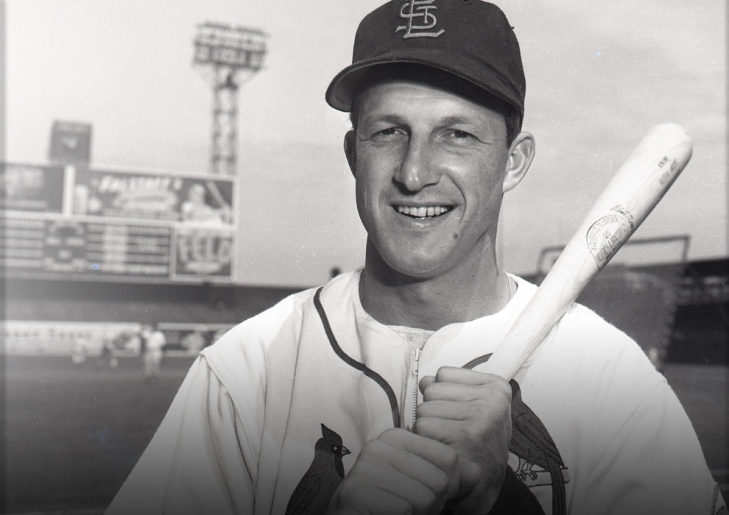
When exploring the core of baseball greatness, discussions about the most consistently excellent hitters often highlight a beloved figure from Western Pennsylvania. Stan Musial didn’t just play baseball; he demonstrated 22 seasons of offensive skill and consistency, dedicating his illustrious career to a single franchise. Originally coming up through the St. Louis Cardinals as a left-handed pitcher, a serious shoulder injury led to a permanent shift to the outfield. This turn of events established a legendary legacy under the Midwestern sun, featuring a distinctive crouched batting stance that intimidated National League pitchers over three decades.
The defining feature of the man known as "Stan the Man" was his exceptional spatial awareness and consistent mechanics, almost to the point of statistical legend. Musial amassed an impressive 3,630 career hits, which still ranks fourth on Major League Baseball’s all-time list and sets a remarkable standard for any player loyal to a single franchise. In a nearly poetic showcase of perfect balance, his hits were evenly split: exactly 1,815 at home and 1,815 on the road. He set the pace in the Senior Circuit by winning six batting titles and came close to more, finishing second three times and third twice.
With his exceptional contact skills, Musial dominated the National League batting race, turning it into his personal domain. He won seven batting titles—achieving the honor in 1943, 1946, 1948, 1950, 1951, 1952, and 1957—a record only matched by a few in baseball history. His smooth swing made a .300 batting average seem routine rather than difficult. It wasn't until his 18th season in the majors, late in his career, that his average fell below that mark for the first time, showcasing decades of consistent adjustments against multiple generations of pitchers.
While some historic high-average hitters solely focused on putting the ball in play without optimizing their patience, Musial combined his excellent eye with strict strike-zone control. He led the Senior Circuit in on-base percentage six times, showing a strong tendency to avoid expanding his zone or chasing high-velocity pitches outside the strike zone. He consistently surpassed a .400 on-base percentage in 14 seasons, finishing with an impressive lifetime average of .417, which kept him a constant, clutch presence on the bases. Even more remarkably, his aggressive yet disciplined batting approach led to more career walks (1,599) than strikeouts (696), a ratio that remains astonishing to today's hitters.
Far from a one-dimensional contact hitter, Musial combined his artistic skill with powerful, gap-to-gap hitting that frequently shattered outfield walls. Although he never secured a league home run title due to the absence of a single-season explosion, he surpassed 30 home runs six times and finished his career with an impressive 475 long balls. His true impact was reflected in total bases and extra-base hits. He led the National League in doubles eight times, triples five times, and was a two-time RBI leader, achieving ten seasons with over 100 runs scored. An exceptional extra-base hitter, he consistently drove the ball into the gaps with a sharp line-drive, ignoring stadium boundaries.
To put his historical dominance into proper context, Musial was undeniably the premier, defining player of the 1940s. He functioned as the emotional and statistical heartbeat of a St. Louis dynasty that captured three World Series championships in a five-year span, hoisting the title banner in 1942, 1944, and 1946. His hardware-certified authority reached its peak with a trio of National League Most Valuable Player Awards, securing the trophy in 1943, 1946, and 1948. He came tantalizingly close to adding further hardware to his trophy case, finishing as the MVP runner-up on four separate occasions in 1949, 1950, 1951, and 1957. His unmatched peers consistently recognized his elite status, selecting him for an incredible 24 All-Star appearances.
His legendary 1948 regular-season performance remains one of the most statistically dominant single-season displays in baseball history. Musial delivered an outstanding showing against National League pitchers, setting career highs with a .376 batting average, 230 hits, 46 doubles, 18 triples, 131 RBIs, and 39 home runs. He led in almost every key offensive category, missing the Triple Crown by just one home run after a rainout wiped out a home run from his totals. Advanced analytics highlight this peak, with his 1948 summer marked by an impressive 11.3 position-player bWAR.
When Musial decided to retire after the 1963 season, he left with the rare 3/4/5 slash line. He finished his career with a .331 batting average, a .417 on-base percentage, and a .559 slugging percentage. Modern analytics strongly affirm his status as an inner-circle Hall of Famer, securing his legacy with a remarkable 128.5 career bWAR, one of the highest in baseball history. He also held numerous Major League and National League records, setting the gold standard for offensive excellence.
The bond between the player, the city, and the uniform was so strong that it established a precedent for how the organization commemorates its history. Accordingly, the front office permanently retired his legendary number 6 right after his retirement in 1963, making Musial the first player in St. Louis Cardinals history to receive this honor. A large bronze statue was placed outside the stadium gates, acting as a lasting symbol of a legacy that went beyond the game, embodying his timeless elegance for future fans passing through.
Musial was selected to the Baseball Hall of Fame in 1969 in his first year of eligibility, and in 2014 was inducted into the inaugural Cardinals Hall of Fame.
2. Albert Pujols

When evaluating a franchise that boasts a century-dense catalog of inner-circle immortals, taking a bold stand requires unyielding statistical justification. Ranking a modern icon ahead of the legendary Rogers Hornsby and the intimidating Bob Gibson is an analytical risk—but it is a risk heavily validated by the numbers. From the moment he erupted onto the Major League landscape in 2001, Albert Pujols orchestrated the most terrifyingly dominant opening decade of any offensive career in baseball history. Across his initial 11-season residency in St. Louis, "The Machine" operated with a mechanical precision so absolute that he didn't just participate in the National League; he completely dictated its terms under the Midwestern sun.
To truly appreciate how incredible his dominance has been, just look at his relationship with the National League Most Valuable Player award. Pujols won the MVP trophy three times as a Cardinal—in 2005, 2008, and 2009—and was the runner-up four times, showing how consistently he was among the best. Even more impressive, in each of his first 11 seasons with the Cardinals, he always finished inside the top ten in MVP voting, which speaks volumes about his consistent excellence.
He dedicated himself to elite performance, making his daily routine strict and unwavering. He started his career with an incredible streak of 10 straight seasons where he batted at least .300, hit 30 or more home runs, and drove in over 100 runs. While Hornsby was known for his historic batting averages and Gibson for his intimidating presence on the mound, Pujols was unique in his decade-long dominance of the game. Experts using advanced analytics recognize his peak as truly extraordinary; from 2006 to 2011, he consistently led the entire National League in position-player bWAR every single year.
He earned a batting title (.359 in 2003), won two home run crowns (47 in 2006 and 47 in 2009), and secured three consecutive OPS titles from 2008 to 2010. Besides his power-hitting, his excellent spatial awareness and strong fundamental skills at first base earned him two Gold Glove Awards, providing the Cardinals with reliable defense across their infield.
His hardware-certified authority played a big role in the team's historic success, taking the franchise to the biggest stage in the game. Pujols led the Redbirds to three National League pennants and two World Series wins in 2006 and 2011. His October performances were filled with legendary, high-stakes moments—most famously, his incredible three-home-run game in Game 3 of the 2011 World Series against Texas. After winning that second title, he made a major move by signing a big contract with the Los Angeles Angels, marking a new chapter away from St. Louis.
Yet, a legacy this monumental demanded a poetic final chapter. Pujols executed a stunning homecoming arc by returning to the Cardinals for his final major league season. Operating as a beloved veteran presence, he defied old age to unleash a thrilling second-half surge, clobbering 24 home runs to spectacularly eclipse the fabled 700-career home run milestone in a St. Louis uniform before officially retiring.
He walked away from the diamond having built a monumental statistical fortress in St. Louis: 2,156 hits, 455 doubles, 469 home runs, and 1,397 runs batted in, paired with a spectacular .326/.417/.614 slash line across his two stints.
Mort Cooper, Jason Isringhausen and Scott Rolen named to the St. Louis Cardinals HOF
We here at Notinhalloffame.com have been (slowly) working on the Top 50 of every major franchise in the NBA, NFL, NHL and MLB. As such it is significant news to us that the St. Louis Cardinals have announced their franchise Hall of Fame Class of 2019.
The new inductees are:
Jason Isringhausen: Isringhausen joined St. Louis in 2001 after being named an All-Star in Oakland. He would remain a closer with the Redbirds and in 2004 would lead the National League in Saves in 2004. The following year he would be named to his second All-Star Game (his second as a Cardinal) and he played there until the end of the 2008 season.
Scott Rolen: The Third Baseman was a four-time All-Star as a St. Louis Cardinal where he was a three-time Gold Glove recipient. Rolen was an integral part of the Cardinals’ 2006 World Series Championship and the fringe Baseball Hall of Famer had 111 Home Runs with a Slash Line of .286/.370/.510 as a Cardinal.
Mort Cooper: Cooper was chosen by the special Red Ribbon Committee and he was with the Cardinals from 1938 to 1945 where he was a two-time All Star and led the National League in Wins in both of those campaigns. Cooper also won the ERA Title in 1942 and was named the league MVP. He helped St. Louis win the 1942 and 1944 World Series.
The other nominees in the fan ballot included Keith Hernandez, Matt Morris, Edgar Renteria and John Tudor.
The St. Louis Cardinals began their Hall of Fame in 2014 and it has quickly become one of the most important franchise halls in the “Big 4” sports.
The induction will take place on August 24.
We here at Notinhalloffame.com would like to congratulate the latest members of the St. Louis Cardinals Hall of Fame Class of 2019.
The St. Louis Cardinals announce their Finalists for their HOF
The St. Louis Cardinals have announced that their franchise Hall of Fame will have six nominees that can be voted on by the public beginning on March 1, which will commence on April 12. You can vote for those candidates here and they are:
Keith Hernandez 1974-83: The co-MVP in 1979, Keith Hernandez would win the National League Batting Title that year and was the top finished in On Base Percentage the season after. Hernandez was a six time Gold Glove winner with St. Louis and he batted .299 with 1,217 Hits and 81 Home Runs for the team. He would help them win the World Series in 1982.
Jason Isringhausen 2002-08: Isringhausen is the all-time franchise leader (217) in Saves for the St. Louis Cardinals and he was the league leader in that category in 2004. He would represent St. Louis in the 2005 All Star Game.
Matt Morris 1997-2005: Morris would lead the NL in Wins with 22 in 2001where he was an All Star and second runner-up for the Cy Young. He would be named an All Star again in 2002 and he had a record of 101-62 for the Cards.
Edgar Renteria 1999-2004: A three time All Star with the Cardinals, Edgar Renteria also was chosen for three Gold Gloves and two Silver Sluggers while he played there. He would bat .290 with 973 Hits with 71 Home Runs and 148 Stolen Bases.
Scott Rolen 2002-07: Rolen would help the Redbirds win the 2006 World Series and he was a four time All Star and three time Gold Glove winner for the team. Rolen finished fourth in National League MVP voting in 2004 and he collected 678 Hits with 111 Home Runs and a .286 Batting Average.
John Tudor 1985-88: Tudor had a stellar 62-26 record with the Cardinals with a 2.52 ERA and 1.080 WHIP. In 1985, his first season with St. Louis he was the runner-up for the Cy Young and would lead the NL in WHIP.
The announcement of the two winners will be made on April 26 and they will be joined from a player chosen from the Veterans Committee. The induction of the new class will take place on August 24.
The St. Louis Cardinals officially induct their 2018 HOF Class
As most of the regular visitors to Notinhalloffame.com are aware we are (very) slowly putting together our top 50 players of every franchise in the “Big 4” of North American sports. After that is completed we will take a look at how each organization honors their past players and executives.
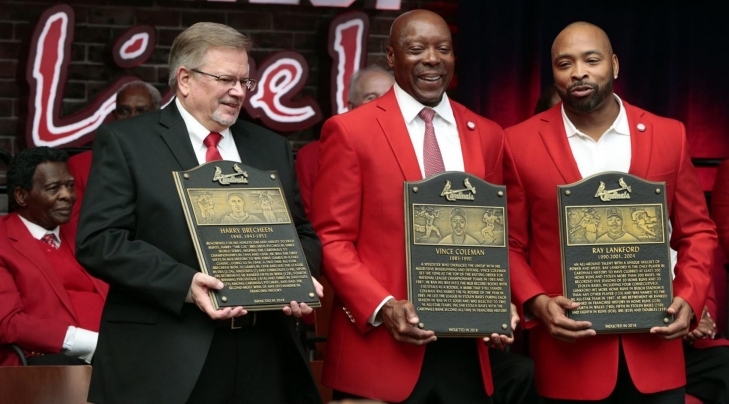
As such, it is important to us that yesterday the St. Louis Cardinals officially inducted Ray Lankford, Vince Coleman and Harry Brecheen to their Hall of Fame.
Lankford debuted in the Majors for the Cardinals in 1990 and in his first full season he would finish third in Rookie of the Year voting while leading the NL in Triples. The Centerfielder would have three 30 Stolen Base seasons and was an All Star in 1997 where he would have career highs in the Slash Line (.295/.411/.585) while finishing 16th in MVP voting. Lankford also put up decent power numbers with six 20 Home Run seasons. He would be traded to the Padres in the 2001 season but would return to finish his career in St. Louis for one final campaign in 2004. In his overall career with the Cardinals Ray Lankford had 1,479 Hits with 228 Home Runs and 250 Stolen Bases.
Vince Coleman played his first six seasons in baseball with the St. Louis Cardinals where he proved to he the best base stealer in the National League. In all six of his seasons he would finish first in the NL in Stolen Bases, the first three of which would see him exceed 100 swipes. Named the Rookie of the Year in 1985, he was also an All Star twice in 1988 and 1989. Coleman had 937 Hits and 549 Stolen Bases for St. Louis.
Harry Brecheen will be inducted posthumously. The southpaw played for the Cardinals from 1943 to 1952 and was a six time 15 Game winner. Brecheen was a two time All Star (1947 & 1948) was the National League Leader in ERA, FIP, WHIP, SO/9 and SO/BB in the 1948 season where he finished fifth in MVP voting. His son in the represented him in the ceremony.
We here at Notinhalloffame.com would like to congratulate the latest members of the St. Louis Cardinals Hall of Fame.
The St. Louis Cardinals announce their Hall of Fame Class of 2018
The St. Louis Cardinals have announced the three new members who have been chosen to be their Hall of Fame Class of 2018. Two former Cardinals were chosen via an online vote (Vince Coleman and Ray Lankford) and one former player (Harry Breechen) via the team’s “Red Ribbon Committee”, which is comprised of baseball writers, historians, officials and Hall of Famers.
Vince Coleman patrolled Leftfield for St. Louis in the first six seasons of his MLB career (1985-90). Coleman was the best base stealer in the National League during that time frame leading the league thefts every single season as a Redbird. Named the Rookie of the Year in 1985, Coleman was a two time All Star (1988 & 1989).
Ray Lankford played 13 of his 15 seasons for St. Louis. An All Star in 1997, Lankford had 238 Home Runs with 258 Stolen Bases with a 37.7 bWAR over his Cardinals tenure.
Coleman and Lankford beat out Scott Rolen, Lee Smith, John Tudor, Keith Hernandez and Jason Isringhausen.
Harry Beechen pitched for the Cardinals in 1940 and from 1943 to 1952. Fro, ’44 to ’49 Beechen would record 14 Wins and he was an All Star in both 1947 and 1948. His ’48 campaign saw him win 20 Games and the ERA, FIP, WHIP and SO/BB title with a fifth place finish in MVP voting. Beechen also helped St. Louis win two World Series (1944 & 1946) and his overall record with the Cardinals was 128 and 79 with a 39.9 bWAR.
The class will be officially inducted on August 18.
We here at Notinhalloffame.com would like to congratulate the new St. Louis Cardinals Hall of Fame Class.
The St. Louis Cardinals Announce their 2017 HOF Class

Today they added to it as three former St. Louis Cardinals, Mark McGwire, Pepper Martin and Tim McCarver have been chosen.
Traded from the Oakland Athletics midway through 1997, Mark McGwire brought an even bigger bat to the Midwest. In 1998, McGwire would set the new single season Home Run Record with 70, and followed it up with 65 the year after. In his four and a half seasons with St. Louis, he tallied 220 Home Runs with a 1.111 OPS.
Achieving more fame as a broadcaster, Tim McCarver was a Cardinal for twelve seasons. An All Star twice, McCarver helped St. Louis win the World Series in 1964 an d 1967 and would accumulate 1,029 Hits over his career with the Red Birds.
Like McCarver, Pepper Martin also helped St. Louis win two World Series Championships (1931 & 1934). A member of the famed “Gashouse Gang”, Martin was an All Star four times and led the National League in Stolen Bases three times.
We here at Notinhalloffame.com would like to congratulate the newest members of the St. Louis Cardinals Hall of Fame.
The St. Louis Cardinals announce the 2017 Finalists for their HOF
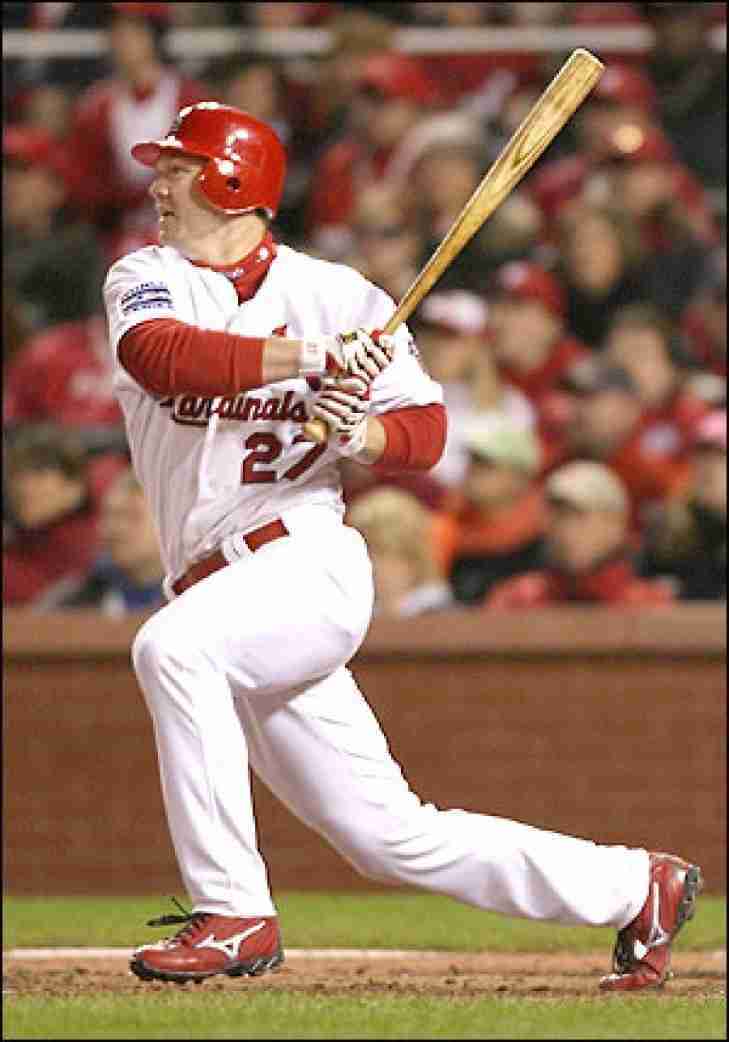
Regular visitors to Notinhalloffame.com know that we are slowly (or glacier like) working on our top 50 players for each major North American Franchise. After that is done, our intention is to look at how each one of those teams honor their past players and executives.
As such, it is news to us that the St. Louis Cardinals have announced seven finalists for their franchise Hall of Fame Class of 2017.
To become eligible for the Cardinals HOF, a player must have at least played for the team for three seasons and have been retired for three years.
Here are this year’s nominees:
Steve Carlton, Pitcher.
Carlton is far better known for winning the Cy Young Award four times with the Philadelphia Phillies it was in St. Louis where “Lefty” first became a star. Carlton rose to prominence in 1967, joining a rotation that would take the Cards to back-to-back World Series appearances in ’67 and ’68. As a Cardinal, Carlton would post a 77 and 62 record with a 3.10 ERA and 951 Strikeouts. The Hall of Fame Pitcher would be traded from St. Louis following a salary dispute, which was a deal that did not exactly fall in the Cardinals favor.
Keith Hernandez, First Base.
Hernandez would with the National League co-MVP in 1979 in a season where he also won the NL Batting Title. Hernandez was thought of us as the best defensive First Baseman in his era and overall would have 1,217 Hits with a Slash Line of .299/.385/.448 over 1,165 games as a Cardinal. Hernandez would be traded to the New York Mets in 1983 after falling out of favor with St. Louis Manager, Whitey Herzog. Still, Hernandez did help the Cards win the 1982 World Series.
Jason Isringhausen, Pitcher.
The Cardinals closer from 2002 to 2008, Isringhausen recorded 217 Saves with a 2.98 ERA. The Cards closer was an All Star in 2005 and led the NL in Saves in 2004. He would help St. Louis win the World Series in 2006.
Tim McCarver, Catcher.
Playing 1,181 Games for St. Louis, the Catcher turned broadcaster was a two time All Star for the Cardinals. McCarver would finish 2nd in MVP voting in 1967, the same season he helped St. Louis win the World Series. He would smack 1,029 Hits as a Cardinal.
Mark McGwire, First Base.
McGwire famously chased (and took) the single season home run record as a Cardinal. He was only with the Cardinals for four and a half seasons but he belted 220 Home Runs with a .420 On Base Percentage while he played there. He was also named to three All Star Games, earned a Silver Slugger and had two top five finishes in National League MVP voting while he was a Cardinal.
Edgar Renteria, Shortstop.
A member of the St. Louis Cardinals from 1999 to 2004, Renteria was skilled with his bat (973 Hits with a .290 Batting Average) and with his glove (two Gold Gloves). The fleet footed infielder would also swipe 148 bases and earn two Silver Sluggers in St. Louis.
Scott Rolen, Third Base.
Rolen was traded to the Cardinals during the 200 season and from 2003 to 2006 was named a National League All Star. Rolen dominated third base, winning three Gold Gloves and also producing good power numbers, belting 111 Home Runs as a Cardinal. He would help St. Louis win the 2006 World Series.
Voting is available online at cardinals.com/HOF. The top two vote getters (voting concludes on April, 14) will be officially inducted into the St. Louis Cardinals Hall of Fame this August.
We would like to congratulate the St. Louis Cardinals who in a short time has made their franchise’s Hall of Fame one of the most respected in team sports.
Other teams, take note!
The St.Louis Cardinals HOF Announces Their 2016 Class

For many, the headliner is one of the two men voted in by the fans, Chris Carpenter. Arriving in St. Louis following a release from the Toronto Blue Jays, Carpenter would finally live up to his potential, recovering from elbow issues and would become a fixture in the Cardinals rotation. The following year, Carpenter would have his best individual season winning the Cy Young Award going 21 and 5 with 213 Strikeouts. The year after, Carpenter would finish third in Cy Young Voting and would ace the Cardinals to a World Series Championship.
The injury bug would strike again and his problem elbow would force the Pitcher to miss almost all of 2007 and 2008 but he would be back in ’09, finishing second in Cy Young voting and winning the ERA title. Appropriately, Carpenter would win the National League Comeback Player of the Year Award. Two years later, Carpenter would assist St. Louis in winning the World Series in 2011.
Overall as a St. Louis Cardinal, Chris Carpenter was a three time All Star with a 95 - 44 Record with 1,085 Strikeouts and an ERA of 3.07.
The second fan inductee is Joe Torre, who entered the Baseball Hall of Fame for his managerial prowess two years ago.
As a St. Louis Cardinal, Joe Torre was the team’s Catcher for six seasons and was named an All Star four times. He was named the National League MVP in 1971 in a season where he led the league in Hits, Runs Batted In and Batting Average. Overall as a Cardinal, Torre had 1,062 Hits, 98 Home Runs and a Slash Line of .308/.382/.458.
Carpenter and Torre won in the fan vote over Keith Hernandez, Jason Isringhausen, Mark McGwire, Matt Morris, Edgar Renteria and Scott Rolen.
As selected by a special committee, Terry Moore and Sam Breadon were also chosen for the St. Louis Cardinals Hall of Fame.
Moore was a Cardinal for his entire MLB career earning All Star honors four times. He was a member of two World Series Championship Teams, and had 1,318 Hits over his career.
Breadon was the President and Majority Owner of the Cardinals from 1920 to 1947 and during his tenure St. Louis won the World Series six times and the National League Pennant nine times.
We here at Notinhalloffame.com would like to congratulate the latest Cardinals Hall of Fame Class.
23. Ken Boyer
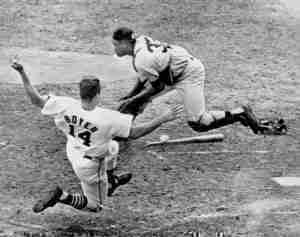
The position of third base holds the fewest Hall of Famers in Baseball. There, however, have been many great ballplayers at the “Hot Corner,” and some even won the MVP award. Ken Boyer was one such man, as he won that coveted trophy in 1964.
