


Site Admin
7. Richmond Webb
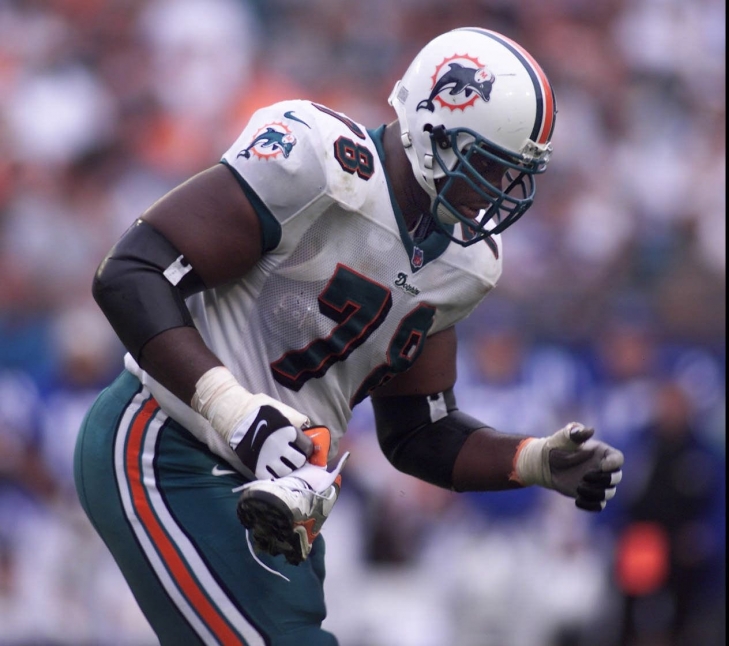
With the ninth overall pick in the 1990 Draft, the Miami Dolphins chose the hulking Richmond Webb with the purpose of protecting Dan Marino’s left side. The former Texas A&M Aggie did just that.
6. Larry Little
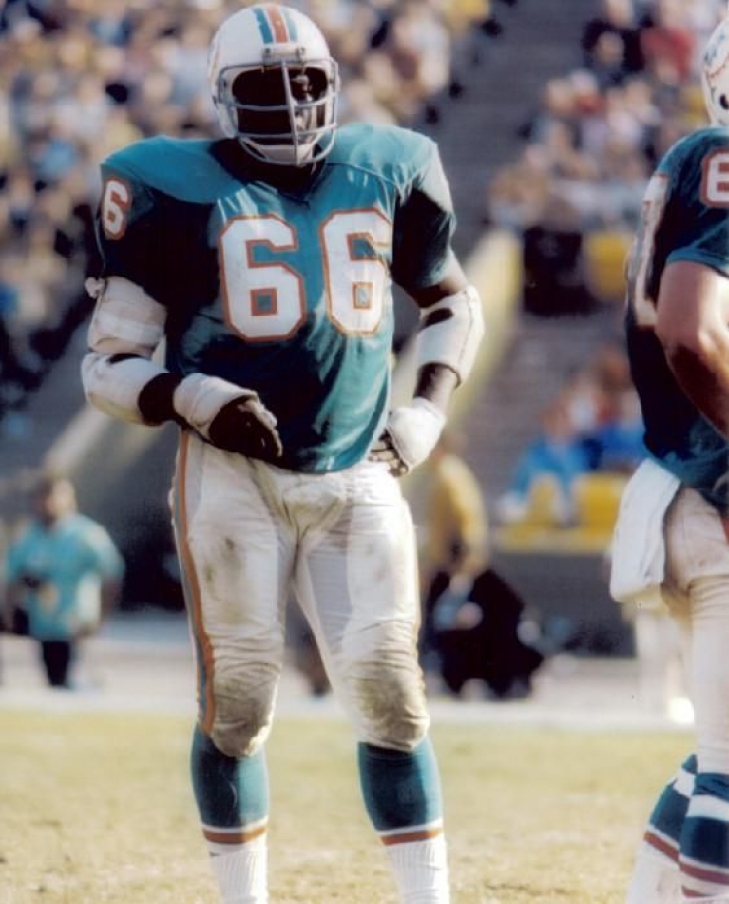
After two unremarkable seasons as a backup Guard with the San Diego Chargers, Larry Little was traded to the Miami Dolphins for Mack Lamb. Little was not thrilled as the Dolphins were not particularly good at the time, but that feeling would quickly change as Miami was building something special. As for the Chargers, Lamb never played for them.
We guess we know who won this trade.
5. Jim Langer
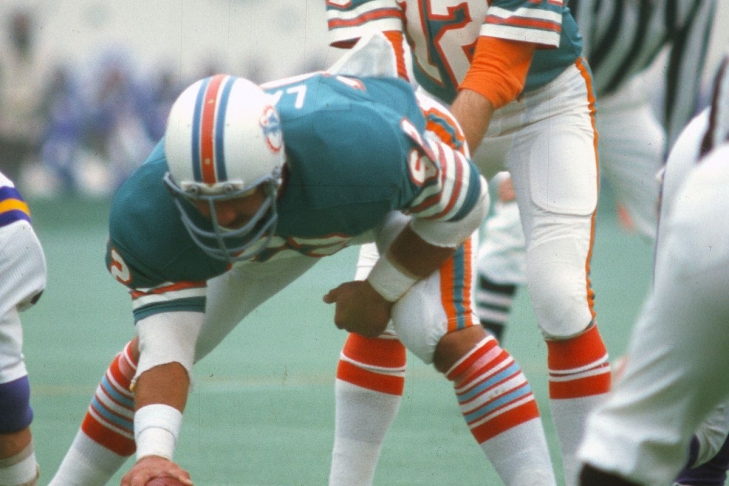
Undrafted out of South Dakota State in 1970, Jim Langer faced an uphill battle just to earn a spot on an NFL roster. After the Cleveland Browns cut him during training camp, the Miami Dolphins claimed him off waivers, and he spent his first two seasons primarily as a backup linebacker and interior offensive line reserve under head coach Don Shula.
Langer took over the starting center job in 1972 and immediately anchored one of the most legendary seasons in pro football history. Playing every single offensive snap during the Dolphins' perfect 17–0 campaign, he provided flawless pass protection and relentless run blocking for Larry Csonka and Mercury Morris, culminating in a victory over Washington in Super Bowl VII.
The dominant center elevated his play even further in 1973, helping Miami repeat as world champions with a convincing 24–7 victory over the Minnesota Vikings in Super Bowl VIII. That stellar championship season kicked off a six-year streak of Pro Bowl selections from 1973 through 1978, during which Langer was widely recognized as the NFL’s premier center.
Flanked by guard Larry Little and tackle Wayne Moore, Langer served as the brain center of Miami's famous "Offensive Machine." His combination of upper-body strength, quick footwork, and scheme intelligence earned him four First-Team AP All-Pro selections (1974, 1975, 1976, and 1977), making him a cornerstone of the franchise's 1970s dynasty.
After ten seasons in South Florida, Langer requested a trade back to his home region to finish his career. He played his final two professional seasons with the Minnesota Vikings (1980–1981) before retiring at age 33.
In 1987, Langer entered the Pro Football Hall of Fame in Canton in his first year of eligibility, one of few undrafted players elected on the first ballot. In 1990, he became an inaugural Miami Dolphins Honor Roll member.
4. Bob Griese
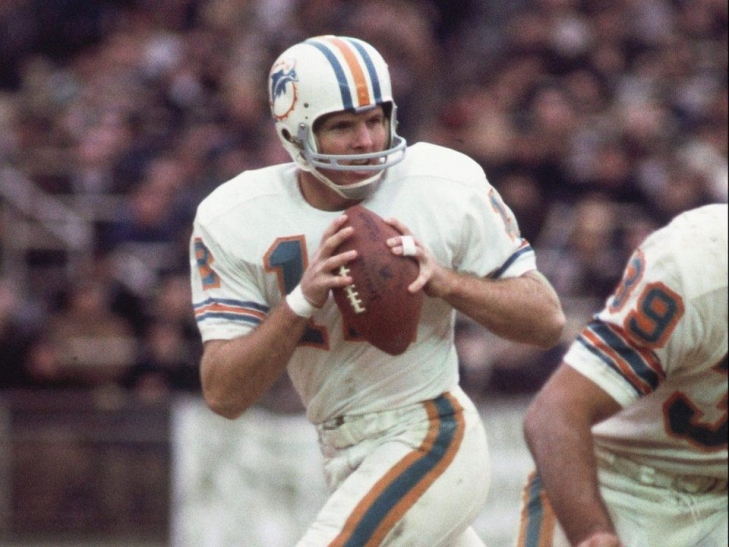
Fresh off the landmark 1970 AFL-NFL merger agreement, the Miami Dolphins utilized their high-value first-round pick (fourth overall) in the 1967 Common Draft to land Purdue signal-caller Bob Griese. The calculated move provided the infant franchise with an immediate field general. Throwing for over 2,000 yards in his debut season, the cool-headed rookie captured AFL All-Star recognition in both 1967 and 1968, laying the foundational brick for an emerging South Florida powerhouse.
The organization's trajectory shifted into overdrive in 1970 when head coach Don Shula arrived in Miami. Combining Shula's ironclad discipline with Griese’s sharp tactical mind, the duo unlocked a new ceiling for the franchise. Famous for calling his own plays at the line of scrimmage, Griese steered Miami to its first AFC Championship and an appearance in Super Bowl VI following the 1971 season. Despite a loss to Dallas in the big game, Griese’s stellar command earned him NFL MVP honors from the Newspaper Enterprise Association (NEA).
The 1972 campaign proved to be both his most testing and ultimate triumph. After breaking his leg in Week 5 against San Diego, Griese watched veteran backup Earl Morrall keep the win streak alive. Healthy enough to return during the postseason, Griese stepped back into the huddle for the AFC Championship Game and started Super Bowl VII, orchestrating a 14–7 victory over Washington to cap off a 17–0 march—the only unblemished, perfect season in NFL history.
Griese secured his place in gridiron history the following year by becoming the first quarterback to start three consecutive Super Bowls. In Super Bowl VIII against Minnesota, he executed Shula’s ground-and-pound strategy to absolute perfection, completing 6 of 7 passes while letting his backfield dismantle the Vikings in a 24–7 championship repeat.
Though Miami’s championship run eventually cooled, Griese remained an elite, calculating passer throughout the decade. He enjoyed an individual renaissance in 1977, winning the prestigious Bert Bell Award after leading the entire league with 22 passing touchdowns and an 87.8 passer rating. A six-time Pro Bowl selection during the 1970s, he capped his run by leading the league in completion percentage (63.0%) in 1978.
Griese retired after the 1980 season with 14 years at Miami, holding a 56.2% completion rate, 25,092 passing yards, 192 touchdowns, 172 interceptions, 994 rushing yards, and seven rushing touchdowns.
The Dolphins honored his legacy in 1982 by retiring his No. 12, the franchise's first. He was also an inaugural Miami Dolphins Honor Roll member in 1990. Canton enshrined Griese into the Hall of Fame that same year as part of the Class of 1990.
